
High Prolactin And Its Effect On Ovulation

Manar Hegazy

Majd Eddin Khaled
High prolactin, also called hyperprolactinemia, is a hormone condition that can affect menstrual cycles, ovulation, and pregnancy chances. Prolactin is produced by the pituitary gland and naturally rises during pregnancy and breastfeeding. When it rises outside these situations, it may interfere with the hormonal signals needed for egg maturation and ovulation.
The effect of high prolactin is not the same in every woman. Some women may stop having periods, while others may only have irregular cycles or weak ovulation. This is why prolactin should not be ignored, but it also should not be treated based on one isolated test result. At Fertiliv, prolactin is evaluated as part of the full fertility picture, including thyroid function, ovulation, ovarian reserve, ultrasound findings, uterine factors, and semen analysis.
What Is Prolactin?
Prolactin is a hormone released by the pituitary gland, a small gland in the brain. Its best-known role is supporting milk production after childbirth. However, prolactin is also present in women who are not pregnant or breastfeeding, usually at lower levels.
Problems may begin when prolactin becomes abnormally elevated outside pregnancy and breastfeeding, especially when it is associated with irregular periods, absent periods, breast discharge, or delayed pregnancy. The elevation may be temporary or persistent, and the cause must be understood before treatment.
Is High Prolactin Common?
High prolactin may appear during fertility evaluation, especially in women with irregular cycles or ovulation problems. However, it is not always the only cause of infertility. A mild elevation may not explain all symptoms, while a significant persistent elevation can strongly affect ovulation.
A slightly high result does not automatically mean a serious problem. The doctor may repeat the test under proper conditions before making a decision. A clearly high or persistent level, especially with symptoms, needs more careful evaluation.
Why Is It Called The Milk Hormone?
Prolactin is often called the milk hormone because it supports breast milk production after delivery. During breastfeeding, high prolactin may naturally reduce ovulation in some women. Outside breastfeeding, high prolactin may make the body behave hormonally as if it is in a lactation state.
This can reduce the reproductive hormone signals that support ovulation. As a result, pregnancy may be delayed even when the uterus and ovaries appear structurally normal.
Read about: Weak Ovulation: A Clear Guide to Diagnosis and Treatment Options
How High Prolactin Affects Ovulation
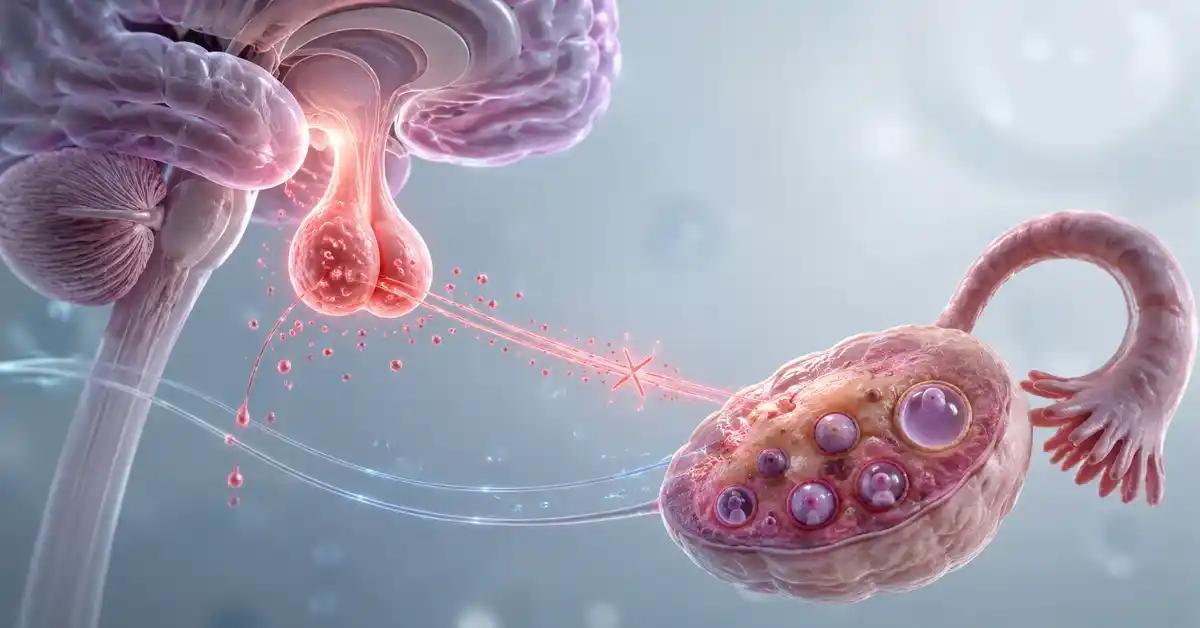
High prolactin can affect ovulation by disrupting communication between the brain and the ovaries. It may reduce or disturb the hormonal signals that regulate FSH and LH. These hormones are essential for follicle growth and the LH surge that triggers ovulation.
When prolactin is elevated, the follicle may not grow properly, the egg may not be released, or ovulation may become irregular. The result can be long cycles, missed periods, anovulation, or luteal phase problems.
Effect On FSH And LH
FSH and LH are central to ovulation. FSH supports follicle development, while LH helps trigger egg release. If prolactin is high enough to interfere with this system, follicle growth may slow down or the LH surge may not occur properly.
This explains why treating high prolactin can sometimes restore cycle regularity and ovulation. However, the doctor must first confirm that prolactin is truly the relevant cause, because PCOS and thyroid disease can cause similar symptoms.
Does It Affect Egg Quality?
High prolactin mainly affects whether ovulation occurs and whether the cycle is regular. It does not always directly damage egg quality. However, if ovulation is irregular or the hormonal environment is unstable, the chance of releasing a mature egg at the right time may decrease.
For this reason, treatment should not stop at lowering the number. The goal is to confirm that ovulation returns and pregnancy planning becomes realistic.
Read about: The Impact of Excess Weight on Reproductive Health: Understanding the Link Between Obesity and Fertility
Symptoms Of High Prolactin In Women
Symptoms vary. The most common include irregular periods, delayed periods, absent periods, weak ovulation, or difficulty conceiving. Some women may have milky breast discharge when they are not pregnant or breastfeeding. Breast discomfort, low libido, vaginal dryness, or mood changes may also occur.
In some cases, if high prolactin is caused by a pituitary tumor, symptoms such as headaches or vision changes may appear, especially if the tumor is large. These symptoms do not always mean a tumor is present, but they should be evaluated.
Irregular Periods
Irregular periods are one of the most common signs. Cycles may become long, unpredictable, or absent. Sometimes bleeding still occurs, but ovulation may not happen regularly. This can make natural conception difficult.
If cycle irregularity is repeated, prolactin should be interpreted with other hormones such as TSH, FSH, LH, and sometimes AMH. One hormone test alone is rarely enough in infertility care.
Breast Discharge
Milky discharge from the breasts outside pregnancy or breastfeeding can be a clue to high prolactin. However, discharge may also occur because of breast stimulation, medications, or local breast causes. Evaluation is needed before assuming the cause.
The absence of discharge does not rule out high prolactin. Some women have significant elevations without breast symptoms. Diagnosis depends on both symptoms and blood testing.
Read about: The Hidden Link Between Thyroid Function and Fertility: A Complete Clinical Guide
Causes Of High Prolactin
There are many possible causes. Temporary or mild elevations may occur due to stress, poor sleep, intense exercise before testing, breast stimulation, or blood draw conditions. Certain medications can also raise prolactin, including some antidepressants, nausea medications, blood pressure medications, and psychiatric medications.
Important medical causes include hypothyroidism and prolactinoma, a usually benign prolactin-secreting pituitary tumor. Because causes differ, treatment must be personalized.
Hypothyroidism
Hypothyroidism can raise prolactin. In such cases, prolactin may improve after thyroid function is corrected. This is why TSH testing is important when prolactin is high, especially if the woman has fatigue, weight gain, cold intolerance, hair loss, or irregular cycles.
If thyroid disease is the cause, the primary treatment is thyroid correction rather than treating prolactin in isolation. Fertiliv evaluates hormone systems together because they are connected.
Medications And Stress
Some medications increase prolactin. Patients should tell the doctor about all medications and supplements they use. Important medications should not be stopped without medical guidance, but alternatives may sometimes be discussed with the prescribing physician.
Stress and poor sleep may cause mild temporary elevation. The doctor may repeat prolactin testing in the morning under calmer conditions to avoid overdiagnosis or unnecessary treatment.

How Should Prolactin Be Tested?
Prolactin testing requires proper conditions. It is often preferred in the morning, after waking, while avoiding intense stress, heavy exercise, and breast stimulation before testing. If the elevation is mild or does not match symptoms, the doctor may repeat the test.
In some cases, macroprolactin testing may be considered. Macroprolactin can raise the lab result but may be less biologically active in some patients. This is useful when prolactin is high but symptoms are absent.
Should The Test Be Repeated?
Often, yes. Repeating the test helps distinguish temporary elevation from persistent hyperprolactinemia. Pregnancy should also be excluded because prolactin rises naturally during pregnancy.
If the level is very high or symptoms are significant, the doctor may proceed with further evaluation rather than only repeating the test.
When Is Pituitary MRI Needed?
Pituitary MRI may be recommended when prolactin is clearly and persistently elevated, when there are headaches or vision changes, or when no other cause is found. The aim is to check for a prolactinoma or another pituitary cause.
A prolactinoma does not always mean a dangerous condition. Many are small and respond well to medication. However, correct diagnosis is important for safe pregnancy planning.
Read about: PCOS Treatment to Improve Fertility and Support Pregnancy Chances
Treatment Of High Prolactin
Treatment depends on the cause. If hypothyroidism is responsible, thyroid treatment is needed. If medication is the cause, the doctor may discuss adjustment with the prescribing specialist. If prolactinoma or persistent symptomatic hyperprolactinemia is present, medications called dopamine agonists may be used to lower prolactin.
These medications can help restore periods and ovulation in many women, but they should be used only under medical supervision. They are not recommended randomly for one mild or unconfirmed result.
When Does Ovulation Improve?
After prolactin is lowered and the cause is treated, ovulation may return within weeks or months depending on the case. Some women notice cycle regularity quickly, while others need longer follow-up.
If prolactin normalizes but pregnancy does not occur, other factors should be assessed, including fallopian tubes, ovarian reserve, age, uterine factors, and semen analysis. Prolactin is not always the only issue.
Is Treatment Safe When Trying To Conceive?
Prolactin-lowering medications are commonly used in women trying to conceive, but the plan after pregnancy occurs depends on the cause, tumor size if present, and physician guidance. The doctor should be informed as soon as pregnancy occurs.
Management differs between mild elevation and a large prolactinoma. Structured follow-up keeps the plan safer and avoids individual decisions without medical advice.
Read about: Endometriosis And Pregnancy: Is Natural Conception Possible Or Is IVF Necessary?
High Prolactin And IVF/ICSI
Before IVF/ICSI, prolactin may be checked if cycles are irregular, there is breast discharge, or the patient has a history of high prolactin. Untreated significant elevation may affect ovulation, hormonal planning, or cycle control. The doctor may prefer to correct it before stimulation or embryo transfer.
However, not every mild elevation prevents treatment. The decision depends on the level, symptoms, cause, and other hormone results. Some cases need treatment first, while others can proceed with monitoring.
Can High Prolactin Delay Treatment?
It may delay treatment if the level is significantly high, associated with absent periods, or requires pituitary evaluation. Mild temporary elevation may not cause major delay. This is why repeating the test and identifying the cause matter.
At Fertiliv, decisions are not based on one number alone. The full case is reviewed, especially when age or ovarian reserve makes time important.
Can It Affect Embryo Transfer?
Prolactin may affect the hormonal environment, but embryo transfer success depends on many factors: embryo quality, endometrial preparation, progesterone timing, uterine health, and medical conditions. Prolactin should be assessed as part of the plan, not as the only explanation.
If prolactin is corrected before transfer, the hormonal plan may become more reassuring. If implantation failure has occurred, other causes must also be evaluated.
Read about: Uterine Fibroids And Fertility: When Do They Affect Pregnancy And How Are They Treated?
When Is High Prolactin A Main Cause Of Infertility?
High prolactin is more likely to be a main fertility factor when it is repeated, clearly elevated, and associated with irregular or absent periods, anovulation, or breast discharge. If cycles are regular, ovulation is confirmed, and elevation is mild, its role may be less clear.
The key questions are: Is the elevation real and persistent? Is it affecting ovulation? If yes, treatment may be an important step toward pregnancy.
Relationship With PCOS
High prolactin and PCOS may look similar because both can cause irregular cycles and delayed ovulation. They may also exist together. For this reason, women with irregular cycles should not be diagnosed with PCOS alone without checking prolactin and thyroid function when clinically appropriate.
If more than one factor exists, each should be managed according to its importance. A patient may need prolactin control, ovulation induction, insulin resistance management, or IVF/ICSI depending on the full picture.
Relationship With Thyroid Disease
Hypothyroidism can raise prolactin and affect ovulation at the same time. In this situation, the problem may be combined: thyroid imbalance, high prolactin, and irregular cycles. Treating thyroid disease may improve both prolactin and ovulation.
This is why TSH is important in fertility evaluation. Correct treatment starts with the underlying cause.
Read about: Chronic Diseases And Fertility: How Can You Achieve Parenthood Despite Health Challenges?
Fertiliv’s Role In High Prolactin Evaluation
Fertiliv evaluates high prolactin within a complete fertility plan. Symptoms, cycle pattern, test timing, TSH, prolactin, FSH, LH, ultrasound findings, ovulation signs, and semen analysis are reviewed together. This avoids focusing on one number while missing another fertility factor.
If prolactin is truly affecting ovulation, the patient is guided toward appropriate treatment and follow-up. If other factors exist, they are included in the plan. The goal is to restore hormonal balance when possible and choose the most suitable path to pregnancy.
Evaluation Beyond A Blood Test
The blood test is important, but it is not the whole story. Prolactin may be temporarily high or persistently elevated. Fertiliv asks about symptoms, medications, stress, thyroid function, cycle pattern, and previous history because these details change the decision.
This approach helps avoid unnecessary treatment while also preventing a true ovulation-disrupting problem from being ignored.
A Fertility-Focused Plan
When the patient wants pregnancy, treatment planning is different from managing prolactin in someone not trying to conceive. The focus becomes restoring ovulation, timing conception, assessing the uterus, reviewing semen analysis, and deciding whether ovulation induction or IVF/ICSI is needed.
Fertiliv helps patients understand the next step clearly: wait for cycle recovery, monitor ovulation, or move to fertility treatment based on age, infertility duration, and test results.
Read about: Blocked Fallopian Tubes: Is It The End Of The Motherhood Dream?
Conclusion
High prolactin can clearly affect ovulation and menstrual cycles, and it may delay pregnancy in some women. It usually works by disturbing the hormonal signals that support follicle growth and egg release. However, high prolactin should not always be assumed to be the only cause of infertility, and it should not be treated without confirmation and cause evaluation.
Proper evaluation may include repeating the test, checking thyroid function, reviewing medications, assessing symptoms, and sometimes pituitary MRI. After treating the cause, ovulation may return and pregnancy chances may improve. If other fertility factors are present, ovulation induction or IVF/ICSI may be needed.
Frequently Asked Questions: High Prolactin And Its Effect On Ovulation
Can High Prolactin Stop Ovulation?
Yes. It may stop or disturb ovulation, especially when elevation is significant and persistent.
Does High Prolactin Always Mean A Tumor?
No. It may be caused by stress, medications, hypothyroidism, or other reasons. MRI is needed only in selected cases.
Should Prolactin Testing Be Repeated?
Often, yes, especially when elevation is mild or does not match symptoms.
Can Treating Prolactin Improve Pregnancy Chances?
Yes, if high prolactin is causing ovulation problems, treatment may restore ovulation and improve chances.
Can IVF/ICSI Be Done With High Prolactin?
Sometimes yes, but the doctor may prefer correcting significant elevation before stimulation or embryo transfer.