
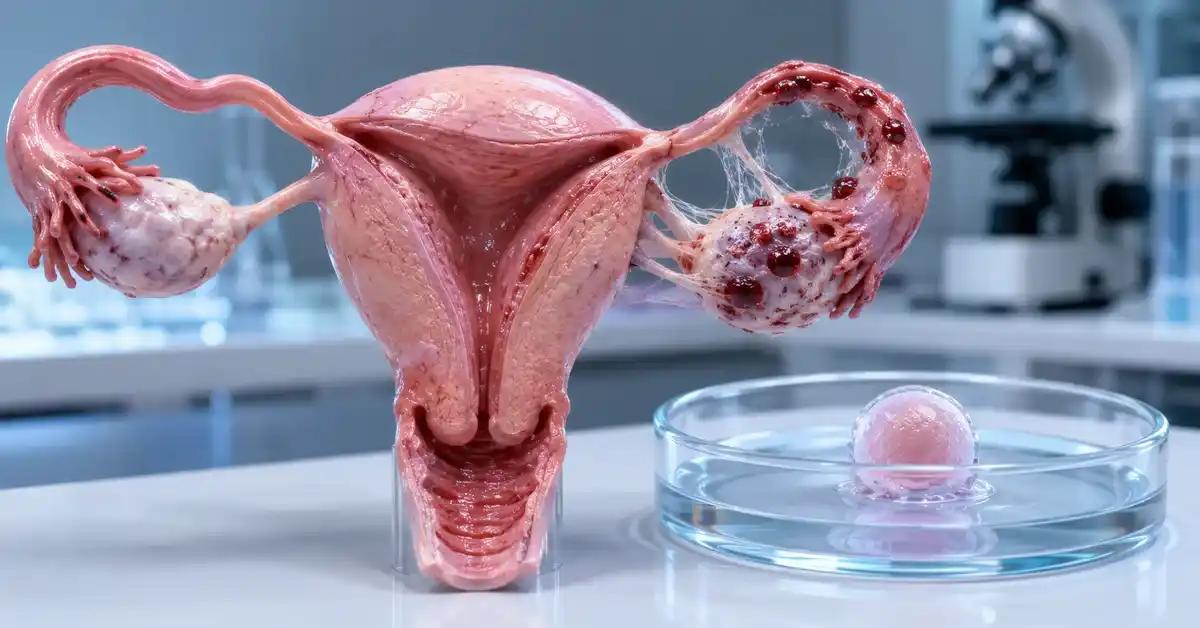
Endometriosis And Pregnancy: Is Natural Conception Possible Or Is IVF Necessary?

Manar Hegazy

Majd Eddin Khaled
Endometriosis is a common condition that may affect both quality of life and fertility. It occurs when tissue similar to the lining of the uterus grows outside its normal place. This may cause painful periods, pelvic pain, pain during intercourse, or delayed pregnancy. However, having endometriosis does not always mean that natural pregnancy is impossible. The impact depends on the severity of the condition, the woman’s age, ovarian reserve, fallopian tube status, ovulation, and the husband’s sperm quality.
At Fertiliv IVF Center in Istanbul, endometriosis and pregnancy are assessed through a complete and practical fertility evaluation. Some women may still have a reasonable chance of natural conception, especially in mild cases. Others may benefit from IVF earlier, particularly when time, ovarian reserve, or tubal damage are important factors. The goal is not to rush every couple into treatment, but to choose the safest and most realistic path toward pregnancy.
Endometriosis And Pregnancy
Endometriosis and pregnancy have a complex relationship. The condition may affect the pelvis, ovaries, fallopian tubes, ovulation, or the inflammatory environment around reproductive organs. In mild cases, natural pregnancy may happen, especially when the tubes are open and ovulation is regular. In moderate or severe cases, the chance of natural conception may decrease.
A treatment decision should never be based only on the diagnosis name. One woman may have mild endometriosis but another fertility factor, while another may have ovarian endometriomas that need careful planning. Fertiliv usually starts by reviewing symptoms, duration of delayed pregnancy, ultrasound findings, ovarian reserve, tube status, and semen analysis for the husband before recommending a path.
How Endometriosis May Affect Fertility
Endometriosis and fertility may be affected in several ways. The condition can cause adhesions around the ovaries or tubes, making it harder for the egg to be picked up or transported. It may also affect ovulation, ovarian response, or create inflammation that makes conception more difficult.
In some women, there are no obvious adhesions, but delayed pregnancy still occurs because of subtle effects on egg quality or pelvic environment. Pain severity does not always match fertility impact. This is why medical evaluation is important before deciding whether natural pregnancy is realistic or IVF for endometriosis may be more suitable.
Does Endometriosis Always Prevent Pregnancy?
Endometriosis does not always prevent pregnancy. Some women conceive naturally, especially with mild disease, open tubes, regular ovulation, and good ovarian reserve. A diagnosis should not create unnecessary fear before the full fertility picture is understood.
However, long waiting is not always wise. If delayed pregnancy endometriosis has continued for a long time, if the woman is over 35, or if ovarian reserve is low, earlier treatment may be recommended. The decision should be based on fertility potential and timing, not fear alone.
Read about: Unexplained Infertility: A Hopeful Journey Through Diagnosis and Modern Treatment
Natural Pregnancy With Endometriosis
Natural pregnancy with endometriosis may be possible when the condition is mild, ovulation is regular, fallopian tubes are open, ovarian reserve is reassuring, and semen analysis is normal. In such cases, a doctor may recommend a limited period of guided trying with ovulation monitoring.
Still, natural trying should have a clear time frame. If pregnancy has already been delayed for a long period, or if pain is severe, ovarian surgery has been performed before, or age is an important factor, waiting may not be the best approach. Fertiliv explains these options clearly so couples understand when natural trying is reasonable and when assisted treatment is more practical.
When Is Natural Trying Reasonable?
Natural trying may be reasonable when endometriosis is mild, age is favorable, delayed pregnancy duration is short, and the tubes are open. Regular ovulation and acceptable semen analysis are also important. When these factors are present, timed intercourse or ovulation follow-up may be considered.
This approach should not be random. It should include identifying fertile days, improving lifestyle, and reassessing the plan if pregnancy does not occur within the agreed time. This protects valuable time and makes endometriosis fertility treatment more structured.
When Is Waiting Not Enough?
Waiting may not be enough when delayed pregnancy endometriosis has lasted too long, when the woman is older, or when ovarian reserve is low. Blocked tubes, severe adhesions, or large ovarian endometriomas may also reduce the chance of natural conception.
In these situations, IVF for endometriosis may be a more suitable option because it can bypass some tubal and pelvic barriers. IVF is not necessary for every woman with endometriosis, but it becomes more important when the natural chance is low or when time is a sensitive factor.
Read about: Navigating a First Pregnancy Delay: Your Complete Guide to Fertility Testing and Diagnosis
Diagnosing Endometriosis Before Pregnancy
Endometriosis diagnosis may begin with symptoms such as severe period pain, chronic pelvic pain, pain during intercourse, or delayed pregnancy. However, some women have few symptoms and discover the condition during fertility evaluation. For this reason, the absence of pain does not completely exclude fertility-related endometriosis.
Ultrasound may help detect ovarian endometriomas, while some cases need further imaging or surgical assessment. At Fertiliv IVF Center, diagnosis is linked to pregnancy planning. The question is not only whether endometriosis exists, but how it affects fertility and what treatment path gives the couple the best chance without unnecessary delay.
Common Endometriosis Symptoms
Endometriosis symptoms may include severe menstrual pain, pelvic pain before the period, pain during intercourse, bloating, bowel discomfort during menstruation, or chronic pelvic discomfort. Sometimes, the first sign is delayed pregnancy without strong pain.
Symptoms alone do not define the severity of fertility impact. A woman with intense pain may still have open tubes, while another with mild symptoms may have significant adhesions. Fertiliv evaluates symptoms together with ultrasound, ovarian reserve, previous surgeries, and the couple’s fertility history.
Important Tests Before Treatment
Before choosing endometriosis fertility treatment, it is important to evaluate ovarian reserve, ovulation, the uterus, fallopian tubes, and semen analysis for the husband. These tests help determine whether natural pregnancy is possible or whether IVF is more appropriate.
Ovarian endometriomas should be assessed carefully. Surgery on the ovary may sometimes affect ovarian reserve, so the decision should not depend only on cyst size. Symptoms, age, fertility goals, ovarian reserve, and treatment plan all matter when choosing between monitoring, surgery, or IVF.

Endometriosis Fertility Treatment
Endometriosis fertility treatment depends on the woman’s goal. A plan for pain control may differ from a plan for pregnancy. Some hormonal medications can reduce symptoms, but they prevent pregnancy while being used, so they may not suit women trying to conceive soon.
When pregnancy is the goal, treatment should support fertility without unnecessary delay. Options may include ovulation follow-up, treatment of associated factors, selected surgery, or IVF. At Fertiliv, the plan is personalized according to age, ovarian reserve, duration of infertility, severity of symptoms, and the couple’s test results.
Is Surgery Always Needed?
Surgery is not always needed before pregnancy. It may be useful in selected cases, such as severe pain, significant adhesions, or specific ovarian cysts that affect treatment access or cause repeated problems. However, ovarian surgery must be considered carefully when ovarian reserve is limited.
Sometimes IVF may be better than surgery, and sometimes surgery is helpful before IVF. There is no single rule for every patient. The benefits, risks, and alternatives should be discussed clearly before any intervention.
Lifestyle Support And Fertility
Lifestyle cannot cure endometriosis, but it may support the body during pregnancy preparation. Balanced nutrition, good sleep, suitable physical activity, stress reduction, and avoiding smoking may help the woman feel better and prepare for treatment.
These steps should not delay medical care when treatment is needed. They are supportive, not a replacement for evaluation. Fertiliv encourages combining healthy lifestyle habits with medical planning, especially for women preparing for IVF for endometriosis.
Read about: Delayed Pregnancy After 35: Medical Facts, Risks, And Tips To Improve Pregnancy Chances
IVF For Endometriosis
IVF for endometriosis may be important when the condition affects the tubes, causes adhesions, or reduces the chance of natural conception. It may also be recommended when age, ovarian reserve, or long-term delayed pregnancy makes waiting less suitable.
IVF allows eggs to be collected and fertilized in the laboratory using the husband’s sperm, then an embryo is transferred according to the medical plan. This does not erase every effect of endometriosis, but it can bypass some barriers that prevent egg and sperm from meeting naturally. That is why IVF can be a practical option in many cases.
When Does IVF Become Necessary?
IVF may become necessary when the tubes are blocked, pelvic adhesions are severe, or waiting could reduce the chance of pregnancy. It may also be recommended when ovarian reserve is low or when a male factor is present in the husband’s semen analysis.
The decision is not based only on endometriosis. It depends on the couple’s full fertility picture. At Fertiliv IVF Center, couples are guided to understand whether IVF should be considered early or whether a limited natural attempt is still reasonable.
How Fertiliv Helps Choose The Plan
Fertiliv helps couples choose the plan through careful assessment rather than a one-size-fits-all approach. Age, pain, ultrasound findings, ovarian reserve, fallopian tube status, duration of delayed pregnancy, and semen analysis are all reviewed.
The plan may involve guided natural trying, preparation for IVF, or treatment of associated factors. The most important point is that the plan should be clear and time-conscious. This helps couples feel more confident because they understand why each step is chosen.
Read about: Recurrent Miscarriage And Delayed Pregnancy
Pregnancy Chances And Expectations
Pregnancy chances with endometriosis differ from one woman to another. There is no single percentage that applies to everyone. Outcomes depend on age, disease severity, ovarian reserve, egg quality, uterine health, adhesions, tube status, and male factors.
Realistic expectations are essential. Some couples may conceive naturally, while others may need IVF. In both situations, early evaluation helps prevent wasted time, especially when the woman is over 35 or has a long history of delayed pregnancy.
What May Improve The Chance?
The chance becomes clearer when evaluation is done early. Ovulation, tubes, ovarian reserve, uterine health, and semen analysis should be checked. Choosing the right treatment at the right time is often more useful than repeating the same attempt without a plan.
In IVF, careful stimulation monitoring, embryo development, and transfer planning may help guide treatment. Fertiliv focuses on organized steps so the couple does not feel lost between random choices.
Why Early Evaluation Matters
Early evaluation matters because time affects fertility, especially when age or ovarian reserve is a concern. Some women wait for years thinking pain is the only issue, while tubes, ovulation, or male factors may also be involved.
Evaluation does not mean IVF must start immediately. It means the couple understands the real situation. Sometimes natural trying is still reasonable, and sometimes earlier IVF is the safer choice. Knowledge gives couples better control over decisions.
Read about: Weak Ovulation: A Clear Guide to Diagnosis and Treatment Options
Conclusion
Endometriosis and pregnancy do not always mean that natural conception is impossible. Some women can conceive naturally, especially with mild disease, open tubes, regular ovulation, and good ovarian reserve. However, in advanced cases, long delayed pregnancy, tubal damage, low ovarian reserve, or older reproductive age, IVF may become a clearer and more suitable path.
At Fertiliv IVF Center in Istanbul, endometriosis is assessed through a full fertility plan that includes the woman’s age, ovarian reserve, tube status, pain symptoms, ultrasound findings, and the husband’s semen analysis. The goal is to choose the most realistic path without exaggerated promises and without unnecessary delay.
If you are wondering whether natural pregnancy or IVF is more suitable for your case, Fertiliv can help you understand your options with clarity.
Start a WhatsApp conversation with Fertiliv when you feel ready to explore the path closest to your pregnancy dream.
Frequently Asked Questions: Endometriosis And Pregnancy: Is Natural Conception Possible Or Is IVF Necessary?
Can I Get Pregnant Naturally With Endometriosis?
Yes, natural pregnancy is possible in mild cases, especially when tubes are open, ovulation is regular, and ovarian reserve is good.
When Is IVF Needed For Endometriosis?
IVF may be needed when tubes are damaged, adhesions are severe, ovarian reserve is low, or pregnancy has been delayed for a long time.
Is Surgery Required Before IVF?
Not always. Surgery depends on cyst size, pain, ovarian reserve, and whether the cyst affects egg collection or treatment planning.
Can Endometriosis Affect Egg Quality?
It may affect egg quality in some cases, especially with ovarian endometriomas or chronic inflammation, so ovarian reserve should be assessed.
How Does Fertiliv Help?
Fertiliv evaluates both partners, then explains whether natural trying is reasonable or IVF offers a clearer and safer treatment path.