
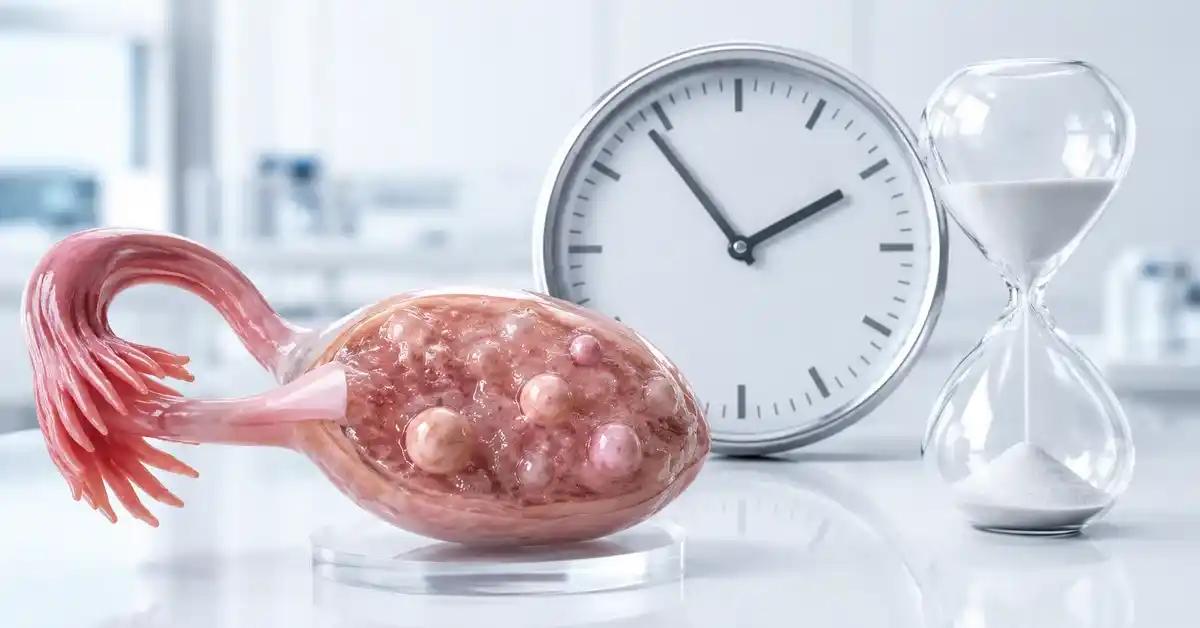
Delayed Pregnancy After 35: Medical Facts, Risks, And Tips To Improve Pregnancy Chances

Manar Hegazy

Majd Eddin Khaled
Delayed pregnancy after 35 is becoming more common as many women choose to build their lives, careers, education, relationships, and emotional readiness before pregnancy. This is a normal and understandable life path. However, from a medical perspective, fertility does change with age, and after 35, timing becomes more important.
Pregnancy after 35 is absolutely possible for many women, naturally or with fertility support. The key is not fear, but early evaluation. At Fertiliv, fertility after 35 is approached through a complete assessment of both partners, including ovarian reserve, ovulation, uterus, tubes, semen analysis, health history, and previous pregnancy attempts. This helps choose the right path instead of losing valuable time.
Why Does Fertility Decline After 35?
Female fertility declines mainly because both egg number and average egg quality decrease with age. A woman is born with a limited number of eggs, and this number decreases naturally over time. Egg quality also changes, which can affect fertilization, embryo development, implantation, and miscarriage risk.
The decline does not happen suddenly on a woman’s 35th birthday. It is gradual. However, after 35, the change becomes more clinically important, and after 40, it becomes more significant for both natural conception and fertility treatment outcomes.
Egg Quality Matters
Many patients focus only on AMH or egg count, but egg quality is just as important. A woman may have a reasonable ovarian reserve but still face embryo quality challenges. Another woman may have low reserve but still produce a good egg in some cycles.
This is why one test alone should not define a woman’s chances. Fertiliv reviews age, AMH, antral follicle count, cycle pattern, previous attempts, miscarriage history, and semen analysis together. The full picture is more useful than a single number.
Is 35 The End Of Fertility?
No, 35 is not the end of fertility. Many women conceive after 35 and have healthy pregnancies. However, it is an age when waiting too long without evaluation may reduce options. The question is not “Can pregnancy still happen?” but “What is the smartest path now?”
Some women need only guided natural trying. Others may need ovulation support, tubal testing, male factor evaluation, or IVF/ICSI. The right decision depends on the couple’s medical situation, not age alone.
Read about: Unexplained Infertility: A Hopeful Journey Through Diagnosis and Modern Treatment
When Should Fertility Evaluation Start After 35?
For women under 35, fertility evaluation is often recommended after 12 months of trying without pregnancy if there are no known concerns. After 35, evaluation is usually recommended after 6 months of regular trying. If a woman is close to 40 or older, or has irregular cycles, known endometriosis, previous pelvic surgery, or recurrent pregnancy loss, evaluation may be needed sooner.
Early evaluation does not mean immediate IVF. It simply helps identify whether the couple should continue trying naturally, correct a specific issue, or move to treatment sooner. Time is an important fertility factor after 35.
Which Tests May Be Needed?
Evaluation may include AMH, day 2 or day 3 hormones, ultrasound for antral follicle count, ovulation assessment, uterine and tubal evaluation when needed, and semen analysis. Male evaluation should not be delayed because male factors may also contribute to infertility.
At Fertiliv IVF Center, testing is selected according to the patient’s history. A woman with regular cycles and no risk factors may need a different approach from someone with low reserve, fibroids, endometriosis, or previous surgery.
Why Waiting Too Long Can Be A Problem
Waiting too long after 35 may reduce available options, especially if ovarian reserve is declining or an unrecognized male or tubal factor exists. Months can pass quickly, and treatment may become more urgent later.
Evaluation provides a map. It does not force a treatment decision. It helps the couple understand whether timed intercourse, simpler treatment, intrauterine insemination, or IVF/ICSI is the most suitable path.
Read about: Navigating a First Pregnancy Delay: Your Complete Guide to Fertility Testing and Diagnosis
Medical Risks Of Pregnancy After 35
Many pregnancies after 35 are healthy, especially with good care. However, some risks become more common with age. These may include miscarriage, gestational diabetes, high blood pressure, preeclampsia, placental issues, preterm birth, and the need for closer fetal monitoring.
This does not mean that pregnancy after 35 should be feared. It means that preconception care and prenatal follow-up are important. The healthier the woman is before pregnancy, the clearer the path may be during pregnancy.
Miscarriage And Embryo Quality
Miscarriage risk increases with age, largely because chromosomal errors in eggs and embryos become more common. This does not mean every embryo will be abnormal, but it explains why age affects both natural pregnancy and IVF outcomes.
If miscarriages repeat after 35, the couple should not assume it is only bad luck. Evaluation may include the uterus, thyroid function, hormones, embryo factors, and other tests depending on medical history. Fertiliv helps choose testing carefully rather than randomly.
Gestational Diabetes And Blood Pressure
Gestational diabetes and high blood pressure are more common with age, especially when weight, family history, insulin resistance, or chronic disease are present. Preparing before pregnancy can reduce avoidable risk.
Women with diabetes, thyroid disease, hypertension, or autoimmune conditions should review their health and medications before trying to conceive. Fertility planning and general health are connected.
Read about: Recurrent Miscarriage And Delayed Pregnancy
How To Improve Pregnancy Chances After 35
Improving pregnancy chances after 35 starts with timely action. If pregnancy has not occurred after 6 months of regular trying, or if cycles are irregular, evaluation should not be delayed. Timed intercourse, lifestyle improvement, health optimization, and medical treatment may all play a role.
However, general advice is not enough. A 36-year-old woman with good ovarian reserve and open tubes needs a different plan from a 39-year-old woman with low AMH or male factor infertility. Personalization is essential.
Understand The Fertile Window
Knowing the fertile window can improve natural conception chances. Ovulation usually occurs about 14 days before the next period, not always on day 14 of the cycle. Cycle tracking, ovulation predictor kits, or ultrasound monitoring may help when needed.
If cycles are short, long, or irregular, ovulation may need evaluation. After 35, random trying for a long time without knowing ovulation status may waste important time.
Improve Lifestyle Without Delaying Care
Healthy sleep, balanced nutrition, moderate exercise, weight management, smoking cessation, and stress reduction can support fertility and pregnancy health. These steps do not reverse age, but they help prepare the body for conception and treatment.
The male partner’s health also matters. Smoking, obesity, heat exposure, poor sleep, and some medical conditions may affect sperm quality. Fertility should be approached as a couple’s journey.

Is IVF Or ICSI Necessary After 35?
IVF or ICSI is not necessary for every woman after 35. It may be recommended when there is low ovarian reserve, blocked tubes, significant male factor infertility, endometriosis, repeated miscarriage, long infertility duration, or time-sensitive concerns.
IVF/ICSI can shorten certain steps by retrieving eggs, fertilizing them in the laboratory with the husband’s sperm, and transferring embryos into the uterus. However, it does not remove the effect of age on egg quality. This is why earlier evaluation often helps.
When Treatment Should Start Faster
A doctor may recommend moving faster if the woman is 38 or older, AMH is low, follicle count is limited, tubes are blocked, semen analysis is abnormal, or infertility has lasted a long time. In these cases, extended natural trying may not be the best use of time.
At Fertiliv in Istanbul, the reason for recommending IVF/ICSI is explained clearly. The goal is not to rush patients, but to protect time when the medical indicators suggest waiting may reduce chances.
Does IVF Success Decline After 35?
Yes, IVF success can decline with age because egg quality and embryo availability decline. Still, IVF/ICSI can be helpful because it provides important information: egg number, fertilization, embryo development, and transfer potential.
Each patient’s outcome is different. Age matters, but so do ovarian reserve, sperm quality, uterine health, laboratory quality, and medical history. Fertiliv evaluates these factors together.
Read about: ICSI Success Rates After 40: Everything You Should Know
Tips Before Trying To Conceive After 35
Before trying to conceive after 35, a preconception check can be very useful. This may include reviewing menstrual cycles, ovulation, ovarian reserve, chronic diseases, medications, weight, previous surgery, and family history. Semen analysis should also be part of the plan.
The doctor may recommend folic acid, thyroid optimization, blood sugar and blood pressure control, infection treatment if needed, or tubal evaluation. These steps are not meant to complicate pregnancy planning; they are meant to make it safer and clearer.
Do Not Avoid Testing Because Of Fear
Some women delay fertility testing because they fear bad news. But delaying testing does not protect fertility. Early information gives more options and more control.
In many cases, results are reassuring or reveal a treatable issue. Fertility evaluation is not a sign of failure. It is a smart way to protect time.
Choose A Plan Based On Facts
After 35, decisions should be based on medical facts, not fear. If test results are reassuring, a defined period of natural trying may be reasonable. If indicators are sensitive, earlier treatment may be better.
Fertiliv helps couples understand their options without pressure. The goal is a plan that respects age, health, emotional readiness, and available time.
Read about: ICSI Success Rates by Woman's Age: A Comprehensive Guide to Achieving Motherhood
Fertiliv’s Role In Fertility After 35
Fertiliv approaches delayed pregnancy after 35 with individualized care. Not every patient needs IVF, and not every patient should be told to simply wait. The evaluation includes ovarian reserve, ultrasound, hormones, uterus, tubes, semen analysis, and previous pregnancy history.
The plan may involve guided natural trying, ovulation induction, intrauterine insemination in selected cases, or IVF/ICSI. If previous attempts failed, reports are reviewed to identify what can be improved.
Realistic Chance Evaluation
Realistic counseling does not reduce hope. It makes hope useful. After 35, time matters, but many women still have meaningful chances. Some have good ovarian reserve and no major factors, while others need quicker treatment.
Fertiliv focuses on clear discussion: What is the natural chance? When should treatment begin? Is IVF/ICSI suitable? Are additional tests needed? Clear answers reduce confusion.
Medical And Emotional Support
Delayed pregnancy after 35 can create emotional pressure. A woman may feel that every month matters, and social expectations can add stress. Supportive care should explain the medical reality without creating fear.
At Fertiliv, the emotional side of fertility treatment is respected. Patients need more than tests and medications; they need a plan they can understand and trust.
Read about: ICSI Success Symptoms: When Can a Pregnancy Test Be Done?
Conclusion
Delayed pregnancy after 35 is not the end of motherhood. It is a stage that requires awareness and timely evaluation. Fertility declines with age because egg number and quality decrease, and some pregnancy risks increase. Still, many women after 35 can conceive and have healthy pregnancies with the right planning.
The most important step is not to wait too long. If pregnancy has not happened after 6 months of regular trying after age 35, a complete couple evaluation is recommended. The plan may be simple, or it may involve assisted treatment or IVF/ICSI depending on results. Fertiliv helps couples understand their real chances and choose the right path with clarity.
Frequently Asked Questions: Delayed Pregnancy After 35: Medical Facts, Risks, And Tips To Improve Pregnancy Chances
Is Pregnancy After 35 Always Difficult?
No. Many women conceive after 35, but fertility may decline and evaluation should happen sooner.
When Should I See A Fertility Doctor After 35?
After 6 months of regular trying without pregnancy, or earlier if cycles are irregular or risk factors exist.
Is IVF Necessary After 35?
Not always. The decision depends on ovarian reserve, tubes, semen analysis, infertility duration, and medical history.
What Tests Are Important After 35?
AMH, ultrasound, hormones, ovulation assessment, tubal evaluation when needed, and semen analysis are commonly reviewed.
Can I Improve Pregnancy Chances After 35?
Yes, through early evaluation, ovulation timing, lifestyle improvement, chronic disease control, and timely treatment.