
Functional Ovarian Cysts: When Are They Concerning for Fertility?

Manar Hegazy

Majd Eddin Khaled
Functional ovarian cysts are among the most common ultrasound findings in women of reproductive age. Hearing the word “cyst” can be frightening, especially when pregnancy is being planned. However, most functional cysts are not tumors and do not automatically mean infertility. They are often related to normal ovarian activity during the menstrual cycle.
At Fertiliv in Istanbul, functional ovarian cysts are evaluated according to their type, size, appearance, symptoms, hormone activity, and timing in the cycle. A simple cyst that appears after ovulation is very different from an endometrioma, a persistent complex cyst, or a cyst linked to chronic ovulation problems. The goal is to understand whether the cyst is temporary or whether it may affect ovulation, fertility treatment timing, or pregnancy planning.
What Are Functional Ovarian Cysts?
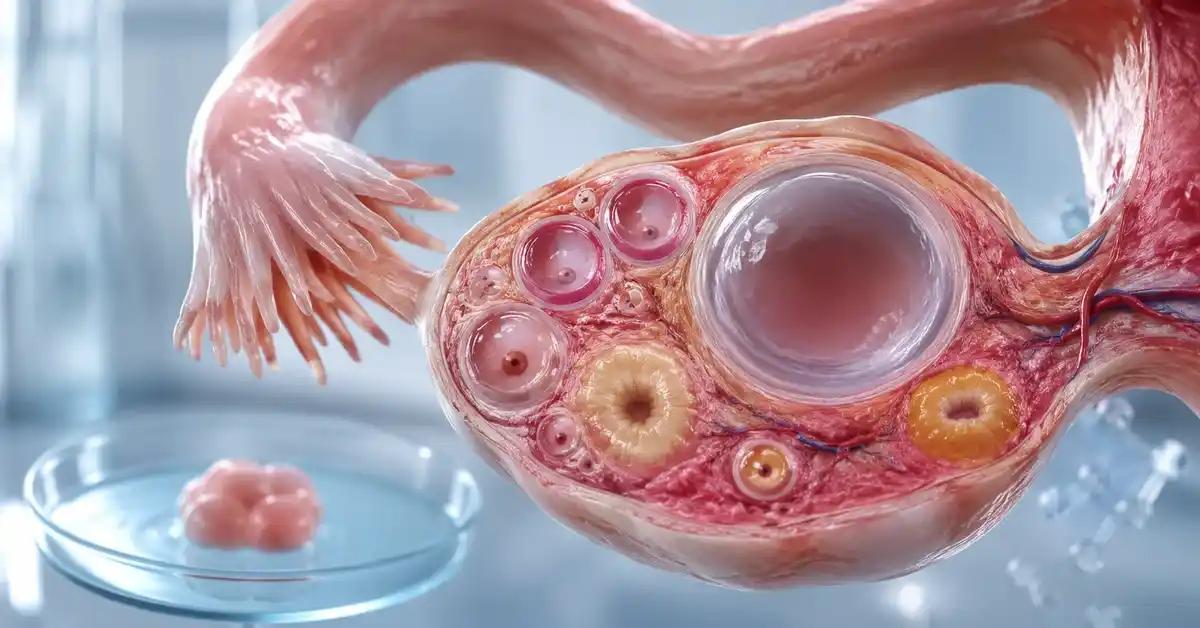
Functional ovarian cysts form as part of the ovary’s normal monthly activity. During each cycle, follicles grow in the ovary, and one follicle usually releases an egg during ovulation. Sometimes the follicle does not release the egg or does not disappear as expected. In other cases, the corpus luteum after ovulation fills with fluid or a small amount of blood.
These cysts are usually temporary and may disappear on their own within one or two menstrual cycles. Their presence alone is not usually a reason for alarm, especially when the cyst is simple, fluid-filled, and not associated with concerning symptoms.
Follicular cyst
A follicular cyst develops when a follicle continues to grow or does not rupture to release an egg. On ultrasound, it often appears as a simple fluid-filled cyst.
A follicular cyst may delay ovulation or the menstrual period in that cycle, but it does not usually indicate a permanent fertility problem. Follow-up helps confirm whether it disappears naturally.
Corpus luteum cyst
After ovulation, the follicle becomes the corpus luteum, which produces hormones that support the second half of the cycle. Sometimes it becomes cystic and appears on ultrasound.
A corpus luteum cyst can be a normal finding after ovulation and may also appear in early pregnancy. Its meaning depends on cycle timing, pregnancy status, symptoms, and ultrasound appearance.
Functional cyst versus other cyst types
Functional cysts are different from endometriomas, dermoid cysts, complex cysts, and cysts associated with polycystic ovary syndrome. These conditions may require different evaluation and may have a stronger connection with pain, ovulation problems, adhesions, or fertility concerns.
This is why the word “cyst” is not enough. The ultrasound description matters: simple or complex, clear fluid or solid components, one-time finding or recurrent, painful or silent.
Read about: Weak Ovulation: A Clear Guide to Diagnosis and Treatment Options
Do Functional Ovarian Cysts Affect Fertility?
In most cases, simple functional cysts do not affect fertility permanently. They may delay ovulation in one cycle or postpone fertility treatment if they are hormonally active, but they usually do not damage long-term pregnancy chances.
The concern increases when a cyst is persistent, large, painful, recurrent, or not clearly functional on ultrasound. It is also important to distinguish functional cysts from endometriomas or chronic ovulation disorders.
Effect on ovulation
If a follicular cyst forms because ovulation did not happen, the period may be delayed and ovulation may be irregular for that cycle. Once the cyst resolves, cycles often return to their usual pattern.
If ovulation problems keep repeating, the doctor may investigate hormones, ovarian reserve, thyroid function, prolactin, or PCOS-related factors rather than focusing only on the cyst.
Effect on fertility treatment
Before ovarian stimulation for IUI or IVF, doctors usually check the ovaries with ultrasound. If a cyst is present, hormone testing may be used to determine whether it is active.
A hormonally active cyst may lead the doctor to delay stimulation. This delay does not mean the treatment failed; it may simply help the cycle start under better conditions.
Effect on ovarian reserve
A simple functional cyst usually does not reduce ovarian reserve. The greater concern is unnecessary surgery or mistaking another cyst type for a functional cyst.
For women planning pregnancy, preserving healthy ovarian tissue is very important. This is why simple cysts should not be removed surgically without a clear reason.
Read about: PCOS Treatment to Improve Fertility and Support Pregnancy Chances
When Functional Cysts Are Usually Not Concerning
Functional ovarian cysts are usually less concerning when they are simple, small to moderate in size, painless or mildly symptomatic, and appear at a cycle timing that fits a functional cyst. In these cases, observation and repeat ultrasound are often enough.
The doctor may recommend another scan after several weeks or after the next period. This allows the cyst time to disappear naturally and avoids unnecessary treatment.
Simple ultrasound appearance
A simple cyst is usually fluid-filled, with a thin wall and no solid areas or complex internal structures. This appearance is generally more reassuring in reproductive-age women.
Still, the doctor must interpret the cyst in context. Age, symptoms, size, cycle timing, and fertility plans all matter.
Disappearing on follow-up
If the cyst disappears on the next scan, this strongly suggests that it was functional and temporary. In that case, it usually has no long-term impact on fertility.
Pregnancy attempts or fertility treatment may often continue once the cyst has resolved and hormone levels are appropriate.
No significant symptoms
Many functional cysts are found incidentally and cause no symptoms. If there is no severe pain, abnormal bleeding, or concerning ultrasound feature, calm monitoring is often appropriate.
However, follow-up should still be done when the doctor recommends it, especially if the cyst is large enough to require observation.
Read about: Endometriosis And Pregnancy: Is Natural Conception Possible Or Is IVF Necessary?
When Cysts Become Concerning for Fertility
Functional ovarian cysts become more important when they are large, painful, persistent, complex in appearance, or associated with repeated cycle disruption. They also deserve closer attention in women with low ovarian reserve, previous ovarian surgery, or upcoming IVF treatment.
Concern does not always mean danger. It means the situation needs a clearer plan: observation, hormone testing, delayed stimulation, additional imaging, or sometimes fertility-preserving surgery.
Large or painful cysts
Large cysts may cause pressure, pelvic pain, or sometimes increase the risk of ovarian torsion. Sudden severe pain, especially with nausea, vomiting, dizziness, or weakness, should be assessed quickly.
In fertility treatment, a large cyst may also complicate ovarian monitoring or egg retrieval. The doctor may need to adapt the plan based on size and location.
Cysts that persist
Functional cysts usually resolve with time. If a cyst persists over several cycles, remains unchanged, or grows, further evaluation may be needed to confirm that it is not another cyst type.
Persistence does not automatically mean something serious, but it makes a simple functional cyst less likely.
Complex ultrasound features
A cyst with thick septations, solid components, unclear fluid, or unusual features needs more careful evaluation. These findings do not always mean malignancy, but they should not be treated like a simple functional cyst.
The doctor may request additional imaging, blood tests, or specialist review depending on age, symptoms, and ultrasound findings.
Read about: Uterine Fibroids And Fertility: When Do They Affect Pregnancy And How Are They Treated?
Functional Cysts and IVF
In IVF, a functional cyst at the beginning of the cycle may affect timing. Some cysts are inactive and may not matter much, while others produce hormones that make stimulation less ideal. This is why baseline ultrasound and hormone testing are often done before starting medication.
Postponing stimulation because of a cyst should not be viewed as failure. It may be the safer and more organized choice.
Before stimulation
Before stimulation, the ovaries are checked to make sure they are ready. If a cyst is seen, the doctor may check estradiol or progesterone levels to determine whether it is active.
If the cyst is small and inactive, treatment may continue in some cases. If it is large or hormonally active, the cycle may be postponed or adjusted.
During stimulation
During stimulation, the doctor must distinguish between growing follicles and cystic structures. Ultrasound and hormone levels help show whether the ovary is responding properly.
Accurate interpretation is important. The goal is to avoid unnecessary cancellation while also avoiding a poorly timed cycle.
Before egg retrieval
If a cyst is large or located in a way that affects access to follicles, the doctor may plan egg retrieval more carefully. Size, position, number of follicles, and patient safety are all considered.
The priority is to protect the ovary and avoid unnecessary procedures that could harm ovarian tissue.

Do Functional Cysts Need Treatment?
Most functional ovarian cysts do not need surgery. Treatment depends on symptoms, cyst size, ultrasound appearance, age, and fertility goals. Observation is often the first step.
In women trying to conceive, surgery is not usually the first choice for a simple functional cyst. Any ovarian surgery should be carefully justified because preserving ovarian tissue matters.
Ultrasound follow-up
Repeat ultrasound is commonly used for simple cysts. It helps confirm whether the cyst disappears, changes, or needs further evaluation.
If it resolves, the patient can often continue pregnancy planning or fertility treatment.
Medication
Sometimes medication may be used to regulate the cycle or reduce the chance of new cyst formation, but some medications prevent pregnancy while being used. They are not always suitable for women who want to conceive immediately.
In fertility care, medication may be used for timing and cycle control rather than as a permanent cyst treatment.
Surgery when needed
Surgery may be discussed if the cyst is persistent, large, painful, complex, or unlikely to be functional. When fertility is desired, surgery should be as ovarian-sparing as possible.
The decision should not be rushed. In many cases, follow-up is safer than unnecessary surgery, but some cases do require intervention.
Read about: Chronic Diseases And Fertility: How Can You Achieve Parenthood Despite Health Challenges?
Symptoms That Need Fast Medical Contact
Most functional cysts are mild, but some symptoms need urgent attention. Sudden severe pelvic pain, nausea and vomiting with pain, dizziness, fainting, heavy bleeding, or fever may suggest rupture, torsion, or another condition.
Women undergoing fertility treatment should contact their clinic quickly if severe pain or unusual swelling occurs after stimulation.
Sudden severe pain
Sudden severe one-sided pelvic pain may suggest torsion or cyst rupture. This should not be managed at home, especially if nausea or dizziness is present.
Fast evaluation helps protect ovarian function and reduce complications.
Abnormal bleeding
Heavy or unusual bleeding with pain should be reviewed. It may be related to cyst rupture, hormonal disturbance, early pregnancy, ectopic pregnancy, or another condition.
Symptoms alone cannot confirm the cause, so medical evaluation is important.
Persistent or recurrent symptoms
Chronic pelvic pain, ongoing bloating, repeated cycle disturbance, or recurrent cysts need broader evaluation. The issue may not be a simple temporary cyst.
The doctor may investigate ovulation disorders, PCOS, endometriosis, inflammation, or hormonal causes.
Read about: Blocked Fallopian Tubes: Is It The End Of The Motherhood Dream?
How to Protect Fertility When a Functional Cyst Is Found
Protecting fertility starts with understanding the cyst type and avoiding rushed decisions. If the cyst is simple and functional, observation may be enough. If it affects ovulation or treatment timing, the doctor should create a clear plan.
Other fertility factors should not be ignored. Ovulation, ovarian reserve, tubes, uterus, and semen analysis may all need assessment if pregnancy is delayed.
Avoid unnecessary surgery
Surgery can be necessary in some cases, but not for every cyst. In women who want pregnancy, unnecessary ovarian surgery may remove or damage healthy ovarian tissue.
If the cyst is simple, follow-up is often safer. If it is complex or persistent, intervention should be planned carefully.
Track ovulation and cycles
If the cyst delays the period or ovulation, cycle tracking and ultrasound can help confirm when the ovary returns to its baseline state. This is especially important before IUI or IVF.
Repeated ovulation disruption may require hormonal evaluation.
Evaluate fertility as a couple
If pregnancy is delayed, the cyst should not be the only focus. Both partners should be evaluated because the cause may involve ovulation, tubes, uterus, sperm, or combined factors.
A complete evaluation helps decide whether to wait, treat, postpone stimulation, or move toward IVF.
Read about: Premature Ovarian Insufficiency (POF): Causes, Symptoms, And Medically Available Fertility Options
Conclusion
Functional ovarian cysts are usually benign, temporary, and unlikely to affect fertility permanently. They become more concerning when they are large, painful, persistent, complex on ultrasound, or when they interfere with ovulation or fertility treatment timing. The right decision depends on cyst type, size, appearance, symptoms, hormone activity, and the patient’s pregnancy plan.
Frequently Asked Questions: Functional Ovarian Cysts and Fertility
Do functional ovarian cysts prevent pregnancy?
Usually, no. They may delay ovulation in one cycle or postpone fertility treatment timing, but simple functional cysts usually do not cause permanent infertility.
When is an ovarian cyst concerning?
It is more concerning if it is large, painful, persistent, complex on ultrasound, or associated with sudden severe pain, heavy bleeding, or repeated cycle disruption.
Does a functional cyst need surgery?
Most functional cysts do not need surgery. Observation is often enough. Surgery is considered when the cyst is persistent, large, painful, complex, or not likely to be functional.
Can IVF start if a functional cyst is present?
It depends on size and hormone activity. The doctor may check hormone levels and decide whether to start, adjust, or delay stimulation.
Does a functional cyst reduce ovarian reserve?
A simple functional cyst usually does not reduce ovarian reserve. Unnecessary ovarian surgery is a greater concern for ovarian tissue preservation.