
Does ICSI Increase Pregnancy Chances in Every Case?

Manar Hegazy

Majd Eddin Khaled
No. ICSI does not automatically increase pregnancy chances for every fertility patient. Its greatest value is seen when there is a specific fertilization problem to overcome, such as severe male-factor infertility, very limited usable sperm or previous unexpected fertilization failure. When sperm parameters are suitable and there is no clear fertilization problem, routinely using ICSI instead of conventional IVF has not consistently been shown to improve live-birth outcomes.
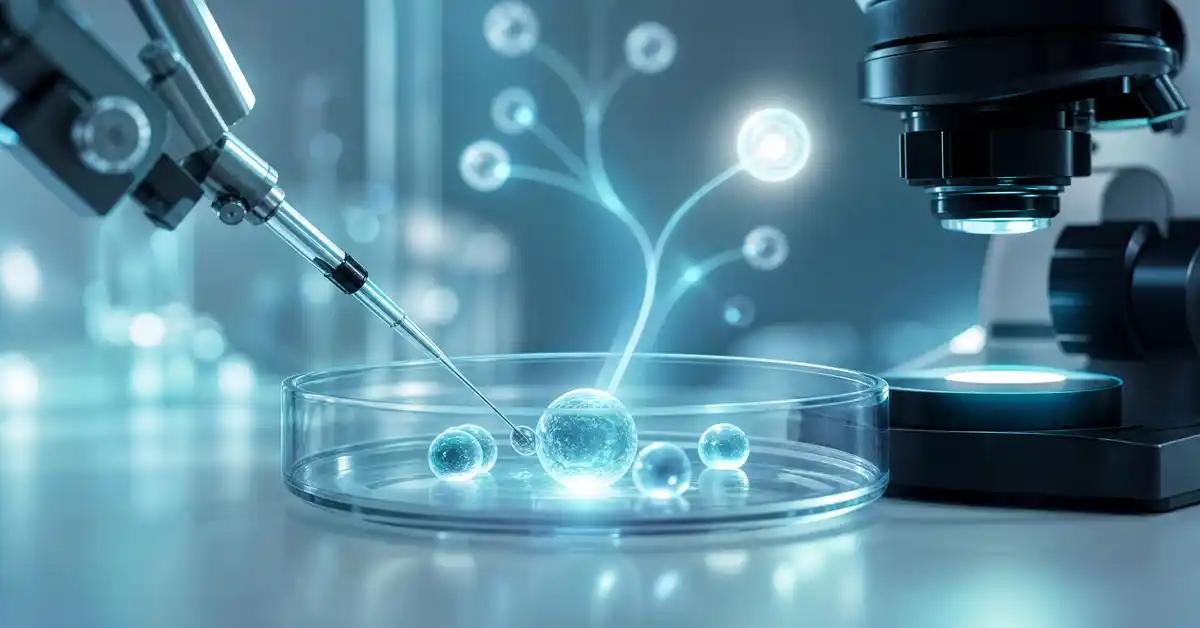
At Fertiliv Clinic, the fertilization method is selected according to the couple's complete fertility profile. ICSI stands for Intracytoplasmic Sperm Injection. During the procedure, one sperm is injected directly into a mature egg. This can solve a fertilization barrier, but pregnancy still depends on egg quality, embryo development, female age and the uterine environment.
Does ICSI Improve Fertilization or Pregnancy?
ICSI primarily changes the way fertilization is attempted in the laboratory.
What Does ICSI Actually Do?
During conventional IVF, eggs are exposed to sperm and fertilization depends on sperm reaching and penetrating the egg.
With ICSI, an embryologist injects one selected sperm directly into a mature egg.
Read more: ICSI Treatment: What It Is and How It Helps Fertilization.
Why Does Better Fertilization Not Always Mean More Pregnancies?
After fertilization, an embryo still needs to divide normally, continue developing, reach a transferable stage and implant in the uterus.
Research in couples without severe male-factor infertility has not shown a consistent live-birth advantage from routine ICSI, even though it may reduce total fertilization failure in some settings.
How Is Conventional IVF Different?
In conventional IVF, sperm fertilize eggs without direct injection.
ICSI bypasses this interaction by inserting sperm into the egg.
Neither approach is automatically superior for every patient.
When Can ICSI Provide a Meaningful Advantage?
The benefit is greatest when it solves a specific fertilization problem.
Severe Male-Factor Infertility
ICSI may be particularly useful with:
very low sperm numbers,
severely reduced motility,
combined semen abnormalities,
very few usable sperm,
or surgically retrieved sperm.
In these situations, only one suitable sperm is needed for each mature egg selected for injection.
Previous Fertilization Failure
If conventional IVF previously resulted in complete or unexpectedly poor fertilization, ICSI may be considered during a later cycle.
The previous cycle should still be reviewed carefully because egg maturity can also influence fertilization.
Read more: ICSI After Failed IVF: Does It Give You Better Chances of Success?
Very Few Eggs
Having only a few eggs does not automatically mean ICSI produces better outcomes.
Evidence in patients without severe male-factor infertility has not demonstrated a clear pregnancy or live-birth advantage simply because the egg number is low.
Read more: Can ICSI Be Done With Only One Egg?
When Does ICSI Not Clearly Improve Pregnancy Chances?
More intervention does not automatically mean a better fertility outcome.
When Semen Parameters Are Suitable
If sperm count and motility are appropriate and there is no previous fertilization failure, conventional IVF may be sufficient.
Recent randomized evidence and pooled analyses have not demonstrated a clear live-birth advantage from routine ICSI when severe male-factor infertility is absent.
When Egg Quality Is the Main Limitation
ICSI cannot reverse age-related changes in eggs.
It cannot make an older egg biologically younger or guarantee that an embryo will have the correct chromosome number.
When the Problem Occurs After Fertilization
Good fertilization can still be followed by:
poor embryo development,
failed implantation,
biochemical pregnancy,
or miscarriage.
ICSI cannot automatically overcome these later stages.
What Determines Pregnancy Success After ICSI?
Pregnancy depends on the complete reproductive process rather than fertilization alone.
Female Age and Egg Quality
Female age strongly influences egg and embryo biology.
As reproductive age increases, the probability of embryos developing chromosome-number abnormalities also increases, affecting implantation and miscarriage risk.
Read more: ICSI Success Rates by Woman's Age: A Comprehensive Guide to Achieving Motherhood.
Ovarian Reserve and Mature Egg Number
Anti-Müllerian Hormone, usually abbreviated AMH, helps estimate expected ovarian response.
Antral Follicle Count, abbreviated AFC, is the number of small ovarian follicles seen by ultrasound near the beginning of a cycle.
These measurements help with treatment planning but cannot individually predict whether pregnancy will occur.
Embryo and Uterine Factors
Embryos must continue developing and ultimately implant within an appropriate uterine environment.
Endometrial development, uterine cavity abnormalities and embryo characteristics can all affect the final outcome independently of the fertilization method.

How Is the Decision Between ICSI and Conventional IVF Made?
The fertilization method should be selected before egg retrieval using information from both partners.
Semen Assessment
Semen analysis examines sperm concentration, total number, motility and morphology.
Abnormal results may sometimes need confirmation with another sample because semen parameters can vary.
Female Fertility Assessment
Evaluation can include ovarian reserve, ultrasound findings, age, previous pregnancies and previous fertility-treatment outcomes.
Read more: Essential Pre-ICSI Tests: Your First Step Toward Achieving Parenthood.
Is the More Complex Technique Always Better?
No.
The question is whether ICSI solves a meaningful problem in that specific cycle. Current comparative evidence does not support assuming that ICSI will increase live birth simply because it is more technically intensive.
Can Additional Technologies Make ICSI More Successful?
Additional sperm-selection and embryo technologies exist, but none should be assumed to improve every ICSI cycle.
Higher-Magnification Sperm Selection
IMSI stands for Intracytoplasmic Morphologically Selected Sperm Injection. It uses higher magnification to assess sperm morphology before injection.
It is not automatically necessary for every patient undergoing ICSI.
Read more: IMSI and Conventional ICSI: What Is the Real Difference?
Can Changing Fertilization Method Alone Solve a Failed Cycle?
Sometimes, particularly when fertilization itself was the problem.
However, if fertilization was normal and embryos stopped developing later, or implantation failed, changing only the fertilization technique may not address the true limitation.
How Do You Know Whether ICSI Is Appropriate?
ICSI may have a clear role with severe male-factor infertility, surgically retrieved sperm and selected previous fertilization failures.
Other situations—including unexplained infertility, mildly abnormal semen, low egg numbers or advanced female age without male-factor infertility—require individualized assessment rather than automatic ICSI.
Conclusion
ICSI does not increase pregnancy chances in every fertility case. Its strongest role is overcoming a fertilization barrier, particularly in significant male-factor infertility and selected cases of previous fertilization failure.
Pregnancy and live birth still depend on female age, ovarian reserve, egg quality, sperm quality, embryo development and the uterus. The best fertilization method is therefore the one that addresses the couple's actual reproductive problem.
Frequently Asked Questions
Is ICSI Better Than IVF for Everyone?
No. In patients without severe male-factor infertility, routine ICSI has not shown a clear live-birth advantage.
Does ICSI Guarantee Fertilization?
No. Not every injected egg fertilizes normally.
Is ICSI Automatically Better for Older Women?
No. ICSI does not reverse age-related changes in egg quality.
Can ICSI Be Used With Normal Semen?
It can be used for selected reasons, but normal semen alone does not mean ICSI will improve live-birth chances.
Does One Failed IVF Cycle Mean ICSI Should Be Used Next?
Not necessarily. The exact stage at which the previous cycle failed should first be identified.