
ICSI After Failed IVF: When Can It Be a Better Option?

Manar Hegazy

Majd Eddin Khaled
After an unsuccessful IVF cycle, couples often ask whether they should use ICSI next time.
Sometimes the answer is yes—particularly when the previous problem occurred during fertilization itself.
However, if fertilization occurred normally, embryos developed, and pregnancy did not occur after transfer, changing from conventional IVF to ICSI does not automatically address the reason for failure.
The first question should therefore be:
At which stage did the previous IVF cycle fail?
The pathway can be reviewed as:
stimulation → egg retrieval → oocyte maturity → fertilization → embryo development → transfer → implantation
Fertiliv helps patients organize previous cycle records and embryology information so the medical team can review where the problem occurred before planning another attempt.
What Does “Failed IVF” Actually Mean?
An unsuccessful IVF cycle can describe very different outcomes:
Poor ovarian response
Low oocyte yield
Low oocyte maturity
Total fertilization failure
Lower-than-expected fertilization
Embryo developmental arrest
No embryo suitable for transfer
Negative pregnancy test after embryo transfer
Biochemical pregnancy
Miscarriage
These situations do not have the same cause and do not require the same solution.
When Does Switching to ICSI Make the Most Sense?
One of the clearest situations is previous failed or unexpectedly poor fertilization with conventional insemination.
In conventional IVF, sperm and oocytes are placed together and sperm must penetrate the oocyte.
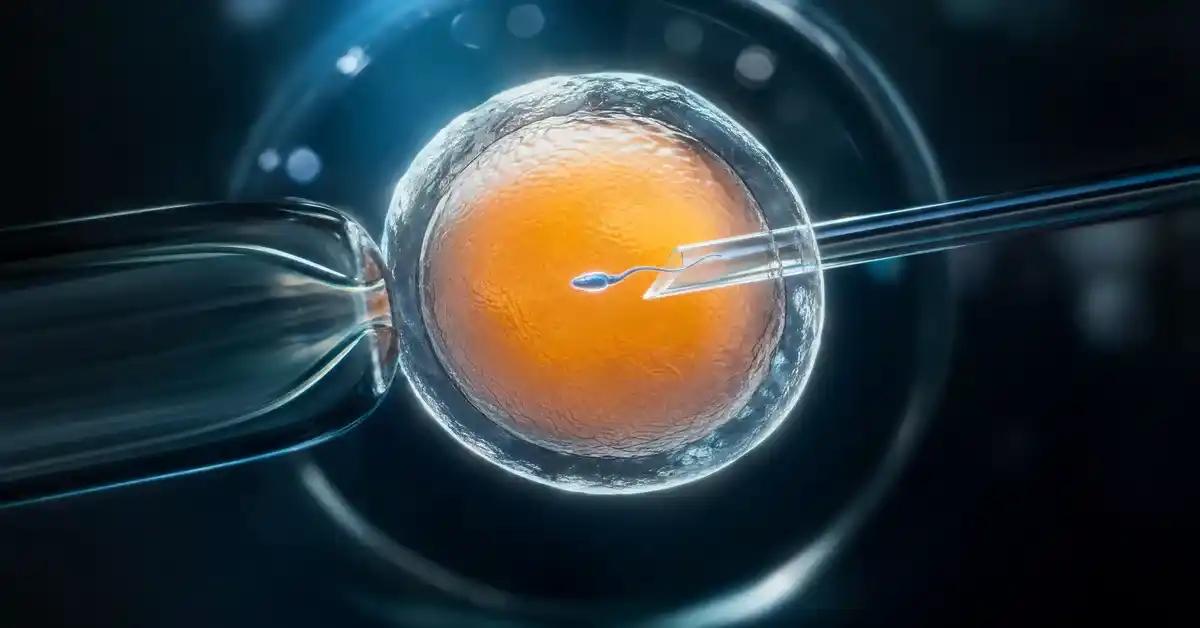
With ICSI, one selected sperm is injected directly into a mature oocyte.
ICSI therefore bypasses one biological step that may have contributed to fertilization failure.
The American Society for Reproductive Medicine's 2026 committee opinion concludes that ICSI can increase fertilization when previous conventional IVF resulted in unexpectedly low or failed fertilization.
Read also: IVF vs ICSI: What Is the Difference and When Is Each Treatment Used?
What Is Total Fertilization Failure?
After retrieval, mature oocytes undergo attempted fertilization.
In total fertilization failure, none of the appropriate oocytes fertilize normally.
This is very different from producing several embryos and later having an unsuccessful embryo transfer.
When a reasonable number of mature oocytes underwent conventional IVF and none fertilized, ICSI may be considered in a subsequent cycle to reduce the risk of another fertilization failure.
It still cannot guarantee fertilization.
What If Fertilization Was Low Rather Than Completely Absent?
Low fertilization and total fertilization failure are not the same.
If far fewer mature oocytes fertilized than expected, ICSI may be considered during the next attempt.
There is no single universally established fertilization-rate cutoff that automatically mandates ICSI.
The team should review:
Number of mature oocytes
Fertilization method
Number normally fertilized
Semen findings
Previous cycle conditions
Embryology findings
before changing strategy.
What If the Semen Analysis Was Normal?
Fertilization failure can occasionally occur despite apparently normal semen parameters.
A semen analysis provides important information about concentration, motility, morphology, and other features, but it does not measure every interaction between sperm and oocyte.
For this reason, previous failed fertilization itself becomes clinically relevant information even when there is no obvious male factor.
What If a Male Factor Is Identified?
If repeat assessment identifies significant male-factor infertility, ICSI may have a clearer indication.
Examples can include:
Severely reduced sperm concentration
Severely impaired motility
Selected severe morphology abnormalities
Surgically retrieved sperm
Azoospermia in which sperm can be retrieved
Read also: IVF and Micro-TESE in Istanbul for Azoospermia Treatment
What If Fertilization Was Good but Embryos Stopped Developing?
ICSI is not automatically the solution.
If an appropriate number of oocytes fertilized normally and embryos later stopped developing, sperm penetration of the oocyte was not necessarily the main problem.
Embryo development can be influenced by multiple factors, including:
Oocyte biology
Female age
Sperm-related factors
Chromosomal abnormalities
Embryonic development
Laboratory factors
ICSI changes the fertilization method. It cannot guarantee continued embryo development afterward.
What If No Transferable Embryo Was Produced?
The cycle should be reviewed stage by stage.
For example:
If 10 oocytes were retrieved, eight were mature, seven fertilized normally, but embryo development later stopped, fertilization itself was relatively successful.
By contrast, if eight mature oocytes underwent conventional IVF and none fertilized, the argument for discussing ICSI is much stronger.
This is why a complete embryology report is far more useful than simply saying that IVF “failed.”
What If an Embryo Was Transferred but Pregnancy Did Not Occur?
ICSI does not directly treat implantation.
If conventional IVF resulted in normal fertilization, embryo development, and embryo transfer, but the pregnancy test was negative, the team should evaluate the broader treatment picture.
Factors may include:
Female age
Embryo characteristics
Uterine cavity
Endometrial factors
Transfer details
Previous reproductive history
Chance biological variation
A failed transfer does not mean that sperm should necessarily have been injected differently.
What If Pregnancy Occurred and Then Miscarriage Happened?
Miscarriage after IVF also does not automatically indicate a need for ICSI.
Chromosomal abnormalities in embryos are an important cause of early pregnancy loss, particularly with increasing female age.
ICSI facilitates fertilization; it does not automatically produce chromosomally normal embryos.
Female Age Still Matters
After a failed cycle, it can be tempting to focus only on the fertilization technique.
Female age remains one of the strongest determinants of the likelihood of obtaining an embryo capable of producing a live birth.
ICSI does not reverse age-related changes in oocytes.
Read also: IVF After Age 40 in Istanbul
Is Diminished Ovarian Reserve a Reason to Switch to ICSI?
Not by itself.
Patients with only a few oocytes may understandably worry about losing them to fertilization failure.
However, the 2026 American Society for Reproductive Medicine opinion reports that routine ICSI solely for diminished ovarian reserve, low oocyte yield, or advanced maternal age has not been shown to improve fertilization or live-birth outcomes in the absence of another indication.
A history of actual failed conventional fertilization is a different situation.
Should Semen Testing Be Repeated?
Sometimes.
Repeat evaluation may be useful when:
The previous test is old
Results were abnormal
Health circumstances changed
Fertilization was unexpectedly poor
The previous cycle raised a male-factor concern
But an unsuccessful cycle does not mean every patient requires every advanced sperm test.

Is Sperm DNA Fragmentation Testing Always Needed?
No.
It may be discussed in selected situations, but it is not automatically required after every failed IVF cycle.
A useful question for any test is:
Would the result change treatment?
Testing should have a clear clinical purpose.
What About Oocyte Quality?
If the main limitation involves oocyte biology, ICSI cannot repair oocyte quality.
There is no single blood test that directly measures the quality of an individual egg.
The team instead reviews information such as:
Female age
Oocyte yield
Oocyte maturity
Fertilization
Embryo development
Should the Stimulation Protocol Also Be Changed?
Not necessarily.
If stimulation produced an appropriate number of mature oocytes and the major problem occurred during fertilization, the stimulation protocol may not be the part that requires major change.
If there was poor response, low maturity, or excessive response, the physician may consider a different stimulation strategy.
It is important to distinguish:
a problem obtaining mature oocytes
from
a problem fertilizing mature oocytes.
Read also: IVF Process Step by Step: From Ovarian Stimulation to Embryo Transfer
Does ICSI Prevent Fertilization Failure Completely?
No.
Even after ICSI:
Some oocytes may not tolerate manipulation
Some may not fertilize normally
Some embryos may stop developing
The purpose is to address a specific fertilization barrier when there is evidence that bypassing sperm penetration may help.
What Does the Evidence Say After Previous Fertilization Failure?
Evidence is strongest when the previous problem involved total or markedly reduced fertilization after conventional IVF.
Studies reviewed by the American Society for Reproductive Medicine found higher subsequent fertilization with ICSI in patients who previously experienced total or very low fertilization using conventional insemination.
This supports ICSI as a strategy for a specific prior fertilization problem—not as a universal response to every failed IVF cycle.
What If the Previous Cycle Already Used ICSI?
If ICSI was already used, “switching to ICSI” obviously cannot explain the next step.
The review should instead include:
Mature oocyte number
Fertilization after ICSI
Embryo development
Timing of developmental arrest
Male-factor findings
Female age
Uterine findings
Transfer details
The limiting factor may lie elsewhere in the cycle.
Should More Add-On Treatments Be Added?
After failed IVF, patients are often offered numerous additional tests and techniques.
More intervention does not automatically mean better outcomes.
For every proposed add-on, ask:
What problem is this intended to address?
Is there evidence it is relevant to my case?
Would the result or treatment change the plan?
Is PGT Required After Failed IVF?
No.
Preimplantation genetic testing may be appropriate in selected patients depending on age, embryo number, reproductive history, and specific inherited disease risk.
One failed IVF cycle alone does not mean every patient needs PGT.
PGT also does not correct fertilization failure itself.
Read also: IVF With PGT-A and PGT-M in Istanbul
How Should the Previous Cycle Be Reviewed?
Try to obtain information on:
| Stage | What Should Be Reviewed? |
|---|---|
| Stimulation | Medication, doses, ovarian response |
| Monitoring | Follicle number and sizes |
| Retrieval | Number of oocytes |
| Maturity | Number of mature oocytes |
| Fertilization | Method used and number normally fertilized |
| Embryology | Development on subsequent days |
| Freezing | Number of embryos frozen |
| Transfer | Embryo stage, number transferred, transfer details |
| Outcome | Pregnancy test and subsequent course |
Without this information, “failed IVF” is too broad to guide the next cycle accurately.
Two Examples
Example One
Nine oocytes were retrieved and seven were mature.
Conventional IVF was used, but none fertilized.
In this situation, discussing ICSI in the next cycle is reasonable because the previous failure occurred at fertilization.
Example Two
Nine oocytes were retrieved, seven were mature, six fertilized normally, two good embryos developed, and one was transferred—but the pregnancy test was negative.
Fertilization was not the obvious problem.
Changing only to ICSI would therefore not automatically address the failed transfer.
Can Conventional IVF and ICSI Be Used in the Same Cycle?
In selected cases with sufficient mature oocytes, the laboratory may consider splitting oocytes between conventional IVF and ICSI.
This can sometimes help answer a specific fertilization question.
It is not necessary for every patient.
Questions to Ask Before the Next Cycle
Ask:
How many oocytes were retrieved?
How many were mature?
Which fertilization method was used?
How many fertilized normally?
Was fertilization actually the main problem?
Is there now evidence of male-factor infertility?
How did embryos develop after fertilization?
At which stage did the previous cycle fail?
Do we need to change stimulation, fertilization, or both?
Which new tests would actually change management?
What benefit do you expect ICSI to provide in our case?
When Is ICSI More Reasonable After Failed IVF?
| Previous Result | Could ICSI Help? |
|---|---|
| Total failed conventional fertilization | Yes, it may be appropriate |
| Very low conventional fertilization | It may be appropriate |
| Newly identified severe male factor | Often |
| Surgically retrieved sperm | Commonly used |
| Good fertilization followed by embryo arrest | Not an automatic solution |
| Good embryos followed by failed transfer | Not a direct solution |
| Miscarriage after pregnancy | Not an automatic solution |
| Diminished ovarian reserve alone | Not sufficient by itself |
| Advanced maternal age alone | Not sufficient by itself |
Conclusion
ICSI after failed IVF can be valuable when it addresses the specific problem that occurred in the previous cycle.
When conventional IVF resulted in:
total fertilization failure or clearly lower-than-expected fertilization
ICSI may reduce the risk of repeating that fertilization problem.
But when fertilization was successful and the problem occurred later—during embryo development, implantation, or pregnancy—changing the fertilization method alone is unlikely to solve the issue automatically.
The correct sequence is:
identify where the cycle failed → review the embryology report → determine the likely limiting factor → change the part of treatment that actually needs changing
Fertiliv helps couples organize previous-cycle records and coordinate medical review before planning another IVF or ICSI attempt.
Frequently Asked Questions: ICSI After Failed IVF: When Can It Be a Better Option?
Should I Switch to ICSI After Any Failed IVF Cycle?
No. The decision depends on where the previous cycle failed, particularly whether there was a fertilization problem.
Can ICSI Help After Total Fertilization Failure?
Yes. It may reduce the risk of another failed fertilization cycle after previous conventional IVF.
If Good Embryos Were Produced but Pregnancy Did Not Occur, Will ICSI Help?
Not necessarily. Fertilization may not have been the limiting step.
Does ICSI Prevent Embryo Arrest?
No. ICSI facilitates fertilization but does not guarantee continued embryo development.
Is Diminished Ovarian Reserve Alone a Reason to Use ICSI?
No. Low reserve alone has not been shown to make routine ICSI improve live birth.
Should Semen Analysis Be Repeated?
It may be useful depending on previous results, timing, and what happened during the failed cycle.
Which Records Should I Obtain From the Previous Clinic?
Obtain stimulation, retrieval, oocyte maturity, fertilization, embryology, freezing, transfer, and pregnancy-result information whenever possible.
What If the Failed Cycle Already Used ICSI?
The rest of the cycle should be reviewed because simply repeating ICSI does not identify the cause of failure.