
Can ICSI Be Done With Only One Egg?

Manar Hegazy

Majd Eddin Khaled
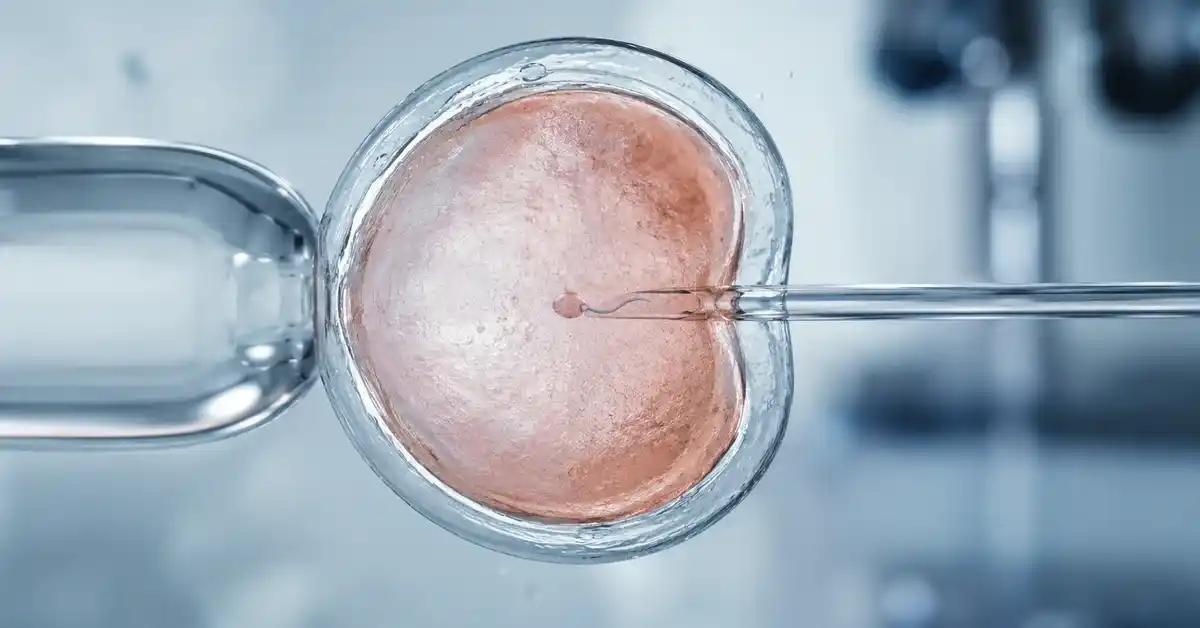
Yes, ICSI can be done with only one egg from a medical point of view, but the answer needs realistic explanation. One egg can be enough if it is mature, fertilizes successfully, develops into a good embryo, and the uterus is ready for transfer. However, because there is only one egg, there is no backup if fertilization or embryo development does not occur.
At Fertiliv, a cycle is not dismissed simply because the egg number is low. At the same time, patients are not given unrealistic promises. One mature egg may represent a real chance for some patients, especially in low ovarian reserve or poor response cases. Still, the expected chance is usually more limited than in cycles where several eggs are retrieved.
Why Might Only One Egg Be Retrieved?
Only one egg may be retrieved because of low ovarian reserve, age-related decline, poor response to stimulation, or a planned natural or mild stimulation cycle. Some ovaries simply do not produce many follicles even when medication doses are increased.
For some women, AMH is low, antral follicle count is limited, or previous cycles already showed poor response. In these cases, one egg may be the realistic result of the cycle. The important question is whether that egg is mature and whether the current plan gives the best possible chance.
Low Ovarian Reserve
Low ovarian reserve means the number of eggs available for response is lower than expected. It may appear in AMH testing, ultrasound follicle count, or previous stimulation cycles with very few eggs. In such cases, one egg may be the only available opportunity.
However, ovarian reserve should not be judged from one test alone. Age, ultrasound, previous response, embryo history, and semen analysis all matter. Fertiliv reviews the whole picture before deciding whether a one-egg cycle should continue.
Natural Or Mild Stimulation Cycles
Some patients do not use high-dose stimulation. Instead, the plan may be a natural cycle or mild stimulation. This can be reasonable in selected poor responders, especially when high doses are unlikely to produce many more eggs.
The goal is not to say that one egg is better than several eggs. The goal is to choose a plan that matches the patient’s ovarian response and avoids unnecessary burden when the expected egg number is very low.
Read about: Comprehensive Comparison of Modern Fertility Techniques: IVF and ICSI Explained
Can One Egg Lead To Pregnancy?
One egg can lead to pregnancy if it passes several steps successfully. It must be mature, survive handling, fertilize after ICSI, develop into an embryo, and be transferred into a receptive uterus. The difficulty is that the process can stop at any of these stages.
This is why ICSI with one egg is possible, but not guaranteed. More eggs increase the chance of having at least one suitable embryo. Still, one good egg can sometimes be enough to create one embryo and one chance.
Egg Maturity Matters More Than Number
Not every retrieved egg can be injected. The egg must be mature for ICSI. If the only egg is immature, the cycle may not proceed to injection. This makes monitoring, trigger timing, and retrieval timing very important.
When only one follicle is expected, precision matters. Losing the opportunity because of timing can mean losing the whole cycle. This is why close monitoring is essential in one-egg cases.
Sperm Quality Becomes Very Important
When there is only one egg, sperm selection becomes highly important. In ICSI, the embryologist selects a sperm cell and injects it into the egg. If semen parameters are very poor, the couple may need deeper male evaluation or advanced sperm selection strategies.
There is little room for trial and error with one egg. Semen count, motility, morphology, and previous fertilization history should be reviewed before making the plan.
Read about: ICSI After Failed IVF: Does It Give You Better Chances of Success?
When Is It Reasonable To Continue With One Egg?
Continuing may be reasonable when the egg is likely mature, the patient usually produces only one or two eggs, or time is sensitive because of age or very low reserve. In such cases, canceling the cycle may not lead to a better result next month.
Some women repeatedly respond with one egg despite different protocols. For them, the decision becomes practical: should every cycle be canceled, or should each mature egg be treated as a possible chance?
When Response Is Always Poor
If previous cycles consistently produced one or two eggs, expecting a large number may not be realistic. The strategy may shift toward using each available egg, adjusting the protocol, or considering embryo accumulation over several cycles if embryos form.
Fertiliv explains that the goal is not simply the egg count. The goal is to reach a transferable embryo. Sometimes one good egg is more meaningful than several poor-quality eggs, although higher numbers usually improve overall chances.
When Time Is Sensitive
When the woman’s age is advanced or ovarian reserve is very low, time may be critical. Canceling and waiting may not guarantee a better response later. If one mature egg is available, continuing may be reasonable.
The decision should still be clear. The patient should understand that fertilization may not occur, embryo growth may stop, or transfer may not happen. Realistic counseling protects the patient emotionally.
Read about: Essential Pre-ICSI Tests: Your First Step Toward Achieving Parenthood
When Might Canceling The Cycle Be Better?
Although ICSI with one egg is possible, canceling may be better in some cases. If the follicle looks unlikely to contain a mature egg, if timing is not optimal, if the endometrium is not suitable, or if a medical issue makes transfer inappropriate, the doctor may advise cancellation or freezing if an embryo forms.
Canceling may also be discussed when this is the first stimulation cycle and the doctor believes another protocol may produce a better response. Canceling does not always mean failure. Sometimes it is a strategic decision.
If The Endometrium Is Not Ready
Sometimes an egg is available, but the uterine lining is not ready for transfer. If an embryo forms, freezing and transferring later may be more suitable than transferring into a poor environment.
In one-egg cycles, every decision matters. Creating an embryo is important, but the transfer plan must also be appropriate.
If The Protocol Needs Adjustment
If the poor response was unexpected, the doctor may review the stimulation protocol. Medication dose, medication type, start timing, trigger plan, or natural-cycle strategy may need adjustment.
However, if low reserve is the main reason, changing protocols may not dramatically improve egg number. The discussion should be honest: is a better response expected, or is one egg the realistic pattern?

ICSI Or Conventional IVF With One Egg?
When there is only one egg, many doctors prefer ICSI because it reduces the risk of failed fertilization related to sperm entry. The decision should still depend on semen quality, previous history, and laboratory judgment. If semen is completely normal, conventional IVF may be discussed in selected cases.
ICSI does not guarantee fertilization, but it allows direct injection of sperm into the egg. With only one egg, reducing uncertainty at the fertilization step can be important.
Why ICSI May Be Preferred
ICSI may be preferred when egg number is very low, semen quality is abnormal, previous fertilization failure occurred, or the team wants to avoid risking the only egg in conventional insemination. The decision is linked to laboratory experience and the couple’s history.
However, ICSI is not a magic solution. If egg quality is poor or embryo development stops after fertilization, ICSI cannot fully correct that.
The Role Of The Embryology Lab
In a one-egg cycle, the embryology lab plays a very sensitive role. Egg handling, maturity assessment, sperm selection, injection timing, and embryo monitoring all matter. A careful laboratory process is especially important when there is no second egg.
Fertiliv IVF Center explains this clearly because success in a small cycle depends on details, not only on the number of eggs.
Read about: Key Steps for ICSI Success: Your Complete Guide from Fertility Experts
Is Embryo Accumulation A Good Idea?
In some low-reserve cases, embryo accumulation may be considered. This means doing more than one retrieval cycle, freezing embryos when they form, and later planning transfer when there are embryos available. This may help women who repeatedly produce only one or two eggs per cycle.
However, embryo accumulation is not suitable for everyone. It may be emotionally and financially demanding, and not every cycle creates an embryo. Age, embryo quality, and the couple’s preference all influence the decision.
When Accumulation May Help
Accumulation may help when the patient produces few eggs but sometimes forms embryos suitable for freezing. Building embryos gradually may give more flexibility for transfer planning.
A clear limit should be set. How many cycles will be attempted? What happens if no embryo forms? When will transfer be planned? A timeline prevents endless treatment without direction.
When Immediate Transfer May Be Better
Immediate transfer may be better if a good embryo forms, the endometrium is suitable, and freezing is not preferred or not ideal for the embryo. The decision depends on embryo stage, embryo quality, and uterine preparation.
There is no single rule. Some patients benefit from freezing and accumulation. Others may prefer transfer when a good embryo is available.
Read about: Modern ICSI Protocols: Advanced Techniques for Achieving Parenthood
How To Decide With Your Doctor
Before continuing ICSI with one egg, ask your doctor: Is the egg likely mature? Is semen quality suitable? Is the lining ready? Should we transfer or freeze? Do we expect another cycle to produce more eggs? These questions help the couple understand the decision.
It is also important to discuss emotional expectations. The cycle may stop after retrieval, fertilization may fail, or the embryo may not continue. Knowing these possibilities does not remove hope; it makes hope more realistic.
Questions Before Retrieval
Before retrieval, ask about follicle size, trigger timing, expected maturity, and the lab plan if one egg is retrieved. When only one egg is expected, every detail matters.
Also ask what the backup plan is if no egg is retrieved or fertilization does not occur. A backup plan helps reduce shock and stress.
Fertiliv’s Role In Low-Egg Cycles
Fertiliv approaches low-egg cycles with realistic care. Age, ovarian reserve, follicle count, previous attempts, stimulation protocols, and semen analysis are reviewed. Then the team explains whether continuing with one egg makes sense or whether the plan should change.
The goal is not to cancel hope because the number is low, and not to exaggerate the chance because one egg exists. The goal is a decision that respects time, cost, effort, and emotions.
Read about: Modern ICSI Steps to Improve Fertility Success: A Comprehensive Guide for Couples
Conclusion
ICSI can be performed with only one egg, and in some cases that egg can become an embryo and lead to pregnancy. However, the chance depends on several steps: egg maturity, fertilization, embryo growth, and uterine readiness. Because there is only one egg, the cycle is more fragile and requires careful planning.
If the egg is mature, sperm quality is suitable, and the uterus is prepared, the attempt may be worthwhile. If there is a realistic chance to improve response with a different protocol, changing the plan may be better. Fertiliv evaluates each case individually to help couples decide with clarity, not pressure.
Frequently Asked Questions: Can ICSI Be Done With Only One Egg?
Can One Egg Be Enough For ICSI?
Yes, if the egg is mature, it can be injected. However, fertilization and embryo development are not guaranteed.
Is Pregnancy Chance Low With One Egg?
It is usually lower than with several eggs, but not zero. Age, egg quality, sperm quality, and uterus matter.
What If The Egg Is Immature?
If the only egg is immature, ICSI may not be possible and the cycle may stop at that point.
Should A One-Egg Cycle Be Canceled?
Not always. If the same response is expected again, continuing may be reasonable after counseling.
How Can Fertiliv Help?
Fertiliv reviews reserve, protocol, semen quality, and endometrium to decide whether to continue or adjust the plan.