
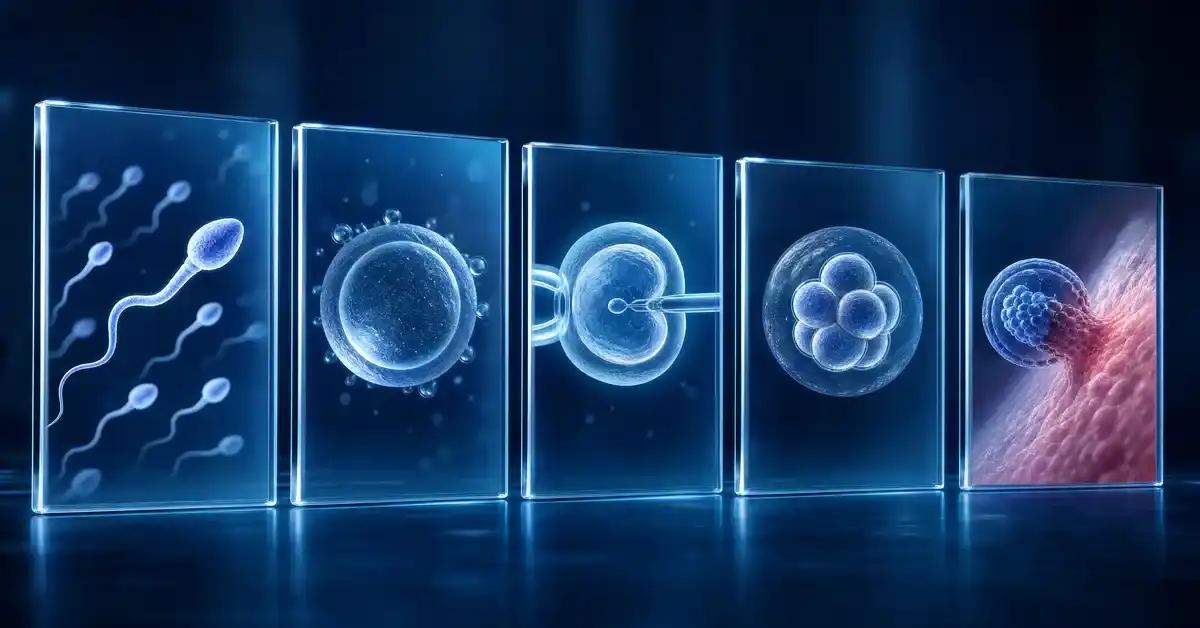
Key Steps for ICSI Success: Your Complete Guide from Fertility Experts

Manar Hegazy

Majd Eddin Khaled
Intracytoplasmic Sperm Injection (ICSI treatment) represents a beacon of hope for countless couples facing challenges with natural conception. This advanced reproductive technology has achieved remarkable success rates over the past decades and has become the first choice for many infertility cases, particularly those related to male factor infertility. But the question on every couple's mind as they embark on this journey is: how to improve ICSI success? What are the key steps for ICSI success in detail?
ICSI success doesn't rely solely on advanced medical procedures; it requires a comprehensive understanding of the process, thorough preparation from both partners, choosing a specialized center with high expertise, and adhering to expert fertility tips for ICSI before, during, and after the procedure. The ICSI success rate is influenced by multiple factors including female age, egg and sperm quality, uterine health, lifestyle, and psychological support.
At Fertiliv Fertility Clinic, we combine cutting-edge medical technologies with an experienced specialized team that provides you with a step-by-step guide for ICSI success. This comprehensive article will take you on a detailed journey through every stage of the process, offering ICSI tips before and important tips after ICSI treatment, conditions for ICSI success, and how to increase your chances of achieving your dream of parenthood.
Detailed Steps for ICSI Success Explained
Understanding the ICSI procedure steps precisely is the first step toward success. The process is not a single procedure but a series of sequential stages that require high medical precision and meticulous coordination.
What Are the Main ICSI Procedure Steps?
The ICSI procedure steps consist of the following stages:
- Initial Assessment and Testing: Includes hormone tests, semen analysis, ultrasound examination of ovaries, and uterine health evaluation
- Ovarian Stimulation: Using hormonal medications to stimulate the ovaries to produce multiple eggs instead of one
- Monitoring Egg Development: Precise monitoring of egg growth through ultrasound and blood tests
- Final Maturation Trigger: Trigger injection to complete egg maturation
- Egg Retrieval: Minor surgical procedure under anesthesia to collect mature eggs
- Sperm Collection and Preparation: Collecting semen sample and processing it in the lab to select the best sperm
- ICSI Procedure: Injecting a single sperm directly into each mature egg using a very fine needle
- Embryo Development: Monitoring embryos in the laboratory for 3-5 days
- Embryo Transfer: Transferring the best quality embryos to the mother's uterus
- Waiting Period: Approximately two weeks before pregnancy testing
Each of these stages is crucial for ICSI success and requires high medical expertise and precise monitoring.
Ovarian Stimulation and Egg Retrieval Process
The ovarian stimulation phase is one of the most important key steps for ICSI success. During this stage:
- Medication Protocol: The doctor prescribes a customized hormonal protocol suitable for your case, including FSH and LH hormone injections to stimulate the ovaries
- Stimulation Duration: Usually 8-14 days, varying based on ovarian response
- Close Monitoring: Regular visits every 2-3 days to monitor egg growth via ultrasound and hormone tests
- Dose Adjustments: The doctor may adjust medication doses based on ovarian response
- Preventing Premature Ovulation: Using medications to prevent egg release before the appropriate time
The goal is to obtain 8-15 mature eggs, which is the ideal number to increase the ICSI success rate. Good response to stimulation depends on female age, ovarian reserve, and adherence to the treatment protocol.
Preparing Sperm and Fertilization in ICSI
After egg maturation, comes a critical stage of the ICSI procedure steps:
Egg Retrieval:
- Performed under light sedation or general anesthesia depending on the case
- Takes 15-30 minutes
- Done using a fine needle guided by transvaginal ultrasound
- Follicular fluid containing eggs is aspirated
- Embryologist immediately examines the fluid to count and assess egg quality
- Most women return home the same day
Sperm Preparation:
- Semen sample is collected on the same day as egg retrieval
- In cases of azoospermia, sperm is surgically extracted from the testicle
- Sample undergoes washing and purification to separate the best sperm
- Best sperm are selected based on morphology and motility
- Sperm are preserved in optimal conditions until injection time
For the best medical care during every stage of the process, connect with the Fertiliv team via WhatsApp to book your consultation with fertility experts.
Read about: Comprehensive Comparison of Modern Fertility Techniques: IVF and ICSI Explained
Essential Expert Fertility Tips Before and After ICSI
ICSI tips before the procedure and important tips after ICSI treatment play a pivotal role in increasing success chances.
Essential ICSI Tips Before the Procedure
ICSI tips recommended by fertility experts:
For Women:
- Start Folic Acid: Take 400-800 mcg daily at least 3 months before
- Maintain Healthy Weight: Excess or severe underweight affects stimulation response
- Stop Smoking Completely: Smoking significantly reduces the ICSI success rate
- Reduce Caffeine: Don't exceed one cup of coffee daily
- Avoid Alcohol: Complete abstinence from alcohol is necessary
- Practice Moderate Exercise: Walking and yoga are beneficial, avoid vigorous workouts
- Eat Balanced Diet: Focus on proteins, vegetables, fruits, and whole grains
- Take Fertility Vitamins: Vitamin D, Omega-3, and Vitamin E
- Sleep Well: 7-9 hours of sleep daily
- Reduce Stress: Practice relaxation and meditation techniques
For Men:
- Take zinc, vitamin C, and folic acid supplements
- Avoid excessive heat (sauna, hot baths)
- Stop smoking and alcohol
- Avoid tight clothing
- Maintain healthy weight
- Reduce stress and fatigue
- Avoid exposure to harmful chemicals
What to Expect After an ICSI Procedure?
Understanding what happens after the ICSI procedure is very important:
After Egg Retrieval:
- You may feel mild bloating and cramping, this is normal
- Avoid strenuous physical activity for 24-48 hours
- Drink plenty of fluids
- Take prescribed pain relievers if needed
- Monitor any abnormal symptoms (severe bleeding, sharp pain, fever)
After Embryo Transfer:
- Rest for 15-30 minutes after transfer at the clinic
- You can return to light normal activities
- Avoid intercourse until pregnancy test
- Don't lift heavy objects
- Avoid hot baths and sauna
- Continue taking prescribed medications regularly
- Don't take early home pregnancy tests to avoid misleading results
Lifestyle and Medical Advice to Improve Outcomes
Important tips after ICSI treatment to increase success chances:
- Medication Adherence: Especially progesterone which supports the uterine lining
- Healthy Nutrition: Eat foods rich in protein and fiber
- Hydration: Drink 8-10 glasses of water daily
- Avoid Stress: Take time off work if possible
- Psychological Support: Talk with your partner, family, or a counselor
- Positive Thinking: Maintain an optimistic outlook
- Avoid Excessive Research: Don't compare your case with others
- Trust Your Medical Team: Follow their instructions precisely

Conditions and Factors Affecting ICSI Success
Conditions for ICSI success and factors affecting ICSI success are multiple and interconnected; understanding these factors helps you improve your chances.
Key Conditions for ICSI Success
Essential conditions for ICSI success include:
- Good Ovarian Reserve: Sufficient number of eggs in the ovaries
- Egg Quality: Mature and healthy eggs
- Sperm Quality: Healthy sperm even if the count is low
- Healthy Uterus: Uterus free from abnormalities and large fibroids
- Adequate Endometrium: Thickness of 8-12 mm with good trilaminar pattern
- Hormonal Balance: Hormone levels within normal range
- No Active Infections: Reproductive system free from active infections
- Good General Health: No uncontrolled chronic diseases
Role of Female Age and Egg Quality
Female age is one of the most important factors affecting ICSI success:
Age Impact on Success Rate:
- Under 35 years: ICSI success rate reaches 50-60% per cycle
- 35-37 years: Success rate around 40-45%
- 38-40 years: Success rate drops to 30-35%
- 41-42 years: Success rate around 20-25%
- Over 42 years: Success rate drops to less than 15%
Egg Quality:
- Egg quality is significantly affected by age
- After age 35, the rate of eggs with chromosomal abnormalities increases
- Healthy lifestyle can improve egg quality
- Nutritional supplements like CoQ10 may help
- Early assessment and quick treatment initiation are very important
Impact of Sperm Quality and Uterine Health
Although ICSI treatment effectively addresses sperm problems, quality remains important:
Sperm Quality Criteria:
- Morphology: Sperm with normal shape
- Motility: Good movement increases fertilization chances
- DNA Integrity: Undamaged DNA increases embryo development chances
- Count: Even very low counts can be used
Importance of Uterine Health:
- Uterus free from large fibroids that distort the cavity
- No intrauterine adhesions
- Healthy and adequately thick endometrium
- No congenital uterine abnormalities
- Healthy cervix allowing easy embryo transfer
For comprehensive assessment of all factors affecting your success, book a consultation with Fertiliv experts via WhatsApp to get a personalized treatment plan.
Read about: ICSI Success Rates by Woman's Age: A Comprehensive Guide to Achieving Motherhood
How to Improve ICSI Success Rate: Practical Advice
The most important question: how to improve ICSI success? The answer lies in a combination of medical and non-medical measures.
How to Improve ICSI Success Effectively
Medical strategies to increase the ICSI success rate:
- Customized Medication Protocol: Choosing the most suitable protocol for your case (Long protocol, Short protocol, Antagonist protocol)
- Advanced ICSI Technique: Using the latest ICSI equipment
- Precise Sperm Selection: Techniques like IMSI to select the best sperm
- Extended Embryo Culture: Culturing embryos to blastocyst stage (Day 5) to select the best
- Preimplantation Genetic Testing (PGT): Testing embryos for chromosomal integrity
- Endometrial Improvement: Using medications to improve endometrial thickness and quality
- Assisted Hatching: Helping the embryo break out of its shell for implantation
- Single High-Quality Embryo Transfer: To reduce multiple pregnancy risks
Factors Affecting ICSI Success Beyond Medical Issues
Non-medical factors affecting ICSI success are equally important:
Lifestyle:
- Optimal Weight: Maintaining BMI between 18.5-24.9
- Good Sleep: 7-9 hours of regular sleep
- Moderate Exercise: 30 minutes of walking 5 times weekly
- Balanced Nutrition: Diet rich in fruits, vegetables, and proteins
- Avoiding Toxins: Stay away from smoking, alcohol, and harmful chemicals
- Reducing Caffeine: Don't exceed 200 mg daily
Psychological Support:
- Stress Management: Practice yoga, meditation, and deep breathing
- Emotional Support: Talk with your partner and close friends
- Psychological Counseling: Visit a counselor specialized in fertility
- Support Groups: Join groups of women going through the same experience
- Positive Thinking: Maintain a realistic optimistic outlook
- Hobbies and Relaxation: Engage in activities you enjoy
Choosing the Right Fertility Clinic and Technology
Choosing the right center is one of the most important factors affecting ICSI success:
Center Selection Criteria:
- Success Rates: Look for centers with high and transparent success rates
- Team Experience: Doctors and embryologists with extensive experience
- Advanced Technologies: Embryology lab equipped with latest technologies
- Personalized Care: Individual and precise monitoring for each case
- Transparency: Clarity in costs, procedures, and expectations
- Comprehensive Support: Availability of psychological and nutritional support
- Accreditations: International and local accreditations
Advanced Technologies at Fertiliv:
- Time-lapse embryo monitoring systems
- Advanced sperm selection techniques
- Comprehensive preimplantation genetic testing
- Advanced embryo freezing techniques (Vitrification)
- Embryology laboratories with international standards
Read about: ICSI Success Rates After 40: Everything You Should Know
Comprehensive Comparison: ICSI vs IVF
A common question: what's the difference between ICSI treatment and IVF? Which is better?
Difference Between ICSI Treatment and IVF
The main difference between ICSI treatment and IVF:
In Vitro Fertilization (IVF):
- Eggs and sperm are placed together in a laboratory dish
- Fertilization occurs naturally without intervention
- Requires a large number of healthy sperm
- Suitable when sperm quality is good
ICSI (Intracytoplasmic Sperm Injection):
- A single sperm is injected directly into each egg
- Fertilization is done with direct intervention by the embryologist
- Only needs one healthy sperm per egg
- Suitable for severe male factor infertility cases
Remaining steps are identical: Ovarian stimulation, egg retrieval, embryo culture, and embryo transfer are all similar in both techniques.
Comparing ICSI Success Rate with IVF Outcomes
ICSI success rate compared to IVF:
- Fertilization Rates: ICSI achieves higher fertilization rates (70-85%) compared to traditional IVF (60-75%)
- Pregnancy Rates: Very similar when sperm quality is good
- In Male Factor Cases: ICSI is clearly superior
- Cost: ICSI is slightly higher due to the precise technique required
Why Experts Recommend ICSI in Specific Cases
Expert fertility tips for ICSI on choosing ICSI:
- Higher Fertilization Rates: Better guarantee for egg fertilization
- Suitable for More Cases: Treats severe sperm problems
- Reducing Fertilization Failure: Lower chance of no fertilization
- Using Frozen Sperm: Effective with frozen samples
- Difficult Cases: Such as surgical sperm extraction
- Previous Failed Attempts: When traditional IVF fails
Read about: ICSI After Failed IVF: Does It Give You Better Chances of Success?
Detailed Step-by-Step Guide for ICSI Success
A step-by-step guide for ICSI success helps you understand the complete journey and prepare for it.
Detailed Steps for ICSI Success Explained
Detailed steps for ICSI success from start to finish:
Phase One: Assessment and Preparation (2-4 weeks before starting)
- Initial consultation with fertility doctor
- Comprehensive tests for both partners
- Ovarian reserve assessment (AMH, FSH, AFC)
- Comprehensive semen analysis
- Uterine examination (HSG or Hysteroscopy)
- Starting vitamins and supplements
- Lifestyle modifications
Phase Two: Ovarian Stimulation (8-14 days)
- Starting stimulation injections on day 2-3 of cycle
- Regular monitoring every 2-3 days (ultrasound + blood tests)
- Dose adjustments based on response
- Final trigger injection
Phase Three: Egg Retrieval and Fertilization (one day)
- Egg retrieval under anesthesia
- Semen sample collection
- Egg and sperm preparation
- ICSI procedure
- Fertilization check the next day
Phase Four: Embryo Culture (3-5 days)
- Daily embryo development monitoring
- Embryo quality assessment
- Selecting best embryos for transfer
- Freezing surplus high-quality embryos
Phase Five: Embryo Transfer (one day)
- Endometrial preparation
- Transfer procedure (no anesthesia, painless)
- Rest for 15-30 minutes
- Starting pregnancy support medications
Phase Six: Waiting Period (10-14 days)
- Adherence to prescribed medications
- Relative rest and light activities
- Avoiding stress and tension
- Not taking early home pregnancy tests
Phase Seven: Pregnancy Test and Follow-up
- Blood pregnancy test (Beta hCG)
- If positive: hormone level monitoring
- Ultrasound to confirm gestational sac (after 2-3 weeks)
- Early pregnancy follow-up
Medical and Psychological Preparation for Couples
ICSI preparation includes both medical and psychological aspects:
Medical Preparation:
- Completing all required tests
- Treating any health issues before starting
- Starting vitamins 3 months before
- Weight improvement if needed
- Stopping smoking and alcohol
- Controlling chronic diseases (diabetes, hypertension, thyroid)
Psychological Preparation:
- Complete education about the process
- Setting realistic expectations
- Open communication with partner
- Preparing for different outcomes
- Building a support network
- Practicing relaxation techniques
- Financial and practical planning
Monitoring Embryo Transfer and Pregnancy Confirmation
Monitoring the ICSI success rate after transfer:
- First Pregnancy Test: 10-14 days after transfer
- If Positive: Repeat test after 48 hours to ensure hormone doubling
- First Ultrasound: 2-3 weeks after positive test
- Early Pregnancy Follow-up: Every 1-2 weeks in first two months
- Transfer to Obstetrician: After 8-10 weeks of pregnancy
For precise and personalized monitoring throughout your journey, connect with the Fertiliv team via WhatsApp to be with you every step of the way.
Common Mistakes to Avoid During the Process
Common mistakes that reduce ICSI success and how to avoid them:
- Delaying Seeking Help: Don't wait too long, consult a fertility doctor after one year of trying (or 6 months if over 35)
- Not Adhering to Medications: Precise adherence to medication timing and doses is crucial for success
- Taking Early Home Pregnancy Tests: May give false results and cause unnecessary stress
- Excessive Rest: Complete bed rest is not required, light movement is beneficial
- Excessive Internet Research: May increase anxiety, trust your medical team
- Comparing Yourself to Others: Each case is unique, what applies to others may not apply to you
- Neglecting Partner: Mutual support is very important for success
- Not Preparing Psychologically: Be prepared for different outcomes
Read about: Essential Pre-ICSI Tests: Your First Step Toward Achieving Parenthood
Signs and Expectations After ICSI Success
Understanding what happens after ICSI success helps you recognize early signs and prepare for the next stage.
Early Pregnancy Signs After ICSI Success
Possible (but not definitive) signs of ICSI success:
- Implantation Bleeding: Light bleeding or spotting 6-12 days after transfer
- Mild Cramping: Cramps similar to menstrual cramps
- Breast Tenderness: Sensitivity or pain in breasts
- Fatigue: Feeling tired and exhausted
- Nausea: Mild nausea especially in the morning
- Frequent Urination: Need to urinate frequently
- Changes in Sense of Smell: Increased sensitivity to odors
Important Note: These symptoms may also be due to pregnancy support medications (progesterone), so they cannot be relied upon. The only definitive method is a blood pregnancy test.
When to Confirm Pregnancy After ICSI
Timeline for pregnancy confirmation:
- Implantation: Usually occurs 6-10 days after embryo transfer
- First Pregnancy Test: 10-14 days after transfer (depending on embryo stage transferred)
- Pregnancy Confirmation: Repeat test after 48 hours to ensure hormone doubling
- Seeing Gestational Sac: By ultrasound 2-3 weeks after positive test
- Hearing Fetal Heartbeat: After 6-7 weeks from last period
- Safe First Trimester: After 12 weeks of pregnancy
The first weeks are crucial, so medication adherence and precise monitoring are essential.
Important Tips After ICSI Treatment to Ensure Stability
Important tips after ICSI treatment to increase pregnancy stability chances:
- Strict Medication Adherence: Especially progesterone, don't stop without doctor's order
- Moderate Rest: Avoid severe stress but complete bed rest is not needed
- Avoid Intercourse: Until pregnancy is confirmed and stable
- Avoid Lifting Heavy Objects: Don't lift more than 5 kilograms
- Avoid Excessive Heat: No hot baths, sauna, or jacuzzi
- Avoid Vigorous Exercise: Light walking is acceptable
- Eat Healthy Food: Focus on proteins and vegetables
- Drink Plenty of Water: 8-10 glasses daily
- Avoid Stress: Practice relaxation techniques
- Sleep Well: 7-9 hours of regular sleep
- Avoid Raw Foods: Raw meat, fish, and eggs
- Monitor Abnormal Symptoms: Severe bleeding, sharp pain, fever
Read about: ICSI Cost in Turkey 2026: Your Smart Investment Toward Achieving Parenthood
Comprehensive Guide for Special Cases
Some cases need special advice to increase ICSI success chances.
Special Conditions for Successful ICSI for Couples
Conditions for successful ICSI for couples with special circumstances:
- Comprehensive Uterine Examination: Ensuring no congenital abnormalities or adhesions
- Ovarian Reserve Assessment: AMH and AFC testing to assess expected response
- Fallopian Tube Examination: To ensure no blockage or infections
- Comprehensive Hormonal Assessment: Thyroid, prolactin, androgens
- Autoimmune Testing: In some cases
- Psychological Preparation: Preparing for the first experience
- Family Support: Importance of spouse and family support
Best Tips for ICSI Success from Experts
Best tips for ICSI success from experts summarized:
- Start Early: Don't delay seeking help
- Choose Center Carefully: Look for experience and documented results
- Prepare Your Body: 3 months of preparation makes a difference
- Follow Instructions: Follow your medical team's instructions precisely
- Care for Mental Health: Stress affects results
- Be Patient: You may need more than one attempt
- Communicate with Your Team: Ask about anything that concerns you
- Trust the Process: Modern techniques have achieved amazing results
Key Questions to Ask Your Fertility Doctor Before ICSI
Important questions to ask your doctor:
- What is the ICSI success rate in my specific case?
- What is the appropriate treatment protocol for me?
- How many eggs are expected to be retrieved?
- What additional techniques might I need?
- Do I need preimplantation genetic testing?
- What are the potential side effects?
- What is the total cost?
- What happens if the first attempt doesn't succeed?
- What is the follow-up plan after embryo transfer?
- Can I freeze surplus embryos?
To discuss your case in detail and get answers to all your questions, connect with Fertiliv experts via WhatsApp to book a comprehensive consultation.
Read about: Modern ICSI Protocols: Advanced Techniques for Achieving Parenthood
Conclusion: Your Journey to Parenthood Starts Here
Key steps for ICSI success require comprehensive understanding of the process, thorough preparation, choosing a specialized medical team, and adhering to expert fertility tips for ICSI. The ICSI success rate is influenced by multiple factors, most importantly female age, egg and sperm quality, uterine health, and lifestyle.
Key points we covered:
- ICSI procedure steps: From initial assessment to pregnancy test, each stage is crucial
- ICSI tips before procedure: 3 months of preparation makes a big difference
- Important tips after ICSI treatment: Medication adherence and moderate rest
- Factors affecting ICSI success: Medical and non-medical, all are important
- How to improve ICSI success: Through choosing specialized center and healthy lifestyle
- Conditions for ICSI success: Good ovarian reserve, egg quality, healthy uterus
- Step-by-step guide for ICSI success: Clear roadmap for the journey
Remember that every woman and every case is unique. What works for one person may differ for another. Therefore, specialized medical consultation and comprehensive assessment are necessary to create a personalized treatment plan that suits your case.
At Fertiliv Fertility Clinic, we combine cutting-edge medical technologies, a specialized team with high expertise, and comprehensive personalized care. We believe that every couple deserves a chance to achieve their dream of parenthood, and we work with all our energy to turn this dream into reality.
Start your journey to parenthood today. Connect with the Fertiliv team via WhatsApp to book a comprehensive consultation including fertility assessment, treatment options discussion, and answers to all your questions. Together, we will achieve your dream.
Frequently Asked Questions: Steps to ICSI Success: Your Complete Guide from Fertility Experts
What are the Detailed Steps of ICSI?
ICSI steps include: initial assessment and comprehensive testing for both partners, ovarian stimulation with hormonal medications for 8-14 days, monitoring egg growth with ultrasound and tests, final stimulation injection, egg retrieval under anesthesia, semen collection and preparation, ICSI where a single sperm is injected into each egg, embryo culture in the laboratory for 3-5 days, transfer of the best quality embryos to the uterus, a waiting period of 10-14 days followed by pregnancy testing. Each stage is critical to ICSI success and requires high medical expertise and careful monitoring.
What are the Most Important Tips Before ICSI?
The most important tips before ICSI include: starting folic acid 3 months in advance, maintaining a healthy weight, completely stopping smoking and alcohol, reducing caffeine, taking fertility vitamins (vitamin D, omega-3, vitamin E), moderate exercise, good sleep 7-9 hours, stress reduction, and eating a balanced diet rich in proteins and vegetables. For men: take zinc and vitamin C, avoid excessive heat, and stop smoking. Good preparation for 3 months before starting significantly increases ICSI success rates.
How Can I Increase ICSI Success Rates?
To increase ICSI success rates: choose a specialized center with high success rates and modern techniques, prepare your body for 3 months with vitamins and healthy lifestyle, strictly adhere to medications and medical instructions, maintain a healthy weight, reduce stress and practice relaxation techniques, get psychological support, completely avoid smoking and alcohol, request advanced techniques such as genetic testing of embryos if needed, choose embryo transfer on day 5 to select the best. ICSI success factors are multiple, and combining them achieves the best results.
What are Important Tips After ICSI?
Important tips after ICSI: strict adherence to pregnancy support medications especially progesterone, moderate rest without complete bed rest, avoid intercourse until pregnancy is confirmed, do not lift heavy objects, avoid hot baths and saunas, avoid strenuous exercise, eat healthy food and drink plenty of water, reduce stress, get good sleep, do not do early home pregnancy tests, monitor any unusual symptoms. The period after ICSI is critical and requires special care.
What are the Conditions for ICSI Success?
Basic conditions for ICSI success: good ovarian reserve with sufficient number of eggs, high egg quality, healthy sperm even if numbers are low, healthy uterus free from abnormalities and large fibroids, appropriate uterine lining with thickness of 8-12 mm, hormonal balance, absence of active infections, good general health. Age is a very important factor: women under 35 have ICSI success rates up to 50-60%, while it gradually decreases with age. Conditions for successful ICSI for first-time patients also include comprehensive examination of the uterus and fallopian tubes.