
Comprehensive Comparison of Modern Fertility Techniques: IVF and ICSI Explained

Manar Hegazy

Majd Eddin Khaled
Many couples struggling with infertility face a complex landscape of treatment options that can feel overwhelming and confusing. Advanced fertility techniques have evolved dramatically over recent decades, offering genuine hope to countless families worldwide. Among these innovative approaches, IVF and ICSI stand out as proven, effective solutions that have transformed the lives of millions. At Fertiliv IVF Center, we are dedicated to providing clear, accurate information about these options and empowering couples to make informed decisions that align with their unique medical circumstances and personal goals.
Understanding the fundamental differences between these techniques is crucial for selecting the most appropriate treatment path. Whether the challenge involves sperm quality, egg health, or other fertility factors, grasping how each technique works opens doors to effective and successful solutions.
Understanding Modern Assisted Reproduction Techniques
In today's reproductive medicine landscape, several scientifically validated methods exist to help couples achieve their parenthood dreams. Each technique has been carefully developed to address specific fertility challenges. Gaining deep knowledge about these methods empowers you to choose the optimal path toward realizing your dream of motherhood and fatherhood. At Fertiliv, we believe that informed patients make better decisions, and we're committed to providing you with comprehensive, easy-to-understand information every step of the way.
What is IVF (In Vitro Fertilization)?
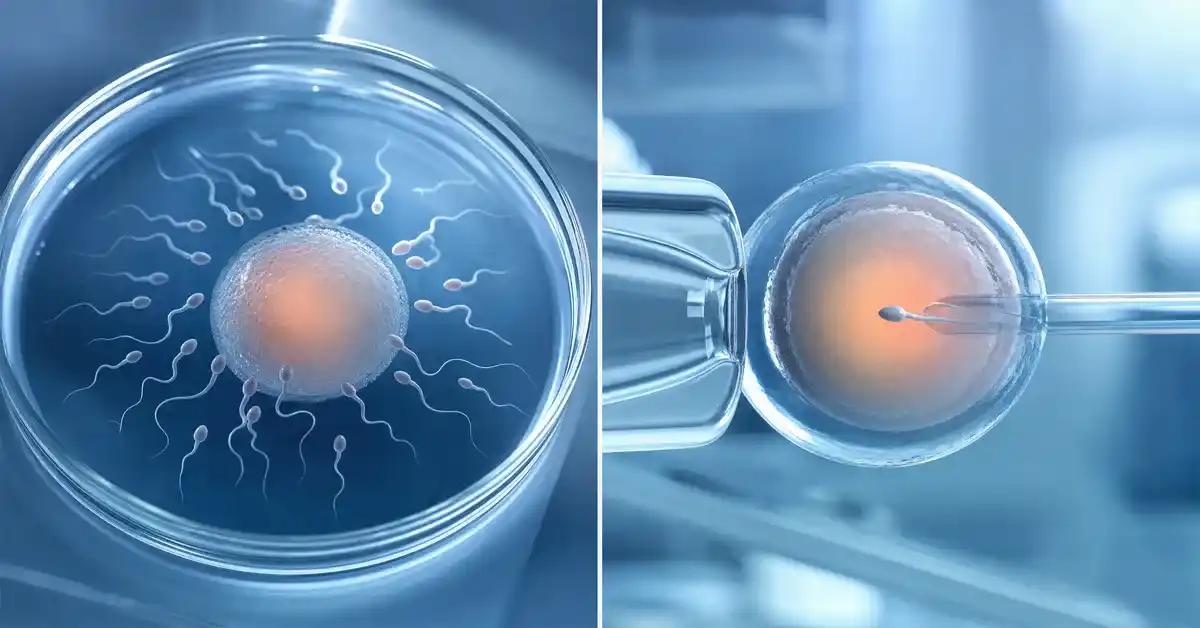
In Vitro Fertilization, commonly known as IVF, represents a groundbreaking advancement in fertility treatment. This technique involves retrieving eggs from a woman and combining them with sperm in a carefully controlled laboratory environment. The process allows sperm to fertilize the egg naturally, just as it would occur inside the body, but in a controlled setting that maximizes the chances of successful fertilization.
IVF has proven highly effective in cases involving blocked fallopian tubes or unexplained infertility. When sperm quality is normal and healthy, the likelihood of successful fertilization in the laboratory is significantly high. IVF offers a safe and effective alternative for couples facing obstacles that prevent natural conception.
What is ICSI (Intracytoplasmic Sperm Injection)?
ICSI represents a revolutionary breakthrough in reproductive medicine, particularly for men experiencing sperm quality issues. Rather than allowing sperm to penetrate the egg naturally, a highly trained specialist uses an extremely fine needle to inject a single sperm directly into the egg under an electron microscope. This precise procedure enables pregnancy even when sperm quality is severely compromised.
ICSI is the ideal solution for men suffering from severe male factor infertility. At Fertiliv IVF Center, we employ state-of-the-art equipment and advanced techniques to ensure optimal success rates with ICSI procedures.
Read about: ICSI Success Rates by Woman's Age: A Comprehensive Guide to Achieving Motherhood
What Is the Process of IVF and ICSI Techniques
The journey toward parenthood through assisted reproduction involves carefully orchestrated steps, each designed with precision to maximize success. From hormonal stimulation to embryo transfer, every phase plays a vital role in achieving your parenthood dreams. At Fertiliv, we guide you through each step of this journey with expertise and compassionate care, ensuring you feel supported and informed throughout the entire process.
Steps of IVF Procedure
The IVF process begins with ovarian stimulation using carefully prescribed hormonal medications. This phase aims to encourage the ovaries to produce multiple eggs rather than a single egg, significantly increasing the chances of obtaining healthy, viable eggs for fertilization.
After approximately ten to fourteen days of hormonal treatment, eggs are retrieved from the ovaries under local anesthesia using a fine needle. On the same day, a sperm sample is collected from the male partner. The eggs and sperm are then placed together in a specialized dish containing nutrient-rich medium that mimics the natural reproductive environment.
The following day, eggs are examined under a microscope to confirm successful fertilization. Fertilized eggs remain in specialized incubators for three to five days as they develop into embryos. Subsequently, the highest quality embryos are selected and transferred into the woman's uterus using a thin catheter.
Steps of ICSI Procedure
The ICSI process begins identically to standard IVF, with ovarian stimulation and egg retrieval. The fundamental difference emerges during the fertilization phase. After egg retrieval, eggs are carefully examined under a microscope to identify mature, fertilization-ready eggs.
The sperm sample is then specially processed to select the highest quality sperm with optimal motility and normal morphology. A highly skilled specialist injects a single sperm directly into each mature egg using an extremely fine needle under an electron microscope. This procedure requires exceptional skill and extensive experience to ensure success.
Following injection, embryos are left in incubators to develop naturally. The remaining steps mirror standard IVF exactly, with the best embryos transferred to the uterus after several days. The key difference is that ICSI guarantees at least one sperm enters the egg, dramatically increasing successful fertilization rates.
Read about: ICSI Success Rates After 40: Everything You Should Know
Which Is Better: IVF or ICSI?
Selecting the appropriate technique is a critical decision that directly impacts your chances of achieving pregnancy. Each case is unique and requires comprehensive evaluation by experienced fertility specialists. At Fertiliv, we conduct thorough assessments of your situation and recommend the technique best suited to your specific medical circumstances. Our sole objective is helping you achieve your parenthood dreams with the highest possible success rates.
In Cases of Male Infertility
When male factor infertility is present, ICSI becomes the clear first choice. If a man experiences poor sperm motility, low sperm count, or abnormal sperm morphology, standard IVF may not deliver satisfactory results. Weak sperm often cannot penetrate eggs independently, leading to fertilization failure.
ICSI resolves this problem definitively and effectively. Even when sperm quality is severely compromised or sperm count is extremely low, injecting a single sperm directly into the egg guarantees fertilization. This makes ICSI the optimal solution for men with severe infertility. At Fertiliv IVF Center, we consistently achieve excellent results using ICSI for men experiencing fertility challenges.
Additionally, ICSI is employed in cases of severe sperm count deficiency. When sperm numbers are extremely limited, ICSI allows each available sperm to be used with maximum efficiency.
In Cases of Female Infertility or Blocked Tubes
In female infertility cases, particularly when fallopian tubes are blocked or damaged, standard IVF is the primary choice. The problem is not with egg or sperm quality, but rather the inability of sperm to reach the egg naturally.
Standard IVF completely bypasses this obstacle because fertilization occurs outside the body. The egg and sperm meet in the laboratory dish rather than in the fallopian tube. When sperm quality is good and motility is normal, the chances of natural fertilization in the laboratory are very high.
In these situations, standard IVF is completely sufficient, and ICSI is unnecessary unless additional sperm problems exist. This makes standard IVF the most cost-effective option with excellent results.

IVF vs ICSI Success Rate
Success rates are what matter most to couples embarking on this journey. Statistics and data provide clear insight into your chances of achieving pregnancy. At Fertiliv, we take pride in success rates that exceed global averages. However, it's important to understand that success rates depend on multiple factors unique to your individual situation.
Success Rates by Age and Health Condition
ICSI and IVF success rates depend significantly on the woman's age and the quality of eggs and sperm. Generally, success rates are quite similar when sperm quality is good. However, when sperm problems exist, ICSI produces substantially better results.
For women under thirty-five years old, standard IVF success rates reach approximately forty to fifty percent per cycle. This percentage gradually declines with advancing age. For women over forty years old, success rates drop to approximately fifteen to twenty percent. ICSI produces similar success rates when egg quality is good, but significantly outperforms standard IVF when sperm quality is compromised.
It's important to note that success rates are not the only consideration. Other factors such as endometrial thickness, overall health status, and psychological factors play crucial roles in success. At Fertiliv, we carefully evaluate all these factors to ensure the best possible outcomes.
Recent Studies on Combining IVF and ICSI
Recent research demonstrates that using ICSI with standard IVF in the same cycle can increase success chances in specific situations. This approach, called "split fertilization," divides eggs between the two techniques.
This strategy allows direct comparison between techniques and increases chances of obtaining viable embryos for transfer. Some studies show this approach can increase success rates by ten to fifteen percent in mild to moderate male factor infertility cases.
At Fertiliv, we employ this approach when appropriate for patient circumstances. Combined technique success rates produce significantly better results than using a single technique alone in many cases. If you want to know which techniques best suit your situation, contact Fertiliv via WhatsApp now so our team can comprehensively evaluate your case and recommend the optimal solution.
Read about: ICSI After Failed IVF: Does It Give You Better Chances of Success?
When to Use ICSI Instead of IVF
ICSI isn't appropriate for everyone, but it's the ideal solution for specific cases requiring this precise intervention. Understanding these situations helps you determine whether this option is right for you. At Fertiliv, we conduct thorough diagnostics to determine whether ICSI is necessary for your case, ensuring we use the best techniques for your unique situation.
In Cases of Low Sperm Count or Abnormal Morphology
ICSI is the first choice when obvious sperm problems exist. This weakness may involve motility, where sperm move too slowly to reach eggs independently. It may also involve morphology, where sperm are malformed and cannot penetrate eggs properly.
In cases of severe sperm count deficiency, ICSI offers a highly effective solution. Even with extremely low sperm numbers, injecting a single sperm directly into the egg guarantees fertilization. This makes ICSI the optimal choice for men with severe infertility.
Additionally, ICSI is used when sperm are surgically retrieved from the testicle or epididymis. In these cases, sperm may lack sufficient motility, but ICSI enables their use with high efficiency.
In Previous IVF Failures or Use of Frozen Eggs
When standard IVF fails in a previous cycle, undetected sperm problems may be the cause. In these situations, ICSI is strongly recommended for the next attempt. This can significantly increase success chances.
Frozen eggs from previous cycles can be used with ICSI. This provides a second chance for couples whose previous attempts failed. Using ICSI with standard IVF in these cases can substantially improve fertilization chances.
It's important to note that if previous failure was caused by sperm problems, ICSI should be the first choice in the next cycle. This dramatically increases success probability.
Read about: Key Steps for ICSI Success: Your Complete Guide from Fertility Experts
IVF vs ICSI Cost
Financial considerations are important when selecting treatment. We understand this represents a significant investment in your dreams, which is why we strive to provide fair, transparent pricing. At Fertiliv, we believe quality and transparency must go hand in hand. We'll help you understand each cost and offer flexible options suited to your budget.
Factors Affecting the Cost
ICSI and IVF costs are affected by several important factors:
First, the cost of hormonal medications used for ovarian stimulation. These medications can be expensive, especially if higher doses are needed or if the woman responds slowly to treatment.
Second, the cost of medical procedures themselves. Egg retrieval, sperm preparation, fertilization, and embryo transfer each have associated costs. ICSI and IVF costs vary based on laboratory quality, equipment used, and medical team expertise.
Third, additional testing and screening. Some cases require genetic testing of embryos or other tests that increase costs. Additionally, freezing extra eggs or embryos adds to total expenses.
Estimated Cost Comparison
Generally, standard IVF costs range from 3000 thousand to 6000 thousand US dollars per cycle. This includes medications, medical procedures, and laboratory services. ICSI typically adds approximately one thousand to 1500 dollars to total costs.
Cost differences between standard IVF and ICSI are not substantial. However, outcome differences can be very significant, especially in male factor infertility. A small additional investment in ICSI can dramatically increase success chances.
At Fertiliv, we offer highly competitive pricing with guaranteed quality and excellent success rates. We believe quality shouldn't be prohibitively expensive. Want to know exact costs for your situation? Contact Fertiliv via WhatsApp now for a free consultation and accurate cost estimate.
Read about: Essential Pre-ICSI Tests: Your First Step Toward Achieving Parenthood
Risks of IVF and ICSI Procedures
Any medical procedure carries some risks, but those associated with assisted reproduction techniques are extremely rare when performed by highly experienced specialists. Understanding these risks helps you make informed decisions and know what to expect. At Fertiliv, we take your safety seriously and implement every necessary precaution to minimize risks to the absolute minimum.
Possible Birth Defects or Maternal Complications
ICSI and IVF risks exist but are extremely rare when performed by highly experienced specialists. One potential risk is bleeding or infection during egg retrieval. However, this is very rare, occurring in less than one percent of cases.
There's also a possibility of internal organ perforation during egg retrieval. However, this is extremely rare with modern techniques and experienced physicians. Additionally, allergic reactions to hormonal medications used in stimulation may occur, but these are easily managed.
It's important to note that recent research found no evidence that ICSI or standard IVF causes birth defects in children. Children born from these techniques are as healthy as naturally conceived children.
Ovarian Hyperstimulation and Other Risks
Ovarian Hyperstimulation Syndrome (OHSS) is a potential complication of hormonal medication use. In this condition, ovaries respond excessively to medication, causing enlargement and fluid accumulation in the abdomen. This may cause abdominal pain, nausea, vomiting, and bloating.
Most OHSS cases are mild and resolve naturally within days. However, in rare cases, the condition may be severe and require hospitalization and medical monitoring. Fortunately, experienced specialists know how to minimize this risk using specific protocols and dosages.
Other risks include ectopic pregnancy and multiple pregnancy. Multiple pregnancy may occur with multiple embryo transfer. However, this can be substantially reduced by transferring a single embryo.
Read about: ICSI Cost in Turkey 2026: Your Smart Investment Toward Achieving Parenthood
Using ICSI with IVF in the Same Cycle
In some cases, the best strategy involves using both techniques together. This innovative approach combines the benefits of both techniques and significantly increases success chances. At Fertiliv, we strategically employ this approach to ensure the best outcomes for each patient.
When Combined Techniques Are Recommended
Using ICSI with standard IVF is recommended in several specific situations:
First, when obvious sperm problems exist. If semen analysis shows clear weakness in motility, count, or morphology, ICSI should be part of the treatment plan.
Second, when previous standard IVF cycles failed. If fertilization didn't occur or was minimal in previous attempts, ICSI may be the effective solution.
Third, when using frozen or surgically retrieved sperm.
Fourth, in some rare unexplained infertility cases. When no obvious infertility cause is identified, subtle sperm problems may exist that standard testing cannot detect. In these cases, ICSI may significantly increase success chances.
How Combining IVF and ICSI Improves Outcomes
Using ICSI with standard IVF together significantly increases success chances. Each technique compensates for the other's weaknesses. Standard IVF provides natural fertilization opportunity, while ICSI guarantees fertilization even with weak sperm.
In practice, eggs are divided between techniques. Some eggs are left with sperm in the dish (standard IVF), while a single sperm is injected into others (ICSI). This substantially increases chances of obtaining viable embryos for transfer.
Combined technique outcomes produce superior results. Some studies show this approach can increase success rates by ten to twenty percent compared to using a single technique alone. At Fertiliv, we successfully employ this approach with excellent results.
Read about: Modern ICSI Protocols: Advanced Techniques for Achieving Parenthood
IVF vs ICSI in Male Infertility Cases
Male factor infertility represents approximately half of couple infertility cases. ICSI has revolutionized the lives of millions of men experiencing fertility problems. At Fertiliv, we specialize in treating male infertility with cutting-edge techniques and scientifically proven methods. Your fatherhood dream is within reach, and we'll help you achieve it.
When the Issue Is in the Sperm
The difference between standard IVF and ICSI in male infertility cases is clear and decisive. When sperm problems exist, ICSI represents the optimal and effective solution. Standard IVF may not produce good results in these cases because weak sperm cannot penetrate eggs independently.
ICSI solves this problem definitively and effectively. Even with severely compromised sperm quality, injecting a single sperm directly into the egg guarantees fertilization. This makes ICSI the first choice for men with severe infertility.
In male infertility cases, the answer is clear. If sperm problems exist, ICSI should be the first choice. The difference between techniques in male infertility cases can mean the difference between success and failure.
Benefits of ICSI for Surgically Retrieved or Frozen Sperm
ICSI offers tremendous benefits when using surgically retrieved or frozen sperm. Frozen sperm may lose some motility after thawing, making it difficult for them to penetrate eggs independently. ICSI ensures these sperm are used with maximum efficiency.
Additionally, surgically retrieved sperm from the testicle or epididymis may lack sufficient motility. However, ICSI enables their use with excellent success rates. This provides men with azoospermia or no sperm in ejaculate a real chance for parenthood with their partners.
Using ICSI with standard IVF in these cases produces optimal results. Frozen or surgically retrieved sperm can be used with maximum efficiency using ICSI. This opens new possibilities for men with severe infertility.
Read about: Modern ICSI Steps to Improve Fertility Success: A Comprehensive Guide for Couples
Conclusion and Final Recommendations
The differences between standard IVF and ICSI represent vital information for any couple seeking to achieve parenthood dreams. Both techniques are genuine revolutions in reproductive medicine that have transformed millions of couples' lives worldwide. Understanding these differences correctly helps couples select the most appropriate and effective treatment path for their unique circumstances.
Knowing how each technique works and understanding when each is appropriate opens doors to effective and successful solutions. Standard IVF is appropriate for cases without sperm problems, while ICSI represents the optimal solution when sperm quality issues exist.
Success rates in both techniques depend on multiple factors. Generally, both techniques produce excellent results when properly applied under highly experienced specialists' supervision. Cost differences between standard IVF and ICSI are not substantial, but outcome differences can be very significant.
At Fertiliv IVF Center, we specialize in both techniques and are committed to providing excellent medical services. Our team of highly experienced doctors and specialists will help you select the optimal approach for your situation. We employ cutting-edge techniques and equipment to ensure the best possible results.
If you're seeking an effective, safe, and reliable infertility solution, Fertiliv is your ideal choice. We offer free consultations and comprehensive assessments of your situation. Don't hesitate to contact us.
Frequently Asked Questions: Comprehensive Comparison of Modern Fertilization Techniques: IVF and ICSI
What is the Basic Difference Between IVF and ICSI?
The basic difference is that IVF (in vitro fertilization) leaves the egg and sperm together in a laboratory dish for fertilization to occur naturally, while ICSI (intracytoplasmic sperm injection) injects a single sperm directly into the egg. This makes ICSI much more effective when there are problems with sperm quality. The differences between IVF and ICSI significantly affect success rates in cases of male infertility.
Which is Better for My Case: IVF or ICSI?
The answer depends on the cause of infertility in your case. If the problem is with sperm, ICSI is much better. If the problem is with fallopian tubes or eggs, traditional IVF may be sufficient. In some cases, using both techniques together is recommended to increase success chances. The differences between the two techniques should be determined based on a comprehensive evaluation of your case by specialists.
Is ICSI Safe for Embryo and Child Health?
Yes, ICSI is very safe for embryo and child health. Modern and advanced studies have found no evidence that ICSI causes birth defects or health problems in children born. Children born from ICSI are in good health just like naturally conceived children. ICSI and IVF procedures are very safe when performed by highly experienced specialists.
What are the Success Rates of ICSI Compared to IVF?
Success rates are very similar when sperm quality is good. However, when there are problems with sperm, ICSI gives much better results. For women under thirty-five years old, the success rate reaches approximately forty to fifty percent per attempt. Success rates depend on the woman's age, egg and sperm quality, and other health factors.
Can ICSI Be Used Together with IVF in the Same Cycle?
Yes, ICSI can indeed be used together with IVF in the same cycle. Eggs are divided between the two techniques, some are left with sperm (IVF) and some have a single sperm injected into them (ICSI). This approach gives the best results in many cases. Using both techniques together can increase success rates by ten to twenty percent.