
IMSI and Conventional ICSI What Is the Real Difference

Manar Hegazy

Majd Eddin Khaled
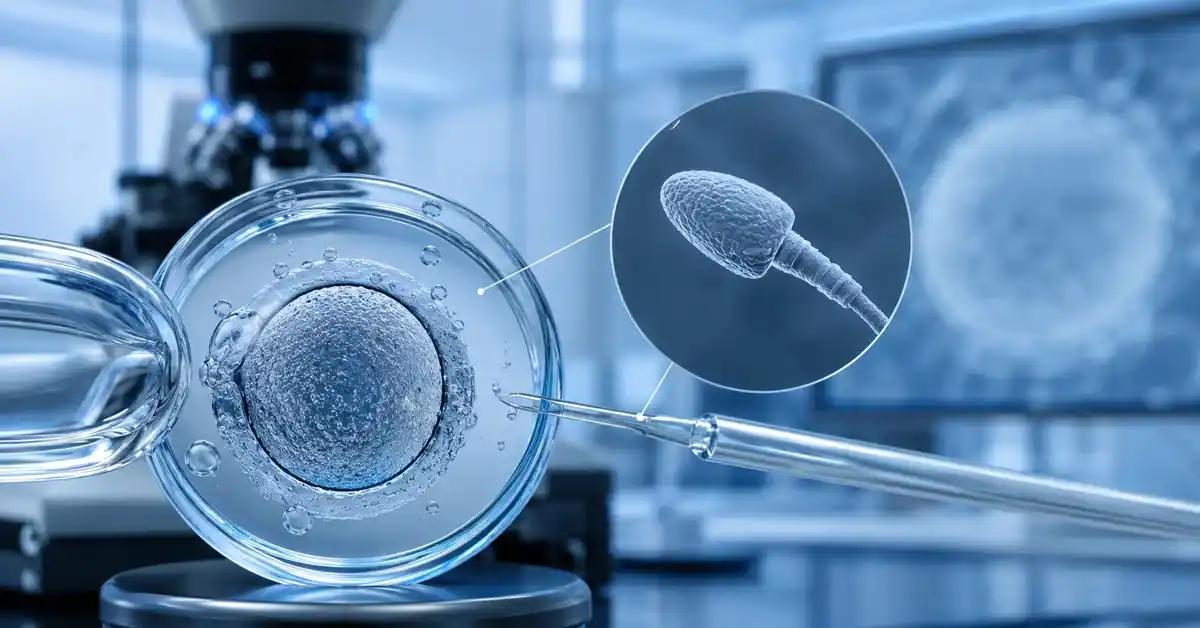
IMSI is an advanced sperm selection approach used within an ICSI cycle, not a completely separate fertility treatment. In conventional ICSI, the embryologist selects a sperm cell under standard laboratory magnification and injects it directly into a mature egg. In IMSI, sperm are examined under much higher magnification before injection, allowing the embryologist to see finer structural details, especially in the sperm head.
How IMSI selects sperm with higher magnification
IMSI uses very high magnification to examine live sperm cells in more detail before choosing one for injection. This may help identify sperm with more regular head structure and fewer visible abnormalities. The aim is not only to choose a visually “better” sperm, but to improve sperm selection in cases where male factor infertility may be affecting fertilization or embryo development.
How IMSI differs from ICSI in the laboratory
Both IMSI and conventional ICSI end with the same final step: one sperm cell is injected into one mature egg. The difference happens before injection. Conventional ICSI uses standard sperm selection, while IMSI adds a more detailed visual selection stage. Therefore, IMSI should be understood as an enhanced sperm selection method within ICSI, not as a replacement for ICSI.
Does IMSI always improve fertilization?
No. IMSI does not always improve fertilization or pregnancy outcomes. Fertilization depends on sperm quality, egg quality, female age, laboratory performance, stimulation protocol, and previous treatment history. IMSI may help selected couples, but it cannot overcome every fertility factor by itself.
When IMSI May Help in Male Infertility Treatment
IMSI may be more useful when sperm morphology is severely abnormal, when previous ICSI cycles had poor fertilization, or when embryo development has repeatedly been disappointing and male factor is suspected. In these cases, the laboratory attempts to improve sperm selection as much as possible before injection.
IMSI for severe sperm morphology problems
When sperm morphology is severely abnormal, especially when sperm head defects are prominent, IMSI may help the embryologist avoid sperm with obvious structural problems. This does not mean every morphology issue requires IMSI, but severe and repeated morphology abnormalities may make it a reasonable option to discuss.
IMSI after poor fertilization or weak embryo development
After failed fertilization or poor embryo development in a previous ICSI cycle, IMSI may be considered as part of a revised plan. However, the whole previous cycle must be reviewed first, because poor outcomes may be related to egg quality, stimulation, laboratory factors, sperm factors, or a combination of several elements.
IMSI and sperm DNA damage concerns
In some cases with suspected or confirmed sperm DNA damage, advanced sperm selection may be discussed. IMSI may be included in a wider plan that also considers lifestyle improvement, treatment of infections or varicocele when present, and careful semen preparation. However, IMSI is not a standalone solution for every DNA-related sperm problem.
Read about: Comprehensive Comparison of Modern Fertility Techniques: IVF and ICSI Explained
Is IMSI Better Than Conventional ICSI for All Couples?
The right question is not whether IMSI is always better, but which couples may benefit from it. Current evidence does not show a clear and consistent advantage for all couples, especially when there is no severe male factor or no history of previous fertilization failure. IMSI should therefore be used selectively rather than routinely.
Cases that usually do not need IMSI
If semen parameters are acceptable, morphology is not severely abnormal, and there has been no previous fertilization failure, IMSI may not add clear value. In these cases, the main focus may be egg quality, ovarian stimulation, uterine readiness, embryo culture, and transfer strategy.
Cases where IMSI may be more reasonable
IMSI may be more reasonable when severe sperm morphology defects are present, previous fertilization was poor, embryo development repeatedly failed, or the sperm selection stage is strongly suspected to be part of the problem. Even then, it should be chosen based on the couple’s full medical picture.
Simple comparison between IMSI and conventional ICSI
| Comparison point | Conventional ICSI | IMSI |
|---|---|---|
| Sperm selection | Standard laboratory magnification | Very high magnification |
| Final step | Sperm injection into the egg | Same injection step |
| Best use | Most ICSI cycles | Selected male factor cases |
| Always better? | Effective standard option | Not better for every couple |
| Decision basis | Medical indication | Severe morphology or prior failure |
Factors That Influence Success With IMSI and ICSI
The success of IMSI or ICSI does not depend on sperm selection alone. Even the best-selected sperm needs a healthy egg, a strong laboratory process, suitable embryo culture, and a receptive uterus. This is why sperm selection should never be discussed separately from the couple’s full fertility plan.
Egg quality and female age in IMSI success
Female age and egg quality are major determinants of ICSI success. IMSI may improve sperm selection in selected cases, but it cannot fully compensate for age-related egg quality decline or very low ovarian reserve. Couples should understand that IMSI is one part of a broader treatment strategy.
Embryology laboratory quality and IMSI experience
IMSI requires equipment, time, and embryology experience. The technique depends on the ability to identify meaningful sperm features under high magnification. However, the overall quality of egg handling, injection, embryo culture, and embryo assessment remains equally important.
Does IMSI add cost without clear benefit?
IMSI may increase treatment cost because it requires more detailed laboratory work. This cost may be reasonable in selected cases, but it should not be added simply because it sounds more advanced. The decision should be based on whether it is likely to help the specific couple.

How the Doctor Chooses Between IMSI and Conventional ICSI
The decision should be based on semen analysis, sperm morphology, count and motility, possible DNA damage concerns, female age, ovarian reserve, previous fertilization rates, embryo quality, and treatment history. A careful review helps determine whether enhanced sperm selection is truly needed.
Reading semen analysis before choosing IMSI
The word “abnormal morphology” is not enough by itself. The doctor needs to know the severity, pattern, repeatability, count, motility, and whether the result appears consistently across samples. Mild morphology issues may not require IMSI, while severe patterns may support its use.
Reviewing previous ICSI cycles before IMSI
Previous cycle details are extremely important. How many mature eggs were retrieved? How many fertilized? Did embryos stop developing early? Was egg quality good? Was the semen sample weak on retrieval day? These answers help identify whether IMSI may address a real problem.
When to choose IMSI and when ICSI is enough
IMSI may be chosen when severe morphology, previous poor fertilization, repeated weak embryo development, or a strong male factor is present. Conventional ICSI may be enough when semen findings are acceptable and there is no evidence that sperm selection is the limiting factor.
Read about: ICSI After Failed IVF: Does It Give You Better Chances of Success?
Fertiliv’s Approach to Choosing IMSI or ICSI
At Fertiliv, IMSI is not presented as a universal upgrade for every couple. The team evaluates whether it is truly useful for the case. Some couples need conventional ICSI only, others may benefit from IMSI, and some need male factor treatment or improved semen preparation before the cycle.
Couple-based evaluation before IMSI
The plan begins with evaluating both partners. Sperm selection matters, but female age, ovarian reserve, egg number, and uterine readiness also influence the final result. A combined evaluation helps prevent random decisions and keeps the treatment focused.
Preparing the male partner before IMSI
When male factor is present, preparation may include lifestyle improvement, infection treatment, varicocele assessment, chronic disease control, medication review, and repeat semen analysis when needed. Choosing IMSI does not replace preparation; it works best when the semen sample is optimized as much as possible.
Choosing the technique that supports pregnancy chances
The key question is whether IMSI adds real value in this specific case. When it does, it can be included in the plan. When it does not, conventional ICSI with a strong laboratory and careful treatment strategy may be the better and more efficient choice.
Read about: Essential Pre-ICSI Tests: Your First Step Toward Achieving Parenthood
Conclusion
IMSI is not better than conventional ICSI for every couple, but it may be helpful when there is a clear male factor, severe sperm morphology abnormality, previous fertilization failure, or repeated weak embryo development. Without these indicators, IMSI may not add a clear benefit, and conventional ICSI remains an effective and appropriate option.
Frequently Asked Questions: IMSI and Conventional ICSI
Is IMSI always better than ICSI?
No. IMSI may help selected couples, but it is not clearly better for everyone.
What is the main difference between IMSI and ICSI?
The main difference is sperm selection. IMSI uses much higher magnification before the sperm is injected into the egg.
Can IMSI improve outcomes with abnormal sperm morphology?
It may help in selected severe morphology cases, especially when sperm head defects are important, but it does not guarantee pregnancy.
Is IMSI needed in the first ICSI attempt?
Not always. It may be discussed in the first attempt when male factor is severe, but many couples do well with conventional ICSI.
Is IMSI useful after failed ICSI?
It may be useful if the previous cycle suggests poor fertilization or embryo development related to sperm factors. A full cycle review is needed first.