
Stem Cell Therapy For Fertility: Is It A New Hope For Refractory Infertility?

Manar Hegazy

Majd Eddin Khaled
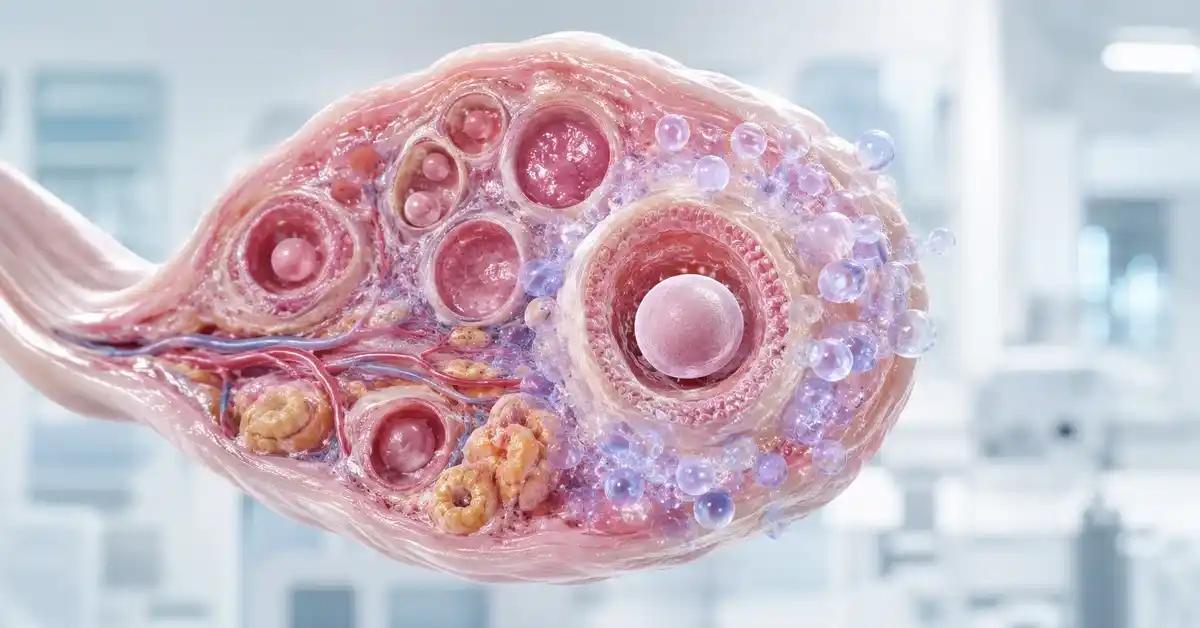
Stem cell therapy for fertility has become one of the most discussed topics among couples facing long and difficult infertility journeys. For patients with low ovarian reserve, poor IVF response, repeated failed cycles, premature ovarian insufficiency, or difficult endometrial problems, the idea sounds hopeful: could stem cells help the ovary respond again? Could they improve the uterine lining? Could they offer a new path when standard options feel limited?
The answer requires both hope and caution. Stem cells are being studied in reproductive medicine, and early research suggests possible roles in ovarian function, tissue repair, inflammation control, blood vessel support, and endometrial regeneration. However, most fertility applications remain investigational. At Fertiliv, this topic is approached with clarity: scientific progress is important, but promising research should not be presented as guaranteed treatment before strong evidence and safety are established.
What Are Stem Cells In Fertility Treatment?
Stem cells are special cells with the ability to renew themselves and support tissue repair through biological signaling. In fertility research, the main interest is not simply turning stem cells directly into ready-to-use eggs. Instead, researchers are exploring whether stem cells may improve the ovarian environment, reduce inflammation, support blood flow, or improve endometrial tissue.
They are being studied in conditions such as low ovarian reserve, premature ovarian insufficiency, poor response to ovarian stimulation, and thin or resistant endometrium. Still, many questions remain unanswered: Which stem cell type is best? What dose is safe? How should it be delivered? Which patients may benefit? What are the long-term outcomes?
Is It Approved Treatment Or Research?
Stem cell therapy for fertility is not currently a standard, proven treatment in the same way as ovarian stimulation, IVF/ICSI, hormone correction, or uterine evaluation. There are clinical studies and early encouraging reports, but that does not make it a guaranteed therapy for every patient.
Couples should be cautious with phrases such as “guaranteed ovarian rejuvenation” or “restored fertility.” Responsible medicine does not use such promises. A more accurate description is that stem cell fertility therapy is a promising research field, not a routine solution with predictable results.
Stem Cells Versus Other Regenerative Treatments
Many people confuse stem cells, platelet-rich plasma, exosomes, and ovarian rejuvenation. These terms are not identical. PRP uses components from the patient’s own blood, while stem cell therapy may involve cells from bone marrow, fat tissue, or other sources depending on the research protocol.
Exosomes are small particles released by cells and may carry biological signals, but they are not full stem cells. This distinction matters. Before accepting any “regenerative fertility” offer, patients should understand exactly what is being used, what evidence supports it, what risks exist, and how follow-up is done.
Read about: Weak Ovulation: A Clear Guide to Diagnosis and Treatment Options
Stem Cells For Low Ovarian Reserve
Low ovarian reserve is one of the main reasons patients search for stem cell therapy for fertility. When AMH is low or only a few eggs are collected during stimulation, the emotional pressure can be intense. Ovarian rejuvenation stem cells may sound like a chance to reopen options.
Some studies explore whether stem cells can support the ovarian environment and help remaining follicles respond better. However, it is not yet proven that stem cells can restore lost ovarian reserve or reliably create new eggs in humans. Patients should avoid delaying evidence-based treatment while waiting for uncertain results.
Can Stem Cells Increase AMH?
Some early studies report changes in markers such as AMH, FSH, estrogen, or menstrual activity after regenerative interventions. However, a hormone change does not always mean a real improvement in pregnancy chance or egg quality.
The real fertility goal is not just a better number. It is obtaining a mature egg, developing a healthy embryo, and achieving a safe pregnancy. Patients should ask whether the treatment improved egg number, embryo quality, pregnancy rates, and live birth outcomes, not only hormone levels.
When Time Should Not Be Lost
When age is advanced or ovarian reserve is very low, time can be critical. Waiting months for an unproven regenerative approach may reduce the chance of using available eggs. Any experimental option must be weighed against IVF timing, embryo freezing, or adjusting stimulation protocols.
Fertiliv evaluates low reserve through age, AMH, antral follicle count, previous stimulation response, embryo history, and semen analysis. This helps determine whether the priority should be a practical fertility plan or discussion of a research-based option.
Read about: PCOS Treatment to Improve Fertility and Support Pregnancy Chances
Stem Cells And Premature Ovarian Insufficiency
Premature ovarian insufficiency occurs when ovarian function declines before age forty. It may cause irregular or absent periods, high FSH, low estrogen, and difficulty conceiving. It can be emotionally painful because it may happen at an age when a woman still hopes to build a family.
Stem cells for premature ovarian insufficiency are an active research field. Researchers are studying whether stem cells may support ovarian tissue, improve biological signaling, or help residual follicles function better. Some studies describe hormonal changes or menstrual return in selected patients, but larger and longer studies are still needed.
Can Stem Cells Restore Ovarian Function?
It cannot be said that stem cells restore ovarian function in every patient with premature ovarian insufficiency. Some patients may have more potential if residual follicles remain, while others may have very limited ovarian activity. Results are not predictable for everyone.
This is why careful evaluation is essential. Hormone tests, ultrasound findings, menstrual history, age, and possible causes of ovarian insufficiency all matter. Hope should be guided by medical reality, not by a single success story or advertisement.
Why Finding The Cause Matters
Premature ovarian insufficiency may be linked to genetic factors, autoimmune conditions, previous surgery, chemotherapy, or unknown causes. Understanding the cause may help guide expectations and treatment planning.
The condition also affects more than fertility. Hormonal health, bone health, and general symptoms may need care. A patient with premature ovarian insufficiency needs a complete health plan, not only an attempt to stimulate the ovaries.
Read about: Endometriosis And Pregnancy: Is Natural Conception Possible Or Is IVF Necessary?
Stem Cells And The Endometrium
Not every fertility problem starts in the ovary. Sometimes the challenge is the endometrium, especially when the uterine lining remains thin or does not respond well before embryo transfer. Researchers have explored stem cell-based or regenerative approaches to improve the uterine environment.
The idea is that stem cells or their secreted factors may support blood flow, reduce inflammation, and improve tissue repair. However, these applications still need stronger evidence to identify who truly benefits, how treatment should be performed, and whether it is safe for pregnancy.
Thin Endometrium
Thin endometrium can make embryo transfer planning difficult, especially when it persists despite changes in medication. Before considering stem cell therapy, possible causes should be investigated: intrauterine adhesions, chronic inflammation, previous surgery, poor blood flow, or weak hormone response.
If the cause can be treated with hysteroscopy, infection treatment, or protocol adjustment, that may be more logical than moving directly to an experimental option. Fertiliv focuses on diagnosis first, targeted treatment second, and advanced options only when appropriate.
Repeated Implantation Failure
Repeated implantation failure often leads couples to search for new solutions, including stem cells. However, implantation failure is not one diagnosis. It may involve embryo quality, uterine cavity problems, transfer timing, hormonal support, or other factors.
Before discussing regenerative treatment, embryo reports, uterine cavity evaluation, endometrial preparation, and previous cycle details should be reviewed. Stem cell therapy should not be the first explanation for failure. It may only be discussed after basic evaluation is complete.

Is Stem Cell Therapy A New Hope For Refractory Infertility?
Stem cell therapy can be considered a promising research area in fertility medicine, but it is not yet a guaranteed solution for refractory infertility. There is an important difference between scientific hope and proven treatment. Scientific hope means there are ideas, early studies, and possible mechanisms. Proven treatment requires strong evidence, clear protocols, and reliable outcomes.
Refractory infertility is a broad term. It may include severe low reserve, repeated IVF failure, resistant endometrium, or unexplained failure. Each situation needs a different evaluation. Sometimes the problem can be improved with known medical steps. Sometimes research-based options may be discussed, but without promises.
Why Big Promises Are Risky
Patients who have struggled with infertility for years are understandably drawn to new hope. Unfortunately, some clinics may exploit that hope by offering costly, unproven treatments with unclear success claims.
Before considering stem cell therapy, patients should ask: Is this part of a regulated study? What is the cell source? How are cells prepared? What are the risks? Are results published? Is long-term follow-up available? Are alternatives explained? If answers are unclear, caution is necessary.
When The Discussion May Be Reasonable
Discussion may be reasonable when standard options are limited, the case has been fully evaluated, and the patient understands that treatment is investigational. The procedure should be offered only within an organized medical framework, with informed consent and clear explanation of risks.
In some cases, it may be more useful to focus on improving IVF stimulation, treating uterine factors, correcting hormones, or reviewing sperm quality before considering regenerative options. A wise decision places hope in the right context.
Read about: Uterine Fibroids And Fertility: When Do They Affect Pregnancy And How Are They Treated?
How To Evaluate This Option Safely
Before deciding on stem cell therapy for fertility, patients should collect all previous fertility reports: AMH, FSH, ultrasound findings, egg numbers, embryo quality, transfer results, uterine assessment, and semen analysis. Without these details, discussion remains too general.
The main question should be: What exact problem are we trying to treat? Is it low reserve, premature ovarian insufficiency, thin endometrium, implantation failure, or unexplained infertility? Defining the target helps determine whether the proposed treatment makes medical sense.
Questions To Ask Your Doctor
Ask whether the treatment is approved or experimental. Ask what evidence supports it, what results are expected in your specific case, what risks exist, whether it may delay IVF, and what alternatives are available.
If answers are vague or overly optimistic, that is a warning sign. A responsible doctor explains both the potential and the limits. Fertiliv encourages patients to understand every step before agreeing to it.
Warning Signs To Notice
Be careful with any offer that promises guaranteed results, demands high payment before scientific explanation, or relies only on success stories without published data. Also be cautious when PRP, stem cells, and exosomes are mixed together without clear distinction.
Regenerative fertility therapy should not be sold as a magical shortcut. If considered at all, it should be part of careful evaluation, informed consent, and structured follow-up.
Read about: Premature Ovarian Insufficiency (POF): Causes, Symptoms, And Medically Available Fertility Options
Fertiliv’s Role In Difficult Infertility Cases
Fertiliv does not approach difficult infertility through one treatment only. The evaluation begins with age, ovarian reserve, stimulation response, embryo quality, uterine condition, semen analysis, chronic illnesses, and previous medications. Sometimes this review reveals modifiable factors before experimental options are needed.
When couples ask about stem cells, the discussion is realistic. The field may be scientifically interesting, but it is not presented as a guarantee. The priority is to avoid losing valuable time or undergoing unclear procedures when more established steps are available.
Evidence-Based Planning
Evidence-based planning means every step has a reason. If ovarian response is poor, the stimulation protocol is reviewed. If embryos are weak, egg factors, sperm factors, and laboratory conditions are assessed. If the lining is resistant, adhesions, inflammation, and preparation protocols are checked.
This prevents patients from moving randomly from one technique to another. At Fertiliv in Istanbul, clarity is central because patients deserve to know why each step is recommended.
Supporting Hope Without Misleading
Hope is essential in infertility treatment, but it must be honest. Stem cells may become important in the future of reproductive medicine, but presenting them today as a guaranteed solution can harm patients emotionally, financially, and medically.
This does not mean closing the door to innovation. It means opening the door carefully. Every advanced option should answer three questions: Does it fit my case? Does it help more than it delays? Do I understand its limits and risks?
Read about: Egg and Embryo Freezing: The Future of Fertility Preservation
Conclusion
Stem cell therapy for fertility may become one of the most exciting areas in future reproductive medicine, especially for low ovarian reserve, premature ovarian insufficiency, and selected endometrial problems. However, it is not yet a routine proven treatment for refractory infertility, and it should not be treated as a guaranteed alternative to IVF or complete fertility evaluation.
The right decision starts with a clear diagnosis. What caused infertility? What happened in previous attempts? Is the main issue eggs, embryos, uterus, sperm, or more than one factor? After that, modern options can be discussed with awareness. Fertiliv supports couples with realistic planning that respects hope without exaggerating promises.
If you are considering stem cell therapy for fertility or need a second evaluation for a difficult infertility case, Fertiliv can help you understand your options.
Start a WhatsApp conversation with Fertiliv when you feel ready to choose between scientific hope and a safer treatment plan.
Frequently Asked Questions: Stem Cell Therapy For Fertility: Is It A New Hope For Refractory Infertility?
Is Stem Cell Therapy Proven For Infertility?
Not yet. It remains a promising research area, but it is not a routine proven fertility treatment.
Can Stem Cells Improve Low Ovarian Reserve?
Early studies are encouraging, but they do not prove guaranteed ovarian reserve restoration or pregnancy.
Can Stem Cells Improve The Uterine Lining?
They are being studied for thin or resistant endometrium, but diagnosis and standard treatments come first.
Should I Delay IVF To Try Stem Cells?
Not always. If age or reserve is urgent, delaying IVF for experimental treatment may be risky.
How Can Fertiliv Help With This Decision?
Fertiliv reviews the full case and explains whether a research option or established plan is more realistic.