
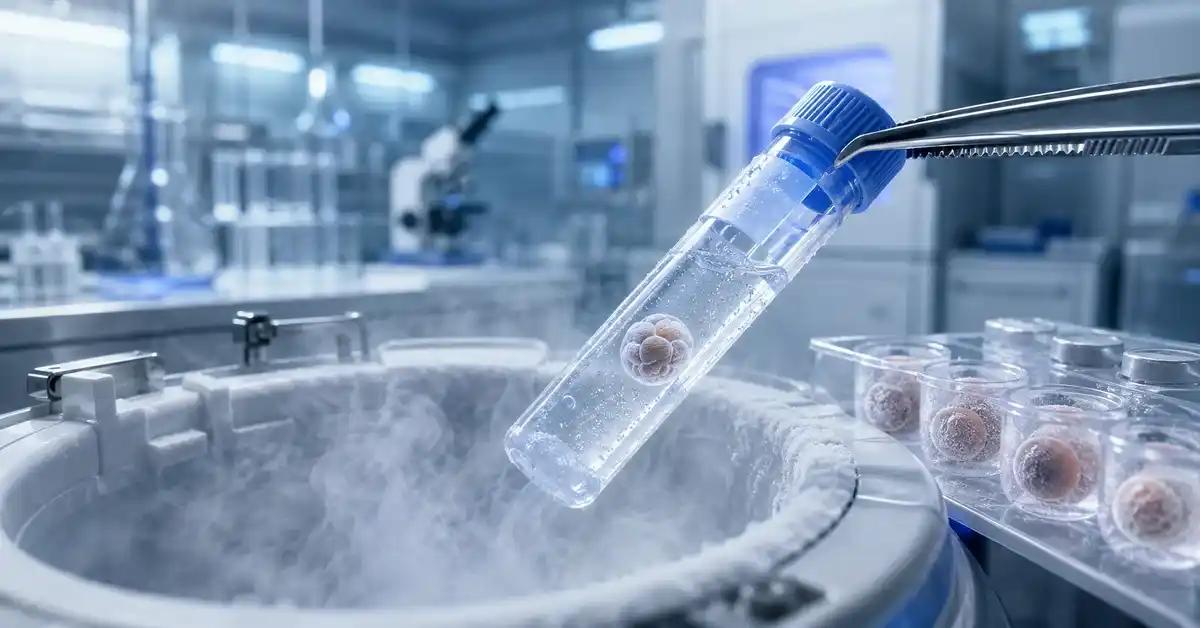
Egg and Embryo Freezing: The Future of Fertility Preservation

Manar Hegazy

Majd Eddin Khaled
Egg and embryo freezing have become important options for women and couples who want to protect future reproductive potential with more confidence and planning. Fertility preservation is no longer discussed only before cancer treatment. It may also be considered in cases of low ovarian reserve, delayed pregnancy plans, medical conditions, fertility treatment planning, or when embryo transfer needs to be postponed.
At Fertiliv in Istanbul, egg and embryo freezing are approached as medical decisions that require careful evaluation, not as guaranteed future pregnancy. Success depends on age at the time of freezing, the number of mature eggs or embryos stored, laboratory quality, the reason for preservation, sperm quality, and uterine readiness when the material is used later.
The earlier and clearer the decision, the more realistic the plan becomes.
What Egg and Embryo Freezing Mean
Egg freezing means preserving unfertilized eggs after ovarian stimulation and egg retrieval. These eggs may later be warmed and fertilized through ICSI when pregnancy is desired. Embryo freezing happens after eggs are fertilized in the laboratory and embryos are monitored before suitable embryos are frozen for future transfer.
The main difference is timing. Egg freezing preserves reproductive potential before fertilization, while embryo freezing preserves a later stage after fertilization and early embryo development have already occurred.
Egg freezing
Egg freezing may be suitable for women who want to preserve fertility before egg quantity or quality declines further. It may be considered before treatments that could harm the ovaries, when ovarian reserve is low, or when pregnancy is being postponed for personal, medical, or life-planning reasons.
Usually, mature eggs are the most useful for freezing because maturity is needed for later fertilization. The younger the woman is at freezing and the more mature eggs stored, the stronger the future plan may be.
Embryo freezing
Embryo freezing is usually part of an IVF or ICSI cycle. The ovaries are stimulated, eggs are retrieved, mature eggs are fertilized, and embryos are followed in the laboratory. Suitable embryos may then be frozen for later transfer.
This option gives clearer information about how many embryos have developed and their laboratory quality. It may be useful when embryo transfer is delayed, when the uterus needs preparation, or when testing or planning requires more time.
Which option is better?
There is no single better option for everyone. Egg freezing may offer more personal flexibility because the eggs are not fertilized yet. Embryo freezing may offer more information because development has already been observed in the laboratory.
The decision depends on age, relationship status, legal requirements, ovarian reserve, sperm quality, expected egg number, future plans, and medical goals. The best choice is the one that fits the patient’s real situation.
Read about: Egg Freezing: Modern Techniques for Future Fertility Preservation
When Fertility Preservation May Be Needed
Fertility preservation should not always be viewed as a late decision. In many cases, earlier counseling is more helpful because egg quality is closely related to age. Once time passes, it is not possible to return eggs to an earlier biological age.
Still, not every woman needs egg or embryo freezing. The decision should be based on age, ovarian reserve, medical history, family history, treatment plans, and the woman’s or couple’s future reproductive goals.
Before treatments that may affect the ovaries
Some women may need fertility preservation before chemotherapy, radiation, or ovarian surgery. In these cases, timing is important, and fertility specialists may need to coordinate quickly with the treating medical team.
The goal is to preserve a future opportunity before ovarian function is affected. The best option may be egg freezing, embryo freezing, or another fertility preservation strategy depending on age, medical condition, and available time.
With low ovarian reserve
Low ovarian reserve may make fertility preservation more time-sensitive, especially if pregnancy is not planned immediately. A woman with a family history of early menopause or declining ovarian reserve may benefit from earlier evaluation.
However, low ovarian reserve does not mean one cycle will always be enough. Some women may need more than one stimulation cycle to store a more meaningful number of eggs or embryos. Expectations should be discussed honestly.
When pregnancy is postponed
Some women and couples consider fertility preservation because pregnancy is being delayed for personal, professional, health, or family reasons. Freezing may support planning, but it should not be presented as an absolute guarantee.
Counseling should include expected egg numbers, age-related success, cost, storage, future use, and alternatives. A clear decision is better than one based only on fear or pressure.
Read about: Egg Freezing for Single Women: Future Fertility Preservation Options
How Egg Freezing Is Done
Egg freezing begins with ovarian reserve assessment, usually through ultrasound and hormone testing such as AMH when appropriate. The doctor then plans ovarian stimulation to encourage multiple follicles to grow during the same cycle.
During stimulation, follicle growth is monitored with ultrasound and sometimes blood tests. When follicles are ready, the trigger injection and egg retrieval are scheduled. After retrieval, the laboratory evaluates the eggs and freezes mature eggs for possible future use.
Assessment before stimulation
Before stimulation, the doctor reviews age, ovarian reserve, medical history, previous surgeries, medications, and the reason for preservation. The patient should understand that the number of eggs retrieved cannot be guaranteed.
This assessment helps choose medication doses, explain expected response, and decide whether any additional testing is needed before starting.
Stimulation and egg retrieval
Ovarian stimulation usually lasts several days, depending on response. Hormonal medications support follicle growth, and ultrasound monitoring helps guide timing.
Egg retrieval is a short procedure performed with sedation or anesthesia depending on the protocol. Retrieved eggs are examined in the laboratory, and mature eggs are selected for freezing.
Freezing and storage
Eggs are frozen using modern techniques designed to protect the cell during cooling and later warming. They are then stored under controlled laboratory conditions with strict identification and monitoring systems.
Future success depends on egg survival after warming, fertilization, embryo development, and uterine readiness at the time of transfer. Egg freezing preserves a chance; it does not promise a baby.
Read about: Modern Egg Freezing Techniques: Innovations and Advanced Tips
How Embryo Freezing Is Done
Embryo freezing starts with an IVF or ICSI cycle. Eggs are retrieved, mature eggs are fertilized in the laboratory, and embryos are observed during early development. Suitable embryos are then frozen for later transfer.
Embryo freezing may be part of a planned freeze-all strategy or may be chosen because the uterus needs preparation, hormone levels are not ideal, genetic testing is planned, or transfer should be delayed for medical reasons.
From egg to embryo
Not every retrieved egg is mature, not every mature egg fertilizes, and not every fertilized egg becomes a good-quality embryo. Embryo freezing gives the couple more information about what has developed in the laboratory.
This information can help planning, but it does not guarantee pregnancy. Future success depends on embryo quality, uterine readiness, and the woman’s age when the eggs were retrieved.
When freeze-all is chosen
A freeze-all plan may be chosen when fresh transfer is not ideal. Reasons may include risk of ovarian hyperstimulation, hormone patterns, uterine preparation needs, or waiting for embryo testing results.
Freeze-all does not mean the cycle failed. It can be a strategic decision to transfer at a better time.
Frozen embryo transfer later
When frozen embryos are used, the uterus is prepared in a natural or medicated cycle depending on the case. Once the endometrium is ready, the embryo is warmed and transferred.
Frozen embryo transfer allows the doctor to focus on uterine timing separately from ovarian stimulation. This can be helpful when the uterus needs special preparation.
Read about: Egg Freezing: Your Path to Preserving Fertility Between Turkey and Germany
Egg Freezing Versus Embryo Freezing
The difference between egg and embryo freezing is medical, personal, legal, and emotional. Eggs are stored before fertilization, while embryos involve both partners and require clear consent and future-use planning.
This is why counseling should include not only success expectations, but also storage, consent, relationship changes, legal requirements, and future decision-making.
Personal flexibility
Egg freezing may offer more flexibility for women who are not ready to create embryos or who do not yet have a clear couple-based plan. The eggs remain unfertilized until future use.
Embryo freezing may be more appropriate when a couple is ready to create embryos and store them as part of an IVF plan. It usually requires more shared decisions.
Laboratory clarity
Embryo freezing provides clearer information about fertilization and early development. Egg freezing leaves those steps for the future.
This does not make embryo freezing automatically better. Egg freezing may be the only appropriate option for some women. The right choice depends on the patient’s situation and goals.
Legal consent and documentation
Egg and embryo freezing require clear consent and documentation. Legal details differ between countries and clinics. In Turkey, legal requirements and documentation should be reviewed carefully before starting, especially for embryo freezing and later use.
Medical planning should not be separated from consent planning. Patients should understand what can be done, what is allowed, and what future decisions may be required.
Factors That Affect Success
The chance of future use depends on several factors: the woman’s age at egg retrieval, number of mature eggs or embryos stored, laboratory quality, the reason for preservation, sperm quality, and uterine health when transfer is attempted.
Realistic expectations are essential. Freezing preserves eggs or embryos at their current biological stage, but it does not remove all fertility challenges.
Age at freezing
Age at egg retrieval is one of the most important factors because egg quality declines with age. Freezing is generally more useful when done before a significant decline in egg quality.
This does not mean freezing later has no value, but expectations should be more careful. More eggs or more cycles may be needed to build a stronger chance.
Number of eggs or embryos stored
The number of mature eggs or embryos stored matters. Not every egg survives warming, fertilizes, becomes an embryo, implants, or leads to birth. Not every embryo leads to pregnancy.
Patients should know not only that material was frozen, but how many mature eggs or embryos were stored and what that means for their age and plan.
Laboratory quality and follow-up
Cryopreservation requires experienced laboratory work, reliable storage systems, clear identification, and ongoing monitoring. Laboratory quality can influence how safely eggs and embryos are preserved and later used.
Administrative follow-up also matters. Storage agreements, renewal processes, and future-use documentation should be understood from the beginning.

Modern Trends in Fertility Preservation
Fertility preservation has advanced through improvements in rapid freezing, ovarian stimulation protocols, embryo culture, laboratory monitoring, and frozen embryo transfer preparation. These developments have made freezing a central part of modern fertility planning.
Still, technology should not create unrealistic promises. It can protect opportunity, but age, egg quality, medical conditions, sperm quality, and uterine health remain important.
Rapid freezing
Vitrification is a rapid-freezing method designed to reduce damage from ice crystal formation. It has become especially important for eggs, which are sensitive cells.
The method requires precision during freezing and warming. Laboratory experience is essential because small technical details can influence outcomes.
Freeze-all strategies
Freeze-all strategies are used in some IVF cycles when transferring later is considered better. This may allow the uterus to be prepared separately or give time for embryo testing and medical optimization.
The decision should have a clear medical reason. It should not be used automatically without explanation.
Fertility preservation as preventive care
Fertility preservation is increasingly part of preventive reproductive care, especially when there is low ovarian reserve, medical treatment risk, or a need to delay pregnancy.
The goal is awareness, not fear. Women and couples should know their options early enough to make informed decisions.
When the Decision Is Right
The decision is appropriate when there is a clear reason to preserve fertility, expectations are realistic, and the medical and legal plan is understood. It should not be made only from fear, but it also should not be delayed until options become very limited.
Good counseling helps the patient understand whether the time is right, which option fits best, how many cycles may be needed, and what future use may involve.
Questions to ask before starting
Patients should ask about ovarian reserve, expected egg number, how many mature eggs may be useful, whether more than one cycle may be needed, storage duration, cost, consent, and future use.
They should also ask whether egg freezing or embryo freezing better fits their situation. Clear questions before treatment reduce future confusion.
When freezing alone may not be enough
Freezing may not be enough if there is a major uterine factor, severe sperm problem, advanced age with very limited egg number, or a medical condition that requires broader planning.
In some cases, moving directly toward fertility treatment may be better than only preserving eggs. The goal determines the plan: pregnancy soon or preserving potential for later.
Individualized planning
No one rule fits everyone. A younger woman with good ovarian reserve is different from a woman with low reserve, upcoming medical treatment, or long infertility history.
Individualized planning gives the decision its value. It connects medical numbers with personal goals and real timing.
Read about:Stem Cell Therapy For Fertility: Is It A New Hope For Refractory Infertility?
Conclusion
Egg and embryo freezing represent an important part of the future of fertility preservation, but they require proper timing, careful assessment, and a clear understanding of the difference between preserving unfertilized eggs and preserving embryos after fertilization. The decision may be suitable before ovarian-impacting treatment, with low ovarian reserve, or when pregnancy is being postponed, but it remains a way to preserve opportunity rather than a guaranteed pregnancy.
Frequently Asked Questions: Egg and Embryo Freezing
What is the difference between egg freezing and embryo freezing?
Egg freezing preserves unfertilized eggs for future use. Embryo freezing preserves embryos after eggs have been fertilized and developed in the laboratory. The right choice depends on the patient’s situation and future plan.
Does egg freezing guarantee pregnancy?
No. Egg freezing preserves a future opportunity, but it does not guarantee pregnancy. Success depends on age at freezing, number of mature eggs, laboratory quality, fertilization, embryo development, and uterine readiness.
When is egg freezing useful?
It may be useful before treatments that affect the ovaries, with low ovarian reserve, family history of early menopause, or when pregnancy is being postponed and the patient wants to preserve future potential.
When is embryo freezing chosen?
Embryo freezing is often chosen during IVF or ICSI when embryos are created and transfer is planned for a later cycle, or when testing, uterine preparation, or medical timing is needed.
What is the most important factor for success?
Age at egg retrieval and the number of mature eggs or embryos stored are among the most important factors. Earlier, informed planning usually creates a clearer future pathway.