
Egg Freezing: Modern Techniques for Future Fertility Preservation

Manar Hegazy

Majd Eddin Khaled
Egg freezing has become an increasingly popular option for women who wish to preserve their fertility for medical or social reasons, offering a valuable opportunity to delay childbearing while maintaining egg quality at a younger age. With significant advances in vitrification egg freezing technology, egg freezing success rate has improved dramatically, giving women greater control over their reproductive choices. Whether you are facing medical treatment that may affect your fertility or wish to postpone parenthood for professional or personal reasons, egg freezing provides an effective and safe solution for fertility preservation. At Fertiliv, we utilize the latest egg freezing techniques and provide comprehensive, personalized care for every woman seeking to preserve her future chances of motherhood through advanced oocyte cryopreservation methods.
Understanding Egg Freezing and Modern Techniques
Egg freezing, also known as oocyte cryopreservation, is a medical procedure in which mature eggs are extracted from a woman's ovaries, frozen, and stored for future use when she is ready to conceive. The process involves a complex series of steps beginning with ovarian stimulation to produce multiple mature eggs, followed by egg retrieval process and freezing using advanced fertility preservation techniques in modern methods that maintain egg quality and viability. The egg retrieval process starts with comprehensive medical evaluation and hormonal testing to assess ovarian reserve and egg quality, followed by ovarian stimulation using hormonal medications for approximately ten to fourteen days to stimulate the growth of multiple eggs simultaneously.
During the stimulation period, egg development is monitored through ultrasound scans and blood tests to determine the optimal timing for egg retrieval. The retrieval procedure is performed under light sedation and takes approximately twenty to thirty minutes, during which eggs are aspirated from the follicles using a thin needle guided by ultrasound. After retrieval, eggs are examined in the laboratory to identify mature eggs suitable for freezing, then immediately frozen using vitrification egg freezing technology. Slow freezing vs vitrification egg survival comparison shows that vitrification significantly outperforms the old slow-freezing method, as vitrification prevents the formation of ice crystals within the egg that could damage its cellular structure, maintaining egg quality and viability at very high rates approaching excellent survival percentages.
Vitrification: The Revolution in Fertility Preservation
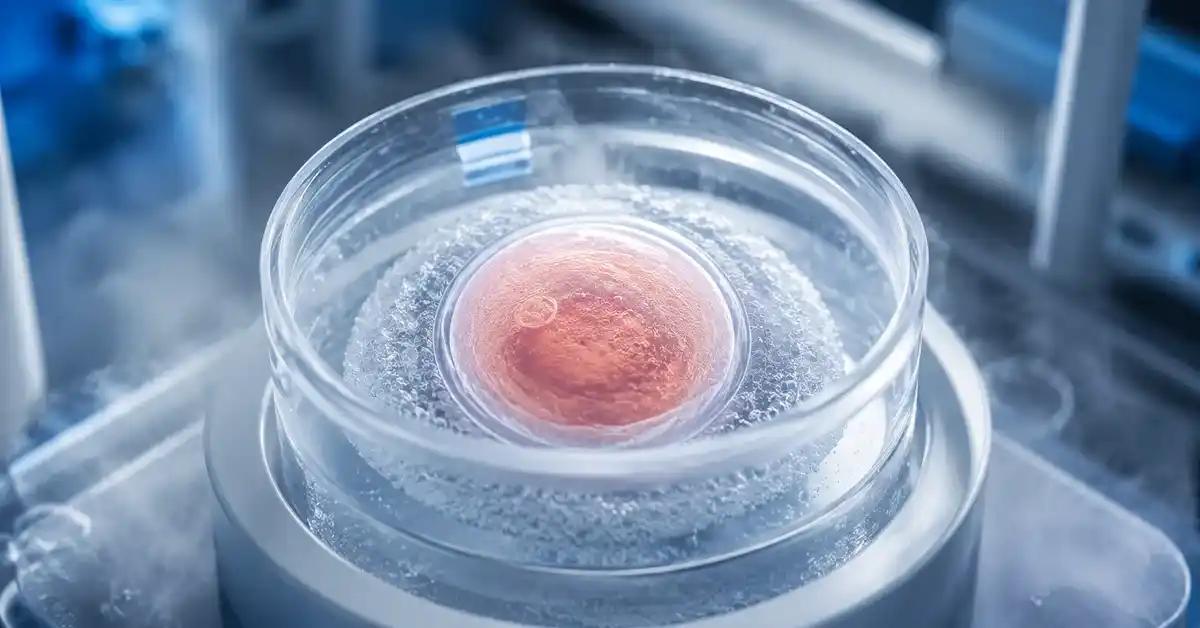
Vitrification egg freezing represents a true revolution in fertility preservation, relying on ultra-rapid cooling of eggs from room temperature to storage temperature in liquid nitrogen at minus one hundred ninety-six degrees Celsius within seconds. This ultra-rapid cooling prevents the formation of large ice crystals that caused egg damage in the old slow-freezing method, instead transforming the fluids inside the egg into a solid glass-like state that preserves the delicate cellular structure of the egg. Egg freezing success rate using vitrification technology is extremely high, with studies indicating that egg survival rates after thawing reach very high percentages, making pregnancy chances after egg freezing nearly equivalent to pregnancy chances using fresh eggs of the same age.
At Fertiliv IVF clinic, we use the latest vitrification protocols and provide advanced laboratories equipped with cutting-edge technology to ensure the highest success rates in egg freezing and preservation. Ovarian stimulation for egg freezing is customized for each woman based on her age, ovarian reserve, and medical history, using advanced stimulation protocols aimed at obtaining the maximum number of high-quality mature eggs while minimizing the risk of ovarian hyperstimulation. Egg preservation and safety protocols are our top priority, with eggs stored in advanced liquid nitrogen tanks with precise monitoring systems operating around the clock to ensure maintenance of optimal temperature and safety of stored eggs.
Read about: Egg Freezing for Single Women: Future Fertility Preservation Options
Who Should Consider Egg Freezing?
Optimal age for egg freezing is a crucial factor in procedure success, as egg quality and quantity are at their highest levels in the twenties and early thirties. Risks of egg freezing for women over 35 include decreased egg quality and quantity, though the procedure can still be successful at older ages. The impact of age on pregnancy chances is significant, as frozen eggs retain the same quality they had at the time of freezing regardless of time passage. Therefore, a woman who freezes her eggs at age thirty will retain eggs of thirty-year-old quality even if she uses them at age forty. Generally, egg freezing is recommended before age thirty-five for optimal results, as egg quality and quantity begin to decline noticeably after this age.
Egg freezing after cancer treatment is one of the most important medical uses of this technology, as chemotherapy and radiation therapy for cancer patients may significantly affect fertility or lead to its complete loss. Women diagnosed with cancer or other diseases requiring treatments that may harm fertility are strongly advised to freeze their eggs before starting treatment to preserve their future chances of motherhood. Egg freezing for social reasons has also become a common option among women who wish to delay childbearing for professional, educational, or personal reasons such as not having the right partner at the present time. This option gives women the freedom to plan their professional and personal lives without worrying about declining fertility with age.
Women with a family history of early menopause or those suffering from medical conditions that may affect fertility such as endometriosis or polycystic ovary syndrome may also benefit from egg freezing at a younger age. At Fertiliv in Istanbul, we provide comprehensive consultations to help every woman understand her options and make the appropriate decision based on her individual situation and future goals. We conduct comprehensive tests to assess ovarian reserve and egg quality, and provide personalized recommendations regarding optimal timing for egg freezing and how many eggs should you freeze for a future pregnancy to achieve the best chances of future conception.
Read about: Modern Egg Freezing Techniques: Innovations and Advanced Tips
Success Rates and Potential Risks
Pregnancy chances after egg freezing depend on several key factors, most importantly the woman's age at the time of freezing, the number of frozen eggs, and egg quality. The difference between frozen eggs and frozen embryos in success and effectiveness shows that historically, success rates with frozen embryos were slightly higher than frozen eggs, but with the development of modern vitrification technology, the gap in success rates has become very small. Recent studies indicate that pregnancy rates using frozen eggs with vitrification technology approach pregnancy rates using fresh eggs of the same age group closely.
The impact of age on pregnancy chances after using frozen eggs is the most important factor, as eggs frozen at age thirty retain the same success rates even if used ten years later. Generally, statistics indicate that each frozen mature egg has a certain chance of resulting in a successful pregnancy, so freezing a sufficient number of eggs is usually recommended to increase success chances. How many eggs should you freeze for a future pregnancy depends on age and individual goals, with younger women typically needing fewer frozen eggs to achieve good pregnancy chances, while older women may need to freeze a larger number to achieve the same success rates. Medical specialists typically recommend freezing an adequate number based on age and ovarian reserve assessment.
Risks and Side Effects
Risks of egg freezing are generally low, but it is important for women to be aware of potential risks and side effects. Ovarian stimulation medications may cause temporary side effects such as bloating, fluid retention, mood swings, and headaches. In rare cases, ovarian hyperstimulation syndrome may occur, a condition requiring careful medical monitoring, but with modern protocols and precise monitoring, this risk can be significantly reduced. The egg retrieval process is generally a safe procedure, but there are minor risks associated with any medical procedure such as bleeding, infection, or damage to adjacent organs, though these complications are very rare.
Thawing frozen eggs and IVF outcomes complications include the possibility that not all eggs will survive the thawing process, as a small percentage of eggs may not survive thawing even with advanced vitrification technology. Additionally, not every surviving egg will fertilize successfully, and not every resulting embryo will lead to a successful pregnancy. Long-term effects of egg freezing on the health of children born from frozen eggs have been extensively studied, and research indicates that children born from frozen eggs show no increase in rates of birth defects or health problems compared to children born naturally or from fresh eggs. At Fertiliv in Turkey, we provide careful monitoring throughout the stimulation and retrieval process to minimize risks to the lowest possible level and ensure patient safety.

Cost, Practical Considerations, and Ethical Issues
Egg freezing cost consists of several main components including initial testing and consultation costs, ovarian stimulation medication costs, egg retrieval and anesthesia procedure costs, freezing and storage costs, and annual fees for preserving frozen eggs. Egg freezing cost in Turkey and the Middle East is competitive compared to Western countries, as Turkey offers high-quality medical services at reasonable prices, making it a preferred destination for many women from around the world. Choosing the best egg freezing clinic requires consideration of several factors including the clinic's experience and success rates, available technology and equipment, medical team qualifications, and patient care quality.
At Fertiliv fertility center, we offer comprehensive egg freezing packages that include all steps from initial consultation to long-term storage, with complete transparency in costs and flexible payment options. We understand that egg freezing represents an important investment in reproductive future, and we strive to provide the best possible value while maintaining the highest standards of quality and care. Egg preservation and safety protocols include storing eggs in advanced liquid nitrogen tanks with electronic monitoring systems operating around the clock, multiple alarm systems, and backup power generators to ensure uninterrupted cooling under any circumstances.
Ethical and Legal Considerations
Ethical issues in egg freezing are an important topic for many women considering this option. Medical and legal ethics related to egg freezing include issues such as ownership of frozen eggs, storage duration, and disposition of eggs in certain situations such as death or divorce. Most medical centers have clear policies and legal contracts that regulate these aspects and protect patient rights. Religious considerations vary among different faiths and denominations, but it is important for women to understand the religious perspectives relevant to their beliefs before making a decision.
Some ethical considerations include questions about the appropriate age for egg freezing, whether egg freezing for social reasons should be encouraged or discouraged, and issues related to egg storage duration and disposition after the woman's reproductive years. At Fertiliv, we respect the religious and cultural beliefs of all our patients and provide a supportive environment that considers these factors, while providing accurate medical information that helps every woman make an informed decision that aligns with her values and beliefs.
Read about: Egg Freezing: Your Path to Preserving Fertility Between Turkey and Germany
Using Frozen Eggs and Success Stories
Thawing frozen eggs and IVF outcomes involve the process of using frozen eggs when a woman is ready to conceive. The thawing process is performed with extreme care in the laboratory, where eggs are removed from storage in liquid nitrogen and gradually warmed to room temperature. After thawing, eggs are evaluated to ensure they remain intact and viable, then fertilized using intracytoplasmic sperm injection (ICSI) where a single sperm is injected directly into each egg. The resulting embryos are monitored in the laboratory for several days, then the best embryos are transferred to the woman's uterus to achieve pregnancy.
Success stories of egg freezing are numerous and encouraging, with thousands of women worldwide successfully achieving the dream of motherhood using frozen eggs. Stories include women who froze their eggs in their thirties for professional or personal reasons, then successfully used them in their forties to have healthy children. There are also inspiring stories of cancer survivors who froze their eggs before chemotherapy and were later able to conceive and have children after recovery. Factors affecting egg freezing success rate include the woman's age at the time of freezing, number and quality of frozen eggs, quality of sperm used in fertilization, and uterine health at the time of embryo transfer.
At Fertiliv IVF clinic, we take pride in the high success rates we have achieved with our patients and are committed to providing the highest levels of care and support at every step of the fertility preservation journey and use of frozen eggs. The Fertiliv team of experienced physicians and specialists works closely with each patient to develop a personalized treatment plan that suits her individual situation and achieves the best chances of success. We believe that every woman deserves the opportunity to preserve her fertility and achieve the dream of motherhood at the right time for her, and we strive to make this dream a reality through our advanced fertility preservation techniques in modern methods and comprehensive care.
Read about: Complete IVF Journey with Egg Freezing: Your Comprehensive Guide
Conclusion
Egg freezing represents a valuable option for women who wish to preserve their fertility and delay childbearing for medical or social reasons. With significant advances in vitrification egg freezing technology, egg freezing success rate has become remarkably high, providing excellent future pregnancy chances. Optimal age for egg freezing is before thirty-five for best results, though freezing can be performed at older ages as well. Egg freezing cost in Turkey is competitive with the availability of choosing the best egg freezing clinic that uses the latest techniques. Risks of egg freezing are generally low, and the procedure is safe and effective. At Fertiliv, we provide comprehensive oocyte cryopreservation services with personalized care and high success rates. For comprehensive consultation about egg freezing and preserving your fertility for the future, you can contact the Fertiliv team via WhatsApp.
Frequently Asked Questions: Egg Freezing: Modern Techniques for Future Fertility Preservation
What is the optimal age for egg freezing?
Optimal age for egg freezing is before age thirty-five, when egg quality and quantity are at their highest levels. Risks of egg freezing for women over 35 include decreased egg quality and quantity, though the procedure can still be successful at older ages. Eggs frozen at a younger age retain the same quality even if used many years later, so freezing eggs early provides the best chances for future pregnancy success.
How many eggs should I freeze?
How many eggs should you freeze for a future pregnancy depends on your age and future goals. Generally, freezing a sufficient number of eggs is recommended to increase success chances, as not every frozen egg will result in a successful pregnancy. Younger women may need fewer eggs, while older women may need to freeze a larger number. Your specialist can provide personalized recommendations based on hormonal tests and ovarian reserve assessment to determine the optimal number for your situation.
What are the risks of egg freezing?
Risks of egg freezing are generally low, but may include side effects from ovarian stimulation medications such as bloating and mood swings, and in rare cases ovarian hyperstimulation syndrome. The egg retrieval process is generally safe with minor risks such as bleeding or infection. Thawing frozen eggs and IVF outcomes complications include the possibility that not all eggs will survive thawing, but with modern vitrification egg freezing technology, survival rates are very high.
What is the cost of egg freezing?
Egg freezing cost consists of several components including initial testing, stimulation medications, retrieval procedure, freezing, and annual storage. Egg freezing cost in Turkey and the Middle East is competitive compared to Western countries, as Turkey offers high-quality services at reasonable prices. At Fertiliv, we provide comprehensive packages with complete cost transparency and flexible payment options, making fertility preservation accessible and affordable.
What are the chances of pregnancy after egg freezing?
Pregnancy chances after egg freezing depend primarily on the woman's age at the time of freezing and the number of frozen eggs. With modern vitrification egg freezing technology, egg freezing success rate has become very high, and pregnancy rates using frozen eggs approach pregnancy rates using fresh eggs of the same age. Eggs frozen at a younger age provide better success rates, and freezing an adequate number of eggs significantly increases the chances of achieving successful pregnancy in the future.