
Complete IVF Journey with Egg Freezing: Your Comprehensive Guide

Manar Hegazy

Majd Eddin Khaled
In today's world of advanced reproductive medicine, the IVF procedure with egg freezing has emerged as a powerful strategy for women who want to preserve their fertility and maintain control over their reproductive timeline. Whether you're a career-focused woman pursuing professional goals, facing medical conditions requiring fertility preservation, or simply not ready for motherhood yet, egg freezing before IVF offers the security and flexibility you need.
At Fertiliv Fertility Clinic, we believe every woman deserves the opportunity to achieve motherhood on her own terms. We offer cutting-edge egg freezing technology and comprehensive IVF services, supported by a dedicated medical team that guides you through every step. This complete guide will explain the egg freezing process step by step and how it integrates with IVF to deliver optimal outcomes.
Understanding IVF with Egg Preservation
The IVF procedure with egg freezing represents an integrated approach to fertility preservation and achieving successful pregnancy. This option combines two advanced medical techniques that give women complete control over their reproductive future.
What Is Egg Cryopreservation?
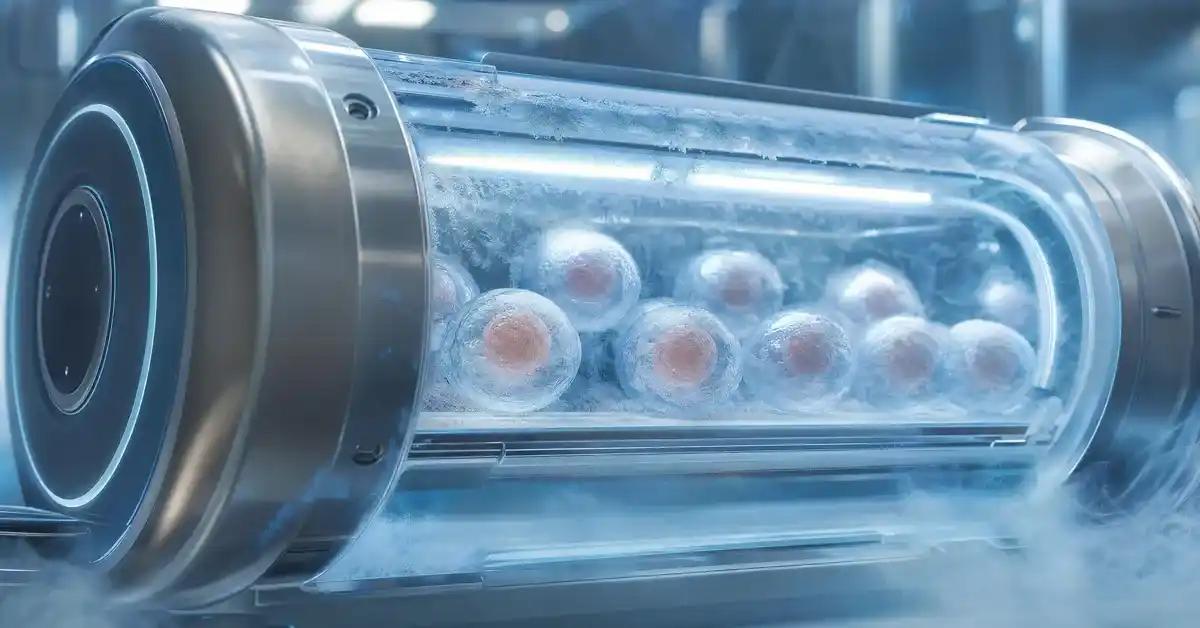
Egg freezing, scientifically known as oocyte cryopreservation, is a precise medical procedure where mature eggs are extracted from the ovaries and preserved at ultra-low temperatures using liquid nitrogen. This technique maintains eggs in a state of complete biological suspension, halting all vital processes and preserving their quality for years or even decades.
How to freeze eggs for IVF depends on an advanced technique called "vitrification." This sophisticated method freezes eggs at an ultra-rapid rate, preventing the formation of harmful ice crystals within the cells. The result is perfectly preserved eggs that retain their full fertilization capacity when needed.
Methods to maintain egg quality after freezing include:
- Using vitrification instead of traditional slow freezing
- Storage in liquid nitrogen tanks at -196°C (-320°F)
- Continuous and precise temperature monitoring
- Advanced and secure storage systems
- Periodic inspection of preserved eggs
Why Egg Freezing Is Ideal Before IVF Treatment
The importance of egg freezing in IVF extends far beyond simple fertility preservation. This option provides multiple strategic advantages that make it the optimal solution for many women. As women age, egg quality and quantity naturally decline, especially after 35. Egg freezing for women over 35 or earlier preserves your eggs at their best.
Primary benefits of this approach:
- Timeline Flexibility: Postpone pregnancy without worrying about declining fertility
- Personal Freedom: Make major life decisions without biological clock pressure
- Quality Preservation: Maintain young, high-quality eggs
- Enhanced Success: Improve future IVF success rates
- Medical Security: Protect fertility before medical treatments
Egg freezing for single women gives them adequate time to find the right partner, while egg freezing for career women allows them to focus on building their careers without sacrificing motherhood opportunities.
Read about: Complete IVF Process Guide: Master Every Step to Achieve Your Parenthood Dream
Detailed Steps of IVF Treatment with Egg Preservation
The egg freezing process step by step consists of several sequential and interconnected stages. Understanding these stages in detail helps you prepare optimally for the journey and eliminates any anxiety or uncertainty surrounding the procedure.
Hormonal Ovarian Stimulation
Ovarian stimulation for egg freezing is the first and fundamental step in the IVF procedure with egg freezing. During this phase, you receive daily hormone injections for approximately 10 to 14 days. The goal is to stimulate the ovaries to produce multiple mature eggs in one cycle, instead of the single egg that occurs naturally.
The medication protocol used for ovarian stimulation includes:
- Gonadotropins: Stimulate follicle growth and egg development
- Aromatase inhibitors: Regulate hormone levels and improve response
- GnRH antagonists: Prevent premature unwanted ovulation
- Trigger shot: Stimulates final egg maturation before retrieval
During this period, you undergo precise medical monitoring including regular blood tests to measure hormone levels, and ultrasound scans to monitor follicle growth and determine the optimal timing for egg retrieval.
Egg Retrieval from Ovaries
The egg retrieval process IVF is a relatively simple medical procedure performed at the clinic under light sedation or local anesthesia. The procedure typically takes only 20 to 30 minutes. The doctor uses a very thin needle guided precisely via transvaginal ultrasound to extract mature eggs from the follicles in the ovaries.
What to expect during and after egg retrieval:
- Arrive at the clinic early morning on an empty stomach
- Receive light sedation for complete comfort
- Undergo the retrieval procedure lasting 20-30 minutes
- Rest in the recovery room for one to two hours
- Return home the same day with a companion
- Experience mild cramping or bloating for a few days
- Rest for 24-48 hours before resuming normal activities
The number of eggs retrieved varies from woman to woman based on age and response to stimulation, but the average ranges between 10 to 20 eggs per cycle.
Egg Preservation Using Modern Techniques
Egg freezing begins immediately after retrieval. The specialized embryology team examines the retrieved eggs under a microscope to identify only the mature ones. Only mature eggs are frozen, as they are capable of fertilization later.
The vitrification freezing process proceeds as follows:
- Treating eggs with special protective solutions that prevent ice crystal formation
- Ultra-rapid egg freezing
- Converting eggs to a solid glass-like state without crystals
- Storing eggs in special straws or small tubes
- Placing eggs in liquid nitrogen tanks
Egg freezing risks IVF are minimal when using modern techniques. Egg survival rates after thawing reach 85-95% with vitrification technology.
Laboratory Fertilization of Thawed Eggs
Laboratory fertilization occurs when you decide to use your frozen eggs to achieve pregnancy. At this stage, eggs are carefully thawed using a specialized protocol that ensures maximum survival rates. Surviving eggs are ready for fertilization within a few hours.
Available fertilization methods:
- Traditional IVF: Placing eggs with a large number of sperm in a laboratory dish
- ICSI (Intracytoplasmic Sperm Injection): Injecting a single sperm directly into each egg
After fertilization, embryos develop in advanced laboratory incubators for 3 to 5 days. During this period, embryologists closely monitor embryo development to identify the best quality ones for transfer.
Embryo Transfer to Uterus
Embryo transfer is the final and decisive step in the IVF procedure. The best quality and development embryos are selected for transfer to your uterus. In most cases, one or two embryos are transferred to balance success chances and avoid multiple pregnancy.
Embryo transfer procedure details:
- Simple and quick procedure requiring no anesthesia
- Takes approximately 5 to 10 minutes only
- Uses a thin, flexible catheter to transfer embryos
- Catheter guided precisely via ultrasound
- Embryos placed in optimal location inside uterus
- Rest for a few minutes after the procedure
- Return home and resume light normal activities
After embryo transfer, you wait 10 to 14 days before taking a blood pregnancy test to determine procedure success.
If you're considering preserving your fertility or starting your IVF journey, contact the Fertiliv team via WhatsApp for a comprehensive consultation and personalized treatment plan for your case.
Read about: IVF: Your Journey to Parenthood Between Turkey and the United States
Advantages of Fertility Preservation Before IVF Treatment
Egg freezing benefits IVF are numerous and meet the needs of different categories of women. This option gives women the freedom to make important life decisions without sacrificing future motherhood opportunities.
Ideal Option for Single Women
Egg freezing for single women represents a practical and smart solution for women who haven't found the right partner yet. This option eliminates the psychological pressure resulting from the biological clock and gives women adequate time to make important life decisions without worry.
Primary advantages of this option:
- Preserving young, high-quality eggs during peak fertility years
- Reducing anxiety and psychological pressure related to age and marriage
- Complete flexibility in choosing the timing of marriage and childbearing
- Ability to use eggs with a future partner
- Increasing IVF success chances when ready for pregnancy
- Feeling secure and in control of reproductive future
The optimal timing for egg freezing for single women is ideally in the late twenties or early thirties, when egg quality is at its best and future success rates are highest.
Supporting Career Ambitions of Professional Women
Egg freezing for career women provides the perfect balance between professional ambitions and the desire for motherhood. Many women want to focus on building their careers and achieving their professional goals in their twenties and thirties, which is the same critical period for fertility.
How egg freezing helps career women:
- Career Planning Freedom: Focus on professional advancement without fertility decline worries
- Timeline Flexibility: Postpone pregnancy until achieving professional and financial stability
- Reduced Pressures: Eliminate conflict between biological clock and professional ambitions
- Timing Choice: Determine optimal pregnancy timing based on professional circumstances
- Quality Preservation: Ensure high-quality eggs when ready for childbearing
Fertility Preservation for Medical Reasons
Egg freezing for medical reasons represents a vital option for women facing health conditions that may affect their fertility. This includes women who will undergo cancer treatments, or suffer from medical conditions requiring treatments that may harm the ovaries.
Medical conditions requiring egg freezing:
- Cancer and chemotherapy or radiation treatment
- Autoimmune diseases requiring strong treatments
- Need for ovarian surgeries
- Family history of premature menopause
- Severe endometriosis
Preventing Effects of Aging
Avoiding the risks of aging on fertility is one of the most important motivations for egg freezing. As women age, natural biological changes occur that negatively affect fertility. Egg freezing for women over 35 or earlier preserves your eggs at their best.
Age-related changes and their impact on fertility:
- Declining egg quantity: Women are born with a limited number of eggs that gradually decreases with age
- Deteriorating egg quality: Increased likelihood of chromosomal abnormalities with advancing age
- Declining success rates: IVF success rates decrease significantly after 35 years
- Increased miscarriage risk: Miscarriage rates rise with aging eggs
- Pregnancy complications: Pregnancy health risks increase with advancing age

Financial Aspects of Egg Preservation
The cost of egg freezing IVF varies significantly depending on several factors. Understanding these costs in detail helps you plan financially for this important investment in your reproductive future.
Factors Affecting Total Cost
Factors influencing egg freezing and IVF costs are multiple and interconnected:
Initial Testing and Assessment:
- Comprehensive blood tests to assess fertility and hormones
- Ultrasound to evaluate ovaries and count follicles
- Required infectious disease screening
- Medical consultations and comprehensive assessment
Ovarian Stimulation Medications:
- Gonadotropins
- Aromatase inhibitors or GnRH antagonists
- Trigger shot
- Additional supportive medications as needed
Medical Procedures:
- Cost of egg retrieval procedure
- Anesthesia and medical monitoring
- Laboratory work and embryology team
- Vitrification freezing process
Storage and Preservation:
- Annual storage fees in liquid nitrogen
- Periodic monitoring and maintenance
- Insurance for preserved eggs
Comparison Between Available Freezing Methods
There are two main methods for egg freezing, each with significantly different costs and success rates:
Traditional Slow Freezing:
- Relatively old technique rarely used currently
- Slightly lower cost
- Egg survival rate after thawing: only 60-70%
- Greater risk of harmful ice crystal formation
- Lower success rates in subsequent IVF
Vitrification:
- Modern technique and current gold standard
- Slightly higher cost but worth the investment
- Egg survival rate after thawing: 85-95%
- Ultra-rapid freezing prevents ice crystal formation
- IVF success rates comparable to fresh eggs
- Recommended choice used in advanced centers
For a detailed quote customized to your case, contact the Fertiliv team via WhatsApp. We offer flexible payment plans and complete transparency in costs.
Read about: Understanding IVF Failure: Your Guide to Improving Success Rates
Success Rates for IVF with Preserved Eggs
Egg freezing and IVF success rates depend on several interconnected factors. Understanding these factors helps you set realistic expectations and increase your chances of success.
What Determines Success Rate
Factors affecting egg freezing success rates with frozen eggs include:
Woman's Age at Freezing:
- The younger the age at freezing, the better the results
- Egg quality gradually declines with advancing age
- Frozen eggs retain their biological age at freezing
Number of Frozen Eggs:
- Greater number of eggs significantly increases success chances
- Not all eggs survive thawing
- Not all surviving eggs fertilize successfully
- Not all embryos develop properly
- Experts recommend freezing at least 15-20 eggs
Egg Quality and Overall Health:
- Healthy lifestyle improves egg quality
- Smoking and alcohol negatively affect quality
- Healthy weight improves success rates
- Chronic medical conditions may affect outcomes
Expected success rates by age at freezing:
- Under 30 years: Pregnancy success rate 50-60%, live birth rate 45-55%
- 30-34 years: Pregnancy success rate 40-50%, live birth rate 35-45%
- 35-37 years: Pregnancy success rate 30-40%, live birth rate 25-35%
- 38-40 years: Pregnancy success rate 20-30%, live birth rate 15-25%
- Over 40 years: Pregnancy success rate 10-20%, live birth rate 8-15%
Comprehensive Comparison: Frozen vs. Fresh Eggs
Comparing egg freezing and IVF success rates with and without prior freezing shows very encouraging results. Recent scientific studies confirm that eggs frozen using vitrification achieve success rates very close to fresh eggs.
IVF with Fresh Eggs:
- Pregnancy success rate: 45-55% for women under 35 years
- Provides no timing flexibility
- Requires synchronization of egg retrieval timing with sperm availability
- Cannot postpone or plan ahead
- Suitable for couples ready immediately for pregnancy
IVF with Frozen Eggs:
- Pregnancy success rate: 40-50% for women who froze eggs under 35 years
- Provides complete flexibility in choosing appropriate timing
- Allows advance planning and optimal preparation
- Preserves egg quality for years or decades
- Suitable for women who want to postpone pregnancy
Read about: Nutrition and IVF Success: Your Comprehensive Guide to Optimal Outcomes
Potential Risks and Challenges of Egg Preservation
Egg freezing risks IVF exist as with any medical procedure, but they are limited and can be effectively managed. Complete transparency about these risks helps you make an informed and considered decision.
Medical and Physical Risks
Health risks of egg freezing are divided into short-term and long-term:
Short-term Risks:
- Ovarian Hyperstimulation Syndrome: Occurs in 1-3% of cases, causes bloating and abdominal pain, mild cases resolve within a week
- Mild bleeding after egg retrieval: Occurs in about 1-2% of cases, usually mild and stops spontaneously
- Infection: Very rare (less than 0.5%), easily treated with antibiotics
- Pain and cramping: Completely normal after egg retrieval, resolves within 2-3 days
- Allergic reactions to medications: Very rare, detected early through close monitoring
Long-term Risks:
- No scientific evidence of long-term health risks from egg freezing
- Long-term studies confirm procedure safety on women's health
- No evidence of increased cancer risk or other health problems
- Children born from frozen eggs enjoy completely normal health
Technical challenges associated with egg freezing:
- Possibility that not all eggs survive after thawing
- Possibility that not all surviving eggs fertilize
- Possibility that not all embryos develop properly
- No 100% guarantee of successful pregnancy even with sufficient eggs
Psychological and Emotional Effects
Psychological and social impacts of egg freezing should be seriously considered:
Positive Effects:
- Feeling secure and in control of reproductive future
- Significantly reducing anxiety related to biological clock
- Complete flexibility in making important life decisions
- Increased self-confidence and sense of empowerment
- Reduced pressure in romantic relationships
Potential Negative Effects:
- Anxiety about possible future procedure failure
- Financial pressure due to high costs
- Feeling guilty or hesitant about the decision
- Unrealistic expectations about guaranteed success
- Feeling isolated if those around don't understand the decision
Read about: Proper Nutrition for Women After IVF: Complete Guide to Pregnancy Success
Tips for Successful Egg Freezing
Tips for egg freezing help you achieve the best possible results and avoid potential problems. Good planning and proper preparation significantly increase your future success chances.
Optimal Timing for Decision-Making
The appropriate timing for egg freezing depends on your personal circumstances, but there are clear indicators and scientific criteria:
Seriously consider egg freezing if:
- Age and Social Status: You're in your late twenties or early thirties and not ready for childbearing, or haven't found the right partner yet
- Professional and Educational Reasons: Planning to postpone childbearing to complete graduate studies or focus on building your career
- Medical Reasons: Facing cancer diagnosis and will undergo chemotherapy or radiation, or need surgery that may affect ovaries
- Desire for Future Options: Want to preserve multiple reproductive options or considering having children in the distant future
Ideal Age for Egg Freezing:
- 25-30 years: Absolutely best time in terms of egg quality and quantity
- 30-35 years: Very ideal time still providing excellent results
- 35-37 years: Very good time, may need additional cycle
- 37-40 years: Still possible and beneficial, but may need several cycles
- Over 40 years: Possible but with lower success rates
Criteria for Choosing the Best Medical Center
Choosing the right medical center for egg freezing and IVF is crucial for procedure success. Here are the essential criteria to consider:
Experience and Specialization:
- Look for a center specialized in egg freezing and IVF
- Verify years of experience and number of cases treated annually
- Review qualifications of doctors and embryologists
- Ensure presence of complete specialized team
Documented Success Rates:
- Request access to documented and updated success rates
- Compare success rates with national and international averages
- Ensure rates are divided by age groups
- Ask about egg survival rate after thawing
Technologies and Equipment:
- Ensure use of vitrification technique
- Verify presence of modern advanced laboratories
- Ask about storage and monitoring systems
- Ensure presence of backup systems for emergencies
Fertiliv Fertility Clinic meets all these criteria and more. Contact us via WhatsApp to schedule a free consultation and tour of our advanced medical facilities.
Read about: Embryo Freezing in IVF: New Opportunities to Achieve Parenthood
Women's Experiences with Egg Preservation and IVF
Experiences of women who underwent egg freezing and IVF provide valuable insights and inspiration for women considering this option. These experiences reflect the challenges, successes, and lessons learned.
Positive and Encouraging Outcomes
Many women achieved great success in preserving their fertility and realizing their motherhood dreams through egg freezing and IVF. Positive outcomes include:
- Successful pregnancy and birth years after egg freezing
- Ability to focus on professional and personal goals without worry
- Feeling secure and in control of reproductive future
- Achieving balance between professional and family life
- Preserving egg quality despite advancing age
Common factors in successful experiences:
- Freezing at relatively young age (before 35 years)
- Choosing specialized and trusted medical center
- Adherence to medical instructions and precise follow-up
- Receiving adequate psychological and emotional support
- Setting realistic expectations about outcomes
Challenges and Lessons Learned
Challenges associated with egg freezing and IVF are real, and learning from them helps others prepare better:
Common Challenges:
- Financial Challenge: High costs were a barrier for some women. Solution: Advance financial planning, seeking financing options
- Emotional Challenge: Anxiety and stress during procedure and waiting period. Solution: Professional psychological support, talking with other women
- Physical Challenge: Side effects of hormone medications. Solution: Precise medical follow-up, dose adjustments, adequate rest
- Social Challenge: Lack of understanding or support from those around. Solution: Education, choosing whom to share decision with
- Psychological Challenge: Fear of failure or eggs not surviving. Solution: Realistic expectations, focusing on positives
Lessons Learned:
- Earlier freezing yields better results
- Choosing the right medical center is crucial
- Psychological and emotional support is essential for success
- Advance financial planning reduces pressure
- Realistic expectations prevent disappointment
- Flexibility and patience are keys to success
Read about: Your Complete IVF Journey: From Start to Success
Conclusion and Final Recommendations
The conclusion and recommendations regarding the IVF procedure with egg freezing confirm that this option represents a powerful and advanced tool for preserving fertility and controlling reproductive future.
Importance of Awareness and Early Planning
The importance of awareness and advance planning cannot be overstated. Early knowledge of your reproductive options enables you to make informed and considered decisions that affect your entire future.
Key recommendations for women at different ages:
- In your twenties: Start thinking about your reproductive options and educate yourself about egg freezing
- In early thirties: Undergo basic fertility tests to assess ovarian reserve
- In mid-thirties: If not ready for childbearing, seriously consider egg freezing
- In late thirties: Consult a fertility specialist immediately to assess your options
- In your forties: Get detailed consultation about available options and realistic expectations
Practical Steps to Begin:
- Educate yourself about IVF and egg freezing procedures
- Undergo basic fertility testing
- Consult a trusted fertility specialist for personal assessment
- Plan financially for egg freezing cost and annual storage
- Research specialized and trusted medical center
- Don't postpone the decision if seriously considering it
Value of Comprehensive Support in the Journey
The role of psychological and social support is crucial in the success of the egg freezing and IVF journey. This journey is not just physical, but a comprehensive emotional, psychological, and social journey.
Necessary Forms of Support:
- Family and Social Support: Understanding and support from family and close friends, sharing decision with trusted people
- Professional Psychological Support: Specialized psychological consultations before, during, and after procedure, anxiety and stress management techniques
- Community Support: Joining support groups for women on same journey, connecting with women who underwent same experience
- Comprehensive Medical Support: Empathetic and understanding medical team, open and transparent communication with doctors
- Spiritual and Faith Support: Faith and optimism about the future, patience and confidence in the decision
At Fertiliv Fertility Clinic, we provide comprehensive support covering all these aspects. Our specialized team accompanies you through every step of your journey toward preserving your fertility and achieving your motherhood dream. We believe every woman deserves the opportunity to realize her reproductive dreams at the right time for her.
The dream of motherhood is not far away. With proper planning, appropriate support, and modern technologies, you can achieve it at the time you choose. Contact Fertiliv Clinic via WhatsApp today to begin your journey toward preserving your fertility and achieving your motherhood dream with confidence and security.
Frequently Asked Questions: IVF Steps with Pre-Frozen Eggs: Your Complete Guide
How Many Years Can Frozen Eggs Be Kept Without Losing Quality?
Frozen eggs can theoretically be kept indefinitely without losing quality or ability to be fertilized. Scientific studies have shown that eggs preserved for 10 years or more using rapid vitrification technology show no significant deterioration in quality. Methods for preserving egg quality after freezing include storage in liquid nitrogen at -196 degrees Celsius, which stops all biological activities completely. In this case, eggs remain in the same biological state they were in when frozen, regardless of time passing.
Is Egg Freezing Painful and What are the Expected Side Effects?
The egg freezing process itself is not painful. The only part that may cause some discomfort is egg retrieval, but it is performed under light or local anesthesia, so you won't feel any pain during the procedure. After egg retrieval, you may experience mild cramping or abdominal bloating for a few days, but these symptoms disappear quickly and can be managed with simple pain relievers. As for the daily injections to stimulate the ovary before freezing, they may cause some mild discomfort, but they are not significantly painful. Health risks of egg freezing are very limited, with the most important being ovarian hyperstimulation syndrome, which occurs in only 1-3% of cases and can be prevented with careful monitoring.
How Many Eggs Should Be Frozen to Ensure Good IVF Success Rates?
The ideal number of frozen eggs depends greatly on your age at freezing. Generally, experts recommend freezing at least 15-20 mature eggs to increase chances of successful IVF in the future. For women under 35, 10-15 eggs may be sufficient to achieve good success rates. For women between 35-37, freezing 15-20 eggs is recommended. For women over 37, you may need a larger number or multiple cycles. The reason is that not all eggs survive thawing, not all surviving eggs are successfully fertilized, and not all embryos develop properly. IVF success rates increase significantly with increasing numbers of high-quality frozen eggs.
Can I Freeze Eggs If I Have Polycystic Ovary Syndrome?
Yes, you can definitely freeze eggs even if you have polycystic ovary syndrome. In fact, women with this syndrome often produce a larger number of eggs during ovary stimulation before freezing, which can be an advantage. However, there is a slightly higher risk of ovarian hyperstimulation syndrome, so you should be monitored very carefully by a specialized medical team. Your doctor may use a customized and modified medication protocol to reduce this risk. The cost of egg freezing and IVF stages remains approximately the same, but you may need more precise monitoring. The good news is that IVF success rates are very good, especially when using eggs frozen at a young age.
What is the Difference Between Egg Freezing and Embryo Freezing and Which is Better?
Egg freezing is done before fertilization, where unfertilized eggs are preserved. This option is suitable for single women or those who do not want to use sperm currently. Embryo freezing is done after eggs are fertilized with sperm and is suitable for married couples or those with a partner. Both options are used in IVF and pre-freezing. In terms of success rates, embryo freezing achieves slightly higher success rates because embryos are more resistant to freezing and thawing than eggs. However, egg freezing provides greater flexibility for single women and allows them to choose the right partner in the future. The method of freezing eggs and embryos is similar, and both use modern rapid vitrification technology. The choice between them depends on your personal and social situation.