
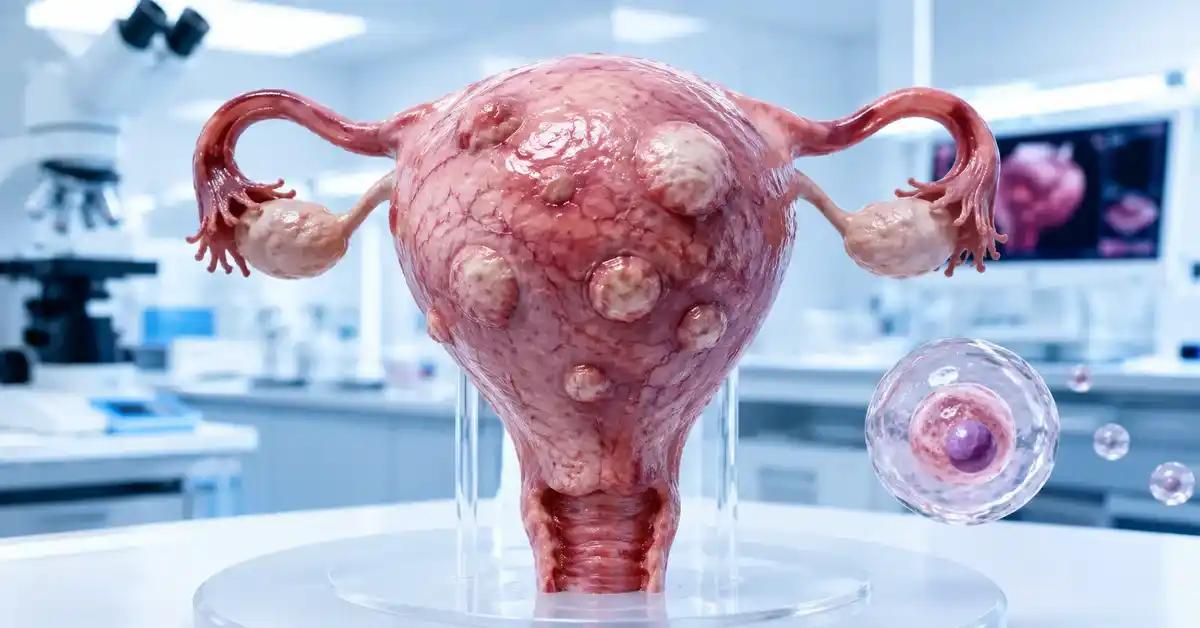
Enlarged Uterus: Its Effect on Fertility and the Latest Treatment Options

Manar Hegazy

Majd Eddin Khaled
An enlarged uterus is a phrase that may appear in an ultrasound report or be mentioned during a gynecological examination. However, it is not a final diagnosis by itself. The uterus may be enlarged because of fibroids, adenomyosis, thickening of the uterine muscle, hormonal factors, or other conditions that require proper evaluation. The important questions are: Can an enlarged uterus affect fertility? Can it interfere with embryo implantation? And when should it be treated before pregnancy or IVF?
At Fertiliv IVF Center in Istanbul, an enlarged uterus is evaluated by identifying the underlying cause, not by focusing on size alone. Its effect on fertility differs from one woman to another. Some cases are mild and do not prevent pregnancy, while others may be linked to fibroids that distort the uterine cavity or adenomyosis that affects the uterine environment. A clear diagnosis allows a more precise treatment plan, especially when fertility preservation is the goal.
What Does an Enlarged Uterus Mean?
An enlarged uterus means that the uterus is larger than expected for a woman’s age and reproductive history. The enlargement may be general, involving the uterine wall, or localized due to a mass such as a fibroid. It may cause heavy bleeding or pain, or it may be discovered during fertility evaluation without symptoms.
Uterine size alone does not determine the seriousness of the condition. The cause and location are often more important than the measurement. A small fibroid inside the uterine cavity may affect fertility more than a larger fibroid on the outer surface of the uterus.
A sign, not a diagnosis
When the uterus is described as enlarged, the next step is to understand why. The doctor needs to determine whether the cause is fibroids, adenomyosis, muscle thickening, a nearby pelvic mass, or another condition. Treatment should not be based on the word “enlarged” alone.
Diagnosis usually begins with transvaginal ultrasound. In some cases, three-dimensional ultrasound or MRI may be needed to clarify uterine anatomy, the cavity, the uterine wall, and the exact location of any abnormality.
Symptoms that may appear
An enlarged uterus may be associated with heavy periods, pelvic pain, pressure, bloating, frequent urination, pain during intercourse, or delayed pregnancy. In other cases, there may be no symptoms at all.
Symptoms help guide evaluation, but they are not enough for diagnosis. Some women have severe symptoms with small findings, while others have large fibroids with limited discomfort. Imaging and medical history must be reviewed together.
When it matters for fertility
An enlarged uterus becomes more important for fertility when it changes the uterine cavity, affects the endometrium, interferes with implantation, is linked to recurrent miscarriage, compresses the fallopian tubes, or causes ongoing inflammation and pain.
If the enlargement is mild, outside the cavity, and not causing symptoms or fertility-related changes, observation may be enough. The decision depends on the full picture, not size alone.
Read about: Weak Ovulation: A Clear Guide to Diagnosis and Treatment Options
Causes of Enlarged Uterus Related to Fertility
Several conditions can enlarge the uterus, but the two most commonly discussed in fertility care are fibroids and adenomyosis. In some women, both may exist together, making diagnosis more complex.
Each cause affects fertility differently. Some conditions change the uterine cavity directly, while others affect contractions, blood flow, inflammation, or the implantation environment. Identifying the cause is essential before choosing treatment.
Uterine fibroids
Fibroids are benign growths from the muscle of the uterus. They may be inside the cavity, within the uterine wall, or on the outer surface. Their effect on fertility depends mostly on size, number, and location. Fibroids that distort the uterine cavity are usually more relevant when pregnancy is being planned.
Fibroids may cause heavy bleeding, pain, pressure, or delayed pregnancy, but they may also be silent. Not every fibroid requires treatment. Treatment is considered when symptoms are significant or when the fibroid is likely to affect fertility.
Adenomyosis
Adenomyosis occurs when tissue similar to the uterine lining grows into the muscular wall of the uterus. It may cause diffuse uterine enlargement, painful periods, heavy bleeding, and in some cases fertility or implantation concerns.
Diagnosis may require experienced ultrasound evaluation or MRI. In fertility care, the aim is to reduce symptoms and improve the uterine environment when possible, while choosing options that do not harm future pregnancy chances.
Other causes to consider
The uterus may appear enlarged because of early pregnancy, endometrial thickening, hormonal conditions, chronic inflammation, or a nearby mass that appears related to the uterus. This is why the cause should not be assumed.
In some cases, additional tests such as hysteroscopy, endometrial sampling, or advanced imaging may be needed, especially if bleeding is abnormal or ultrasound findings are unclear.
Read about: Endometriosis And Pregnancy: Is Natural Conception Possible Or Is IVF Necessary?
How an Enlarged Uterus May Affect Fertility
The effect of an enlarged uterus is not the same in every woman. Some women conceive naturally despite uterine enlargement, while others experience delayed pregnancy if the uterine cavity or lining is affected.
In fertility care, the key questions are not only whether the uterus is large. The doctor must know why it is large, whether the cavity is normal, whether the endometrium is suitable, whether there has been recurrent miscarriage, and whether other fertility factors exist.
Effect on embryo implantation
Embryo implantation requires a receptive endometrium and a regular uterine cavity. If enlargement is caused by a fibroid inside or near the cavity, it may change the shape of the cavity and affect implantation. Adenomyosis may also influence the implantation environment in some women.
This does not mean every enlarged uterus prevents implantation. It means the cavity should be evaluated carefully. Three-dimensional ultrasound or hysteroscopy may help when cavity distortion is suspected.
Relationship with recurrent miscarriage
Some uterine conditions linked to enlargement may be associated with recurrent miscarriage, especially when the cavity is distorted or the uterine environment is affected. When recurrent miscarriage and uterine enlargement occur together, the uterus should be assessed carefully.
However, recurrent miscarriage has many possible causes, including chromosomal, hormonal, immune, clotting, and embryo-related factors. Uterine enlargement should not be assumed to be the only cause without a full evaluation.
Effect on fertility treatment
Before IVF or embryo transfer, the doctor needs to know whether the uterine cavity is ready to receive an embryo. If enlargement is caused by a submucosal fibroid or severe adenomyosis, embryo transfer may be delayed until the uterus is treated or better prepared.
In some cases, freezing embryos and treating the uterus before transfer may be a better strategy. In other cases, treatment may proceed without intervention. The decision depends on cause, severity, and the couple’s fertility plan.
Read about: Uterine Fibroids And Fertility: When Do They Affect Pregnancy And How Are They Treated?
Diagnosis of Enlarged Uterus
Diagnosis usually begins with transvaginal ultrasound. This gives information about uterine size, wall thickness, fibroids, endometrial appearance, and the ovaries. However, ultrasound may not answer every question, especially when adenomyosis, multiple fibroids, or cavity distortion is suspected.
The goal is not only to confirm enlargement. The goal is to understand whether it affects fertility and which treatment, if any, is needed.
Transvaginal ultrasound and 3D ultrasound
Transvaginal ultrasound is the first imaging test in most cases. It can detect fibroids, uterine shape, endometrial thickness, and some signs of adenomyosis. Three-dimensional ultrasound may give clearer information about the uterine cavity.
This matters because a problem inside the cavity is treated differently from a fibroid outside the cavity. Treatment planning depends heavily on location.
MRI
MRI may be useful when ultrasound is unclear, when adenomyosis is suspected, or when multiple fibroids need detailed mapping before surgery. It provides more information about the uterine wall and the relationship between lesions and the cavity.
Not every woman needs MRI. It becomes more valuable when fertility decisions depend on precise anatomy or when the treatment approach is not clear.
Hysteroscopy
Hysteroscopy allows direct visualization of the uterine cavity. It may be diagnostic or therapeutic. If a submucosal fibroid, polyp, or cavity abnormality is present, hysteroscopy may confirm the diagnosis and sometimes treat the problem.
In fertility care, hysteroscopy can be important because the uterine cavity is where the embryo needs to implant. It may be part of preparation before pregnancy or embryo transfer in selected cases.

Latest Fertility-Preserving Treatment Options
Treatment depends on the cause, symptoms, age, fertility goals, location of the problem, and severity. There is no single treatment for every enlarged uterus. Some women need observation only, while others may need medication or uterine-preserving surgery.
When pregnancy is desired, treatment must be chosen carefully. Some options reduce bleeding or uterine size but may not be ideal for someone trying to conceive soon. The goal should be clear: symptom control, fertility improvement, or uterine preparation before fertility treatment.
Medical treatment
Medications may help control heavy bleeding and pain related to fibroids or adenomyosis. Options may include hormonal treatments, anti-inflammatory medications, or bleeding-control medications depending on the diagnosis.
However, some medications prevent pregnancy while being used and may not remove the underlying cause. They may be used temporarily, for symptom control, or before a procedure. Women planning pregnancy should understand how each medication affects ovulation and conception.
Uterine-preserving myomectomy
Myomectomy, the surgical removal of fibroids while preserving the uterus, may be important when fibroids affect fertility or cause significant symptoms. It may be performed hysteroscopically for fibroids inside the cavity, or laparoscopically, robotically, or through open surgery depending on size, number, and location.
The aim is to remove the fertility-relevant fibroid while protecting the uterus as much as possible. After surgery, a waiting period before pregnancy may be needed depending on the depth and type of repair.
Adenomyosis treatment and fertility planning
Adenomyosis treatment in women who want pregnancy requires careful balance. Some medical treatments may reduce symptoms temporarily, and in selected fertility plans, doctors may prepare the uterus before embryo transfer. Surgery for adenomyosis is more complex and must be chosen carefully.
There is no single ideal treatment for every fertility patient with adenomyosis. The plan should consider disease severity, age, ovarian reserve, embryo availability, IVF timing, and symptoms.
Read about: Chronic Diseases And Fertility: How Can You Achieve Parenthood Despite Health Challenges?
Modern Techniques: When They Fit and When They Do Not
Modern options such as uterine artery embolization, focused ultrasound, and radiofrequency ablation may help selected patients with fibroids. These techniques may be less invasive in some cases, but they are not automatically the best option for women planning pregnancy.
“Modern” does not always mean “best for fertility.” Some techniques may reduce symptoms but require careful discussion about uterine safety and pregnancy data afterward. Treatment should be selected according to reproductive goals.
Uterine artery embolization
Uterine artery embolization can reduce fibroid size and bleeding by blocking the blood supply to fibroids. It may be useful for some women, but it is not always the first choice for women actively planning pregnancy.
It may be considered in selected situations, especially when other options are not suitable. However, in fertility planning, alternatives such as myomectomy often require discussion.
Focused ultrasound
Focused ultrasound uses targeted energy to shrink selected fibroids without traditional surgical incisions. It may suit certain fibroids depending on size, location, depth, and relation to nearby organs.
It is not suitable for every case. When pregnancy is desired, the doctor must consider the available evidence, the center’s experience, and whether the treatment supports the patient’s fertility goal.
Radiofrequency and fibroid-shrinking techniques
Radiofrequency ablation aims to shrink fibroids by delivering controlled heat energy into the tissue. It may help symptoms in selected women, but fertility planning requires special caution.
The key question is whether the technique improves the chance of pregnancy or mainly treats symptoms. A modern technique should not replace a clear fertility plan.
Read about: Blocked Fallopian Tubes: Is It The End Of The Motherhood Dream?
Choosing the Right Plan Before Pregnancy or IVF
The treatment plan must be individualized. The doctor needs to know the cause of uterine enlargement, the location of the problem, the woman’s age, ovarian reserve, miscarriage history, infertility duration, and the male partner’s fertility status.
Sometimes treatment before pregnancy is necessary. In other cases, observation or moving directly into fertility treatment may be more appropriate. During IVF, embryo freezing and delayed transfer may be considered if the uterus needs treatment first.
When to treat before trying to conceive
Treatment before pregnancy may be discussed when enlargement is linked to cavity distortion, heavy bleeding, significant pain, recurrent miscarriage, or severe adenomyosis. The goal is to improve the uterine environment and reduce pregnancy-related risks.
If the problem is outside the cavity, mild, and not affecting fertility, observation may be enough. Unnecessary treatment can cause delay or introduce risks the couple may not need.
When fertility treatment may start first
Starting fertility treatment first may be appropriate when age or ovarian reserve is a major concern, or when uterine treatment may take time. In some cases, eggs may be collected and embryos frozen before treating the uterus and planning transfer later.
This strategy can protect time-sensitive fertility potential while allowing the uterus to be optimized before implantation.
Why both partners should be evaluated
Although uterine enlargement affects the woman, fertility planning should include both partners. If there is severe male-factor infertility or long-standing delay, the plan may change.
The best plan balances uterine health, egg quality, ovarian reserve, semen analysis, and the available time. A couple-based approach prevents treating one finding while missing another important factor.
Read about: Premature Ovarian Insufficiency (POF): Causes, Symptoms, And Medically Available Fertility Options
Follow-Up After Treatment and Pregnancy Chances
After treatment, follow-up helps confirm symptom improvement, uterine healing, and cavity readiness for pregnancy. Follow-up may include ultrasound, hysteroscopy, or reassessment before embryo transfer depending on the procedure.
Pregnancy chances after treatment depend on cause, age, ovarian reserve, semen quality, and other fertility factors. Treatment may improve the uterine environment, but it does not guarantee pregnancy by itself.
When pregnancy can be attempted
The timing of pregnancy after treatment depends on the type of procedure. Minor hysteroscopic treatment may need a shorter recovery period, while deeper uterine surgery may require a longer waiting time for healing.
The doctor should determine timing based on the actual procedure and uterine repair. Following this guidance is important for safety.
Checking the uterine cavity
If treatment involved the uterine cavity or was close to it, the doctor may check that the cavity is suitable for pregnancy. Ultrasound or hysteroscopy may be used in selected cases to rule out adhesions or remaining distortion.
This is especially important before embryo transfer, where both embryo quality and uterine readiness matter.
Realistic expectations
Treatment of an enlarged uterus may improve bleeding, pain, uterine shape, and fertility chances in appropriate cases. However, pregnancy also depends on age, ovarian reserve, sperm quality, endometriosis, inflammation, and other factors.
Treatment should be seen as part of a complete fertility plan. Realistic expectations help couples make calmer and more informed decisions.
Read about: Vaginal And Pelvic Infections: Can They Cause Infertility?
Conclusion
An enlarged uterus may be a mild finding that does not affect fertility, or it may be related to fibroids, adenomyosis, or uterine cavity changes that need treatment before pregnancy or IVF. The decision should not be based on size alone, but on the cause, location, symptoms, age, ovarian reserve, pregnancy history, and the couple’s full fertility situation.
Frequently Asked Questions: Enlarged Uterus, Fertility, and Latest Treatment Options
Can an enlarged uterus prevent pregnancy?
Not always. An enlarged uterus may not affect pregnancy if it is mild and does not change the uterine cavity. It may affect fertility if it is related to cavity-distorting fibroids, severe adenomyosis, or endometrial changes.
What are the common causes of an enlarged uterus?
Common causes include fibroids and adenomyosis. Other causes may include hormonal changes, endometrial thickening, chronic inflammation, early pregnancy, or nearby pelvic masses.
When should an enlarged uterus be treated before pregnancy?
Treatment may be needed if there is heavy bleeding, significant pain, cavity distortion, recurrent miscarriage, or suspected implantation impact. Mild cases may only require follow-up.
Does myomectomy preserve fertility?
Myomectomy removes fibroids while preserving the uterus and may be appropriate when fibroids affect the cavity or fertility. The best surgical approach depends on fibroid size, number, and location.
Are modern options like embolization or focused ultrasound suitable before pregnancy?
Not for every case. Some modern options can reduce symptoms, but women planning pregnancy need careful evaluation of uterine safety, available pregnancy data, and whether the option supports their fertility goal.