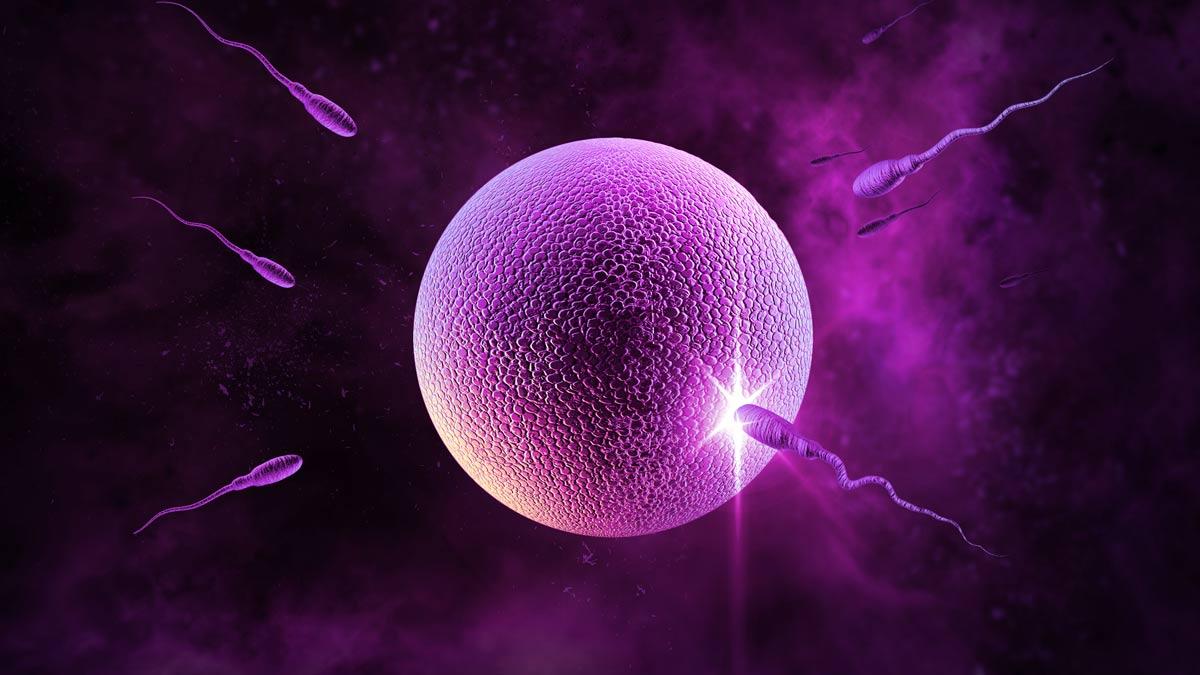
What is Artificial Insemination?

Manar Hegazy

Majd Eddin Khaled
Artificial insemination is one of the oldest and simplest methods used to help couples achieve pregnancy, especially in cases of mild infertility or reduced fertility. However, many people confuse artificial insemination with in vitro fertilization (IVF) and intracytoplasmic sperm injection (ICSI).
In this article, we will provide a clear definition of what artificial insemination is, its main types, how it is performed, and explain the differences between it and other techniques like IVF and ICSI, so you can understand your medical options clearly and accurately.
What Is Artificial Insemination?
Artificial insemination is a procedure in which sperm are placed directly into a woman’s reproductive system to facilitate fertilization without natural intercourse or as a support for it. This method does not involve retrieving eggs from the body, nor does it involve fertilizing outside the body — fertilization occurs inside the uterus, cervix, or vagina, depending on the type used. It is typically recommended in cases of:
- Mild male fertility issues.
- Minor fallopian tube problems that can be bypassed.
- Couples looking for an affordable option before moving to IVF.
Types of Artificial Insemination
Intrauterine Insemination (IUI)
In this technique, sperm are purified and then injected directly into the uterus, increasing the chances of reaching the egg.
IUI is often used alongside ovulation-stimulating medications to increase the chances of conception, making it one of the most effective and commonly used types of artificial insemination.
Intracervical Insemination (ICI)
In ICI, sperm are injected directly into the cervix — the part connecting the vagina and the uterus.
This method doesn’t require full preparation of the semen sample as in IUI and can sometimes be used at home.
It is less effective than IUI but more affordable and involves fewer medical interventions.
Intravaginal Insemination (IVI)
In IVI, sperm are placed inside the vagina using simple tools.
This is the cheapest and most accessible method, but also the least effective, as sperm must still swim through the cervix to reach the uterus, just as they would during natural conception.
Is IVF a Type of Artificial Insemination?
You may have heard about IVF , which stands for in vitro fertilization , or "fertilization in glass." This process is not a type of artificial insemination. While many people confuse IVF with the earlier techniques and think it's a form of artificial insemination, it is actually a different technology and one of the assisted reproductive techniques. In IVF , the sperm and egg are combined outside the body to form an embryo, which is then transferred into the uterus.
Is IVF the Same as ICSI?
Intracytoplasmic Sperm Injection (ICSI) is an advanced technique used in treating infertility. The difference between ICSI and traditional IVF lies in the fertilization method. In standard IVF, sperm and eggs are placed together in a petri dish to allow natural fertilization. In ICSI, a single sperm is selected and directly injected into each egg using a high-powered microscope. This method is usually used when the sperm count is low, their movement is poor, or there are significant abnormalities.
How Does ICSI Differ from Traditional IVF?
IVF and ICSI share most of the same steps, including:
- Ovarian stimulation
- Egg retrieval
- Embryo transfer
The key difference lies in the fertilization stage .
In traditional IVF , eggs are placed with a large number of sperm in a culture dish, allowing natural fertilization to occur.
In ICSI , a single sperm is selected for each egg and injected directly into it under microscopic guidance.
ICSI is an advanced technique within the IVF process and is used when sperm quality is compromised, such as low count, poor motility, or abnormal shape.
What Is IMSI?
IMSI (Intracytoplasmic Morphologically Selected Sperm Injection) is an advanced version of ICSI that uses a higher magnification microscope, allowing embryologists to observe fine details in sperm structure that could affect embryo health.
This technique is used in cases where:
- Previous ICSI attempts were unsuccessful.
- There is suspicion of poor sperm quality even after careful selection.
- Medical teams need the highest level of precision to improve fertilization chances.
Final Comparison
In summary, artificial insemination (including IUI, ICI, and IVI) is a suitable option for couples who only need minimal assistance in achieving pregnancy. It is known for being simple and cost-effective compared to more complex procedures.
IVF , on the other hand, is a more advanced medical procedure used when simpler methods fail or when the issue is more severe, such as serious male infertility or blocked fallopian tubes.
ICSI is a major development within the IVF process and is used when sperm are unable to penetrate the egg naturally. If ICSI fails, IMSI is considered for better sperm selection based on external appearance and internal structure before injection into the egg.
At Fertiliv Clinic , we believe that choosing the right treatment begins with a clear understanding of the terminology and available assisted reproduction options. We offer both you and your partner comprehensive consultation and close follow-up to help you make the best decision together.

Comments (0)
There's no more comments