
Intracytoplasmic Sperm Injection (ICSI)

Manar Hegazy

Majd Eddin Khaled
Intracytoplasmic Sperm Injection (ICSI), commonly known as micro-fertilization, is one of the most advanced developments in fertility treatment. It is primarily used to treat severe cases of male infertility. While this technique differs from traditional in vitro fertilization (IVF) in how eggs are fertilized, it shares most other steps with IVF. In this article, we will walk you through the ICSI process — from medical preparation to embryo transfer — and provide a detailed explanation of each stage.
Step 1: Medical Preparation and Initial Evaluation
Before beginning the ICSI procedure, both partners undergo a comprehensive assessment to determine their readiness for treatment and identify the most suitable protocol. This includes:
- Hormonal testing for the woman to assess her ovarian response to medications.
- Ultrasound imaging of the ovaries and uterus to evaluate anatomical health.
- Semen analysis for the man , including sperm count, motility, and morphology.
- General blood tests to screen for infectious or genetic conditions if necessary.
Once these exams are completed, the start date for stimulation is scheduled based on the woman’s menstrual cycle.
Step 2: Ovarian Stimulation to Produce Eggs
The process begins by giving the woman hormonal medications to stimulate the ovaries to produce multiple eggs instead of just one, as in a natural cycle. These medications may include:
- FSH-based drugs to promote follicle growth.
- GnRH agonists or antagonists to prevent premature ovulation.
Throughout the stimulation phase:
- Follicular growth is monitored using regular ultrasound scans every few days.
- Hormone levels like estrogen are checked periodically.
Step 3: Retrieval of Mature Eggs
When the follicles reach the appropriate size, the woman receives a trigger injection (hCG) to complete egg maturation. Egg retrieval takes place around 34–36 hours later , under light or general anesthesia.
How Is Egg Retrieval Done?
- A fine needle connected to a vaginal ultrasound probe is used to collect mature eggs from the follicles.
- The procedure typically lasts between 15–30 minutes .
- After retrieval, eggs are immediately sent to the lab for fertilization.
Step 4: Preparing the Sperm
At the same time as egg retrieval, the medical team prepares the sperm sample.
If Sperm Are Present in Semen:
Healthy sperm are separated using special techniques and placed in a culture medium to increase activity.
If No Sperm Are Found in Semen:
Sperm can be directly retrieved from the testicles using procedures such as TESE or PESA .
Step 5: Fertilization Using ICSI Technique
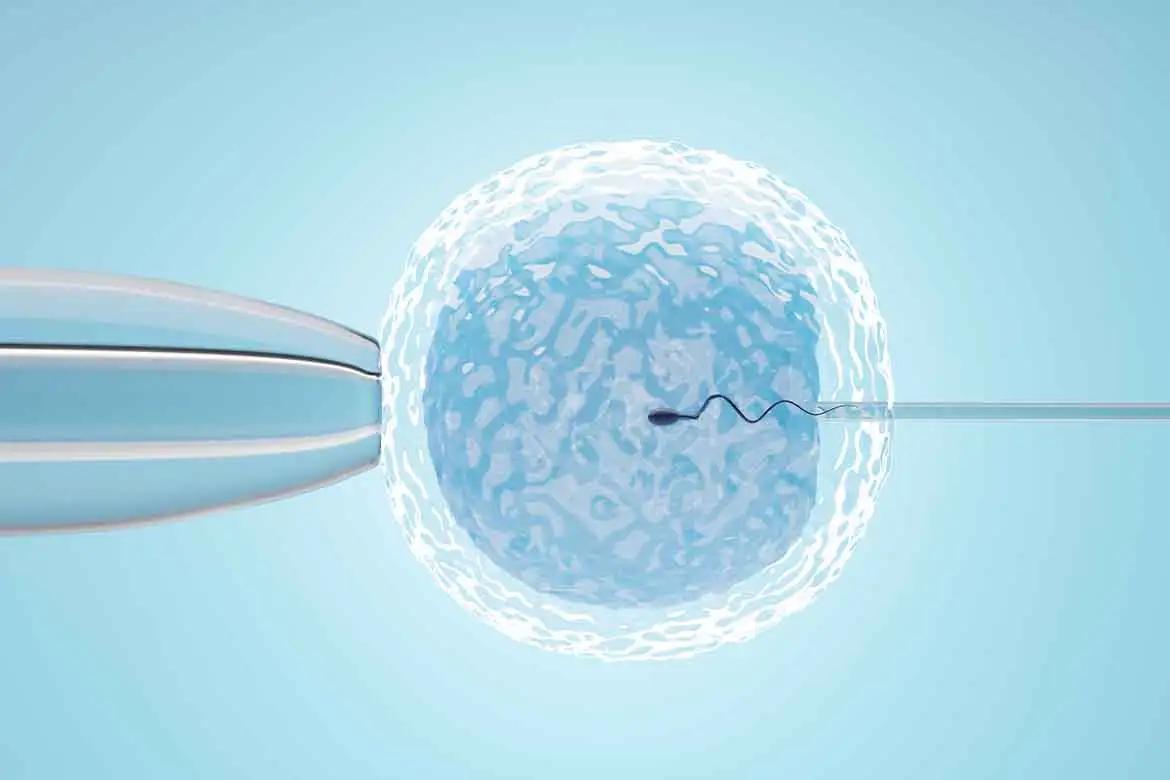
Mature eggs are selected under a high-powered microscope and a single healthy sperm is injected into each egg using precise tools. After fertilization, the eggs are placed in an incubator to monitor development into embryos.
Step 6: Embryo Monitoring in the Lab
After fertilization, embryos are monitored in the lab for 2–5 days . During this time, embryologists observe:
- Cell division and embryo development.
- Embryo quality in terms of cell number, symmetry, and abnormalities.
- Readiness for implantation.
In some modern clinics, preimplantation genetic testing (PGT) is performed to select the healthiest embryos genetically.
Step 7: Embryo Transfer to the Uterus
Once the embryos reach the proper developmental stage, they are transferred into the woman’s uterus using a thin catheter inserted through the cervix. Usually, one or two embryos are transferred, depending on age and condition.
This part of the process is generally painless and does not require anesthesia. After the transfer, the woman rests briefly, then resumes normal activities. She is advised to avoid intense physical exercise and emotional stress, and to continue progesterone and other luteal support medications.
Final Stage: Pregnancy Test
Around 10–14 days after embryo transfer , a blood test is done to measure hCG levels and confirm whether pregnancy has occurred.
If Pregnancy Is Successful:
- Early prenatal care begins.
- An ultrasound is performed after 4–5 weeks to check fetal development.
If Not Successful:
- The medical team discusses possible reasons for failure.
- Adjustments are made for future attempts.
- Emotional and medical support is offered to help the couple recover and prepare for another cycle.
ICSI is a major advancement within the IVF process and is considered the best option for treating severe male infertility. Although it differs from traditional IVF in the method of fertilization, the rest of the stages — from preparation to embryo transfer — are nearly identical.
At Fertiliv Clinic , we believe that choosing the right technique starts with a thorough individual evaluation and an experienced medical team who can offer the most effective solution in a transparent and safe way.