
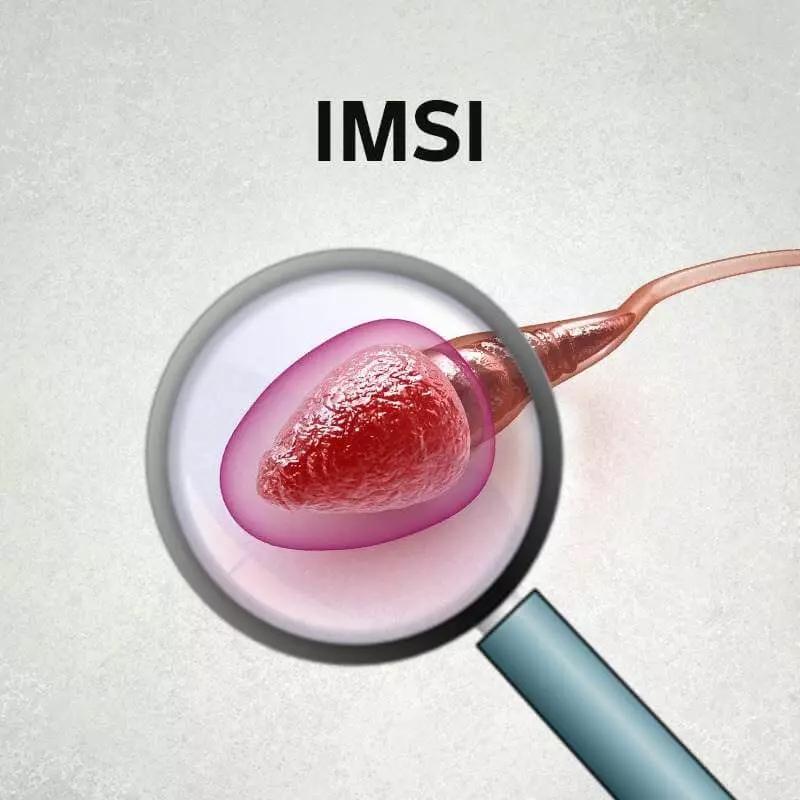
What is IMSI ?

Manar Hegazy

Majd Eddin Khaled
In the journey of infertility treatment, traditional techniques may not be sufficient to achieve the desired pregnancy — especially when there are issues related to sperm quality. In such cases, IMSI (Intracytoplasmic Morphologically Selected Sperm Injection) emerges as a significant advancement in micro-fertilization procedures and is considered a refined update to ICSI (Intracytoplasmic Sperm Injection) .
In this article, we will explain what IMSI is, how it differs from ICSI, why doctors recommend it in certain cases, and provide a clear breakdown of the steps involved in this advanced technique.
What Is IMSI?
IMSI is a procedure in which sperm are selected with high precision based on their detailed morphology before being injected into the egg. This technique is used during IVF or ICSI , but differs by using a much more powerful microscope.
Instead of a standard microscope, an extremely high-magnification microscope (up to 6000x) is used, allowing embryologists to see internal and external abnormalities in sperm that would otherwise go unnoticed with traditional ICSI methods, such as irregularities in the head, nucleus, vacuoles, or internal structure.
How Is IMSI Performed?
- Semen Collection: Similar to ICSI, the semen sample is collected from the male partner, and healthy sperm are separated using advanced laboratory techniques.
- High-Precision Microscopic Examination: Each sperm cell is carefully examined under a high-resolution microscope to ensure it has no internal defects.
- Sperm Injection into the Egg: After careful selection, the chosen sperm is directly injected into the egg, just like in ICSI.
- Embryo Monitoring: The fertilized eggs are monitored for development and growth over the following days.
Why Is IMSI Used?
IMSI is typically recommended when concerns exist about sperm quality even after precise selection in ICSI, particularly in the following situations:
- Failed fertilization or implantation despite ICSI: If previous attempts did not result in successful fertilization or embryo implantation, hidden sperm abnormalities might be the cause.
- Poor sperm quality after preparation: When sperm have severe morphological issues or poor motility and structure, even after processing.
- Recurrent miscarriage or repeated implantation failure: These can sometimes indicate underlying DNA damage in the sperm, which can be identified using high-magnification imaging.
How Does IMSI Differ from ICSI?
IMSI is not a replacement for ICSI — rather, it is an advanced version of ICSI . While ICSI uses a basic microscope to select sperm, IMSI uses a much higher magnification, allowing for more accurate identification of sperm abnormalities.
The main difference lies in the level of magnification and the ability to detect internal sperm structure issues. This leads to better embryo quality and increases the chances of successful fertilization and implantation.
Does IMSI Increase Pregnancy Chances?
Yes, studies show that IMSI can improve fertilization rates and increase the likelihood of implantation, particularly in men who have:
- Abnormal sperm shape (morphology)
- Sperm DNA fragmentation
- Low sperm production
However, it's important to note that improvement is not guaranteed at 100%, and this technique is best reserved for specific cases and only after consultation with a fertility specialist.
IMSI represents a major step forward in assisted reproductive technology, offering highly accurate sperm selection that contributes to better fertilization and higher chances of successful pregnancy — especially in challenging cases.
At Fertiliv Clinic , we believe that medical advancements must come alongside a deep understanding of each couple’s unique physical and emotional needs. We offer you and your partner specialized consultation and close follow-up to help you make the most informed decision on your path to parenthood.