
ICSI Stimulation Protocols: How Is the Right Treatment Plan Chosen?

Manar Hegazy

Majd Eddin Khaled
There is no single ICSI stimulation protocol that is right for every patient.
Two women may begin treatment at the same time yet receive different medications, starting doses, suppression strategies, monitoring schedules, and final maturation triggers.
Important differences include:
Female age
Ovarian reserve
Antral follicle count
Previous ovarian response
Risk of ovarian hyperstimulation syndrome
Medical history
Treatment goals
The objective is not simply to use the strongest stimulation possible.
The goal is to obtain an appropriate and safe ovarian response while creating a reasonable opportunity to retrieve mature oocytes.
Fertiliv helps patients organize ovarian-reserve testing and previous treatment results and coordinate review of individualized IVF and ICSI stimulation plans.
What Is an ICSI Stimulation Protocol?
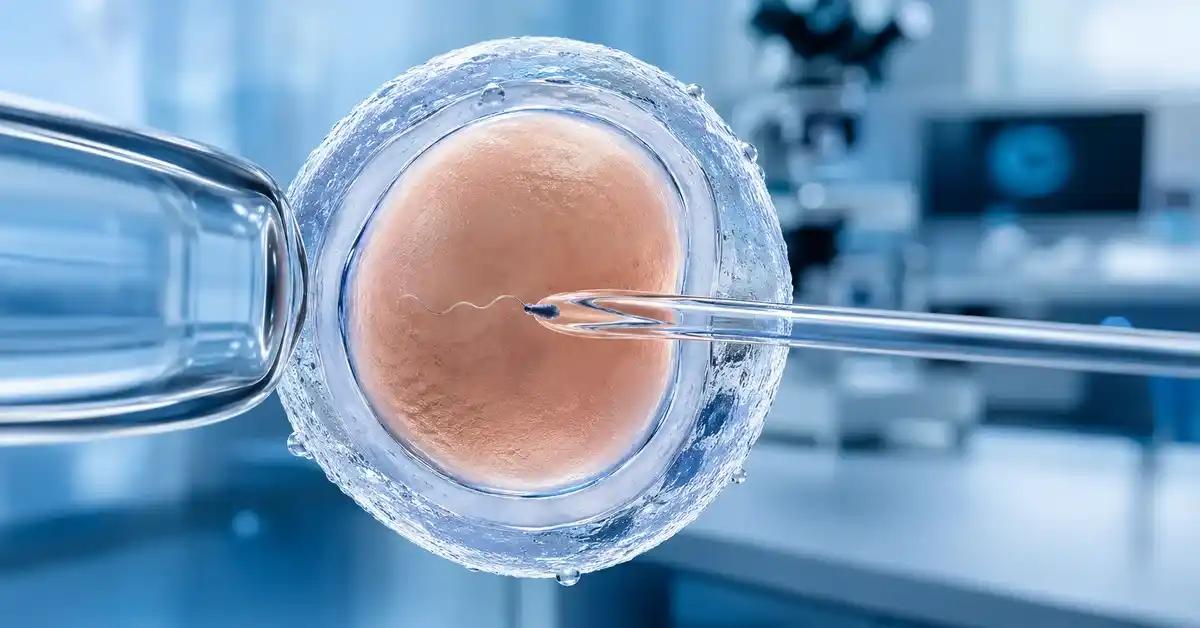
ICSI itself is a fertilization technique in which a sperm is injected directly into an oocyte.
The stimulation protocol refers to the treatment strategy used before egg retrieval.
It determines:
When ovarian stimulation starts
Which gonadotropins are used
The starting dose
How premature ovulation is prevented
How response is monitored
When final oocyte maturation is triggered
Whether fresh transfer or freeze-all may be appropriate
A protocol is therefore an entire treatment strategy rather than the name of one medication.
Read also: IVF Process Step by Step: From Ovarian Stimulation to Embryo Transfer
How Is Expected Ovarian Response Predicted?
Before stimulation, physicians try to estimate whether a patient is likely to have a low, normal, or high ovarian response.
The 2025 ESHRE ovarian-stimulation guideline recommends either:
Anti-Müllerian hormone, or AMH
Antral follicle count, or AFC
for predicting ovarian response.
These markers can help estimate:
Expected oocyte yield
Risk of low response
Risk of excessive response
An appropriate starting dose
Whether OHSS-prevention strategies may be needed
However, AMH and AFC should not be interpreted as direct tests of embryo quality or the probability of live birth.
ASRM similarly emphasizes that ovarian-reserve markers are much better at predicting oocyte yield than reproductive potential.
Read also: How Is an IVF Treatment Plan Chosen and Why Does It Differ Between Patients?
What Are the Main Stimulation Protocols?
GnRH Antagonist Protocol
Gonadotropin stimulation begins first, and a GnRH antagonist is then introduced during stimulation to prevent a premature LH surge and ovulation.
Potential advantages include:
A relatively shorter protocol
Less prolonged pituitary suppression
Flexibility in final maturation triggering
Important safety advantages for patients at increased OHSS risk
ESHRE strongly recommends the GnRH antagonist protocol for predicted high responders.
Long GnRH Agonist Protocol
A GnRH agonist is used to suppress pituitary activity before or around the beginning of ovarian stimulation.
This traditional approach may still be appropriate in selected patients.
However, it generally involves longer suppression and does not automatically produce better results simply because the protocol is longer or more intensive.
Modified and Individualized Strategies
Selected patients may have:
Adjusted start timing
Repeated stimulation for oocyte or embryo accumulation
Protocol changes based on previous response
Cycle scheduling strategies
A more complicated protocol is not automatically a more effective one.
How Is the Starting Gonadotropin Dose Chosen?
More medication does not necessarily mean better treatment.
Starting dose may take into account:
AMH
AFC
Age
Previous response
Risk of excessive response
Individual treatment goals
ESHRE emphasizes selecting an appropriate starting dose rather than relying on repeated dose changes during stimulation.
Predicted Normal Responders
For predicted normal responders, the 2025 ESHRE guideline refers to a conventional FSH-equivalent range of approximately 150–225 IU per day.
This is not a universal prescription.
The dose still needs to be individualized.
Predicted High Responders
Lower starting doses may be appropriate.
ESHRE conditionally recommends reduced gonadotropin dosing in predicted high responders to reduce OHSS risk.
Low Responders
Very high doses cannot create follicles that are not biologically available.
Increasing medication substantially does not necessarily produce a proportional increase in oocyte number.
The goal is therefore not simply to escalate the dose as far as possible.

How Is Response Monitored During Stimulation?
Monitoring commonly includes:
Transvaginal ultrasound
Follicle number
Follicle sizes
Hormonal testing when clinically useful
The decision-making process considers the entire follicular cohort rather than only the largest follicle.
Are Doses Changed Throughout Treatment?
Sometimes clinical circumstances justify a change.
However, ESHRE states that routine increases or decreases in gonadotropin dose during mid-stimulation are probably not recommended because evidence has not shown a clear benefit.
This makes the initial individualized dose particularly important.
What Does Low, Normal, or High Response Mean for the Plan?
Low Response
A low response alone is not an automatic reason to cancel a cycle.
ESHRE recommends individual counselling about the expected chance of pregnancy and a patient-specific decision on whether to continue.
Read also: When Is an IVF Cycle Cancelled Before Egg Retrieval? Causes and What Happens Next
Normal Response
The objective is an appropriate number of developing follicles while maintaining safety.
The aim is not to produce the maximum possible oocyte count at any cost.
High Response
A very strong ovarian response increases the risk of ovarian hyperstimulation syndrome.
The team may therefore reconsider:
Gonadotropin dose
Suppression protocol
Final maturation trigger
Fresh transfer versus freeze-all
A higher follicle count is therefore not automatically a better result.
How Is the Final Oocyte Maturation Trigger Chosen?
Once the follicular cohort is considered ready, final oocyte maturation is triggered before retrieval.
Depending on the treatment strategy, the trigger may involve:
hCG
A GnRH agonist in suitable antagonist cycles
Another individualized strategy
The choice depends on both efficacy and safety.
OHSS Risk Changes the Trigger Strategy
For patients at increased risk of OHSS, ESHRE supports GnRH agonist triggering in appropriate antagonist cycles when fresh transfer is not planned.
A freeze-all strategy may then be used to reduce late-onset OHSS risk.
Is a Dual Trigger Always Better?
No.
A dual trigger combines more than one hormonal signal, but current evidence does not support routine use in all patients.
The 2025 ESHRE update does not routinely recommend adding a GnRH agonist to hCG for predicted normal or low responders, nor routinely adding hCG to an agonist trigger in high responders.
Read also: Why Are Some Eggs Immature After Retrieval? Causes and Impact on IVF and ICSI
Should the Same Protocol Be Used in Every Cycle?
Sometimes yes, but not automatically.
The previous cycle provides valuable information about actual ovarian biology.
The physician can review:
Follicles developed
Oocytes retrieved
Mature oocytes
Excessive or poor response
Fertilization
Embryo development
If a protocol produced an appropriate and safe response, there may be no reason to replace it.
If response was unexpectedly high, low, or poorly synchronized, selected components may be reconsidered.
The goal is not to change the protocol merely because pregnancy did not occur.
Are Newer Protocols and Add-Ons Always Better?
No.
“New” does not mean “proven to improve outcomes.”
The 2025 ESHRE guideline does not support routine use of several stimulation add-ons in many patient groups.
Examples include routine use of:
Growth hormone in normal responders
Growth hormone for low responders
DHEA in low responders
Aspirin to improve ovarian stimulation outcomes
Myo-inositol as a routine ovarian-stimulation adjunct in several IVF populations
This does not mean these substances have no medical use in any setting.
It means they should not simply be added to IVF stimulation with the assumption that more treatment must improve success.
What About Double Stimulation?
Double stimulation can be used in selected situations when the objective is to accumulate oocytes or embryos and a fresh transfer is not planned.
It is not automatically superior for every patient.
Read also: Embryo Banking Before Transfer: When Are Multiple Egg Retrieval Cycles Considered?
How Can You Understand Whether Your Protocol Is Individualized?
Before starting treatment, useful questions include:
What ovarian response is expected?
Why was this protocol chosen?
Why was this starting dose selected?
Am I at risk of excessive ovarian response?
How will premature ovulation be prevented?
How will follicular response be monitored?
What will determine trigger timing?
What happens if response is lower or higher than expected?
Might freeze-all be needed?
What was learned from my previous cycles?
Two patients undergoing ICSI do not need identical medication schedules.
Conclusion
An ICSI stimulation protocol is not a single standard prescription.
The treatment plan should reflect:
AMH + AFC + previous ovarian response + age + OHSS risk + treatment goals
GnRH antagonist and GnRH agonist-based approaches are among the established stimulation strategies, but each has specific clinical contexts.
Higher gonadotropin doses do not automatically produce better outcomes.
Routine dose changes during stimulation are also not necessarily beneficial, which makes selection of the starting dose important.
Final oocyte maturation should be chosen according to the stimulation protocol, ovarian response, OHSS risk, and embryo-transfer strategy.
The objective is not to use the largest number of medications or the newest add-on.
It is to achieve an effective, safe, and individualized ovarian response.
Fertiliv helps patients organize ovarian-reserve tests and previous treatment records and coordinate review of individualized IVF and ICSI stimulation plans.
Frequently Asked Questions: ICSI Stimulation Protocols: How Is the Right Treatment Plan Chosen?
What Is the Best ICSI Stimulation Protocol?
There is no single best protocol. The choice depends on expected ovarian response, ovarian reserve, treatment history, and safety.
What Is the Difference Between Antagonist and Long Agonist Protocols?
The antagonist is introduced during stimulation, while long agonist protocols use earlier pituitary suppression before or around stimulation.
Does AMH Determine My Medication Dose?
AMH helps predict ovarian response, but dose selection also considers AFC, previous response, age, and other clinical factors.
Does a Higher FSH Dose Always Produce More Eggs?
No. Ovarian response is limited by the available follicular cohort, and increasing the dose does not guarantee proportionally more oocytes.
Can the Medication Dose Change During Stimulation?
Yes when clinically necessary, but routine mid-cycle dose adjustment has not been shown to improve outcomes for all patients.
Why Are Different Trigger Injections Used?
Trigger choice depends on stimulation protocol, ovarian response, OHSS risk, and whether fresh embryo transfer is planned.
Is Dual Trigger Better?
Not routinely. Current ESHRE guidance does not recommend using a dual trigger automatically in every patient.
Should the Protocol Change After an Unsuccessful Cycle?
Not necessarily. The previous response should first be reviewed to determine whether the stimulation protocol itself actually needs modification.