
Does ICSI Help With Weak Sperm and Male Infertility?

Manar Hegazy

Majd Eddin Khaled
Yes. ICSI can be particularly useful when male infertility involves a very low sperm count, poor motility, severe abnormalities in sperm morphology, or only a limited number of sperm available for fertilization. However, ICSI does not treat the underlying cause of poor sperm quality. Its main purpose is to overcome some of the barriers that prevent sperm from reaching and fertilizing an egg.
At Fertiliv Clinic, the decision to use ICSI is based on assessment of both partners. Semen analysis is important, but female age, ovarian reserve, egg quality, previous fertility treatment and other factors also influence the treatment strategy.
Does ICSI Help Weak Sperm and How Does It Work?
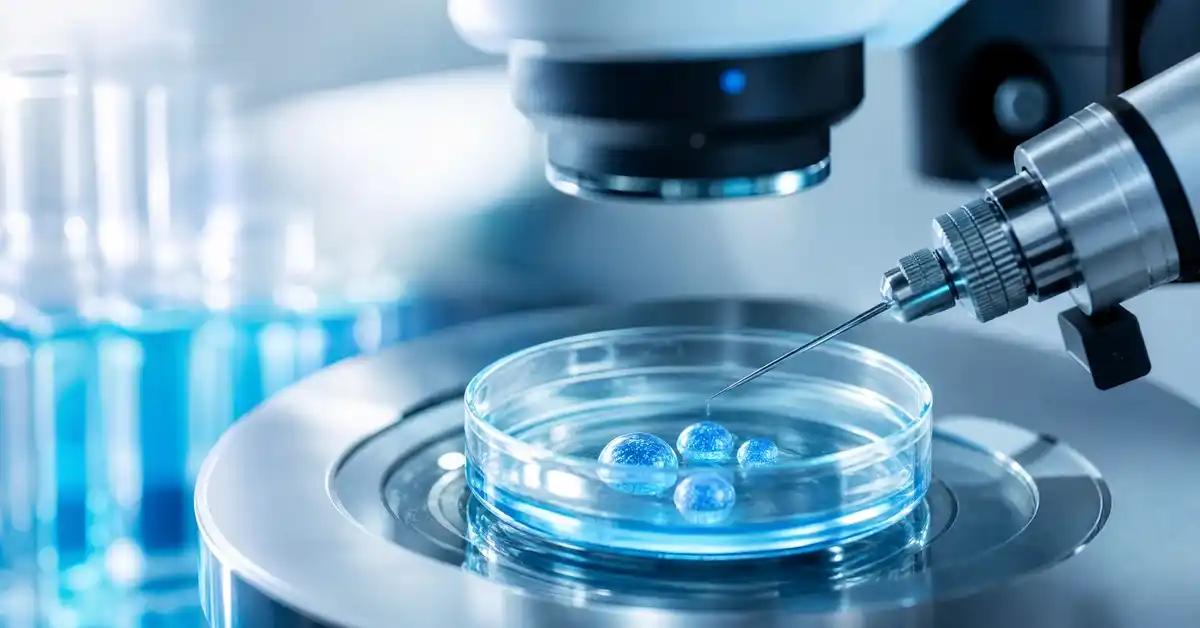
ICSI stands for Intracytoplasmic Sperm Injection. During ICSI, one sperm is selected and injected directly into the cytoplasm of a mature egg.
This bypasses several steps that sperm normally need to complete before fertilization.
How Does ICSI Bypass Male-Factor Infertility?
During conventional IVF, eggs are placed with sperm in the laboratory and sperm must reach and penetrate the egg.
With ICSI, the embryologist introduces a selected sperm directly into the mature egg.
This makes ICSI particularly useful when only a small number of usable sperm are available or when sperm motility is severely reduced.
For a complete explanation, see ICSI Treatment: What It Is and How It Helps Fertilization.
Does ICSI Cure Poor Sperm Quality?
No.
ICSI does not increase sperm production inside the man's body, cure poor motility, correct abnormal morphology or treat underlying hormonal, genetic or testicular disease.
It helps the fertilization process despite the sperm problem.
Does ICSI Always Increase Pregnancy Chances?
No.
ICSI can improve the ability to achieve fertilization when a significant sperm problem is present, but pregnancy also depends on egg quality, female age, embryo development and the uterine environment.
In couples without severe male-factor infertility, routinely using ICSI does not automatically result in better live-birth outcomes than conventional IVF.
Patients comparing the techniques can also read Comprehensive Comparison of Modern Fertility Techniques: IVF and ICSI Explained.
Which Types of Weak Sperm Can ICSI Help?
Male-factor infertility can involve sperm count, movement, morphology or a combination of several abnormalities.
Low Sperm Count
Oligozoospermia means a low sperm concentration in the semen.
When very few sperm are present, natural conception may become more difficult. ICSI can allow the laboratory to use the limited number of suitable sperm available to attempt fertilization.
Very low counts should still be investigated because hormonal, genetic, testicular and other causes may be present.
Poor Sperm Motility
Asthenozoospermia means reduced sperm motility.
Poor motility can prevent sperm from reaching the egg effectively. ICSI bypasses this requirement by placing sperm directly inside a mature egg.
Even some severe motility disorders may be managed with ICSI when viable sperm can be identified and selected.
Abnormal Morphology and Combined Sperm Problems
Teratozoospermia means a high proportion of sperm with abnormal morphology.
Low count, poor movement and abnormal morphology can also occur together.
Morphology alone should not be used as the only reason to predict whether treatment will succeed, because embryo development depends on both sperm and egg factors.
| Sperm problem | What it means | Potential role of ICSI |
|---|---|---|
| Low sperm count | Few sperm are present | A limited number of sperm can be used for mature eggs |
| Poor motility | Sperm have difficulty moving effectively | Sperm do not need to swim to the egg |
| Abnormal morphology | Many sperm have abnormal shape | A suitable sperm can be selected when available |
| Combined severe abnormalities | Count, motility and morphology are affected | ICSI may be more practical than conventional fertilization |
| Azoospermia | No sperm are found in the ejaculate | ICSI may be possible if sperm are surgically retrieved |
| High sperm DNA fragmentation | Greater damage to sperm genetic material | ICSI does not repair the underlying DNA damage |
When Is ICSI Recommended for Male-Factor Infertility?
The decision should reflect the severity and cause of the sperm problem.
Severe Male-Factor Infertility
ICSI can be particularly valuable when the number of motile sperm is extremely low or when only a few suitable sperm are available.
One usable sperm is required for each mature egg selected for injection.
Azoospermia and Surgical Sperm Retrieval
Azoospermia means that sperm are not seen in the ejaculated semen sample.
This can occur because of an obstruction or because sperm production is severely impaired.
Micro-TESE stands for Microsurgical Testicular Sperm Extraction. It is a microsurgical procedure used in selected cases to search testicular tissue for areas where sperm may be produced.
If usable sperm are retrieved, they can potentially be used for ICSI. If no viable sperm can be obtained, ICSI cannot be performed using the man's own sperm.
For more information, see IVF and Micro-TESE in Istanbul for Azoospermia Treatment.
Previous Fertilization Failure
ICSI may also be considered after unexpectedly poor or failed fertilization in a previous conventional IVF cycle.
However, the previous cycle should be reviewed in detail before assuming sperm were the only reason for failure.
Read ICSI After Failed IVF: Does It Give You Better Chances of Success?.
Which Tests Are Needed Before ICSI for Weak Sperm?
The cause of poor semen quality should still be evaluated even when ICSI is likely to be used.
Semen Analysis
Semen analysis evaluates factors including semen volume, sperm concentration, total number, motility and morphology.
Repeat testing may be needed because sperm results can vary over time.
For a fuller overview, see Essential Pre-ICSI Tests: Your First Step Toward Achieving Parenthood.
Hormonal, Genetic and Testicular Evaluation
Severely low sperm counts or azoospermia may require hormonal testing, genetic assessment, examination for varicocele and specialist evaluation.
The purpose is to understand why sperm production is impaired rather than simply bypassing the problem with ICSI.
What Is Sperm DNA Fragmentation?
DNA means Deoxyribonucleic Acid, the genetic material carried in cells.
Sperm DNA fragmentation describes damage within the sperm's genetic material.
Testing may be considered in selected situations, but it is not required for every man with an abnormal semen analysis.
Importantly, injecting a sperm into an egg does not repair damaged DNA. Selected patients may require additional investigation of the cause. Evidence in specific male-infertility groups also suggests that the source of sperm and DNA fragmentation may influence treatment outcomes, but surgical retrieval should not automatically be used for every man with poor semen parameters.

When Is ICSI Alone Not Enough?
ICSI can overcome a fertilization barrier without necessarily correcting the underlying reproductive problem.
When the Male Problem Has a Treatable Cause
Poor semen quality can sometimes be associated with varicocele, hormone problems, certain infections, medications, smoking, obesity, metabolic disease, testicular conditions or genetic factors.
These issues should be evaluated when clinically relevant even if ICSI is planned.
When Female Fertility Factors Are Also Present
Successful ICSI depends on more than sperm.
Female age, ovarian reserve, egg maturity, embryo development and uterine factors can strongly influence the final result.
Both partners should therefore be evaluated together.
Does Every Mild Sperm Abnormality Require ICSI?
No.
Some mild sperm abnormalities may still allow conventional IVF in selected couples.
ICSI should not automatically be viewed as a stronger version of IVF for everyone. Its clearest value is when sperm have a meaningful difficulty reaching or fertilizing the egg.
Patients can also read When Is Conventional IVF Better Than ICSI?.
How Can ICSI Outcomes Be Optimized in Male Infertility?
Treatment planning should integrate male assessment, female fertility factors and embryology.
Egg Quality and Sperm Selection
ICSI requires mature eggs and viable sperm.
The embryologist can evaluate sperm movement and morphology when selecting sperm, but microscopic selection cannot guarantee that a chosen sperm is genetically normal.
IMSI stands for Intracytoplasmic Morphologically Selected Sperm Injection. It involves sperm selection under higher magnification before injection. It is not automatically required for every male-factor case.
For more detail, see IMSI and Conventional ICSI: What Is the Real Difference?.
What If Fertilization or Embryo Development Is Poor?
A cycle should be reviewed stage by stage:
number of eggs retrieved,
number of mature eggs,
number injected,
fertilization results,
embryo development,
semen findings,
female age,
and egg quality.
Poor embryo development should not automatically be attributed to sperm alone.
Conclusion
ICSI can be highly useful in cases of weak sperm, particularly with very low sperm count, severe motility problems, combined sperm abnormalities or surgically retrieved sperm in selected azoospermia cases. Its main role is to help overcome a fertilization barrier.
However, ICSI does not cure the underlying cause of male infertility and cannot guarantee embryo development or pregnancy. Both partners should be assessed so that treatment addresses the complete fertility picture.
If you have a semen analysis and would like to understand whether ICSI is suitable for your case, contact Fertiliv Clinic on WhatsApp to share your reports and discuss your treatment options.
Frequently Asked Questions About ICSI and Weak Sperm
Can ICSI Be Done With an Extremely Low Sperm Count?
Yes, in some cases, as long as viable sperm suitable for use can be identified.
Can ICSI Help With Very Poor Sperm Motility?
Yes. ICSI bypasses the need for sperm to travel to and penetrate the egg, but viable sperm still need to be available.
Does Abnormal Sperm Morphology Prevent ICSI?
Not necessarily. The entire semen profile should be considered rather than morphology alone.
Can ICSI Be Performed With Azoospermia?
Only if viable sperm can be retrieved from the testis or epididymis in an appropriate case.
Does ICSI Guarantee Embryos?
No. Injection assists fertilization, but not every injected egg fertilizes and not every embryo continues developing.