
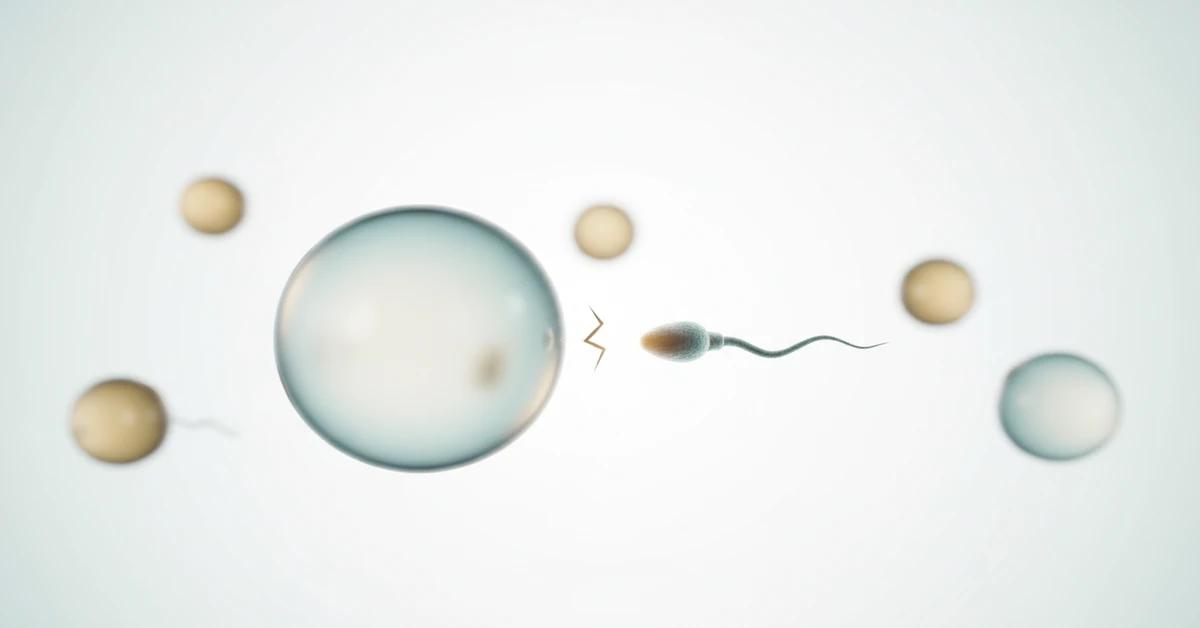
Why Does Fertilization Fail After ICSI Despite Mature Eggs?

Manar Hegazy

Majd Eddin Khaled
A patient may retrieve several mature oocytes, undergo technically successful ICSI, and then receive an unexpected laboratory report the following day:
No normal fertilization occurred.
This can seem confusing because sperm were already injected directly into the oocytes.
However, sperm injection and fertilization are not the same event.
ICSI bypasses the need for sperm to penetrate the oocyte, but the sperm and oocyte must still complete a complex biological activation process before normal fertilization occurs.
Fertiliv helps patients organize retrieval, ICSI, and fertilization reports and coordinate review of whether low or failed fertilization was an isolated event or requires a different strategy in a subsequent cycle.
What Does Fertilization Failure After ICSI Mean?
After ICSI, injected oocytes are returned to culture and assessed for fertilization.
Normal fertilization is traditionally identified by the presence of two pronuclei, or 2PN.
Total Fertilization Failure
Total fertilization failure means none of the mature injected oocytes show normal fertilization.
For example:
6 MII oocytes → 6 ICSI → 0 normal 2PN
Very Low Fertilization
Some oocytes may fertilize while most do not.
For example:
6 MII oocytes → 6 ICSI → 1 normally fertilized oocyte
This is not total failure, but very low fertilization can become clinically important, particularly when it repeats.
Atypical Fertilization Patterns
Not every unusual pronuclear pattern has exactly the same meaning.
The timing of assessment also matters, because pronuclei may appear and disappear before a static laboratory observation.
This is why fertilization reports require proper embryology interpretation rather than simply labeling every oocyte without visible 2PN at one observation as unfertilized.
Read also: ICSI Process Step by Step: From Ovarian Stimulation to Embryo Development
Why Isn't Injecting the Sperm Enough?
After sperm enters the oocyte, the oocyte must become activated.
Normal fertilization triggers intracellular calcium changes that help the oocyte:
Complete meiosis
Extrude the second polar body
Form pronuclei
Begin the developmental program leading to embryo cleavage
If these activation signals fail, sperm may physically be inside the oocyte while biological fertilization does not progress.
Oocyte activation deficiency is therefore an important mechanism of fertilization failure after ICSI.
Is the Problem With the Sperm or the Oocyte?
Either may be responsible.
Sperm-Related Activation Problems
Sperm normally deliver factors that trigger oocyte activation.
Severe abnormalities affecting this function can lead to failed activation.
A classic example is globozoospermia, in which sperm have round heads and severe acrosomal abnormalities and may also have impaired ability to activate the oocyte.
Other functional sperm defects may not be fully visible on a routine semen analysis.
Oocyte-Related Activation Problems
The oocyte itself must be able to respond appropriately to activation signals.
Possible problems may involve:
Calcium-signaling pathways
Cytoplasmic function
Cellular maturation
Other aspects of oocyte competence
Therefore, an oocyte classified as:
MII
is mature by standard morphological criteria, but that does not prove every intracellular function is normal.
Do Age or Low AMH Explain Fertilization Failure?
Not by themselves.
Age strongly influences oocyte competence, aneuploidy, and embryo potential.
AMH helps estimate ovarian reserve and expected oocyte yield.
Neither one by itself diagnoses oocyte activation deficiency.
Current evidence also does not support using ICSI routinely simply because a patient is older, has diminished ovarian reserve, or produces few oocytes when no other indication exists.
Fertilization failure should therefore be reviewed from the actual laboratory events rather than attributed to AMH alone.
What Should the Embryology Laboratory Review?
Number of Mature Oocytes
Failure involving:
one mature oocyte
is very different from:
eight mature oocytes with zero fertilization.
With very small numbers, random biological variation has a larger effect.
Oocyte Maturity
Review:
MII oocytes
MI or GV oocytes
Oocyte abnormalities
ICSI Observations
The laboratory may review:
Oolemma behavior during injection
Cytoplasmic appearance
Post-ICSI degeneration
Sperm quality
Technical observations during injection
Timing of Fertilization Assessment
Modern laboratory guidance recommends evaluating pronuclei and polar bodies at an appropriate interval after insemination or injection because assessment timing affects interpretation.
Read also: Why Do Some Retrieved Oocytes Degenerate Before ICSI? Causes and What It Means
Does One Failed Fertilization Cycle Mean It Will Happen Again?
No.
A single failed or very low fertilization cycle may be followed by a better result.
Interpretation depends on:
Number of mature oocytes
Total versus partial failure
Previous fertilization history
Semen findings
Oocyte observations during ICSI
However, recurrent:
total fertilization failure after ICSI
or:
very low fertilization
raises stronger concern about sperm- or oocyte-related activation problems.

What Is Artificial Oocyte Activation?
Artificial oocyte activation, or AOA, is a laboratory intervention intended to help trigger oocyte activation after ICSI.
One commonly studied approach uses substances known as calcium ionophores to increase intracellular calcium.
The purpose is to reproduce part of the activation signal that sperm would normally initiate.
Is AOA Used in Every ICSI Cycle?
No.
AOA is not recommended for routine use in all ICSI patients.
Current recommendations support selective use in situations such as:
Previous complete activation failure with 0% normal fertilization
Very low fertilization, such as below 30% in an appropriate context
Globozoospermia
It should not routinely be added simply because of:
Advanced age
Low AMH
Low oocyte number
Failed embryo transfer
A desire to generally “increase success”
Do Calcium Ionophores Improve Fertilization?
Recent evidence suggests that calcium-ionophore AOA in patients with previous ICSI fertilization failure may improve:
Fertilization rate
Clinical pregnancy
Possibly live birth
However, the evidence requires caution.
Studies differ in:
Ionophore used
Concentration
Exposure time
Number of exposures
Type of fertilization failure
Study design
Some studies also have moderate or high risk of bias.
The appropriate conclusion is therefore not:
“AOA improves ICSI for everyone.”
It is:
“AOA may improve outcomes in carefully selected patients with prior evidence of activation failure.”
Is Artificial Oocyte Activation Safe?
Available studies have not shown a clear increase in congenital abnormalities compared with standard ICSI.
However, long-term safety evidence is more limited than for routine IVF and ICSI.
The calcium signal produced by ionophores also does not perfectly reproduce the physiological oscillatory pattern of normal fertilization.
For this reason, professional guidance supports selective use with appropriate indication and continued safety monitoring.
Can Tests Identify the Cause of Activation Failure?
Specialized and research-level tests exist.
Areas being studied include:
Sperm activation factors such as PLCζ
Functional oocyte-activation assays
Selected genetic testing
Advanced sperm evaluation
However, these are not routine investigations required for every patient.
In many clinics, the pattern of previous total or very low fertilization itself contributes substantially to deciding whether AOA should be considered in a subsequent cycle.
What if Fertilization Failure Happened After Conventional IVF Instead of ICSI?
This is a different situation.
If conventional IVF produced:
Total fertilization failure
Or unexpectedly low fertilization
ICSI may be appropriate in a subsequent cycle.
ICSI then bypasses potential problems with sperm reaching or penetrating the oocyte.
This differs from fertilization failure after ICSI, where sperm has already been placed inside the oocyte and activation failure becomes more relevant.
Read also: ICSI After Failed IVF: When Can It Be a Better Option?
What Can Be Changed in the Next Cycle?
There is no single solution for all fertilization failure.
Fertilization Method
After conventional IVF failure:
ICSI may be considered.
After ICSI failure:
simply repeating identical ICSI may not address recurrent activation failure.
Review Sperm Factors
This becomes especially relevant with:
Severe male-factor infertility
Globozoospermia
Recurrent fertilization failure
Review Oocyte Factors
The laboratory can review:
Maturity
Morphology
Degeneration
Injection response
Consider AOA
AOA can be discussed when there is an appropriate indication, particularly after previous total or very low fertilization following ICSI.
Avoid Unrelated Add-Ons
Fertilization failure occurs before an embryo exists.
Therefore, treatments aimed primarily at implantation, such as endometrial receptivity testing or immune therapies, do not address the core problem when oocytes never fertilized.
How Should the Numbers Be Interpreted?
Consider:
8 oocytes retrieved
6 MII
6 ICSI
0 normal 2PN
This is a strong pattern of total fertilization failure after ICSI.
Compare that with:
3 oocytes retrieved
1 MII
1 ICSI
0 fertilization
The outcome is still disappointing, but only one fertilization opportunity existed, so the diagnostic significance is different.
Similarly:
8 MII
8 ICSI
2 normal fertilizations
represents low fertilization rather than total failure.
The phrase:
“ICSI failed”
is therefore not enough.
The denominator at each stage matters.
Questions to Ask After Fertilization Failure
Ask:
How many oocytes were retrieved?
How many were MII?
How many underwent ICSI?
How many showed normal 2PN?
Did any oocytes degenerate after injection?
Were any oocyte abnormalities noted?
Were there unusual technical observations during ICSI?
Is there a significant sperm abnormality?
Has low or failed fertilization happened before?
Does this meet the definition of total fertilization failure?
Is oocyte activation deficiency suspected?
Would AOA be appropriate next time?
What is the specific indication for using it?
Is additional male or genetic evaluation justified?
What will actually change in the next cycle?
Conclusion
Injecting sperm into an oocyte during ICSI does not mean fertilization is complete.
After injection, the oocyte must undergo a complex activation process involving calcium signaling, completion of meiosis, and pronuclear formation.
Fertilization can therefore fail despite technically successful ICSI and mature oocytes.
The cause may involve:
sperm factors + oocyte factors + activation failure + biological or laboratory factors that cannot always be identified precisely.
Age or low AMH alone should not be used as the explanation.
A single failure involving very few oocytes may not recur.
However, previous total or repeatedly very low fertilization after ICSI makes oocyte-activation problems more relevant.
Artificial oocyte activation using calcium ionophores may be useful in selected patients, but it should not be used as a routine ICSI add-on.
When fertilization failure occurred after conventional IVF instead, switching to ICSI in a subsequent cycle may be the more appropriate intervention.
Fertiliv helps patients organize oocyte, ICSI, and fertilization reports and coordinate review of whether the next cycle should involve a change in fertilization method or consideration of AOA.
Frequently Asked Questions: Why Does Fertilization Fail After ICSI Despite Mature Eggs?
Can Fertilization Fail Even When Sperm Was Injected Into the Egg?
Yes. Sperm injection does not guarantee successful oocyte activation or completion of normal fertilization.
What Is Total Fertilization Failure After ICSI?
It means that none of the mature injected oocytes show normal fertilization.
Is the Problem Usually the Sperm or the Oocyte?
Either can be responsible, and sometimes the exact source cannot be confidently identified.
What Is Oocyte Activation?
It is the intracellular process, including calcium signaling, that allows the oocyte to complete fertilization after sperm entry.
Can AOA Help After Failed ICSI?
It may help selected patients with previous complete or very low fertilization or globozoospermia, but it is not routinely used for everyone.
Does Low AMH Cause Fertilization Failure?
Low AMH mainly reflects ovarian reserve and expected oocyte yield and does not independently diagnose fertilization failure.
Will Fertilization Failure Definitely Happen Again?
No. Interpretation depends on mature-oocyte number, whether failure was total or partial, and previous treatment history.
What if Fertilization Failed After Conventional IVF?
After previous failed or very low conventional fertilization, ICSI may be considered in a subsequent cycle.