
IVF: What Is In Vitro Fertilization, How Does It Work and Who Is It For?

Manar Hegazy

Majd Eddin Khaled
In vitro fertilization (IVF) is one of the main assisted reproductive technologies used to help couples achieve pregnancy when natural conception is difficult or when other fertility treatments are unlikely to be appropriate.
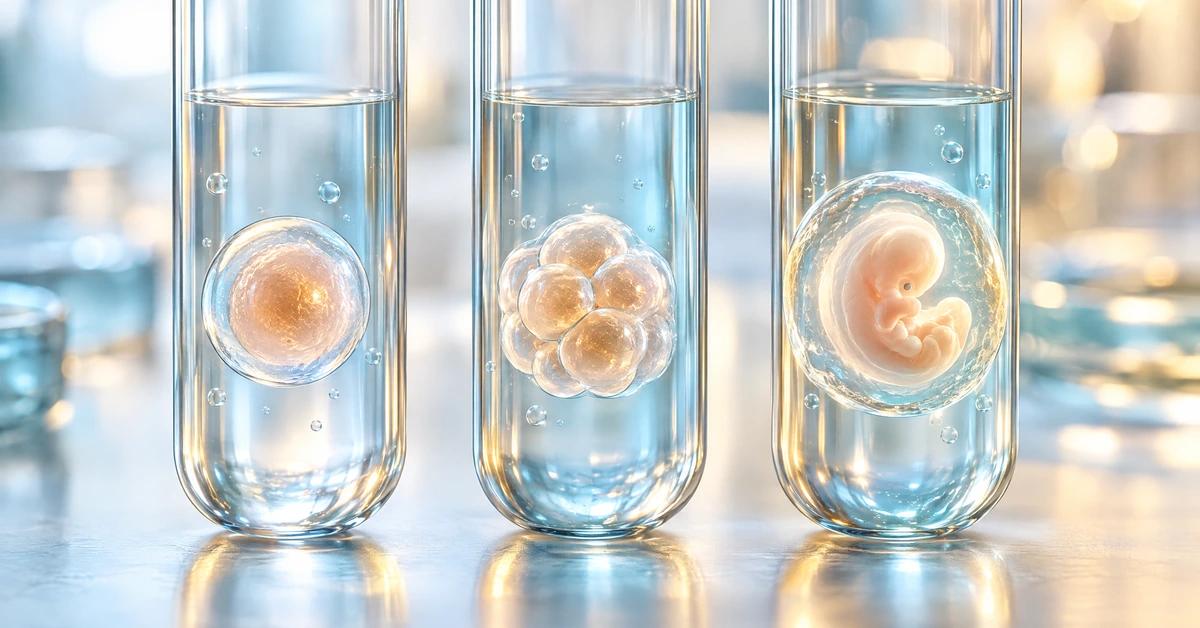
During IVF, eggs are retrieved from the ovaries and fertilized with sperm in an embryology laboratory. The resulting embryos are then monitored before an appropriate embryo is transferred to the uterus or frozen for future use.
IVF is not one fixed procedure for every patient. Ovarian stimulation, fertilization method, embryo culture, and the timing of embryo transfer can all differ according to the couple's individual fertility situation.
At Fertiliv, treatment planning begins by evaluating female age, ovarian reserve, sperm findings, uterine health, infertility diagnosis, and previous reproductive and treatment history.
What Is IVF?
In natural conception, fertilization usually occurs inside the fallopian tube.
With IVF, eggs are retrieved from the ovaries after controlled ovarian stimulation and fertilized in a laboratory.
After fertilization, embryos are monitored during the following days. Depending on the treatment plan, an embryo may be transferred during the same cycle or suitable embryos may be frozen for a later transfer.
IVF therefore describes a complete treatment pathway rather than only the laboratory fertilization step.
For a detailed overview of the complete sequence, read IVF Steps: From Ovarian Stimulation to Embryo Transfer.
When May IVF Be Recommended?
There is no single reason for starting IVF, and infertility does not automatically mean IVF is the first treatment required.
IVF may be discussed in situations such as:
Blocked or severely damaged fallopian tubes.
Unexplained infertility after appropriate evaluation.
Selected cases of endometriosis.
Reduced ovarian reserve, especially when time is important.
Certain ovulation disorders.
Male-factor infertility.
Failure of simpler fertility treatments in selected cases.
The need for embryo genetic testing in appropriate situations.
Previous fertility treatment history suggesting IVF is a more suitable next step.
The diagnosis alone does not determine treatment.
Two patients with the same diagnosis can receive different recommendations because of differences in age, ovarian reserve, sperm parameters, duration of infertility, or previous treatment results.
The important question is therefore not only “Can we undergo IVF?” but “Is IVF the most appropriate next treatment for our situation?”
How Does the Doctor Decide Whether IVF Is Appropriate?
IVF planning begins with evaluating both partners.
The assessment may include:
Female age.
Menstrual cycle history.
Ovarian reserve testing.
Antral follicle count.
Assessment of the uterus and uterine cavity when required.
Tubal evaluation when relevant.
Semen analysis.
Previous pregnancies or miscarriages.
Previous surgery.
Earlier fertility treatments.
Medical conditions and medications.
Once these factors are reviewed, the doctor can decide whether IVF is appropriate, which stimulation protocol may be suitable, and whether another condition should be treated before starting treatment or embryo transfer.
This is why IVF plans can vary considerably even between patients with similar diagnoses.
Read How Does a Doctor Personalize an IVF Treatment Plan? for a closer look at individualized treatment planning.
How Is IVF Performed?
An IVF cycle can be divided into several main stages.
Ovarian Stimulation
In a natural menstrual cycle, one dominant follicle usually develops and releases an egg.
During IVF, hormonal medication is used to encourage several follicles to develop when the ovaries are capable of responding.
The goal is not simply to obtain the largest possible number of eggs. The aim is an appropriate and safe ovarian response based on age, ovarian reserve, and the patient's medical situation.
Monitoring Follicle Development
Ultrasound examinations are performed during stimulation to monitor the number and size of developing follicles.
Hormone tests may also be requested at selected stages depending on the protocol and ovarian response.
Medication doses and follow-up timing can be adjusted according to these findings.
Final Maturation Trigger
When the follicles reach an appropriate stage, the final maturation trigger is scheduled.
Timing is important because egg retrieval is planned according to the time of this injection.
Egg Retrieval
Egg retrieval is generally performed under appropriate sedation or anesthesia using an ultrasound-guided needle.
The retrieved eggs are immediately transferred to the embryology laboratory, where their maturity is assessed.
Sperm Preparation and Fertilization
A sperm sample is prepared on the day of fertilization.
One important distinction is whether conventional IVF or intracytoplasmic sperm injection (ICSI) is used.
In conventional IVF, mature eggs are placed with prepared sperm and fertilization is allowed to occur without injecting sperm directly into each egg.
With ICSI, an embryologist selects a single sperm and injects it directly into a mature egg.
ICSI is therefore primarily a different laboratory fertilization method within the IVF treatment pathway rather than an entirely separate ovarian stimulation process.
For a detailed comparison, read IVF vs ICSI: What Is the Difference and When Is Each Used?.
How Do Eggs Develop Into Embryos?
Patients should understand that the number naturally decreases at each stage.
The number of follicles seen on ultrasound does not necessarily equal the number of eggs retrieved.
Not every retrieved egg is mature, not every mature egg fertilizes, and not every fertilized egg continues developing into an embryo suitable for transfer or freezing.
The pathway can be simplified as:
follicles → retrieved eggs → mature eggs → fertilized eggs → developing embryos.
This biological attrition is a normal part of embryo development and does not by itself indicate a laboratory or treatment problem.

Are Embryos Transferred Immediately or Frozen?
Both strategies are possible.
Some patients may have a fresh embryo transfer during the same treatment cycle.
In other situations, embryos may be frozen and transfer postponed to a later cycle.
A freeze-all strategy may be considered when:
Embryo genetic testing is planned.
The risk of ovarian hyperstimulation is increased.
The endometrium is not considered optimal for transfer.
A medical reason makes delaying transfer preferable.
The treatment team considers separating stimulation and transfer cycles more appropriate.
Egg retrieval and embryo transfer therefore do not always take place during the same treatment cycle or visit.
What Is the Difference Between IVF and ICSI?
Most stages of treatment are similar.
Both conventional IVF and ICSI may involve ovarian stimulation, follicle monitoring, egg retrieval, embryo culture, and embryo transfer or freezing.
The primary difference is how fertilization takes place in the laboratory.
With conventional IVF, sperm are placed with the eggs and fertilization occurs without direct sperm injection.
With ICSI, one selected sperm is injected directly into a mature egg.
This does not mean ICSI is automatically better or produces a higher pregnancy rate for every patient.
The fertilization method may be selected according to sperm findings, egg number, previous fertilization history, sperm source, and other clinical considerations.
For more information, read When Is Conventional IVF Better Than ICSI and When Is ICSI Unnecessary?.
Is IVF Success Guaranteed?
No fertility treatment can guarantee pregnancy or live birth from a single cycle.
IVF outcomes depend on several factors, including:
Female age.
Egg quality.
Ovarian reserve.
Sperm quality.
Cause of infertility.
Number of mature eggs.
Fertilization.
Embryo development and quality.
Uterine and endometrial health.
Previous fertility treatment history.
The term “IVF success rate” can also mean different outcomes.
It may refer to a positive pregnancy test, clinical pregnancy, or live birth, and statistics may be calculated per cycle or per embryo transfer.
For this reason, a single percentage should not be compared without understanding what outcome it represents.
Read IVF Success Rates: How Are They Calculated and Why Do They Vary? for a detailed explanation.
How Important Is Female Age in IVF?
When a woman is using her own eggs, age is one of the most important factors associated with treatment outcome.
As age increases, the number of available eggs may decline and egg quality can change. The probability of chromosomal abnormalities in embryos also rises.
Age alone, however, does not provide the complete picture.
Two women of the same age can have very different ovarian reserve, follicle counts, responses to medication, reproductive histories, uterine findings, and partner sperm factors.
Age should therefore be interpreted as part of the full fertility assessment.
How Long Does an IVF Cycle Take?
There is no single timeline for all patients.
Ovarian stimulation and monitoring continue until the follicles are considered ready for egg retrieval.
Retrieval is followed by fertilization and embryo development over the following days.
If a fresh transfer is planned, the embryo may be transferred during the same treatment cycle.
If embryos are frozen, frozen embryo transfer becomes a separate stage at a later date.
It is therefore important to distinguish between the duration of the egg retrieval cycle and the total time until embryo transfer and pregnancy testing.
What Happens if the First IVF Cycle Fails?
A failed first cycle does not mean future IVF treatment cannot succeed.
However, the next cycle should not automatically be repeated without reviewing what happened during the previous attempt.
The medical team may examine:
Ovarian response.
Number of eggs retrieved.
Number of mature eggs.
Fertilization results.
Embryo development.
Whether suitable embryos were available.
Endometrial findings.
Whether implantation failed or a pregnancy developed and later stopped.
This review may indicate whether stimulation, fertilization method, uterine assessment, or embryo-transfer strategy should be reconsidered.
Read First IVF Failure: What Should Be Reviewed Before the Next Attempt? for a structured review of the first unsuccessful cycle.
Are There Risks or Side Effects?
IVF is widely used, but like any medical treatment it can involve side effects and risks.
These may include:
Bloating or discomfort during ovarian stimulation.
Excessive ovarian response in some patients.
Ovarian hyperstimulation syndrome.
Uncommon bleeding or infection after egg retrieval.
Multiple pregnancy when more than one embryo is transferred.
Ectopic pregnancy.
Physical and emotional stress related to treatment.
Monitoring is therefore designed not only to obtain eggs but also to maintain patient safety throughout treatment.
What Happens After Egg Retrieval and Embryo Transfer?
Instructions vary according to the treatment stage and individual situation.
After egg retrieval, mild discomfort or bloating can occur for a short period, while certain symptoms should be reported if they become significant.
After embryo transfer, prolonged bed rest is generally not the goal. Activity and medication instructions are individualized according to the patient's condition.
For practical guidance, read After IVF: Instructions and Symptoms to Monitor After Retrieval and Embryo Transfer.
How Does Fertiliv Personalize IVF Treatment?
At Fertiliv, treatment does not begin with one standard protocol for every patient.
The team first evaluates the couple's fertility situation and considers questions such as:
Is IVF the appropriate next treatment?
What ovarian response can reasonably be expected?
Which stimulation protocol is suitable?
Is ICSI medically indicated?
Does a uterine condition require treatment before embryo transfer?
Is fresh transfer or embryo freezing more appropriate?
Is embryo genetic testing medically indicated?
How should monitoring be organized for international patients?
The objective is not to add the greatest number of procedures, but to build a treatment plan that matches the actual cause of infertility and the couple's medical circumstances.
Conclusion
IVF is a multi-stage treatment journey beginning with fertility evaluation and individualized planning, followed by ovarian stimulation, egg retrieval, laboratory fertilization, embryo development, and an appropriate embryo-transfer strategy.
There is no single IVF protocol suitable for everyone. Female age, ovarian reserve, sperm findings, uterine health, and previous reproductive and treatment history all influence the plan.
The choice between conventional IVF and ICSI, as well as fresh transfer versus embryo freezing, should be based on medical indications rather than a routine protocol.
Frequently Asked Questions About IVF
Is IVF painful?
Ovarian stimulation can cause bloating or discomfort. Egg retrieval is generally performed under appropriate sedation or anesthesia. Symptoms vary between patients.
Does every IVF patient need ICSI?
No. Conventional IVF or ICSI may be selected according to sperm findings, egg numbers, previous fertilization history, and other medical factors.
How many eggs are needed for successful IVF?
There is no specific number that guarantees success. Outcome depends on egg number and quality, maturity, female age, fertilization, and subsequent embryo development.
Can IVF be performed with low ovarian reserve?
It may be possible in selected patients, although low ovarian reserve can reduce the expected number of eggs. Age, ovarian reserve testing, follicle count, and previous response should be assessed together.
Can natural pregnancy occur after failed IVF?
Yes, natural conception remains possible for some couples if their underlying fertility situation allows it. The likelihood depends on the cause of infertility, female age, tubal status, sperm findings, and other factors.