
Vitrification of Eggs and Embryos: Which One is Right for Me?

Manar Hegazy

Majd Eddin Khaled
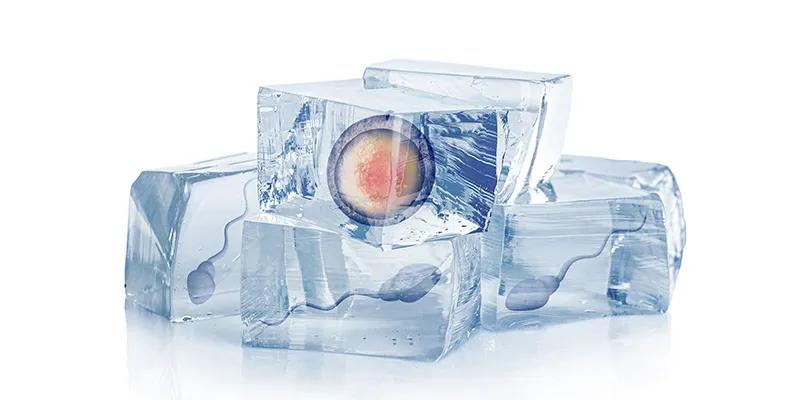
Rapid freezing of eggs and embryos, known as Vitrification , has become one of the most important medical advancements in the field of fertility. It has opened new doors for couples to delay pregnancy or repeat attempts with greater safety and effectiveness.
If you or your partner are considering freezing eggs or embryos for personal or medical reasons, this article will help you understand how this procedure can improve future chances of conception, and explain the difference between vitrification and traditional slow-freezing methods.
What Is Vitrification?
Vitrification is a modern technique used to preserve eggs, embryos, or even reproductive tissues without damaging them during the freezing process. Unlike slow freezing , which was previously used, vitrification prevents the formation of ice crystals inside cells — the main cause of damage in older freezing techniques.
Today, this method is considered safe and effective by many doctors, especially in cases such as:
- Freezing eggs in young women who wish to delay pregnancy.
- Preserving embryos after a successful IVF or ICSI cycle.
- Using frozen embryos in Frozen Embryo Transfer (FET) cycles.
Why Is Vitrification a Revolution in Reproductive Medicine?
- High cell protection: Thanks to high concentrations of cryoprotectants and fast freezing, internal damage to eggs or embryos is significantly reduced.
- Higher survival rates after thawing: Studies show that post-thaw egg and embryo survival rates now exceed 90% , which was not possible before this technology.
- Empowering women to delay childbearing: Women can now freeze their eggs at a younger age and use them later when they feel ready — whether medically or socially.
- Improving success rates in repeated attempts: In cases of natural conception failure or complex infertility, rapid freezing allows couples to reuse embryos without starting a new cycle from scratch.
Is Egg Freezing Different from Embryo Freezing?
Yes, there are key differences:
Egg Freezing
- Only mature eggs are frozen.
- Frequently used by single women or those undergoing treatments like chemotherapy or radiation due to conditions such as breast or ovarian cancer.
- Requires sperm selection and fertilization after thawing.
Embryo Freezing
- Performed after the eggs have been fertilized using the partner’s sperm.
- Best suited for couples with a clear plan for parenthood.
- No need for re-fertilization when used in future cycles.
When Is Vitrification Used in Fertility Treatment?
Vitrification is applied in several situations, including:
- Delaying pregnancy for years: For women who want to focus on career, education, or undergo medical treatment (e.g., chemotherapy or radiotherapy), also known as fertility preservation .
- Freezing excess embryos after an IVF or ICSI attempt: If multiple embryos develop, additional ones can be safely frozen for future use.
- Avoiding transferring all embryos in the same cycle: In some cases, the uterine environment may not be optimal due to:
- High estrogen levels
- Risk of Ovarian Hyperstimulation Syndrome (OHSS)
- Desire to perform preimplantation genetic testing (PGT)
Is Vitrification Safe?
Yes, studies have shown that children born from embryos or eggs preserved through vitrification are no different in health outcomes than those from natural or fresh transfers. Long-term freezing does not affect egg or embryo quality, provided proper medical protocols are followed during handling and storage.
Vitrification is not just an extra step in the fertility journey — it is a vital medical tool that gives couples the opportunity to delay or repeat the process with more confidence and better results.
At Fertiliv Clinic , we believe that family planning should be a science-based, fully supported choice. We offer you and your partner comprehensive consultation and follow-up to ensure the best possible outcomes.