
Retrograde Ejaculation Understanding Causes and Available Treatments

Manar Hegazy

Majd Eddin Khaled
Retrograde ejaculation is a male fertility condition that can be confusing because sexual desire, erection, and orgasm may still feel normal. The main difference is that little or no semen comes out during ejaculation. For couples trying to conceive, this can become a major concern because sperm may not reach the vagina in the usual way.
At Fertiliv in Istanbul, retrograde ejaculation is evaluated through accurate diagnosis before choosing treatment. The condition does not always mean sperm are absent or pregnancy is impossible. In many cases, sperm are being produced, but the semen moves backward into the bladder instead of forward through the urethra. With the right testing, it may be possible to identify the cause and choose medical treatment, sperm recovery, IUI, IVF, or ICSI depending on the case.
What Is Retrograde Ejaculation?
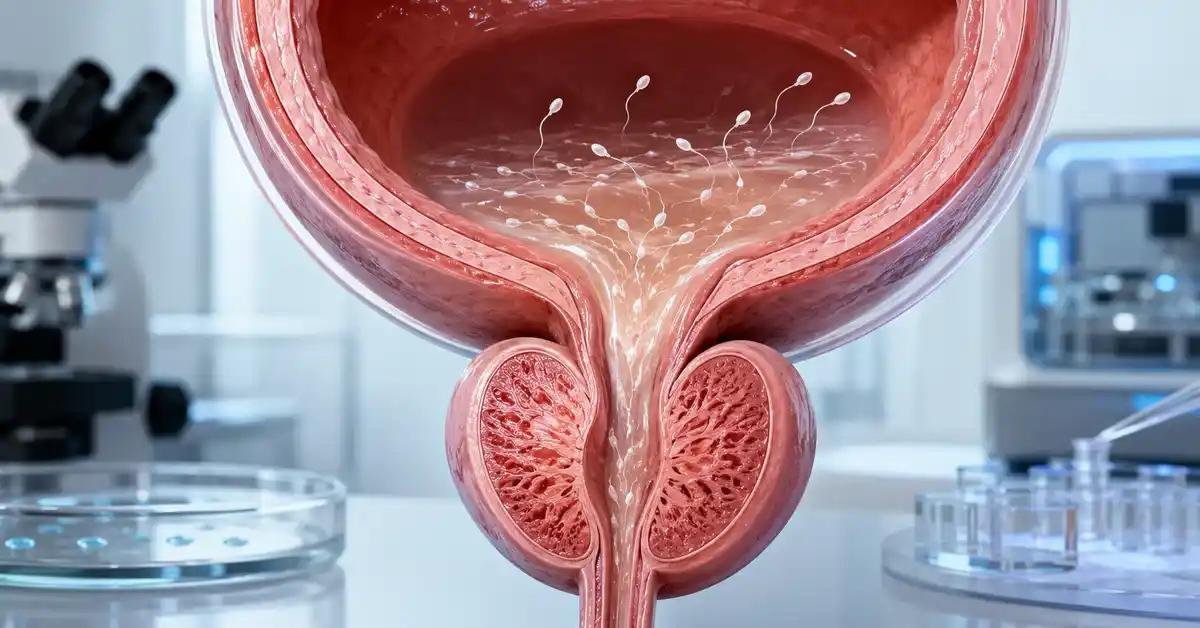
In normal ejaculation, semen exits the body through the urethra. In retrograde ejaculation, semen moves backward into the bladder because the bladder neck does not close properly during ejaculation. The man may still feel orgasm, but semen volume is very low or absent.
This condition is different from erectile dysfunction. Many men with retrograde ejaculation can have normal erections and orgasm. The issue is mainly the direction of semen flow.
Why semen goes into the bladder
During ejaculation, the bladder neck should close so semen moves outward. If the bladder neck does not close well, semen can enter the bladder instead.
Afterward, semen may leave the body with urine. Some men notice cloudy urine after orgasm. This is why post-ejaculation urine testing can be useful when retrograde ejaculation is suspected.
Is it dangerous?
Retrograde ejaculation is usually not harmful to general health. It does not usually damage the bladder or cause serious physical danger. Its main concern is fertility, because sperm do not reach the vagina in enough quantity for natural conception.
However, the condition should still be evaluated, especially when pregnancy is desired. It may be linked to diabetes, medication use, nerve damage, or previous surgery.
Difference from anejaculation
Retrograde ejaculation is not the same as anejaculation. In retrograde ejaculation, ejaculation occurs but semen flows backward. In anejaculation, semen may not be expelled because ejaculation itself does not happen.
This difference matters because testing and treatment are different. Finding sperm in urine after orgasm supports the diagnosis of retrograde ejaculation.
Read about: Male Infertility: Causes and Advanced Medical Solutions
Symptoms of Retrograde Ejaculation
The most common symptom is little or no semen during orgasm. This may be described as a “dry orgasm.” Some men also notice cloudy urine after sexual activity because semen has entered the bladder.
Many men have no pain. The problem may only become clear when the couple is trying to conceive or when semen analysis shows very low volume or no sperm in the sample.
Low semen volume
Repeatedly low semen volume can have different causes, including partial retrograde ejaculation, obstruction, reduced gland fluid, hormone issues, or sample collection problems. It should not be judged by appearance alone.
Semen analysis helps measure volume, sperm concentration, motility, and other parameters. If volume is very low, urine testing after ejaculation may be needed.
Orgasm without semen
Orgasm without semen can suggest retrograde ejaculation or anejaculation. Suspicion increases if it happens after prostate surgery, with diabetes, or after starting certain medications.
A specialist evaluation is important because symptoms alone may not identify the exact cause.
Infertility despite regular intercourse
Fertility may be the reason the condition is discovered. If semen does not enter the vagina, natural pregnancy becomes less likely even when sperm production is normal.
The key question becomes whether sperm can be found in post-ejaculation urine and whether they can be prepared for fertility treatment.
Read about: Male Sperm Weakness: Comprehensive Guide to Causes and Treatment
Causes of Retrograde Ejaculation
Retrograde ejaculation is usually caused by a problem with bladder neck closure during ejaculation. This may result from surgery, nerve damage, diabetes, medication effects, spinal cord injury, or pelvic conditions.
Some causes are reversible, such as medication effects. Others may be more permanent, especially after surgery that changes the anatomy or nerve function around the bladder and prostate.
Diabetes and nerve function
Long-term diabetes can affect the nerves that control ejaculation and bladder neck closure. This may lead to retrograde ejaculation, weak ejaculation, or other sexual problems.
When retrograde ejaculation occurs in a man with diabetes, the evaluation should include blood sugar control, nerve health, medications, and overall male reproductive health.
Prostate and bladder surgery
Some prostate or bladder surgeries can affect the bladder neck and cause semen to flow backward into the bladder. This may happen after procedures for enlarged prostate or other pelvic operations.
When the cause is surgical, medication may be less effective, especially if permanent anatomical change has occurred. Fertility treatment may then focus on sperm recovery and assisted reproduction.
Medications and neurological conditions
Some medications used for prostate symptoms, blood pressure, or mental health can affect ejaculation. Neurological conditions such as multiple sclerosis, spinal cord injury, Parkinson’s disease, or nerve damage may also contribute.
Medication should not be stopped without medical guidance. If a medication is suspected, the doctor can assess whether safe alternatives are possible.
Read about: Low Sperm Count: Genetic, Environmental Factors, and Treatment Options
Diagnosis of Retrograde Ejaculation
Diagnosis begins with medical history, sexual symptoms, medication review, diabetes history, previous surgeries, and fertility goals. The doctor asks about semen volume, orgasm, cloudy urine, pelvic surgery, prostate medications, and neurological conditions.
Testing may include semen analysis and post-ejaculation urine analysis. The goal is to determine whether sperm are not being produced or whether they are being redirected into the bladder.
Semen analysis
Semen analysis is essential because it shows semen volume, sperm count, motility, and other values. In retrograde ejaculation, the sample may be very low in volume or may contain few or no sperm.
A low-volume or sperm-free sample does not always mean the testicles are not producing sperm. Post-ejaculation urine analysis may reveal sperm in the urine.
Post-ejaculation urine test
In this test, urine is collected after orgasm and examined for sperm. If sperm are found in significant numbers, retrograde ejaculation becomes more likely.
Sometimes urine must be prepared or alkalinized before collection because urine can damage sperm. This should be done according to medical instructions.
Couple-based fertility assessment
If pregnancy is delayed, both partners should be evaluated. The female partner’s ovulation, ovarian reserve, tubes, uterus, and age influence the treatment plan.
If all female factors are reassuring, sperm recovery and simpler fertility options may be considered. If other factors exist or time is limited, ICSI may be more appropriate.

Available Treatments
Treatment depends on the cause and the goal. If the man is not trying to conceive and is not bothered by the condition, treatment may not be needed. If fertility is desired, treatment may include medication adjustment, medications to improve bladder neck closure, sperm recovery from urine, or assisted reproduction.
There is no single plan for all cases. Medication-related retrograde ejaculation may improve after adjustment, while surgery-related cases may require fertility-focused sperm recovery.
Changing the causative medication
If retrograde ejaculation started after a medication, the doctor may consider changing it or adjusting the dose. This may apply to certain prostate medications, blood pressure medications, or medications affecting the nervous system.
The patient should not stop medication independently. Safety must come first, especially with blood pressure, heart, or neurological medications.
Medications that support forward ejaculation
Some medications may help the bladder neck close more effectively during ejaculation. They may work better when the cause is functional or related to nerve signaling rather than permanent surgery.
These medications can affect blood pressure, heart rate, or interact with other drugs. They should be used only under medical supervision.
Treating the underlying cause
If diabetes is involved, improving blood sugar control and nerve health matters. If medication is the cause, alternatives may be discussed. If surgery is the cause, treatment may focus more on fertility pathways than restoring normal ejaculation.
The goal is to choose the most realistic route to sperm use and pregnancy.
Read about: Seminal Tract Obstruction: Causes, Diagnosis, And Surgical Sperm Retrieval Methods
Sperm Recovery and Fertility Options
When pregnancy is the goal, sperm may sometimes be recovered from urine after ejaculation. This requires special preparation because urine can harm sperm movement and survival. The clinic may provide instructions to make the urine environment less damaging before collection.
After recovery, sperm are assessed for number, movement, and quality. The result helps determine whether IUI, IVF, or ICSI is suitable.
Recovering sperm from urine
Post-ejaculation urine can be processed in the laboratory to separate sperm. Proper preparation and timing are important.
If enough motile sperm are recovered, they may be used for fertility treatment. However, quality may vary, and more than one attempt may be needed.
Intrauterine insemination
IUI may be considered if enough motile sperm are recovered and the female partner has open tubes and good ovulation. The prepared sperm are placed inside the uterus around ovulation.
If sperm numbers or movement are limited, IUI may have a lower chance and ICSI may be more appropriate.
IVF with ICSI
ICSI may be suitable when sperm numbers are low or sperm must be carefully selected in the laboratory. Sperm recovered from urine or surgically retrieved sperm may be used if viable.
ICSI can allow pregnancy even when normal forward ejaculation is not restored. The full plan should include egg quality, uterine readiness, and the couple’s timeline.
Read about: Sperm DNA Fragmentation: What Is It And How Does It Affect Fertilization Success And Miscarriage?
When Surgical Sperm Retrieval Is Needed
If medications do not work and enough sperm cannot be recovered from urine, the doctor may discuss sperm retrieval from the testicle or epididymis. This is considered when sperm production exists but ejaculation cannot deliver usable sperm.
The decision should be based on hormone results, testicular size, semen and urine findings, and the female partner’s fertility plan.
Epididymal or testicular sperm retrieval
Sperm may be obtained from the epididymis or testicle depending on the case. When sperm production is normal and the problem is only delivery, the chance of finding sperm may be better than in severe sperm production failure.
Retrieved sperm are usually used with ICSI because numbers may be limited. Freezing extra sperm may be discussed when appropriate and legally allowed.
When ICSI becomes the best option
ICSI is often preferred when sperm are few, recovered from urine, or surgically retrieved. It may also be the better option when the female partner has age-related factors or ovarian reserve concerns.
The decision should be couple-based, not male-only. Time, egg number, sperm source, and previous history all matter.
Importance of a specialized laboratory
Retrograde ejaculation may involve non-standard samples such as processed urine or surgically retrieved sperm. Laboratory preparation, washing, and sperm selection are important.
A fertility center with experience in male-factor infertility and ICSI can make the plan more organized and realistic.
Read about: The Effect of Heat and Medications on Sperm Quality
Emotional and Couple Support
Retrograde ejaculation can cause embarrassment or fear, especially if the man interprets it as loss of masculinity. It is important to explain that desire, erection, and orgasm can remain normal. The problem is semen direction, not manhood.
Support between partners is essential. Medical understanding helps reduce shame and turns the issue into a practical fertility plan.
Do not connect it with masculinity
Low semen volume or dry orgasm does not mean the man is less masculine. Retrograde ejaculation is a physical mechanism problem that may be related to diabetes, medication, surgery, or nerves.
Understanding this helps men seek care earlier and reduces emotional pressure.
Communication with the partner
Open discussion between partners helps reduce stress. It is often helpful for both partners to attend the consultation because the treatment plan affects the couple’s pregnancy pathway.
When both partners understand sperm recovery and ICSI options, decision-making becomes calmer.
Create a timeline
If pregnancy is the goal, a clear timeline is important. It may include semen analysis, post-ejaculation urine testing, a medication trial if suitable, sperm recovery planning, and ICSI when needed.
A structured plan prevents months of uncertainty and helps the couple move from one step to the next.
Read about: A Medical Roadmap to Enhancing Sperm Motility and Male Fertility
Conclusion
Retrograde ejaculation happens when semen moves backward into the bladder instead of leaving the body during ejaculation. It is usually not dangerous to general health, but it can affect fertility by preventing sperm from reaching the vagina. Causes may include diabetes, prostate or bladder surgery, medications, nerve injury, or bladder neck dysfunction. Diagnosis depends on semen analysis, post-ejaculation urine testing, and careful medical history.
Frequently Asked Questions: Retrograde Ejaculation
Can retrograde ejaculation prevent pregnancy?
It can make natural pregnancy difficult because semen does not reach the vagina in enough quantity. However, pregnancy may still be possible with sperm recovery and fertility treatment.
Is retrograde ejaculation dangerous?
It is usually not dangerous to general health, but it matters when pregnancy is desired. The underlying cause should also be evaluated.
How is retrograde ejaculation diagnosed?
Diagnosis usually includes medical history, semen analysis, and urine testing after ejaculation to look for sperm in the urine.
Can medication treat retrograde ejaculation?
Medication may help in some cases, especially when the cause is functional or medication-related. It may not work well when there is permanent surgical or anatomical change.
Can sperm from urine be used for ICSI?
Yes, in selected cases sperm can be recovered from post-ejaculation urine after special preparation and used for IUI or ICSI depending on quality.