
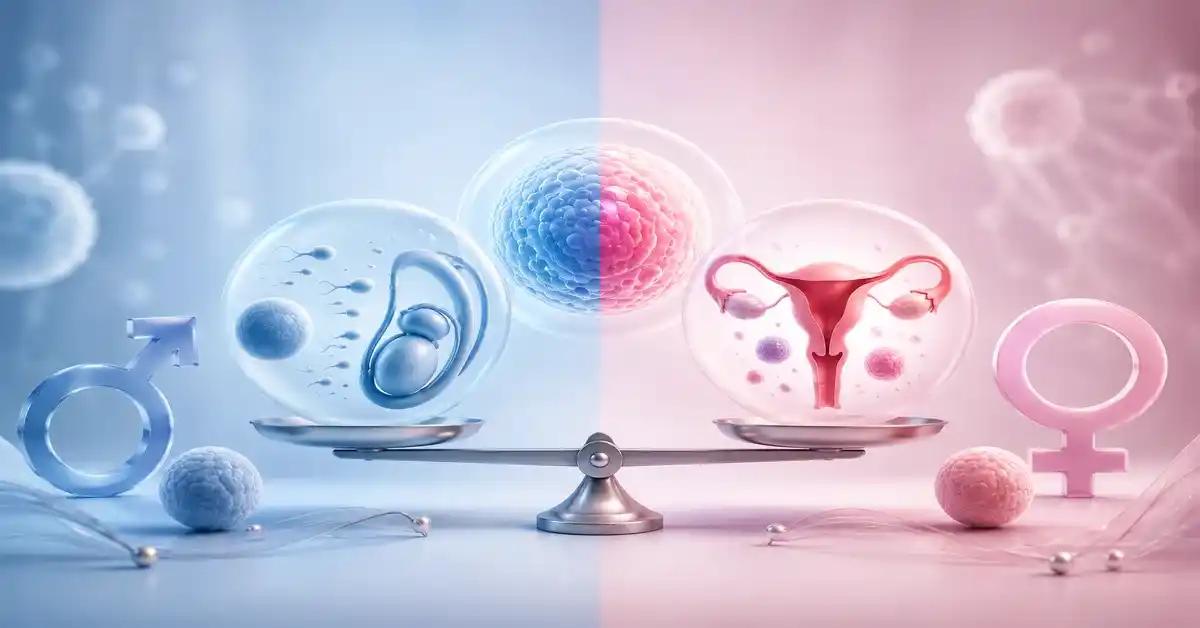
Male and Female Infertility: Comparing Causes and Comprehensive Treatments

Manar Hegazy

Majd Eddin Khaled
Infertility is not a problem that belongs to only one partner. It may be caused by female factors, male factors, combined factors, or remain unexplained after basic testing. A correct fertility plan begins by evaluating both partners together rather than focusing on one side only. This parallel approach saves time, reduces confusion, and helps the couple choose the treatment that matches the real cause.
At Fertiliv in Istanbul, infertility is approached as a medical pathway that needs diagnosis before treatment. Some couples may need ovulation support, infection treatment, or semen improvement, while others may need IUI, IVF, ICSI, surgery, or sperm retrieval. The goal is not to jump to the most advanced treatment, but to choose the most appropriate treatment based on age, history, test results, and time.
Understanding Infertility as a Couple-Based Condition
Infertility is commonly defined as failure to achieve pregnancy after 12 months or more of regular unprotected intercourse. Evaluation may begin earlier when the female partner is 35 or older, or when there are clear risk factors such as irregular cycles, known tubal disease, severe semen abnormality, recurrent pregnancy loss, pelvic surgery, or prior cancer treatment. WHO describes infertility as a disease of the male or female reproductive system and notes that it can arise from male, female, combined, or unexplained factors.
Primary and secondary infertility
Primary infertility means pregnancy has never been achieved, while secondary infertility means difficulty conceiving after a previous pregnancy. This distinction helps the doctor understand the history, but it does not replace current evaluation. A previous pregnancy does not guarantee that ovulation, ovarian reserve, tubes, uterus, sperm quality, or health conditions have remained unchanged.
Why both partners should be evaluated
Evaluating both partners from the beginning prevents unnecessary delay. A woman may undergo repeated hormonal tests while the main factor is severe male infertility, or a man may have a normal semen analysis while the problem is tubal blockage or ovulation dysfunction. ASRM recommends that when a male partner contributes to pregnancy, evaluation of both partners should begin at the same time.
When evaluation should not be delayed
Evaluation should begin earlier when there are irregular or absent periods, known endometriosis, pelvic surgery, ectopic pregnancy, chemotherapy or radiation exposure, suspected male infertility, sexual dysfunction, or recurrent pregnancy loss. Waiting without direction may reduce options, especially when female age or ovarian reserve is time-sensitive.
Read about: Unexplained Infertility: A Hopeful Journey Through Diagnosis and Modern Treatment
Comparing Female and Male Causes
Female infertility causes commonly involve ovulation, ovarian reserve, fallopian tubes, uterus, endometriosis, hormones, or age. Male infertility causes often involve sperm count, motility, morphology, sperm transport, hormones, varicocele, infection, or genetic factors. The final chance of pregnancy depends on both sides together, so the couple’s results should be interpreted as one reproductive picture.
| Comparison area | Female causes | Male causes | Treatment note |
|---|---|---|---|
| Hormonal factors | PCOS, thyroid disease, prolactin, ovarian aging | Low testosterone, FSH/LH disorders | Treat the underlying hormone issue |
| Transport pathways | Blocked tubes, pelvic adhesions | Obstructive azoospermia, ejaculatory problems | IVF/ICSI or surgery may be needed |
| Reproductive cells | Egg number or quality concerns | Low count, motility, or morphology | Age and semen results guide timing |
| Structural factors | Polyps, fibroids, adhesions, endometriosis | Varicocele, infection, testicular failure | Treatment depends on severity |
Ovulation and ovarian reserve
Ovulation problems are among the major causes of female infertility. They may appear through irregular cycles, delayed periods, absent periods, or sometimes subtle cycle changes. Common causes include PCOS, thyroid dysfunction, high prolactin, weight changes, excessive exercise, and ovarian aging. Ovarian reserve testing, including AMH and ultrasound follicle count, helps guide treatment speed and strategy, but it does not alone define whether pregnancy is possible.
Tubal and uterine factors
Fallopian tubes allow egg and sperm to meet naturally. Tubal blockage may follow pelvic infection, ectopic pregnancy, surgery, adhesions, or endometriosis. Uterine factors such as polyps, submucosal fibroids, adhesions, congenital uterine abnormalities, or endometrial problems may affect implantation or pregnancy continuation. Testing may include HSG, saline ultrasound, or hysteroscopy depending on the history.
Semen and male factors
Male infertility may involve low sperm count, poor motility, abnormal morphology, azoospermia, inflammation, obstruction, or hormonal imbalance. A semen analysis is the starting point, but abnormal results often need confirmation because semen values vary between samples. AUA/ASRM states that initial male evaluation should include reproductive history and one or more semen analyses.
Read about: Navigating a First Pregnancy Delay: Your Complete Guide to Fertility Testing and Diagnosis
Essential Fertility Tests
Fertility testing should be systematic and directed. A good evaluation begins with the couple’s history: duration of infertility, age, cycle pattern, previous pregnancies, surgeries, infections, medications, lifestyle, and male reproductive history. Tests should be chosen because they can change the treatment plan, not simply because they are available.
Female testing
Female evaluation may include transvaginal ultrasound, ovulation assessment, TSH, prolactin when indicated, AMH, ovarian reserve assessment, and tubal testing when natural conception or IUI is being considered. Hysteroscopy or advanced imaging may be used when uterine cavity disease is suspected. ASRM recommends a systematic, expeditious, cost-effective approach with emphasis on the least invasive methods for common causes.
Male testing
Male testing begins with semen analysis, assessing volume, concentration, total count, motility, morphology, and sometimes inflammatory signs. If results are abnormal, repeat testing is often useful because fever, recent illness, abstinence interval, stress, smoking, and collection factors can affect results. Depending on findings, hormone tests, physical examination, genetic tests, or targeted imaging may be needed.
Advanced tests for selected cases
Tests such as sperm DNA fragmentation, karyotype, Y-chromosome microdeletion, immune testing, hysteroscopy, or genetic testing are not needed for every couple at the beginning. They become more useful with severe male factor, azoospermia, recurrent pregnancy loss, repeated IVF failure, unexplained infertility after basic evaluation, or known genetic risks. AUA/ASRM does not recommend sperm DNA fragmentation testing as a routine initial male infertility test.
Read about: Delayed Pregnancy After 35: Medical Facts, Risks, And Tips To Improve Pregnancy Chances
Comprehensive Treatment Options
Treatment depends on the cause, female age, ovarian reserve, duration of infertility, semen analysis, tubal status, uterine health, and previous treatment history. Some couples need only a simple correction; others need assisted reproductive technology. The best plan is cause-based, time-aware, and realistic.
Medication and ovulation induction
When ovulation dysfunction is the main cause, treatment may include weight optimization, correction of thyroid or prolactin problems, and ovulation induction with ultrasound monitoring. This may be suitable when the woman is younger, the tubes are open, and semen analysis is acceptable. It is less useful when tubes are blocked, ovarian reserve is low, age is advanced, or male factor is severe.
Surgery and minimally invasive treatment
Some causes benefit from surgery or hysteroscopy before pregnancy attempts or IVF. Examples include removal of uterine polyps, treatment of intrauterine adhesions, selected fibroids affecting the cavity, endometriosis in specific cases, varicocele repair when appropriate, or microsurgical reconstruction for obstructive male infertility. The decision should depend on how strongly the finding affects fertility and whether surgery improves the chance of pregnancy.
IUI, IVF, and ICSI
IUI may be suitable when tubes are open, ovulation is present, and semen parameters are adequate, especially in mild male factor or unexplained infertility. IVF or ICSI may be more appropriate with tubal blockage, severe male factor, low ovarian reserve, advanced female age, failed IUI, or surgically retrieved sperm. For men with non-obstructive azoospermia requiring sperm retrieval, AUA/ASRM recommends microdissection testicular sperm extraction.

Choosing the Right Treatment Path
The correct treatment is not determined by diagnosis alone. PCOS in a 27-year-old woman with open tubes and normal semen analysis is not the same as PCOS in a 39-year-old woman with low ovarian reserve. Similarly, varicocele in a man whose partner is young may be approached differently from severe male factor when time is limited.
When simpler treatment is reasonable
Simpler treatment may be reasonable when the couple still has a good chance with lower-level intervention. This may include lifestyle correction, treating infections, correcting hormones, ovulation induction, or IUI. However, the plan should have a clear timeline so that “simple treatment” does not become years of delay.
A practical sequence may include:
- Confirm ovulation and cycle pattern.
- Check semen analysis and tubal status.
- Treat correctable factors.
- Set a defined trial period.
- Move to advanced treatment if pregnancy does not occur.
When ICSI may be preferred
ICSI may be preferred when simpler options have a low chance or time is critical. This includes blocked tubes, severe sperm abnormalities, surgically retrieved sperm, advanced female age, low ovarian reserve, severe endometriosis, failed prior treatments, or genetic testing needs. In these cases, ICSI is not necessarily an aggressive choice; it may be the most efficient and realistic route.
When multidisciplinary care is needed
Some couples need combined care from fertility specialists, male reproductive urologists, endocrinologists, hematologists, or minimally invasive surgeons. This may happen with recurrent miscarriage, severe sperm abnormalities, autoimmune disease, cancer history, complex hormonal disease, or uterine cavity problems. Coordinated care prevents fragmented decisions.
Read about: Secondary Infertility: Understanding Difficulty Conceiving After a Previous Child
Prevention, Emotional Support, and Fertiliv’s Plan
Not every infertility cause can be prevented, but some risks can be reduced. Healthy weight, smoking cessation, infection prevention, avoiding anabolic steroids or testosterone when trying to conceive, protecting fertility before cancer treatment, and early evaluation all support reproductive health. Emotional support is equally important because infertility affects relationships, identity, and mental wellbeing.
Lifestyle and fertility protection
Lifestyle affects both egg and sperm health. Smoking, obesity, excessive alcohol intake, poor sleep, chronic stress, heat exposure around the testes, anabolic steroids, and environmental pollutants may reduce fertility. WHO notes that lifestyle factors and environmental toxins can affect eggs and sperm quality.
Emotional support during treatment
Infertility treatment can be stressful even when the medical plan is clear. Waiting, injections, scans, results, family pressure, and fear of failure all affect the couple. Good care should include clear explanations, realistic expectations, and emotional support. A failed attempt should be treated as information for the next plan, not as the end of the journey.
Fertiliv’s couple-based approach
At Fertiliv, the plan begins with evaluating both partners, prioritizing tests, explaining results clearly, and choosing treatment without unnecessary delay or unnecessary escalation. The pathway may involve ovulation support, IUI, ICSI, male fertility treatment, hysteroscopy, or sperm retrieval, but the central goal remains the same: a clear, safe, and personalized plan that gives the couple the best possible chance.
Read about: Recurrent Miscarriage And Delayed Pregnancy
Conclusion
Male and female infertility is not one diagnosis. It may involve ovulation, tubes, uterus, ovarian reserve, semen quality, hormones, infections, genetic factors, or combined issues. The best starting point is not random treatment, but a parallel and organized evaluation of both partners that identifies the cause and matches treatment to age, time, test results, and medical history.
Frequently Asked Questions: Male and Female Infertility
Is infertility usually caused by the woman?
No. Infertility may be due to female factors, male factors, combined factors, or unexplained causes. Both partners should be evaluated.
What is the first test for infertility?
The first step is a careful history for both partners, semen analysis for the male partner, and targeted female tests such as ultrasound, ovulation assessment, and tubal evaluation when needed.
Does poor semen analysis always mean ICSI?
No. The decision depends on severity, female age, tubal status, infertility duration, and other factors. Severe male factor often makes ICSI more appropriate.
When should tubes be checked?
Tubal testing is important when natural conception or IUI is being considered, or when there is pelvic infection, ectopic pregnancy, surgery, or unexplained infertility.
Can unexplained infertility be treated?
Yes. Unexplained infertility means basic tests have not shown a clear cause, but treatment may still include ovulation tracking, IUI, IVF, or ICSI depending on age and duration.