
MACS Sperm Selection for Better Sperm Quality Before ICSI

Manar Hegazy

Majd Eddin Khaled
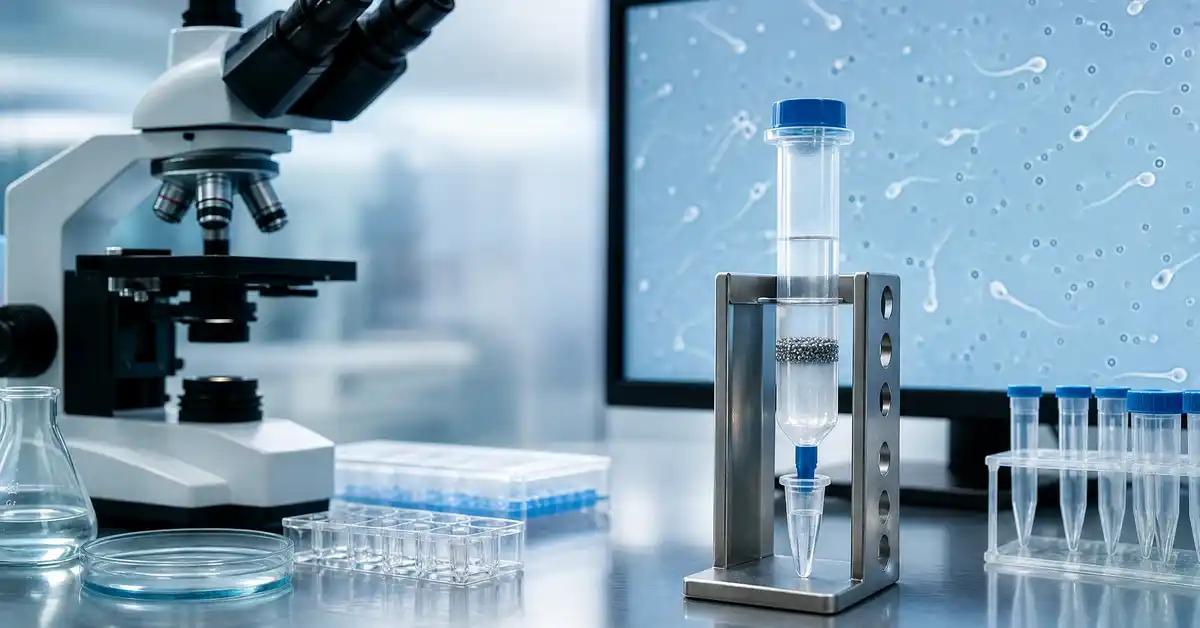
MACS sperm selection is an advanced laboratory technique designed to improve sperm selection before ICSI or selected fertility treatment plans. Its aim is to separate sperm cells showing unwanted cellular markers from sperm cells that appear more suitable for use. MACS does not create new sperm or repair damaged DNA; it helps the laboratory select a better fraction from the available sample.
What MACS sperm selection means
MACS uses a magnetic separation method to identify and remove sperm cells showing early cellular markers linked to apoptosis. The selected remaining sperm fraction may contain a lower proportion of cells affected by these markers. This makes MACS a functional sperm selection method rather than a simple visual sperm assessment.
How MACS differs from standard sperm washing
Standard sperm washing mainly separates motile sperm and removes seminal fluid, debris, and unwanted cells. MACS adds another level of selection by targeting sperm cells with specific cellular damage markers. For this reason, it may be used as an additional step when the case suggests that sperm DNA integrity may be affecting reproductive outcomes.
Does MACS treat infertility or improve sperm selection?
MACS does not directly treat the cause of infertility. It does not cure varicocele, infection, oxidative stress, or lifestyle-related sperm damage. Instead, it attempts to improve the sperm sample used in the laboratory. This is why MACS should be part of a complete male and couple-based fertility plan, not a standalone promise.
Sperm DNA Fragmentation and Its Role in Recurrent Infertility
Sperm DNA fragmentation refers to breaks or damage in the genetic material carried inside sperm. It may sometimes be present even when semen count, motility, and morphology are not severely abnormal. In selected couples, high sperm DNA fragmentation may be relevant in recurrent infertility, weak embryo development, implantation failure, fertilization problems, or recurrent miscarriage.
Why sperm DNA damage may affect embryo quality
Sperm contributes half of the embryo’s genetic material. When sperm DNA damage is high, it may affect fertilization, embryo division, embryo development, or pregnancy continuation in some cases. The effect is not identical in every couple because egg quality, female age, and embryo biology also matter.
When sperm DNA fragmentation testing may be considered
Testing may be discussed after recurrent pregnancy loss, repeated ICSI failure, poor embryo development, unexplained infertility, or when male risk factors are present. These may include varicocele, smoking, heat exposure, inflammation, advanced male age, or previous abnormal semen results. Testing is most useful when the result can change the treatment plan.
Does high sperm DNA fragmentation always require MACS?
No. High DNA fragmentation does not automatically mean MACS is the only answer. The cause should be reviewed, lifestyle and medical factors should be addressed, and the couple’s full treatment history should be assessed. MACS becomes more relevant when high fragmentation is combined with recurrent failure and an ICSI plan where sperm selection can be improved.
Read about: Male Sperm Weakness: Comprehensive Guide to Causes and Treatment
When MACS May Help in ICSI and Recurrent Treatment Failure
MACS may be most useful when there is a clear sign that sperm quality, especially DNA integrity, may be contributing to the couple’s repeated treatment problems. It should not be added automatically to every ICSI cycle. It is most meaningful when the treatment team can connect the technique to a specific concern.
MACS for high sperm DNA fragmentation
When sperm DNA fragmentation is elevated, MACS may reduce the proportion of sperm affected by cellular damage markers in the final sample. A recent evidence review found that MACS significantly reduced sperm DNA fragmentation and showed improved outcomes in selected ICSI cycles, particularly when DNA fragmentation was high.
MACS for recurrent implantation failure or miscarriage
In recurrent implantation failure or miscarriage, the sperm factor is only one possible part of the problem. Egg quality, embryo genetics, uterine factors, hormonal balance, and immune-related issues may also be involved. MACS may be considered when male factor and high sperm DNA fragmentation are present as part of a broader treatment plan.
MACS after failed ICSI or poor embryo development
After failed ICSI, low fertilization, weak embryo development, or repeated embryo arrest, the previous cycle should be reviewed carefully. If the pattern suggests a possible sperm contribution and DNA fragmentation is elevated, MACS may be discussed along with other sperm selection or male factor optimization strategies.

MACS Laboratory Steps Before Sperm Use
MACS is performed in the laboratory as part of sperm preparation. The patient does not experience it as a painful separate procedure. Its value depends on proper indication, sample quality, laboratory handling, and coordination with egg retrieval.
Semen sample preparation before MACS
The semen sample is first assessed and prepared. If sperm numbers are very low, the laboratory must consider whether MACS can be applied without losing too many usable sperm. In severe male factor cases, preserving enough sperm for injection may be just as important as improving selection.
Magnetic sorting and removal of damaged sperm markers
The prepared sample goes through magnetic separation to remove sperm cells showing unwanted cellular markers. The goal is to obtain a final fraction with a higher proportion of sperm that appear less affected by these markers. This can improve the sample used for ICSI in selected cases.
Using MACS-selected sperm in ICSI
After sorting, the selected sperm fraction may be used for ICSI according to egg readiness and the laboratory plan. When MACS is performed on the day of egg retrieval, timing and coordination are important so the embryology team has the prepared sample ready for injection.
Read about: Low Sperm Count: Genetic, Environmental Factors, and Treatment Options
Benefits and Limits of MACS for DNA Fragmentation and Recurrent Infertility
MACS is promising in selected cases, but it is not a guarantee. Its strength is that it targets a functional quality marker, not only sperm appearance. Its limitation is that it cannot solve every cause of treatment failure, and it cannot fully compensate for poor egg quality, uterine problems, or embryo chromosome issues.
Potential benefits of MACS sperm selection
The main potential benefit is reducing the number of sperm with apoptosis-related markers in the final preparation. This may be useful when sperm DNA fragmentation is high and previous fertility outcomes suggest a male contribution. Recent findings support possible benefit in selected ICSI cases, but not routine use for everyone.
Limits of MACS in very poor semen samples
When sperm count is extremely low, any additional sorting step may reduce the number of sperm available for injection. In these cases, the laboratory must balance sperm quality improvement with preserving enough usable sperm. Alternative strategies may sometimes be more appropriate.
Is MACS always better than other sperm selection methods?
No. MACS is not always superior to other sperm selection methods. Different techniques target different sperm characteristics, and comparative studies show that results can vary by patient group, indication, and protocol. The choice should depend on diagnosis, DNA fragmentation level, previous treatment results, and expected egg number.
Read about: Seminal Tract Obstruction: Causes, Diagnosis, And Surgical Sperm Retrieval Methods
Fertiliv’s Plan for Using MACS in Recurrent Infertility
At Fertiliv, MACS is not treated as an automatic add-on to every ICSI cycle. It is considered only after reviewing whether sperm DNA damage or apoptosis-related sperm quality may be contributing to the couple’s repeated difficulties. The plan begins with diagnosis, not with the technology.
Male evaluation before choosing MACS
The male partner is evaluated through semen analysis, sperm DNA fragmentation when indicated, varicocele assessment, infection history, smoking, heat exposure, medications, chronic illness, and previous fertility outcomes. If a treatable cause exists, it should be addressed before or alongside the ICSI plan.
Female and embryo evaluation before adding MACS
Recurrent failure should not be blamed on sperm alone. Female age, ovarian reserve, egg quality, embryo development, uterine lining, miscarriage history, and prior cycle records must be reviewed. If the main problem appears to be egg or uterine-related, MACS alone may not be the central solution.
Choosing MACS when it can realistically help
MACS is most reasonable when high sperm DNA fragmentation, recurrent embryo problems, implantation failure, or miscarriage history are present with a clear male factor. If semen quality is good and there is no recurrent failure or high fragmentation, MACS may not be necessary.
Read about: Sperm DNA Fragmentation: What Is It And How Does It Affect Fertilization Success And Miscarriage?
Conclusion
MACS sperm selection is an advanced laboratory option that may help improve sperm selection in selected cases of high sperm DNA fragmentation, recurrent infertility, failed ICSI, implantation failure, or recurrent miscarriage. It works by reducing the proportion of sperm showing unwanted cellular damage markers in the final sample. However, MACS is not a magic solution and does not guarantee pregnancy. Success still depends on egg quality, embryo development, uterine health, female age, and the complete treatment plan.
If you have high sperm DNA fragmentation, failed ICSI attempts, recurrent miscarriage, or unexplained repeated failure, contact the Fertiliv team directly through WhatsApp for a complete couple-based evaluation, review of previous cycles, and a clear decision on whether MACS is truly suitable for your case.
Frequently Asked Questions: MACS Sperm Selection
Does MACS repair sperm DNA fragmentation?
No. MACS does not repair damaged DNA. It helps select a sperm fraction with fewer cells showing apoptosis-related damage markers.
When is MACS used in ICSI?
It may be used with high sperm DNA fragmentation, recurrent embryo failure, implantation failure, or miscarriage history when male factor is suspected.
Does MACS guarantee pregnancy?
No. It may improve sperm selection, but pregnancy also depends on eggs, embryos, uterus, age, and the full treatment plan.
Is MACS suitable for very low sperm count?
Not always. If sperm count is extremely low, extra sorting may reduce the number of sperm available for ICSI.
Is MACS better than IMSI or PICSI?
Not always. Each method targets different sperm features, so the best choice depends on the diagnosis and previous results.