
Endometrial Scratch in IVF: What It Is and Why It Is Used

Manar Hegazy

Majd Eddin Khaled
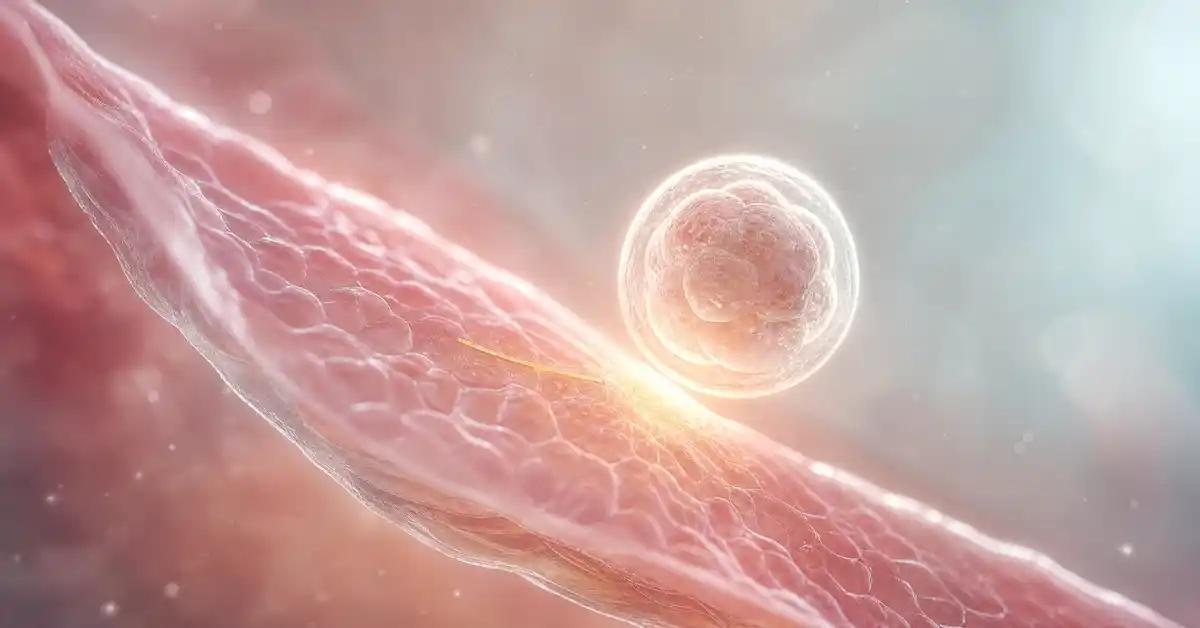
Endometrial scratching is a minor procedure that intentionally creates a superficial injury in the uterine lining before embryo transfer or an IVF cycle. The proposed idea is that the healing response may stimulate local factors that could make the lining more receptive to implantation. Although the theory is biologically plausible, the key clinical question is whether it actually improves pregnancy or live birth rates. Current evidence does not support routine use for most IVF or ICSI patients.
What endometrial scratching means before embryo transfer
The procedure is usually performed using a thin instrument passed through the cervix to gently scratch the uterine lining. It is not meant to remove a large amount of tissue or treat a visible uterine abnormality. Its purpose is to trigger a local healing response that may affect inflammatory and growth signals within the endometrium.
How endometrial scratching might support implantation
The proposed mechanism is that a small injury may activate repair pathways and local immune signaling in the lining. These changes could theoretically improve the interaction between embryo and endometrium. However, implantation depends on many factors, including embryo quality, transfer timing, hormones, uterine cavity health, and female age, so scratching alone cannot solve every implantation problem.
Is endometrial scratching painful or risky?
The procedure may cause cramping, brief discomfort, or light bleeding. It is usually short, but it is still an intrauterine procedure. For this reason, it should not be added without a clear indication, especially when the expected benefit is uncertain.
Medical Evidence on Endometrial Scratch and IVF Success
Evidence on endometrial scratching has changed over time. Earlier studies suggested possible benefit, especially in selected groups, but larger trials and broader reviews have led to a more cautious view. Today, it is best understood as a selective option rather than a standard add-on for every embryo transfer.
Endometrial scratch in first IVF cycles
For patients undergoing their first IVF cycle, the evidence does not support routine endometrial scratching. A focused review found no clear improvement in live birth or pregnancy outcomes and recommended against performing it routinely in first-cycle IVF patients.
Endometrial scratch before IVF and live birth rates
A large randomized trial found that endometrial scratching before IVF did not increase live birth rates compared with no intervention. Another trial analysis pooling similar studies also found no significant live birth benefit. This is why patients should not be told that scratching is a proven way to improve IVF success.
Why studies on endometrial scratching show mixed results
Study results differ because patient groups, timing, procedure method, number of previous failures, and embryo transfer types vary. Some recent analyses suggest a small possible benefit in certain groups, while other evaluations consider the benefit unclear. This makes individualized decision-making more appropriate than routine use.
Read about: Complete IVF Process Guide: Master Every Step to Achieve Your Parenthood Dream
When Endometrial Scratch May Be Discussed After Implantation Failure
Endometrial scratching may be discussed after repeated failed embryo transfers, but it should not be the first or only response. Recurrent implantation failure is complex and may involve embryo quality, uterine factors, transfer timing, sperm factors, hormonal preparation, or more than one cause. A full cycle review should come before adding any procedure.
Endometrial scratch in recurrent implantation failure
When good-quality embryos have repeatedly failed to implant, the team may review whether endometrial scratching has a role. It may be considered only after assessing embryo quality, uterine cavity, transfer timing, lining preparation, and other factors. Even then, the benefit is not guaranteed.
Endometrial scratch after failed transfer of good embryos
After failed transfer of good embryos, the next step should be careful review. The team should look at embryo stage, embryo grading, whether the embryo was fresh or frozen, endometrial thickness, progesterone timing, uterine cavity findings, and previous cycle records. If a clear issue is found, correcting that issue may matter more than scratching.
Endometrial scratch with a normal uterine lining
When the uterine lining appears normal and there is no repeated implantation failure, the justification for scratching is weaker. In such cases, it may add discomfort, cost, and anxiety without a strong expected benefit.
Read about: Your Complete IVF Journey: From Start to Success
Timing and Procedure of Endometrial Scratch Before Embryo Transfer
Timing is one reason studies have been difficult to compare. Endometrial scratching may be performed in the cycle before transfer, during a specific phase of the cycle, or during another indicated uterine procedure. It should be planned as part of the embryo transfer strategy, not performed randomly.
When endometrial scratching is performed before transfer
It is often performed in a cycle before embryo transfer so the lining can heal and renew before the transfer cycle. Different studies have used different timing, which partly explains conflicting results. Patients should ask why a specific timing is being recommended and how it fits the transfer plan.
Endometrial scratching during hysteroscopy
Sometimes, endometrial irritation may occur during a hysteroscopy when the procedure is already indicated to evaluate or treat the uterine cavity. Some studies have reported encouraging findings in selected groups, but this does not mean every patient needs hysteroscopy or scratching without a clear reason.
Instructions after endometrial scratching
After the procedure, mild cramping or light bleeding may occur. Patients may receive instructions about intercourse, medications, infection warning signs, and timing of the next treatment step. Severe pain, fever, heavy bleeding, or abnormal discharge should be reported promptly.

Benefits and Limits of Endometrial Scratch Compared With Other Implantation Factors
Even when endometrial scratching is considered, its potential effect is limited compared with major implantation factors such as embryo competence, chromosome status, female age, uterine cavity health, and transfer timing. It should not become the main focus if other stronger explanations for failure exist.
Endometrial scratching does not improve embryo quality
If failed implantation is mainly related to embryo quality, chromosome problems, or age-related egg factors, scratching the lining will not correct that issue. A receptive lining cannot compensate for an embryo that cannot continue developing.
Endometrial scratching does not treat uterine cavity problems
Polyps, submucosal fibroids, adhesions, chronic inflammation, or structural uterine problems require diagnosis and targeted management. Scratching alone is not a substitute for treating a clear uterine factor.
When other steps are more important than scratching
Other steps may be more important when the issue relates to progesterone timing, lining preparation, uterine cavity disease, embryo quality, sperm DNA damage, or previous cycle planning. In these situations, changing the underlying strategy is more meaningful than adding a scratch without addressing the cause.
Read about: What Is The Success Rate Of IVF? Key Factors And How To Improve Your Chances
Fertiliv’s Responsible Approach to Endometrial Scratch
At Fertiliv, endometrial scratching is not presented as an automatic add-on for every IVF or ICSI patient. It is considered only when the case review suggests a possible role. The aim is to balance potential benefit, discomfort, cost, and scientific evidence.
Reviewing previous IVF attempts before endometrial scratch
The plan begins by reviewing previous transfers: embryo number, embryo quality, transfer day, fresh or frozen status, endometrial thickness, medications, progesterone timing, and the result of each attempt. If there has only been one failed attempt or no transfer of good embryos, scratching may not be a priority.
Assessing the uterus and lining before endometrial scratch
Before considering scratching, the uterine cavity and endometrial pattern should be reviewed. If a treatable issue is found, it should be addressed directly. If findings are reassuring but repeated failure continues, scratching may be discussed as one part of a broader plan.
Choosing endometrial scratch only when it may add value
The goal is not to add more procedures, but to choose the step that fits the case. If scratching is reasonable, it should be explained without exaggerated promises. If it is not indicated, the focus should shift to embryo quality, transfer preparation, uterine assessment, or other more relevant factors.
Read about: Understanding IVF Failure: Your Guide to Improving Success Rates
Conclusion
Endometrial scratch is a simple concept, but the decision to use it should be careful. Current evidence does not support routine use for all IVF or ICSI patients, especially in first cycles or when there is no history of repeated implantation failure. It may be discussed in selected patients after repeated failed transfers of good embryos, but only as part of a full review of embryo quality, uterine lining, transfer timing, and uterine cavity health.
If you have had previous failed embryo transfers and are considering endometrial scratching, contact the Fertiliv team for a detailed review of your previous cycles and a clear decision on whether this procedure truly fits your case.
Frequently Asked Questions: Endometrial Scratch
Does endometrial scratching always improve implantation?
No. It is not supported for routine use, and any possible benefit appears limited to selected cases.
When may endometrial scratching be considered?
It may be discussed after repeated failed transfers of good embryos, after reviewing embryo, uterine, and timing factors.
Is endometrial scratching painful?
It may cause mild cramping or brief discomfort, and some light bleeding may occur.
Is endometrial scratching recommended before a first IVF cycle?
Usually no. Evidence does not support routine use in first-cycle IVF patients.
Does endometrial scratching replace hysteroscopy?
No. If a uterine cavity problem is suspected, proper evaluation and treatment may be more important.