
Congenital Azoospermia: Sertoli Cell-Only Syndrome and Reproductive Options

Manar Hegazy

Majd Eddin Khaled
Azoospermia, or the absence of sperm in the semen, can be one of the most emotionally difficult male infertility diagnoses. When the cause is congenital or linked to severe sperm production failure inside the testicle, the couple may feel that options are limited from the beginning. One important diagnosis in this group is Sertoli cell-only syndrome, a condition in which the seminiferous tubules contain Sertoli support cells but few or no developing sperm-producing cells.
At Fertiliv, azoospermia is not treated as a final conclusion after one semen test. The first step is to understand whether the problem is obstructive or non-obstructive, whether any sperm production may still exist in small areas of the testicle, whether hormones or genetics are involved, and whether surgically retrieved sperm can be used with ICSI.
What Sertoli Cell-Only Syndrome Means
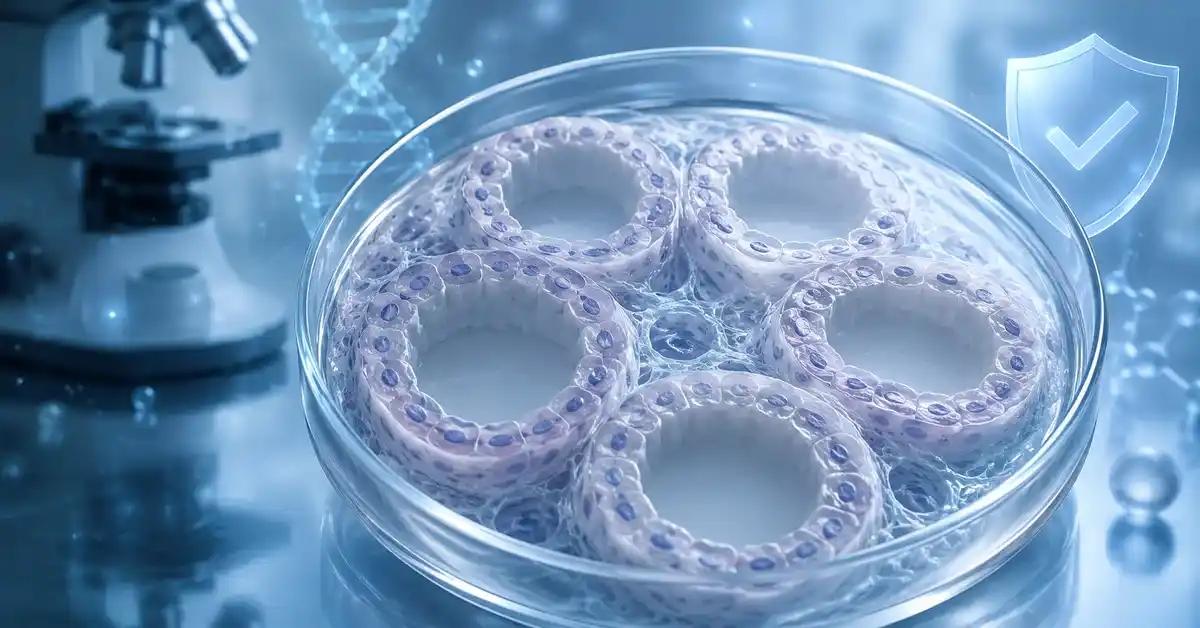
Sertoli cell-only syndrome is a testicular tissue pattern in which the tubules that normally produce sperm are lined mainly by Sertoli cells, while germ cells are absent or extremely reduced. It is usually classified under non-obstructive azoospermia, meaning the core problem is sperm production rather than only sperm transport.
Obstructive versus non-obstructive azoospermia
Obstructive azoospermia means sperm may be produced in the testicle but cannot reach the semen because of a blockage. Non-obstructive azoospermia means sperm production is severely impaired. Sertoli cell-only syndrome usually belongs to the non-obstructive category, which is why testicular function, hormones, and genetic testing matter before making a treatment plan.
Why Sertoli cells are important
Sertoli cells support the environment in which sperm normally develop. In this syndrome, the support cells are present, but the cells that should mature into sperm are missing or very limited. This explains why semen analysis shows no sperm even though the testicles may still contain seminiferous tubules.
Is it always congenital?
It may be congenital or linked to genetic factors, but severe acquired testicular damage may sometimes create a similar pattern of sperm production failure. Previous chemotherapy, radiation, severe infection, undescended testes, or testicular injury may be relevant. For this reason, the diagnosis should be interpreted together with history, hormones, examination, and genetic results.
Read about: Male Infertility: Causes and Advanced Medical Solutions
Causes and Associated Factors
There is no single cause for all cases. Some remain unexplained, while others are linked to chromosomal changes, Y-chromosome microdeletions, testicular developmental problems, or prior damage to the testicular tissue. The goal of evaluation is not only to name the condition, but to estimate whether sperm retrieval may be possible and whether genetic counseling is needed.
Genetic and chromosomal factors
In some men with non-obstructive azoospermia, genetic or chromosomal findings can explain sperm production failure. These results may influence whether surgical sperm retrieval is reasonable and whether genetic counseling is needed before using retrieved sperm in ICSI.
Testicular size and hormones
Testicular size and hormone levels help estimate testicular function. High FSH with small testes may suggest severe production failure, but it does not always prove that no sperm-producing areas exist. This is why doctors combine semen analysis, examination, hormones, and other findings instead of relying on one number.
Acquired factors that may resemble the condition
Severe testicular damage from previous treatments, infections, trauma, or undescended testes can lead to very low or absent sperm production. These cases may not be congenital, but they can clinically resemble severe non-obstructive azoospermia. A detailed history helps avoid missing a relevant cause.
Read about: Male Sperm Weakness: Comprehensive Guide to Causes and Treatment
Correct Diagnosis Before Treatment
A careful diagnosis is essential before choosing treatment. Azoospermia should be confirmed properly because rare sperm may appear in some samples and completely change the plan. After confirmation, the evaluation should determine whether there is a treatable hormonal cause, a genetic concern, or a realistic indication for surgical sperm retrieval.
Confirming azoospermia
Diagnosis usually requires at least two semen analyses, with careful examination of centrifuged samples to look for rare sperm. Finding even a very small number of sperm may change the treatment strategy, including freezing or preparing directly for ICSI.
Hormonal and genetic tests
Hormonal tests may include FSH, LH, testosterone, and prolactin when needed. Genetic tests may include karyotype and Y-chromosome microdeletion testing in men with non-obstructive azoospermia or severe sperm production failure. These tests help explain the cause and guide counseling before treatment.
Role of testicular tissue evaluation
In some cases, Sertoli cell-only pattern is confirmed after testicular tissue examination. However, if the couple’s goal is pregnancy, the tissue procedure should ideally be connected to a clear sperm retrieval and ICSI plan, rather than performed only as a diagnostic step that does not change treatment.
| Evaluation step | What it shows | Why it matters |
|---|---|---|
| Repeat semen analysis | Confirms sperm absence | Avoids decisions based on one test |
| Hormone testing | Estimates testicular function | Helps distinguish production failure from hormonal causes |
| Genetic testing | Identifies inherited causes | Guides counseling and treatment planning |
| Surgical sperm search | Looks for focal sperm production | May enable ICSI if sperm are found |
Reproductive Options
The most important question is whether pregnancy can be attempted using sperm from the husband. This depends on whether small focal areas of sperm production exist in the testicle. Even in non-obstructive azoospermia, rare sperm may sometimes be found surgically and used with ICSI.
Microsurgical sperm retrieval
Microsurgical sperm retrieval uses magnification to search the testicle for tubules more likely to contain sperm. The aim is to improve the chance of finding sperm while reducing unnecessary tissue removal. It can be valuable, but the result is not guaranteed, especially when the Sertoli cell-only pattern is extensive.
ICSI when sperm are found
If sperm are found, they are usually used with ICSI because the number is often too low for natural conception or simpler fertility treatments. The timing may be coordinated with the female partner’s egg retrieval, or sperm may be frozen if the sample is suitable.
Sperm freezing after retrieval
If sperm are found during surgery, freezing may be considered to avoid repeating the procedure. However, if sperm numbers are extremely low or quality is fragile, the team may prefer using them fresh when eggs are ready. This decision requires coordination between the surgical and embryology teams.

Success Chances and Realistic Limits
Sertoli cell-only syndrome requires honest counseling. Some men may have focal sperm production and a chance for ICSI, while others may have no retrievable sperm despite an expert attempt. Success varies widely depending on the extent of the condition, testicular findings, hormones, genetics, and the quality of the retrieval procedure.
What affects sperm retrieval chances?
Sperm retrieval chances may be influenced by the histological pattern, testicular volume, hormones, genetic findings, prior history, surgical technique, and laboratory handling. Some evidence suggests that outcomes differ greatly between patients and that the pattern may be focal in some men and diffuse in others.
Can medication restore sperm production?
In most severe primary sperm production failure, medication does not reliably restore sperm production. However, treatable hormonal causes should be excluded before final conclusions are made. If the problem is hormonal rather than primary testicular failure, treatment may help in selected cases.
What if sperm retrieval fails?
A failed retrieval means no usable sperm were found during that procedure. The next step should be a careful review of the surgical report, tissue findings, genetics, hormones, and female partner’s fertility status. Any repeat attempt should be based on realistic benefit, not on vague promises.
Read about: Low Sperm Count: Genetic, Environmental Factors, and Treatment Options
Fertiliv’s Couple-Based Plan
At Fertiliv, the plan begins by reviewing the full couple picture: semen analysis, hormones, genetics, male examination, female age, ovarian reserve, and treatment timing. Azoospermia treatment is not only about the male partner; if sperm are found, the female partner’s eggs and the laboratory plan become equally important.
Evaluating both partners together
Even when the main factor is male, the female partner should be evaluated early. Ovarian reserve, age, uterine health, and previous fertility history all affect whether the best approach is immediate synchronized ICSI, sperm freezing first, or further preparation.
Coordination between surgery and laboratory
Surgical retrieval is only one part of the plan. The embryology team must be ready to examine tissue carefully, identify rare sperm, decide whether sperm can be frozen, and coordinate with egg retrieval when needed. This teamwork can make the attempt more meaningful and organized.
Emotional support and clear expectations
Azoospermia can deeply affect identity, confidence, and the couple’s emotional wellbeing. Clear counseling matters. The aim is not to offer unrealistic hope, but to build a medically honest plan that explains both the chance and the limits.
Read about: Seminal Tract Obstruction: Causes, Diagnosis, And Surgical Sperm Retrieval Methods
Conclusion
Congenital azoospermia and Sertoli cell-only syndrome are complex male infertility conditions, usually linked to severe sperm production failure inside the testicle rather than a simple blockage. Diagnosis requires confirmed semen analysis, hormone assessment, genetic testing when indicated, and a careful understanding of testicular function. Although the condition is difficult, microsurgical sperm retrieval may find sperm in selected men and open the possibility of ICSI.
Frequently Asked Questions: Sertoli Cell-Only Syndrome and Azoospermia
Does Sertoli cell-only syndrome make pregnancy impossible?
Not always, but it is a difficult diagnosis. If rare sperm are found inside the testicle, ICSI may be possible, though success is not guaranteed.
Can semen analysis alone diagnose Sertoli cell-only syndrome?
No. Semen analysis confirms azoospermia, but the Sertoli cell-only pattern is usually confirmed through testicular tissue evaluation.
Can medication treat Sertoli cell-only syndrome?
Medication usually cannot restore sperm production in severe primary testicular failure, but treatable hormonal causes should be excluded first.
What is the difference between TESE and micro-TESE?
Both search for sperm inside the testicle, but micro-TESE uses surgical magnification to identify more promising areas and reduce random tissue removal.
Should the female partner be evaluated too?
Yes. If sperm are found, ICSI is usually needed, so ovarian reserve, egg quality, and treatment timing must be planned in advance.