
Assisted Hatching in IVF and ICSI: How It May Support Embryo Implantation

Manar Hegazy

Majd Eddin Khaled
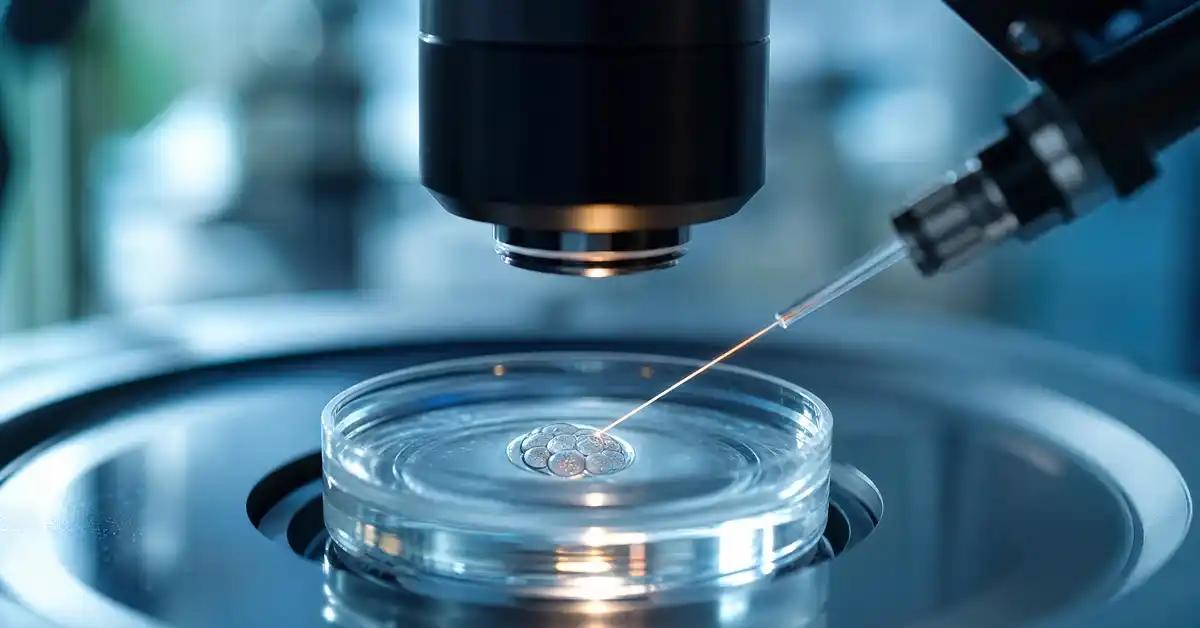
Assisted hatching is a laboratory technique used in selected IVF or ICSI cycles to help an embryo exit its outer shell before implantation. During early development, the embryo is surrounded by a protective outer layer. For implantation to begin, the embryo must hatch from this layer and interact with the uterine lining. Assisted hatching aims to support this step by creating a small opening or thinning part of the outer shell before embryo transfer.
What assisted hatching means in IVF and ICSI treatment
Assisted hatching is performed in the embryology laboratory, not on the patient’s body. The embryologist creates a small opening or weakens a small area of the embryo’s outer shell using a precise laboratory method, often before transfer. The aim is to make it easier for the embryo to hatch at the right time after it is placed in the uterus.
How assisted hatching may help embryo implantation
For implantation to happen, the embryo must leave its outer shell and attach to the uterine lining. If hatching is difficult, implantation may be less likely. Assisted hatching is designed to support this transition, but implantation still depends on embryo quality, uterine receptivity, female age, and the overall treatment plan.
Does assisted hatching always improve pregnancy rates?
No. Assisted hatching does not clearly improve outcomes for every patient. Current evidence does not support routine use for all IVF or ICSI cycles, especially when there is no specific indication. It is best understood as a selective laboratory option rather than a universal add-on.
When Assisted Hatching May Be Recommended to Improve Implantation Chance
Assisted hatching is not recommended for every embryo transfer. It is usually discussed when there are signs that embryo hatching may be part of the implantation challenge. The decision may depend on female age, previous IVF history, whether the embryo is fresh or frozen, embryo quality, and the appearance of the outer shell.
Assisted hatching after recurrent implantation failure
When good-looking embryos have been transferred more than once without pregnancy, the treatment team should review several possible causes, including embryo quality, uterine lining, transfer timing, uterine cavity health, hormonal factors, and sperm-related issues. If no clear cause is found, assisted hatching may be considered as part of a broader plan.
Assisted hatching in older reproductive age groups
In older reproductive age groups, embryo development and implantation potential may be affected by egg and embryo quality. Assisted hatching may sometimes be discussed when age, previous failed transfers, or laboratory observations suggest a possible hatching difficulty. However, it cannot compensate for poor embryo quality or age-related chromosomal problems.
Assisted hatching with frozen and thawed embryos
Some frozen-thawed embryos may have changes in the outer shell after freezing and warming. In selected cases, assisted hatching may be considered before frozen embryo transfer, especially when there is previous failed transfer history or laboratory concern about shell thickness. However, benefit is not proven for every frozen embryo transfer.
Read about: Complete IVF Process Guide: Master Every Step to Achieve Your Parenthood Dream
Assisted Hatching Steps Inside the Embryology Laboratory
Assisted hatching is done in the laboratory shortly before embryo transfer in many cases. The patient does not need an additional painful procedure. The technique requires careful handling because the embryo is delicate and the opening must be controlled.
Timing of assisted hatching before embryo transfer
Assisted hatching is usually performed before embryo transfer, and timing depends on embryo stage, laboratory protocol, and whether the embryo is fresh or frozen-thawed. The goal is to support hatching without harming embryo integrity. This is why timing is decided by the embryology team based on the embryo’s condition.
Laser assisted hatching and other laboratory methods
Several methods may be used, including laser, mechanical, or older chemical approaches. Laser-based assisted hatching is widely used because it allows precise control over the opening size and location. However, the value of the technique depends less on the name of the tool and more on correct indication and laboratory skill.
What happens after assisted hatching and embryo transfer
After assisted hatching, the embryo is transferred into the uterus according to the usual embryo transfer plan. The patient typically follows the same post-transfer instructions as in any IVF or ICSI cycle. Pregnancy testing is performed later according to the clinic’s schedule.

Benefits and Limits of Assisted Hatching for Implantation
The potential benefit of assisted hatching is that it may help the embryo exit its outer shell, especially when shell thickening or previous implantation failure is a concern. Its main limitation is that it does not improve embryo chromosomes, repair poor egg quality, treat uterine problems, or guarantee pregnancy.
When assisted hatching may be more reasonable
Assisted hatching may be more reasonable when the embryo shell appears thick, when there have been repeated failed transfers of good-quality embryos, or when frozen-thawed embryo characteristics suggest a possible hatching issue. In these cases, it may be a logical addition to the plan.
Why assisted hatching is not used for every embryo
It is not used routinely for every embryo because clear improvement in live birth rates has not been proven for all patients. Any additional embryo manipulation should have a reason. Without a clear indication, it may add cost and complexity without improving the outcome.
Are there risks with assisted hatching?
When performed by an experienced laboratory, assisted hatching is generally considered low risk, but it still involves embryo manipulation. Some sources report a possible slight increase in identical twin risk. This is why the decision should include a discussion of potential benefit and limits.
Read about: Nutrition and IVF Success: Your Comprehensive Guide to Optimal Outcomes
Implantation Failure Causes That Assisted Hatching Cannot Solve Alone
Implantation failure should not be reduced to hatching difficulty alone. Implantation requires a competent embryo, receptive uterine lining, correct timing, and a healthy uterine cavity. If previous transfers failed, the full cycle should be reviewed before adding a single laboratory technique.
Embryo quality and chromosome factors in implantation success
Even if the embryo hatches well, implantation may fail if embryo quality is poor or chromosomal problems are present. Assisted hatching cannot correct these issues. The key question is whether the transferred embryo itself has strong developmental potential.
Uterine lining and embryo transfer timing
The uterine lining must be hormonally and structurally ready. If the lining is thin, mistimed, inflamed, or affected by polyps or fibroids, assisted hatching alone may not change the result. Uterine assessment becomes especially important after repeated failed transfers.
Male, hormonal, and other factors in recurrent implantation failure
Sperm DNA damage, hormonal imbalance, selected clotting issues, or other medical factors may contribute to recurrent failure in some couples. Assisted hatching does not treat these causes. A broader evaluation is often needed when implantation failure repeats.
Read about: What Is The Success Rate Of IVF? Key Factors And How To Improve Your Chances
Fertiliv’s Approach to Choosing Assisted Hatching in IVF Cycles
At Fertiliv, assisted hatching is not presented as an automatic add-on for every embryo transfer. It is considered when the couple’s history, embryo quality, embryo shell appearance, frozen-thawed status, or previous implantation history suggest that it may add value. The goal is to use the technique where it fits the case.
Reviewing previous implantation failure before assisted hatching
When previous embryo transfers have failed, the team reviews embryo stage, embryo quality, endometrial appearance, medication protocol, transfer timing, and whether embryos were fresh or frozen. Assisted hatching is chosen only if it addresses a realistic possible problem.
Evaluating embryo quality and outer shell appearance
The embryology laboratory plays an important role in the decision. If the outer shell appears thick or the embryo belongs to a group that may benefit from hatching support, assisted hatching may be discussed. If the shell appears normal and there are no risk factors, it may not be necessary.
Choosing assisted hatching only when it can help
The goal is not to add more technology for its own sake. If assisted hatching is appropriate, the couple should understand why it is being used and what it can and cannot do. If it is not appropriate, the focus should shift to embryo quality, uterine preparation, or transfer strategy.
Read about: Understanding IVF Failure: Your Guide to Improving Success Rates
Conclusion
Assisted hatching is a precise laboratory technique that may help selected embryos exit their outer shell before implantation. It may be considered after recurrent implantation failure, in older reproductive age groups, with some frozen-thawed embryos, or when the embryo shell appears unusually thick. However, it is not necessary for every patient, does not clearly improve outcomes for all IVF or ICSI cycles, and cannot solve poor embryo quality or uterine lining problems by itself.
If you have had previous failed embryo transfers or are considering assisted hatching in your IVF or ICSI plan, contact the Fertiliv team directly through WhatsApp for a detailed review of previous cycles, embryo quality, uterine lining, and whether assisted hatching is truly suitable for your case.
Frequently Asked Questions: Assisted Hatching
Does assisted hatching always increase implantation?
No. It may help selected cases, but it does not guarantee implantation or pregnancy.
When is assisted hatching recommended?
It may be considered after recurrent implantation failure, in selected older patients, with some frozen-thawed embryos, or when the embryo shell appears thick.
Is assisted hatching painful?
No. It is performed in the laboratory on the embryo before transfer, so the patient does not feel it.
Is assisted hatching needed in the first IVF attempt?
Not always. If there are no risk factors or laboratory concerns, it may not be necessary in a first attempt.
Does assisted hatching improve embryo quality?
No. It helps with the outer shell only and does not correct embryo chromosomes, egg quality, or uterine lining problems.