
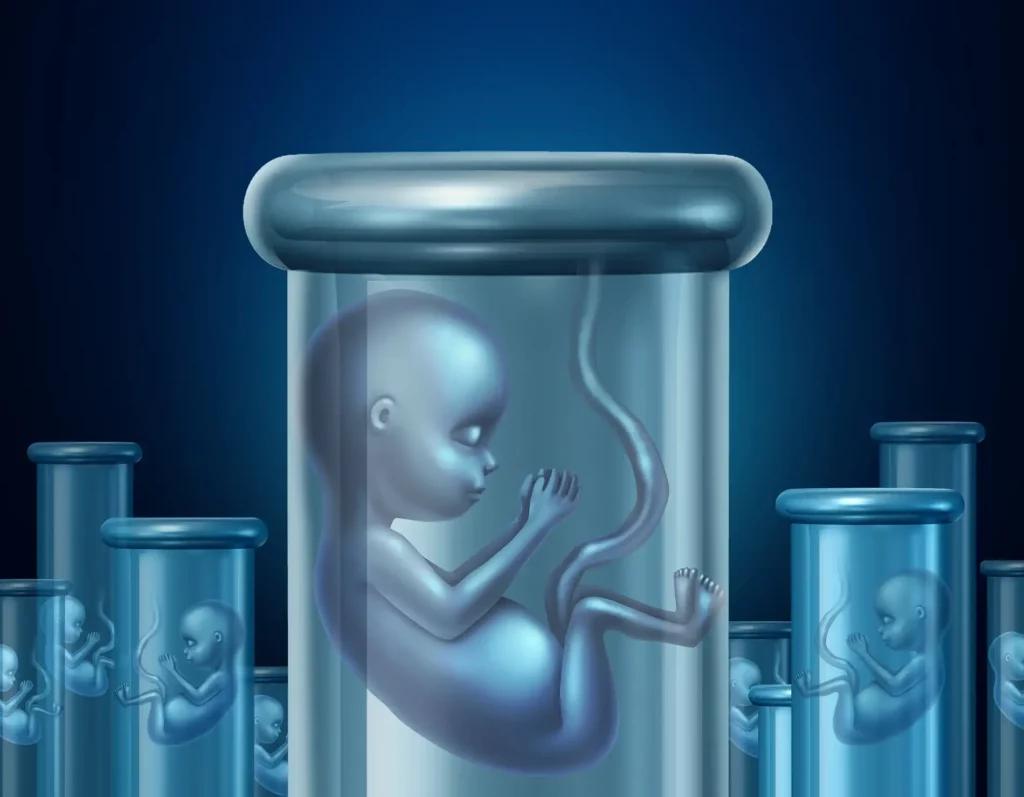
Discover the Importance of Smart Incubators in ICSI

Manar Hegazy

Majd Eddin Khaled
Behind every successful pregnancy, there is a precise and supportive growth environment. When it comes to in vitro fertilization (IVF) and ICSI , the incubation period during the first days of embryonic life plays a crucial role.
Today, fertility labs are no longer just places for embryo storage — they have become smart centers that precisely control temperature, humidity, and gas concentration to support healthy and stable embryo development.
In this article, we will explain to you and your partner how the evolution of embryo culture systems has helped improve pregnancy chances, and what the latest technologies used in advanced IVF labs are.
What Is the Laboratory Environment for Embryos?
The laboratory environment refers to the conditions in which an embryo develops after fertilization. These include:
- The type of incubator used.
- The nutritional culture media.
- Temperature and humidity levels.
- Oxygen and carbon dioxide concentrations inside the incubator.
Together, these factors determine the stability and health of the embryo before it is transferred into the uterus.
How Have Incubators Evolved Over Time?
In the past, embryos were placed in basic incubators that only maintained a constant temperature. Today, incubators have become more advanced and intelligent , offering greater precision.
Among the most recent developments:
- Fully enclosed incubators with automatic gas control.
- Advanced sensors to monitor even the smallest environmental changes.
- Specialized culture dishes designed to reduce human intervention and enhance cellular development.
These advancements have significantly improved implantation rates and increased the likelihood of achieving a stable pregnancy — even for couples who previously experienced failed attempts.
Why Is the Lab Environment Critical for Pregnancy Success?
During its early stages, the embryo is highly sensitive to environmental changes — whether in temperature, nutrient composition, or even external vibrations.
The impact of the lab environment on the embryo includes:
- Increasing the chances of proper cell division.
- Enhancing embryo quality before transfer.
- Preventing early abnormalities caused by unstable conditions.
For this reason, choosing a medical center equipped with the best culture systems is essential to achieve optimal results.
What Are the Latest Developments in Embryo Culture Systems?
Smart Incubators
- Equipped with internal lighting and continuous imaging cameras.
- Record detailed data about embryo development without removing it from the incubator.
Advanced Culture Dishes (EmbryoScope)
- Used with Time-Lapse Imaging technology .
- Minimize the need to move embryos or open the incubator repeatedly.
Stage-Specific Nutritional Media
- Nutrient compositions change depending on the stage of embryo development.
- Amino acids and glucose are carefully balanced between day one and day five to match natural progression.
Does the Lab Environment Affect Embryo Health?
Yes, the laboratory environment has a direct effect on the embryo's ability to develop normally.
Many studies have shown that using advanced culture systems leads to:
- Increased blastocyst formation.
- Improved inner cell mass quality.
- Higher implantation and stable pregnancy rates.
Medical advancements have not been limited to techniques involving the couple alone; they have extended to the very environment in which the embryo develops in the lab.
Improving embryo culture systems is not just a technological luxury — it’s a fundamental step toward increasing pregnancy success, especially for couples facing repeated failures or advanced maternal age.
At Fertiliv Clinic , we believe that attention to every detail — even within the lab — is part of the comprehensive care that every couple deserves. We provide you and your partner with an advanced laboratory environment and close monitoring to ensure the best possible outcomes.