
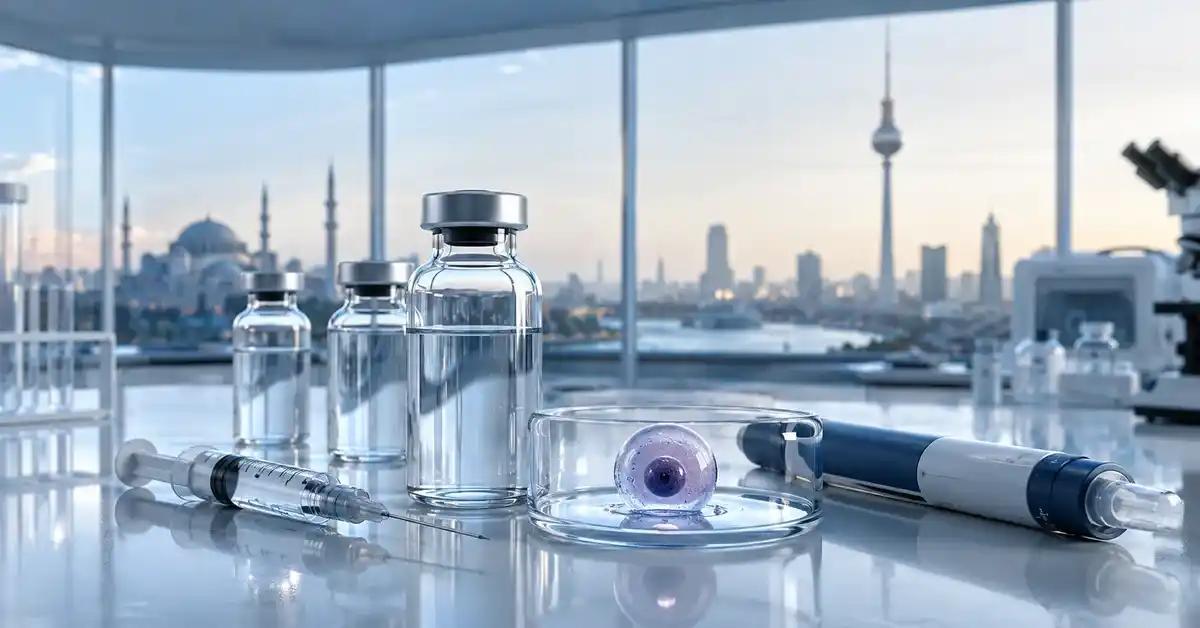
Hormonal Fertility Enhancement: Your Treatment Journey Between Turkey and Germany

Manar Hegazy

Majd Eddin Khaled
Hormones are the fundamental driver of the fertility system in both women and men, and any imbalance in their equilibrium can lead to conception difficulties that may persist for years without accurate diagnosis. Hormonal fertility treatment has sparked a genuine revolution in the world of reproductive medicine, opening doors of hope for thousands of couples who once believed parenthood was out of reach. Between Turkey — which leads the global map of fertility medical tourism — and Germany, distinguished by its robust medical system, the options are numerous and the paths are varied.
This comprehensive guide takes you on an in-depth journey through the most prominent hormonal fertility improvement options available in both countries, shedding light on the types of hormonal treatments, their success rates, and the factors that determine outcomes — so you can make your treatment decision with confidence and clarity.
A Comprehensive Overview of Hormonal Fertility Treatment in Turkey and Germany
Before diving into the details of the comparison, it is essential to understand the nature of fertility treatment with hormones and its mechanisms in both countries.
What Does Hormonal Fertility Improvement Actually Mean?
Hormonal fertility treatment is built on the principle of restoring or enhancing the hormonal balance necessary for reproduction, through carefully designed pharmaceutical protocols targeting the hormonal axes responsible for ovulation, egg development, and sperm quality. The most prominent hormones used in this context include:
- FSH (Follicle-Stimulating Hormone): to stimulate egg growth in the ovary
- LH (Luteinizing Hormone): to trigger ovulation at the appropriate time
- HCG: to complete egg maturation and trigger ovulation
- Progesterone: to support the uterine lining and prepare it to receive the embryo
- GnRH: to control ovulation timing and prevent premature ovulation
- Estrogen: to prepare the uterine lining and improve the receptive environment
Who Are the Most Suitable Candidates for Hormonal Treatment?
Hormonal fertility weakness treatment is a suitable option for a wide range of cases, most prominently:
- Ovulation disorders such as polycystic ovary syndrome and anovulation
- Premature ovarian insufficiency and poor ovarian response
- Hormonal imbalance and fertility disruption stemming from pituitary axis dysfunction
- Elevated prolactin levels that impede natural ovulation
- Thyroid disorders affecting fertility
- Cases requiring ovarian stimulation with hormones before ICSI or IVF
- Certain cases of sperm weakness of hormonal origin
Read about: Modern Fertility Treatments for Men and Women: Transform Your Parenthood Dreams
The Financial Dimension of Hormonal Fertility Treatment
The financial aspect is one of the most prominent factors influencing the choice of treatment destination, whether in Turkey or Germany.
What Determines the Cost of Hormonal Treatment in Turkey?
Turkey stands out for offering fertility treatment in Turkey at competitive costs compared to European countries, while maintaining high medical standards. The total cost is determined by several key factors:
- The type of hormonal protocol used and its duration
- Initial diagnostic tests to assess hormonal status
- Cost of hormonal medications accompanying the treatment
- Number of follow-up sessions and periodic tests
- The medical center's level and the specialized team's expertise
- Support services for international patients including translation, accommodation, and transport
Why Does the Cost of Hormonal Treatment in Germany Differ?
Germany ranks among the highest-cost countries for fertility treatment in Germany, due to several structural factors:
- High operational costs within the German healthcare system
- Elevated hormonal medication prices in the European market
- Limited health insurance coverage for fertility procedures in many cases
- Administrative and legal fees associated with medical procedures
- Accreditation and compliance costs tied to strict regulatory standards
Read about: How Do Hormones Affect Fertility? Essential Tests for Couples
The Most Prominent Types of Available Hormonal Treatments
The types of hormonal treatments used in hormonal fertility improvement are diverse, varying according to the nature of the case and the treatment objectives.
Ovarian Stimulation Protocols with Hormones
Ovarian stimulation with hormones is among the most common procedures in fertility treatment, encompassing several specialized protocols:
- Long Protocol: Begins two weeks before the menstrual cycle to regulate ovarian response and synchronize follicle growth
- Short Protocol: Begins at the start of the menstrual cycle and suits cases with good ovarian response
- Antagonist Protocol: Used to prevent premature ovulation while reducing hyperstimulation risks
- Modified Protocol for Poor Responders: Customized protocols to maximize response in cases of diminished ovarian reserve
- Mild Stimulation Protocol: Low doses suitable for sensitive cases or those prone to excessive response
Treating Hormonal Disorders That Affect Fertility
Hormonal disorder treatment affecting fertility requires a comprehensive approach that goes beyond mere ovulation stimulation:
- Elevated Prolactin Treatment: Medications that lower prolactin levels and restore natural ovulation
- Thyroid Disorder Correction: Treatment of hypothyroidism or hyperthyroidism to restore hormonal balance
- Insulin Resistance Treatment: Pharmaceutical protocols to improve insulin sensitivity in polycystic ovary syndrome cases
- FSH/LH Imbalance Correction: Hormonal protocols to restore the normal ratio between the two hormones
- Luteal Phase Support: Progesterone to support the uterine lining and improve implantation chances

Success Rates and the Factors That Determine Outcomes
Hormonal fertility treatment success rates are the primary benchmark by which couples measure the value of any treatment program.
Hormonal Treatment Outcomes: Numbers and Facts
Fertility activation results are influenced by multiple factors, most prominently the woman's age and the nature of the hormonal disorder. The following are pregnancy success rates by age group in specialized centers:
- Under 35: Pregnancy success rate between 40% and 55% per treatment cycle
- 35–37: Pregnancy success rate between 30% and 45%
- 38–40: Pregnancy success rate between 20% and 35%
- 41–42: Pregnancy success rate between 12% and 22%
- Over 42: Pregnancy success rate below 12%
Key Factors for Improving Hormonal Treatment Results
Multiple factors combine to determine the outcomes of hormonal fertility improvement, the most prominent of which are:
- Precision of the initial hormonal diagnosis and accurate identification of the imbalance cause
- Selection of the most appropriate hormonal protocol for each individual case
- Precise and continuous monitoring via ultrasound and blood tests
- The woman's age and ovarian reserve measured by AMH hormone
- The specialist's expertise in adjusting doses according to individual response
- General health status and absence of chronic diseases affecting fertility
- Adherence to treatment instructions and avoiding inhibiting factors such as smoking and chronic stress
Read about: Hormones and Fertility: Complete Testing Guide for Couples
Specialized Physicians and Fertility Treatment Centers
Selecting the appropriate medical center and specialized fertility physician team is a fundamental pillar of the hormonal treatment journey.
Criteria for Choosing the Best Fertility Doctor in Turkey
The best fertility doctor in Turkey is distinguished by a set of characteristics that make them the preferred choice for international patients:
- Extensive experience in diagnosing and treating hormonal imbalance and fertility in all its forms
- Ability to customize the hormonal protocol for each case rather than following a one-size-fits-all approach
- Precise and continuous follow-up with dose adjustments based on individual response
- Effective communication with patients and clear explanation of treatment steps and expectations
- International accreditations and membership in specialized medical societies in reproductive medicine
- Continuous updating with the latest fertility improvement techniques and scientific research
Specialized Fertility Treatment Centers: What Sets Them Apart?
Specialized fertility treatment centers in Turkey, particularly in Istanbul, are distinguished by characteristics that make them a preferred destination for patients from around the world:
- Internationally recognized accreditations (JCI and others)
- Multidisciplinary medical teams with extensive experience in fertility treatment in Turkey
- Laboratories equipped with the latest hormonal and genetic diagnostic techniques
- Transparency in publishing annual success statistics
- Integrated services for international patients including translation, accommodation, and transport
- Psychological and emotional support throughout the treatment journey
Fertiliv ICSI Center occupies a prominent position among fertility centers in Turkey, combining deep medical expertise, modern technologies, and comprehensive human care for patients arriving from countries around the world.
Read about: Natural Fertility Treatments: Effective Solutions to Increase Pregnancy Chances
Risks and Side Effects of Hormonal Treatment
Like any medical treatment, hormonal fertility treatment is accompanied by a range of risks and side effects that should be fully understood before commencing treatment.
Primary Risks of Hormonal Treatment
The most prominent hormonal treatment risks that should be discussed with the specialist include:
- Ovarian Hyperstimulation Syndrome (OHSS): The most common complication, ranging from mild to moderate to severe
- Multiple Pregnancy: Increased likelihood of twin or multiple pregnancy due to stimulating the development of several eggs
- Ectopic Pregnancy: A limited risk that nonetheless requires careful early monitoring
- Early Miscarriage: A slight increase in miscarriage rate compared to natural pregnancy
- Medication Side Effects: Mood swings, bloating, headaches, and pain at injection sites
Potential Side Effects and How to Manage Them
Most side effects of hormonal treatment are temporary and manageable, and include:
- Bloating and heaviness in the abdominal area due to ovarian enlargement
- Mood swings and emotional sensitivity related to hormonal changes
- Mild to moderate headaches during certain phases of the protocol
- Redness and mild pain at hormonal injection sites
- General fatigue and tiredness during the hormonal stimulation period
- Changes in appetite and sleep patterns during treatment phases
Read about: Modern Fertility Treatments: Your Journey to Parenthood Between Turkey and America
Choosing the Optimal Treatment Destination
Choosing the appropriate country for receiving hormonal fertility treatment is a pivotal decision that affects the entire treatment experience.
What Makes Turkey the Optimal Choice for Hormonal Treatment?
Multiple factors combine to make fertility treatment in Turkey a standout choice:
- High internationally accredited medical standards rivaling the best European centers
- Latest fertility improvement techniques available in fully equipped specialized centers
- Competitive costs compared to Germany and Western Europe with comparable medical quality
- Easy access from most countries worldwide with accessible visas
- Integrated services for international patients including translation, accommodation, and transport
- Shorter waiting periods to begin treatment compared to many Western countries
- Greater flexibility in customizing treatment protocols for each case
A Comprehensive Comparison Between Turkey and Germany in Hormonal Fertility Treatment
Turkey and Germany share several fundamental aspects of fertility treatment while differing in others that affect the patient experience:
Similarities:
- Use of the latest hormonal fertility improvement techniques in both countries
- Availability of specialized medical teams with high competence
- Adherence to international medical safety standards
- Access to precise and integrated hormonal diagnosis
Differences:
- Turkey offers more competitive costs with comparable medical quality
- Germany stands out with a stronger research infrastructure and broader clinical trials
- Turkey provides more comprehensive services for international patients
- Turkey features shorter waiting times to begin treatment
- Turkey offers greater flexibility in customizing treatment protocols
In conclusion, Turkey — and through it Fertiliv fertility center — offers an integrated treatment system that combines the highest medical quality standards, an exceptional human experience, and competitive costs, making it the optimal choice for couples seeking to achieve the dream of parenthood through hormonal fertility improvement. Connect with the Fertiliv ICSI Center team today for a free medical consultation and a personalized treatment plan tailored to your case.
Frequently Asked Questions: Hormonal Fertility Enhancement: Your Treatment Journey Between Turkey and Germany
Is hormonal fertility treatment safe?
Yes, hormonal fertility treatment is generally safe when performed under the supervision of a specialist with careful monitoring. Most side effects are temporary and manageable, and serious complications such as ovarian hyperstimulation syndrome are rare and can be largely avoided with proper follow-up and dose adjustments based on individual response.
How long does a hormonal fertility treatment cycle take?
A hormonal treatment cycle typically lasts between 10 and 20 days for short protocols, and may extend to 6 weeks for long protocols. The cycle includes a hormonal stimulation phase, monitoring of follicle growth via ultrasound and blood tests, then an ovulation trigger phase or egg retrieval in the case of ICSI.
Can hormonal treatment be repeated if unsuccessful?
Yes, hormonal treatment cycles can be repeated after evaluating the response and adjusting the protocol based on the results of the previous cycle. Studies show that a significant proportion of cases achieve pregnancy within the first three cycles, and the doctor may recommend changing the protocol or adding supportive procedures to improve outcomes in subsequent cycles.
What is the difference between ovarian stimulation for IUI versus ICSI?
In intrauterine insemination (IUI), ovarian stimulation with hormones aims to develop only 1–2 follicles to limit the risk of multiple pregnancy, while in ICSI the protocol targets developing as many follicles as possible to retrieve multiple eggs and increase the chances of obtaining high-quality embryos for transfer or freezing.
Why is Turkey a distinguished destination for hormonal fertility treatment?
Turkey combines unique factors that make it the premier destination for fertility medical tourism: an internationally accredited high medical standard, advanced modern technologies, competitive costs compared to Germany and Western Europe, easy access from most countries worldwide, and integrated services for international patients. Added to this is authentic Turkish hospitality that eases the burden of the treatment journey.