
Hydrosalpinx and IVF: Should It Be Treated Before Embryo Transfer?

Manar Hegazy

Majd Eddin Khaled
Hydrosalpinx and IVF: Should It Be Treated Before Embryo Transfer?
Some women discover that one or both fallopian tubes contain accumulated fluid during fertility investigations. This condition may be identified through ultrasound, hysterosalpingography (HSG), or examinations performed before starting in vitro fertilization (IVF).
Hydrosalpinx is important because it can affect more than the movement of eggs through the fallopian tubes. In certain cases, fluid from the affected tube can reach the uterine cavity and negatively influence embryo implantation.
This means that even though IVF bypasses the fallopian tubes during fertilization, the condition may still need treatment before embryo transfer.
In this article, we explain what hydrosalpinx is, why it develops, how it can affect IVF outcomes, which treatment options are available, and how doctors determine the appropriate timing of treatment in relation to egg retrieval and embryo transfer.
What Is Hydrosalpinx?
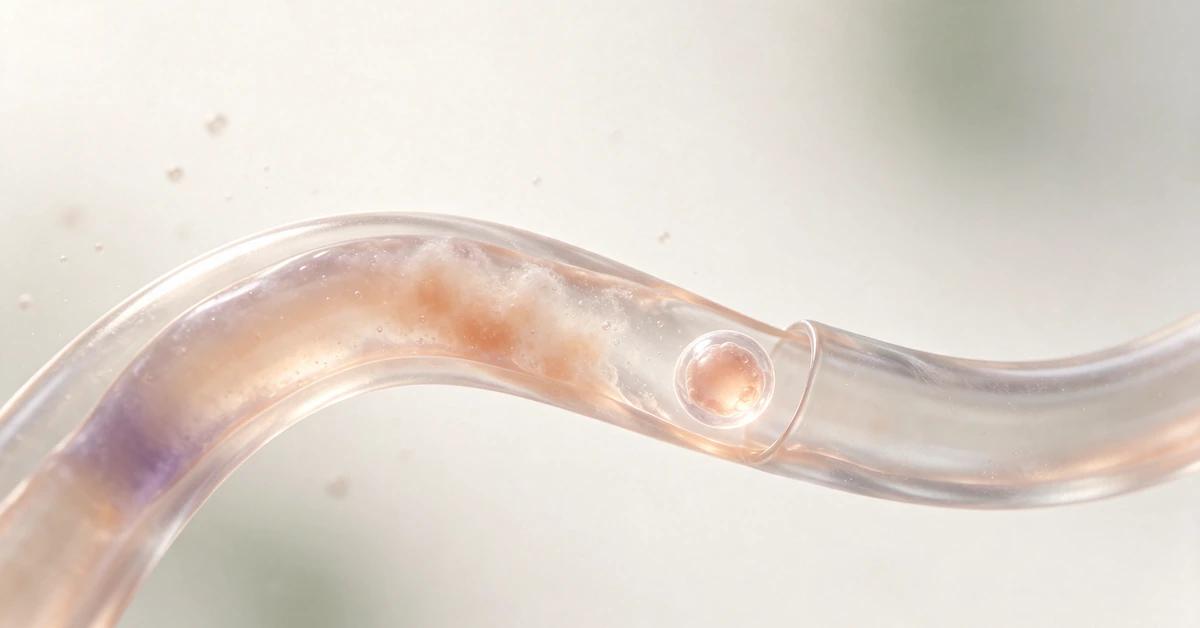
Hydrosalpinx is a condition in which fluid accumulates inside a fallopian tube, usually because the tube has become blocked or damaged, often near its outer end.
Normally, the fallopian tube helps collect the egg after ovulation and transports it toward the uterus. Fertilization usually takes place inside the tube.
However, inflammation, previous infection, tissue damage, or adhesions can block the end of the tube. Fluid then accumulates inside it, causing the tube to become enlarged and distended.
Hydrosalpinx can affect one fallopian tube or both.
The main concern is not simply the presence of fluid, but the possibility that it may reach the uterine cavity and interfere with embryo implantation.
What Is the Difference Between Hydrosalpinx and Blocked Fallopian Tubes?
Although the two conditions are related, they are not identical.
Blocked fallopian tubes:
This means that one or both tubes are closed or that the passage of eggs and sperm is obstructed or restricted. Fluid accumulation is not necessarily present.
Hydrosalpinx:
This describes a dilated fallopian tube containing fluid, usually because of obstruction or damage. Depending on the location of the blockage, the accumulated fluid may or may not communicate with the uterine cavity.
The distinction matters because hydrosalpinx may require specific treatment before embryo transfer, even when the tubal blockage itself does not prevent IVF.
What Causes Hydrosalpinx?
Hydrosalpinx commonly develops after inflammation or damage causes blockage and fluid accumulation inside the tube.
Possible causes include:
1. Pelvic Inflammatory Disease
Pelvic inflammatory disease is an important cause of fallopian tube damage, particularly when the infection is severe, recurrent, or untreated.
Inflammation can lead to scarring, adhesions, and blockage near the end of the tube.
2. Sexually Transmitted Infections
Infections such as chlamydia and gonorrhea can spread to the upper reproductive tract and cause inflammation of the fallopian tubes.
Some women may have few or no noticeable symptoms.
3. Previous Abdominal or Pelvic Surgery
Previous operations can cause adhesions around the fallopian tubes, potentially restricting their movement or blocking their outer ends.
4. Endometriosis
Endometriosis can cause inflammation, adhesions, and anatomical changes around the tubes and ovaries, potentially contributing to tubal obstruction or damage.
5. Previous Ectopic Pregnancy
An ectopic pregnancy or its surgical treatment may damage a fallopian tube, particularly when previous inflammation or adhesions are also present.
6. Previous Undiagnosed Infections
Some women discover hydrosalpinx without remembering any previous pelvic infection.
This may happen because certain infections cause mild or unnoticeable symptoms.
Does Hydrosalpinx Cause Symptoms?
Not necessarily.
Some women have no symptoms, and the condition is discovered incidentally during infertility investigations.
Others may experience:
Chronic or recurrent lower abdominal or pelvic pain.
Pain during sexual intercourse.
Unusual vaginal discharge in some cases.
Pressure or discomfort on one side of the pelvis.
Difficulty becoming pregnant.
These symptoms are not specific to hydrosalpinx and may occur with other gynecological conditions.
Sudden severe pain, fever, or significant deterioration in general health requires prompt medical assessment rather than assuming hydrosalpinx is the only possible cause.

How Is Hydrosalpinx Diagnosed?
Diagnosis involves reviewing medical history, clinical findings, and imaging results. More than one investigation may be needed.
1. Ultrasound
Transvaginal ultrasound may identify an enlarged, fluid-filled fallopian tube appearing as an elongated or tubular structure near the uterus or ovary.
However, a normal ultrasound does not always exclude hydrosalpinx, particularly when the condition is small or not continuously visible.
2. Hysterosalpingography (HSG)
HSG evaluates the uterine cavity and the passage of contrast through the fallopian tubes.
It may demonstrate tubal blockage, dilation, and retained contrast within the affected tube.
Results should be interpreted alongside other findings because HSG can sometimes produce inconclusive or false-positive results, particularly with certain types of proximal tubal obstruction.
3. Laparoscopy
Laparoscopy may be considered when direct assessment of the fallopian tubes and surrounding adhesions is necessary or when surgical treatment is being planned.
It allows the surgeon to evaluate the extent of tubal damage and determine the most appropriate procedure.
4. Review of Previous Medical Records
The doctor may review:
Previous pelvic infections.
Previous abdominal or pelvic operations.
History of ectopic pregnancy.
Previous HSG results.
Ultrasound reports.
Previous fertility treatment.
This information helps determine the likely cause and its relevance to the treatment plan.
How Does Hydrosalpinx Affect IVF Success?
This is the most important issue.
During IVF, fertilization does not depend on the fallopian tubes. Eggs are collected from the ovaries, fertilized in the laboratory, and the resulting embryo is placed directly into the uterus.
However, hydrosalpinx may affect a later stage: embryo implantation.
When the affected tube communicates with the uterine cavity, fluid may flow back into the uterus.
This may interfere with IVF outcomes through several possible mechanisms.
1. Fluid Entering the Uterine Cavity
Fluid from the damaged tube may enter the uterus and alter the environment in which the embryo needs to implant.
2. Changes in Endometrial Receptivity
The fluid may be associated with inflammatory or biological changes in the endometrium, potentially making it less receptive to implantation.
3. Mechanical Interference With Implantation
The movement of fluid into the uterine cavity may interfere with the embryo's ability to establish a stable implantation environment.
4. Increased Risk of Implantation Failure
Studies have associated hydrosalpinx, particularly when visible on ultrasound and communicating with the uterus, with reduced implantation and pregnancy outcomes following IVF.
The American Society for Reproductive Medicine (ASRM) explains that hydrosalpinx can substantially reduce pregnancy, implantation, and delivery rates compared with cases without this condition.
However, the degree of impact varies, and hydrosalpinx does not mean that IVF failure is inevitable.
Can IVF Be Performed With Hydrosalpinx?
Yes, IVF can technically be performed.
However, the more important question is whether embryo transfer should proceed before the hydrosalpinx is treated.
When hydrosalpinx is clearly present and communicates with the uterine cavity, treatment before embryo transfer is generally recommended because leaving it untreated may negatively affect treatment outcomes.
For smaller collections or tubes that do not communicate with the uterine cavity, management may differ according to the imaging and anatomical findings.
A diagnosis written as "Hydrosalpinx" on a report should therefore not automatically lead to surgery without further assessment.
Should Hydrosalpinx Be Treated Before Egg Retrieval or Before Embryo Transfer?
This is one of the most important questions when planning IVF.
There is a difference between the timing of egg retrieval and the timing of embryo transfer.
The more established medical principle is that clinically significant hydrosalpinx should be treated before embryo transfer. Treatment does not necessarily have to precede egg retrieval in every patient.
The sequence may differ according to maternal age, ovarian reserve, surgical complexity, and the urgency of fertility treatment.
Option One: Treat Hydrosalpinx Before Starting IVF
This may be appropriate when:
Hydrosalpinx is clearly present and requires surgical treatment.
Ovarian reserve is reassuring.
There is no urgent reason to delay treatment.
Surgery can be performed safely.
Delaying ovarian stimulation is not considered a significant concern.
After recovery, ovarian stimulation, egg retrieval, fertilization, and embryo development can proceed.
Option Two: Retrieve Eggs and Freeze Embryos First
In selected patients, particularly those with advanced reproductive age, diminished ovarian reserve, or a clinical reason not to delay egg retrieval, the doctor may discuss ovarian stimulation and egg retrieval before treating the hydrosalpinx.
Suitable embryos can be created and frozen.
The hydrosalpinx is then treated before a later frozen embryo transfer.
This approach may help preserve reproductive time, but it is not automatically appropriate for every patient.
There is insufficient evidence to establish one universal treatment sequence as superior for all patients.
The timing should be individualized, while ensuring that clinically significant hydrosalpinx is treated before embryo transfer.
What Are the Treatment Options for Hydrosalpinx Before Embryo Transfer?
Treatment depends on the size and location of the hydrosalpinx, the extent of tubal damage, pelvic adhesions, and the patient's reproductive plan.
Options include:
1. Salpingectomy
Salpingectomy is a surgical procedure to remove all or part of the affected fallopian tube, depending on the clinical situation.
It is commonly performed using laparoscopy, allowing the surgeon to visualize surrounding tissues and carefully manage adhesions and blood vessels.
It may be recommended when the tube is severely damaged or when hydrosalpinx is likely to interfere with IVF outcomes.
Potential benefits:
Removes the affected tube and the source of accumulated fluid.
Prevents fluid from the removed tube from entering the uterine cavity.
Has established evidence supporting improved IVF outcomes in appropriately selected patients.
Risks and considerations:
Anesthesia and surgical risks.
Bleeding or infection.
Formation of new adhesions.
Possible effects on the blood supply to the nearby ovary if surgery is difficult or involves surrounding vessels.
Careful surgical technique is important to preserve the blood vessels supplying the ovary whenever possible.
2. Proximal Tubal Occlusion
Instead of removing the affected tube, the surgeon can close it near its connection with the uterus.
This prevents fluid from the damaged tube from reaching the uterine cavity.
The procedure is commonly performed laparoscopically, depending on the technique selected.
When may it be considered?
It may be suitable when:
Removal of the tube is difficult because of severe adhesions.
Extensive dissection near the ovary should be avoided.
Preserving the surrounding tissues is particularly important.
The doctor believes that blocking communication with the uterus will achieve the treatment objective.
However, tubal occlusion does not remove the accumulated fluid. The tube may remain enlarged, and its size may increase in some cases.
Careful anatomical assessment and follow-up are therefore important.
3. Hydrosalpinx Aspiration
In selected cases, fluid may be removed from the affected tube using a needle under ultrasound guidance.
This may be considered when surgery is not feasible or when there are reasons to avoid an operation.
However, fluid can accumulate again, meaning that aspiration is not necessarily a permanent solution.
Evidence comparing aspiration with surgery or tubal occlusion remains limited.
4. Sclerotherapy
Some centers may consider introducing a specific substance into the tube to reduce fluid secretion and the likelihood of recurrent accumulation.
This approach is not appropriate for every patient, and evidence regarding its long-term effectiveness remains more limited than that for established surgical options.
Which Is Better: Salpingectomy or Tubal Occlusion?
There is no single answer for every patient.
Both procedures may help improve conditions for embryo transfer when clinically significant hydrosalpinx communicates with the uterus.
Salpingectomy removes the affected tube.
Tubal occlusion prevents fluid from reaching the uterine cavity while leaving the damaged tube in place.
The choice depends on:
Tube size and degree of dilation.
Severity of pelvic adhesions.
Location of the tube relative to the ovary.
Ovarian reserve.
Whether one or both tubes are affected.
Previous operations.
Surgeon experience.
Potential risks of each procedure.
The World Health Organization suggests either salpingectomy or tubal occlusion before IVF for women with infertility associated with hydrosalpinx, taking into account adhesions and the availability of appropriately trained professionals.
Does Salpingectomy Affect Ovarian Reserve?
This is an important concern, especially for women with diminished ovarian reserve or advanced reproductive age.
The fallopian tubes and ovaries are anatomically close and share parts of their surrounding blood supply.
Difficult surgery or inappropriate handling of blood vessels may therefore affect ovarian circulation.
However, studies evaluating salpingectomy for hydrosalpinx have not consistently demonstrated a significant reduction in ovarian stimulation response or the number of eggs retrieved.
Nevertheless, a possible effect cannot be completely excluded in certain patients, particularly when severe adhesions or previous operations are present.
Before surgery, the doctor may request:
AMH testing.
Antral follicle count (AFC).
Ovarian ultrasound.
Review of previous operations.
Assessment of the relationship between the hydrosalpinx and the ovary.
The aim is to treat the tubal problem while preserving ovarian function as much as possible.
Can You Get Pregnant Naturally After Removing One Fallopian Tube?
Yes.
Natural pregnancy may still occur if the remaining fallopian tube is healthy and functioning, and other fertility factors are favorable.
Removing one tube does not necessarily make natural pregnancy impossible.
However, if the remaining tube is blocked or damaged, natural conception may be limited, and IVF may be the more appropriate option.
Women with previous tubal damage should also be aware of the increased risk of ectopic pregnancy and seek early assessment when pregnancy occurs.
Can Hydrosalpinx Affect Both Fallopian Tubes?
Yes.
Hydrosalpinx may affect one or both tubes.
When both tubes are affected, each should be evaluated separately because the degree of damage and adhesions may differ.
Treatment may be required on both sides before embryo transfer, but the same procedure is not necessarily appropriate for both tubes.
Can Antibiotics Treat Hydrosalpinx?
If an active infection is present, the doctor may prescribe antibiotics according to the infection and test results.
However, antibiotics do not necessarily remove fluid accumulated in a permanently damaged tube or reverse chronic scarring and obstruction.
In other words:
Antibiotics treat active infection when present.
Appropriate surgery or another intervention addresses the structural problem and accumulated fluid.
The disappearance of pain or discharge does not necessarily mean that hydrosalpinx has resolved.
Can Hydrosalpinx Disappear on Its Own?
The size and appearance of hydrosalpinx may change over time, but spontaneous disappearance should not be assumed.
Even if it is not visible on one ultrasound examination, the doctor may need to review previous findings and determine whether the tube remains connected to the uterus or contains fluid.
Treatment decisions should be based on the current clinical situation and potential effect on embryo transfer, rather than one symptom or one scan alone.
Can Embryos Be Transferred With a Small Hydrosalpinx?
It depends on the characteristics of the condition.
The doctor should assess:
Whether it is clearly visible on ultrasound.
Whether it communicates with the uterine cavity.
Whether fluid is present inside the uterus.
Whether its size changes.
Whether severe tubal damage or adhesions exist.
Whether previous implantation failures have occurred.
Not every small or non-communicating hydrosalpinx requires the same intervention.
However, when clinically significant hydrosalpinx communicates with the uterine cavity, treatment before embryo transfer is generally preferred.
Does Hydrosalpinx Affect Embryo Quality?
Hydrosalpinx is not considered a direct established cause of poor egg or embryo quality in the laboratory.
The main concern is its potential effect on the uterine environment and embryo implantation after transfer.
A patient may therefore produce good-quality embryos in the laboratory but still require treatment of hydrosalpinx before those embryos are placed in the uterus.
This illustrates the difference between successful embryo development and successful implantation.
How Long Should You Wait Before Embryo Transfer After Salpingectomy?
The body generally needs time to recover after surgery before endometrial preparation and embryo transfer begin.
However, there is no single mandatory waiting period for every patient.
The doctor determines timing according to:
Type of surgery.
Surgical complexity.
Presence of adhesions or complications.
Recovery.
Postoperative examination.
Endometrial readiness.
Transfer may be planned in a subsequent cycle once the patient is medically ready.
Can Embryos Be Frozen Before Hydrosalpinx Treatment?
Yes, in selected cases.
When delaying egg retrieval is not advisable, the couple may discuss ovarian stimulation, egg retrieval, embryo creation, and cryopreservation before treating the hydrosalpinx.
This separates treatment into two stages:
Creating and preserving embryos first, then treating the fallopian tube and preparing the uterus for transfer later.
This may be useful when reproductive time is an important consideration.
However, it should not be interpreted as a recommendation for every patient to undergo egg retrieval before surgery. The decision depends on the individual balance of risks and benefits.
Does Hydrosalpinx Mean You Cannot Become Pregnant?
No.
Hydrosalpinx does not automatically mean that pregnancy is impossible.
Treatment options may improve the chances of pregnancy, either through appropriate surgery in selected patients or through IVF after addressing the condition that may interfere with embryo transfer.
Outcomes depend on several factors, including:
Maternal age.
Ovarian reserve.
Uterine health.
Condition of the opposite tube.
Embryo quality.
Other fertility factors.
Response to hydrosalpinx treatment.
What Is the Expected Treatment Plan for a Patient With Hydrosalpinx Who Needs IVF?
The plan may include several stages.
Stage One: Assessment and Diagnosis
Review of medical history.
Transvaginal ultrasound.
Review of HSG or additional imaging when appropriate.
Assessment of ovarian reserve.
Review of previous surgical reports.
Determination of whether hydrosalpinx communicates with the uterine cavity.
Stage Two: Choosing Treatment
Determine whether salpingectomy or tubal occlusion is appropriate.
Assess the possibility of laparoscopic surgery.
Consider adhesions and the location of blood vessels and ovaries.
Determine the timing in relation to egg retrieval.
Stage Three: Fertility Treatment
If surgery is performed first:
Recovery → ovarian stimulation → egg retrieval → fertilization and embryo development.
If embryos are frozen before surgery:
Stimulation → egg retrieval → embryo creation and freezing → hydrosalpinx treatment → preparation for frozen embryo transfer.
Stage Four: Embryo Transfer
Once clinically significant hydrosalpinx has been treated and the endometrium is ready, embryo transfer is scheduled according to the medical plan.
What Factors Affect IVF Success After Hydrosalpinx Treatment?
Treating hydrosalpinx may improve the conditions for implantation, but it does not guarantee pregnancy.
Other important factors include:
Maternal age at egg retrieval.
Ovarian reserve.
Egg quality.
Embryo quality.
Uterine cavity.
Endometrial condition.
Male fertility factors.
Other conditions such as endometriosis.
Previous IVF attempts.
Hydrosalpinx treatment should therefore be understood as addressing a potentially negative factor, not as a guarantee of IVF success.
When Should You Consult a Fertility Specialist?
A fertility assessment is recommended when:
Hydrosalpinx appears on an ultrasound report.
Tubal blockage is diagnosed with fluid accumulation.
There is a history of pelvic inflammatory disease.
There has been a previous ectopic pregnancy.
Repeated implantation failures occur alongside known tubal disease.
IVF is being planned in a patient with diagnosed hydrosalpinx.
Sudden severe pain, fever, or other serious symptoms require urgent medical assessment.
How Does Fertiliv Approach Hydrosalpinx Cases?
At Fertiliv, assessment begins with reviewing ultrasound and tubal imaging reports, medical history, ovarian reserve, uterine condition, and other fertility factors.
The physician then evaluates whether the patient may need:
Removal of the affected fallopian tube.
Proximal tubal occlusion.
An alternative intervention in selected cases.
Egg retrieval and embryo freezing before surgery.
IVF after treatment of the tubal condition.
The procedure is not selected based on the diagnosis alone. The patient's anatomy, reproductive goals, and the potential impact of hydrosalpinx on embryo transfer are considered.
Conclusion
Hydrosalpinx is more than an ordinary tubal blockage. It involves fluid accumulation inside a damaged fallopian tube and may negatively affect IVF outcomes when that fluid reaches the uterine cavity.
When clinically significant hydrosalpinx communicates with the uterus, treatment before embryo transfer is generally recommended. Depending on the individual situation, this may involve removing the affected tube or closing it near the uterus.
The timing of treatment in relation to egg retrieval should be individualized. Some patients may benefit from treating hydrosalpinx before starting IVF, while selected patients may undergo egg retrieval and embryo freezing first, followed by tubal treatment before transfer.
The goal is not simply to treat the fallopian tube. It is to prepare the best possible conditions for embryo transfer while preserving ovarian function and minimizing surgical risks.
Frequently Asked Questions
Does Hydrosalpinx Prevent IVF Success?
It does not make success impossible, but it may reduce implantation chances, particularly when the affected tube communicates with the uterine cavity and fluid reaches the uterus. Treatment is generally recommended before embryo transfer when the condition is clinically significant.
Does a Fallopian Tube Need to Be Removed Before ICSI?
Not necessarily. Salpingectomy may be appropriate, but proximal tubal occlusion can be an alternative in selected cases. The decision depends on tubal damage, adhesions, and the relationship between the tube and ovary.
Does Salpingectomy Affect Ovarian Reserve?
There may be a risk of affecting ovarian blood supply, particularly during complex surgery. However, studies have not consistently demonstrated reduced ovarian response after salpingectomy. Ovarian reserve should be assessed and surgery planned carefully.
Can Eggs Be Retrieved and Embryos Frozen Before Hydrosalpinx Treatment?
Yes. This may be considered when delaying egg retrieval is undesirable because of age or diminished ovarian reserve. However, clinically significant hydrosalpinx should be treated before frozen embryo transfer.
Can You Get Pregnant Naturally After Removing One Fallopian Tube?
Yes, if the remaining tube is healthy and functioning. If both tubes are damaged or blocked, IVF may be the more appropriate treatment.