
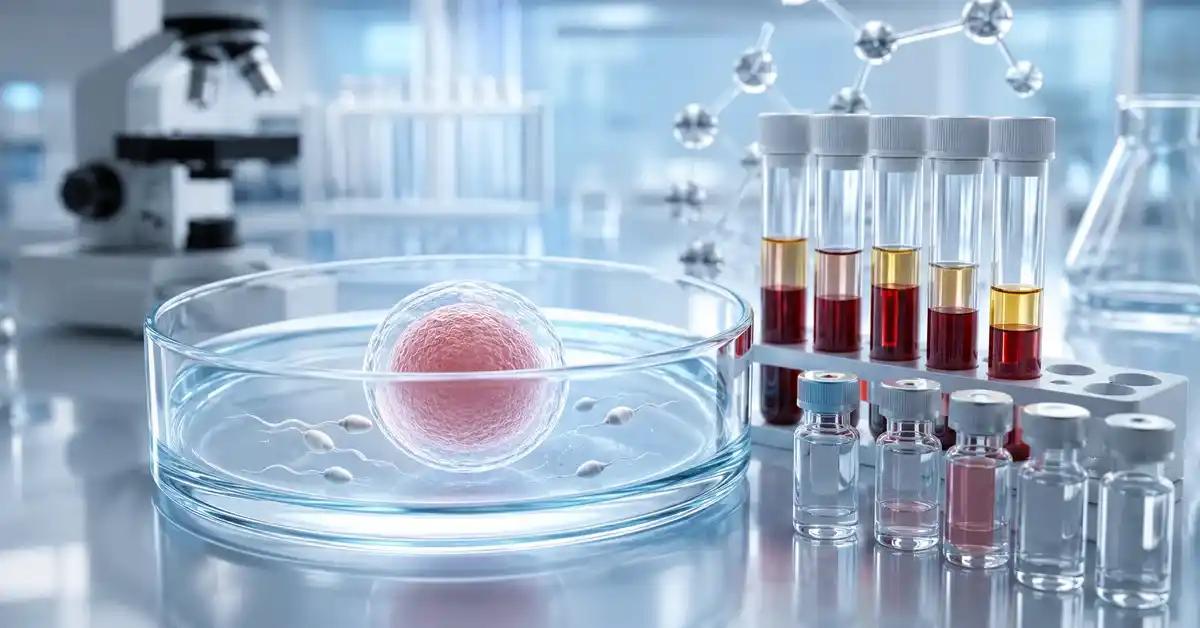
How Do Hormones Affect Fertility? Essential Tests for Couples

Manar Hegazy

Majd Eddin Khaled
Hormones play a pivotal and fundamental role in regulating reproductive functions in both men and women, controlling complex vital processes including sperm production, egg maturation, ovulation, and preparing the uterus for pregnancy. Any disruption or imbalance in the delicate hormonal equilibrium can lead to serious fertility problems that hinder the dream of parenthood. Understanding how hormones affect reproductive capacity and conducting necessary hormonal tests represents the first and most important step toward accurate diagnosis and effective treatment of infertility issues. At Fertiliv, we believe in the importance of comprehensive and precise diagnosis that begins with a deep understanding of the hormonal status of both partners, enabling the development of a personalized treatment plan tailored to each case individually and achieving the best possible outcomes.
Hormones and Their Essential Role in Fertility
Hormones are chemical substances secreted by specialized glands in the body and transported through the blood to regulate the functions of different organs, with sex hormones being among the most important hormones affecting fertility. In men, testosterone plays the primary role in sperm production and maintaining sexual desire, while FSH test for fertility (Follicle-Stimulating Hormone) helps assess testicular function and their ability to produce sperm. LH test for fertility (Luteinizing Hormone) measures the hormone level that stimulates Leydig cells in the testes to produce testosterone. Any imbalance in these hormone levels can lead to decreased sperm count, poor sperm quality, or even complete absence of sperm.
In women, the hormonal picture is more complex and dynamic, as hormone levels change cyclically throughout the menstrual cycle. FSH test for fertility plays a crucial role in stimulating egg growth within the ovary, while LH test for fertility helps trigger the release of the mature egg during ovulation, with the LH surge and ovulation being closely linked. Estradiol test for fertility measures the primary female hormone responsible for preparing the uterine lining and regulating the menstrual cycle, with estradiol and egg quality being directly connected. Progesterone test for fertility assesses the hormone that maintains the thickness of the uterine lining and supports early pregnancy, with progesterone and implantation being critical for successful conception. AMH test for fertility (Anti-Müllerian Hormone) is considered a precise indicator of ovarian reserve, measuring the number of eggs remaining in the ovary, making it an essential test for evaluating fertility in women, especially with advancing age. The delicate balance between all these hormones is necessary for regular ovulation and successful pregnancy.
Impact of Hormonal Imbalances on Reproductive Capacity
Hormonal imbalances represent one of the main causes of fertility problems in couples and can result from multiple causes including pituitary gland disorders, thyroid problems, polycystic ovary syndrome, obesity, or chronic stress. In men, low testosterone levels can lead to weak sperm production and decreased sexual desire, while elevated prolactin test for fertility results may cause erectile dysfunction and reduced sperm count, as prolactin and ovulation are interconnected in the hormonal system. In women, elevated FSH levels and fertility may indicate decreased ovarian reserve or approaching menopause, while low AMH levels and fertility suggest a limited egg reserve.
Thyroid function test for fertility is crucial as thyroid disorders significantly affect fertility in both sexes. Hyperthyroidism or hypothyroidism can lead to menstrual cycle irregularities, ovulation problems, and increased miscarriage risk, demonstrating the strong connection between thyroid health and fertility. Testing TSH (Thyroid-Stimulating Hormone) along with T3 and T4 hormones is necessary to assess thyroid function and its impact on fertility. At Fertiliv IVF clinic, we conduct comprehensive thyroid tests as part of the initial fertility assessment to ensure treatment of any imbalance that may hinder pregnancy.
Read about: Modern Fertility Treatments for Men and Women: Transform Your Parenthood Dreams
Essential Hormonal Tests for Men and Women
Diagnosing fertility problems begins with conducting a comprehensive set of hormonal tests that reveal any imbalances that may affect reproductive capacity. For men, male fertility tests include testosterone testing, which measures the primary male hormone responsible for sperm production and male sexual characteristics. FSH test for fertility in men helps evaluate testicular function and their ability to produce sperm, as elevated FSH levels may indicate testicular failure or damage to the seminiferous tubules. LH test for fertility in men measures the hormone that stimulates Leydig cells in the testes to produce testosterone, and imbalances in its levels may indicate problems in the pituitary gland or testes.
Prolactin test for fertility is important for both men and women, as elevated levels can cause serious fertility problems. In men, high prolactin can lead to decreased testosterone, erectile dysfunction, and reduced sperm count. In women, elevated prolactin may cause menstrual irregularities, absence of ovulation, and milk discharge from breasts despite no pregnancy or breastfeeding. Semen analysis for fertility is the fundamental and most important test for assessing male fertility, measuring sperm count, motility, morphology, and semen volume, providing a comprehensive picture of semen quality and sperm quality and fertility potential for fertilizing the egg.
Comprehensive Hormonal Tests for Women
In women, hormonal tests are more diverse and complex due to cyclical changes in hormone levels. AMH test for fertility is one of the most important tests for assessing ovarian reserve, reflecting the number of eggs remaining in the ovary and helping predict response to fertility treatments. AMH levels and fertility are directly correlated, and this test can be performed at any time during the menstrual cycle as it remains relatively stable, making it a reliable and convenient test. FSH test for fertility in women is usually conducted on day two or three of the menstrual cycle to assess ovarian function and egg reserve. Elevated FSH levels and fertility at the beginning of the cycle may indicate decreased ovarian reserve or weakened ovarian function, while normal levels indicate good egg reserve.
LH test for fertility in women helps determine ovulation timing and diagnose disorders such as polycystic ovary syndrome, as an elevated LH to FSH ratio is considered an indicator of this syndrome. Ovulation predictor kits are based on detecting the LH surge and ovulation to identify the most fertile days. Estradiol test for fertility measures the primary female hormone responsible for uterine lining growth and menstrual cycle regulation, with estradiol and egg quality being closely linked. Low estradiol levels may cause ovulation disorders and fertility problems. Progesterone test for fertility is usually conducted in the mid-luteal phase of the menstrual cycle (around day 21 in a 28-day cycle) to confirm ovulation occurrence and assess its quality. Elevated progesterone levels at this timing confirm successful ovulation, while low levels may indicate weak ovulation or luteal phase deficiency, affecting progesterone and implantation success.
Ultrasound examination of the uterus and ovaries is an important complementary test that helps assess ovarian size, follicle count, uterine lining thickness, and detect any abnormalities, cysts, or tumors that may affect fertility. At Fertiliv in Istanbul, we use the latest high-precision ultrasound equipment for comprehensive assessment of the female reproductive system, ensuring accurate diagnosis and effective treatment planning.
Read about: Do Natural Fertility Vitamins Really Boost Your Chances of Conception?
Thyroid Tests and Additional Hormones
Thyroid function test for fertility is an essential part of comprehensive fertility assessment, as thyroid disorders are relatively common and significantly affect reproductive capacity in both men and women. TSH testing is the primary initial test for assessing thyroid function, as elevated TSH indicates hypothyroidism while decreased levels indicate hyperthyroidism. Both conditions can cause fertility problems, menstrual irregularities, and increased miscarriage risk, demonstrating the critical connection between thyroid health and fertility. T3 (triiodothyronine) and T4 (thyroxine) testing provides a more detailed assessment of thyroid function, reflecting the actual activity of the gland.
Untreated hypothyroidism can lead to ovulation disorders, decreased egg quality, and increased early miscarriage risk. Hyperthyroidism may cause irregular menstrual cycles, weight loss, and difficulty conceiving. DHEA (Dehydroepiandrosterone) testing is important in some cases, helping assess adrenal gland function and may be useful in cases of low ovarian reserve or poor response to stimulation treatments. Pituitary hormone tests include measuring FSH, LH, and prolactin levels, as the pituitary gland is the main regulator of sex hormones in the body. Any dysfunction in the pituitary gland can lead to widespread hormonal imbalances affecting fertility. In some cases, additional tests such as MRI of the pituitary gland may be needed to detect any tumors or abnormalities that may affect hormone secretion. At Fertiliv in Turkey, we conduct comprehensive assessment including all necessary hormonal tests to determine the precise cause of fertility problems and develop an effective treatment plan.

Test Preparation, Timing, and Result Interpretation
Proper preparation for hormonal tests and conducting them at the appropriate time is extremely important for obtaining accurate and reliable results. For men, most hormonal tests can be performed at any time, but it is preferable to conduct them in the early morning when testosterone levels are at their peak. It is recommended to abstain from strenuous exercise 24 hours before the test, get adequate sleep, and avoid stress as much as possible, as these factors can affect hormone levels. For semen analysis for fertility, it is recommended to abstain from ejaculation for 2-5 days before the test to obtain accurate results reflecting the normal state of semen and sperm quality and fertility potential.
For women, timing of hormonal tests is crucial due to cyclical changes in hormone levels throughout the menstrual cycle. FSH test for fertility, LH test for fertility, and estradiol test for fertility are usually conducted on day two or three of the menstrual cycle (day one is the first day of full bleeding) to assess ovarian reserve and ovarian function at the beginning of the cycle. Progesterone test for fertility is conducted in the mid-luteal phase (around day 21 in a regular 28-day cycle) to confirm ovulation occurrence and assess progesterone and implantation potential. AMH test for fertility can be performed at any time during the menstrual cycle as AMH levels and fertility remain relatively stable, making it a flexible and convenient test.
Interpreting hormonal test results requires specialized medical expertise, as normal hormone levels vary by age, sex, and menstrual cycle phase in women. Understanding testosterone test results depends on normal ranges, and low testosterone may indicate gonadal insufficiency, pituitary problems, or other causes requiring additional evaluation. Elevated FSH levels and fertility in men may indicate primary testicular failure or seminiferous tubule damage, while decreased levels may indicate a pituitary problem. Interpreting AMH test results is an important indicator of ovarian reserve, as low AMH levels and fertility indicate limited egg reserve and may require prompt intervention if the woman wishes to conceive. Very high levels may indicate polycystic ovary syndrome. Interpreting semen analysis for fertility results includes assessing several criteria: normal sperm count, percentage of motile sperm, percentage of normally shaped sperm, and semen volume, with any deviation from normal ranges potentially requiring additional tests or therapeutic interventions.
Treatment Options and Lifestyle Modifications
Medication for hormonal imbalances depends on the underlying cause and type of hormonal disorder. Treatment for testosterone imbalance may include testosterone replacement therapy in cases of deficiency, or medications that stimulate natural testosterone production in other cases. Treatment for FSH and LH imbalances may involve using medications such as clomiphene or letrozole to stimulate ovulation in women, or FSH and LH hormone injections to stimulate sperm production in men. Treatment for prolactin imbalance usually includes medications such as bromocriptine or cabergoline that lower prolactin levels and restore normal hormonal balance. Treatment for thyroid disorders involves thyroid hormone replacement in hypothyroidism or antithyroid medications in hyperthyroidism, with thyroid health and fertility being closely interconnected.
In addition to medication, lifestyle changes play an important role in improving hormonal balance and fertility. Proper nutrition is crucial for hormonal balance, involving a balanced diet rich in vitamins, minerals, and antioxidants that support hormone production and improve sperm quality and fertility as well as egg quality. Regular moderate exercise helps regulate hormones, improve blood circulation, and maintain healthy weight. Getting 7-8 hours of quality sleep daily helps regulate hormone secretion and improve fertility. Reducing stress and anxiety is important as chronic stress elevates cortisol levels, which can disrupt hormonal balance and negatively affect fertility. At Fertiliv fertility center, we provide comprehensive guidance on lifestyle modifications alongside medical treatments to achieve the best possible outcomes.
Read about: The Best Foods to Naturally Boost Fertility in Men and Women
Importance of Early Testing and Regular Monitoring
Early fertility testing plays a crucial role in preventing fertility problems by detecting hormonal imbalances before they develop into serious issues that hinder pregnancy. The importance of early medical consultation lies in the fact that early diagnosis and treatment achieve much better results than delaying seeking medical help. Couples who have been trying to conceive unsuccessfully for one year (or six months if the woman is over 35) are advised to undergo comprehensive fertility testing. Planning for a healthy reproductive life begins with understanding the hormonal and health status of both partners and taking necessary steps to improve fertility before attempting conception.
At Fertiliv, we offer comprehensive fertility assessment programs including all necessary hormonal tests, semen analysis for fertility, ultrasound examinations, and additional tests as needed. The Fertiliv team of specialized physicians has extensive experience in interpreting test results and developing personalized treatment plans tailored to each case individually. We believe in the importance of accurate diagnosis as the foundation for any successful treatment, and we use the latest technologies and equipment to ensure obtaining accurate and reliable results. Our holistic approach considers all factors affecting fertility, from hormonal balance to lifestyle factors, ensuring comprehensive care that addresses the root causes of fertility problems and maximizes chances of achieving the dream of parenthood.
Read about: Hormones and Fertility: Complete Testing Guide for Couples
Conclusion
Hormones play a pivotal role in regulating reproductive functions, and any imbalance in hormonal equilibrium can lead to serious fertility problems. Conducting comprehensive hormonal tests for both partners is the first and essential step toward accurate diagnosis and effective treatment of infertility issues. Testosterone, FSH test for fertility, LH test for fertility, and prolactin test for fertility for men, along with AMH test for fertility, FSH test for fertility, LH test for fertility, estradiol test for fertility, and progesterone test for fertility for women, in addition to thyroid function test for fertility and semen analysis for fertility, are all necessary tests that provide a comprehensive picture of hormonal status and fertility potential. At Fertiliv IVF clinic, we provide comprehensive and accurate assessment including all necessary tests, and develop personalized treatment plans that address the root causes of fertility problems and achieve the best possible outcomes. For comprehensive consultation and necessary hormonal tests to assess your fertility, you can contact the Fertiliv team via WhatsApp.
Frequently Asked Questions: How Do Hormones Affect Fertility? Essential Tests for Couples
What are the most important hormonal tests for men?
The most important male fertility tests include testosterone testing which measures the primary male hormone level, FSH test for fertility to assess testicular function and sperm production, LH test for fertility to evaluate testosterone production stimulation, and prolactin test for fertility to rule out any elevation that may affect fertility. Additionally, semen analysis for fertility is the fundamental test for assessing sperm count, motility, and morphology, providing comprehensive information about sperm quality and fertility potential.
What are the most important hormonal tests for women?
The most important hormonal tests for women include AMH test for fertility to assess ovarian reserve and AMH levels and fertility correlation, FSH test for fertility to evaluate ovarian function and egg reserve with FSH levels and fertility being key indicators, LH test for fertility to determine ovulation timing and detect LH surge and ovulation, estradiol test for fertility to assess uterine lining growth and the relationship between estradiol and egg quality, and progesterone test for fertility to confirm ovulation occurrence and evaluate progesterone and implantation potential. Ultrasound examination of the uterus and ovaries is an important complementary test for comprehensive reproductive system assessment.
When should hormonal tests be conducted for women?
Timing of hormonal tests for women is very important for obtaining accurate results. FSH test for fertility, LH test for fertility, and estradiol test for fertility are conducted on day two or three of the menstrual cycle to assess ovarian reserve. Progesterone test for fertility is conducted in the mid-luteal phase (around day 21) to confirm ovulation and assess progesterone and implantation capability. AMH test for fertility can be performed at any time during the cycle as AMH levels and fertility remain relatively stable, making it a convenient test for assessing ovarian reserve.
How does the thyroid affect fertility?
Thyroid function test for fertility is very important as thyroid disorders significantly affect reproductive capacity, demonstrating the strong connection between thyroid health and fertility. Hypothyroidism may cause ovulation disorders, decreased egg quality, and increased miscarriage risk. Hyperthyroidism may cause irregular menstrual cycles and difficulty conceiving. Testing TSH, T3, and T4 hormones is necessary to assess thyroid function and treat any imbalance before attempting conception, as proper thyroid health and fertility management is essential for successful pregnancy.
What does low AMH mean?
Low AMH levels and fertility indicate decreased ovarian reserve or limited egg supply. AMH test for fertility showing low levels means the woman has fewer eggs available for fertilization, which may reduce chances of natural conception and require prompt intervention if she wishes to conceive. Low AMH is common with advancing age but can also occur at a younger age due to genetic or medical factors. In these cases, the doctor may recommend assisted fertility treatments such as IVF or egg freezing to preserve future reproductive options, as understanding AMH levels and fertility is crucial for family planning.