
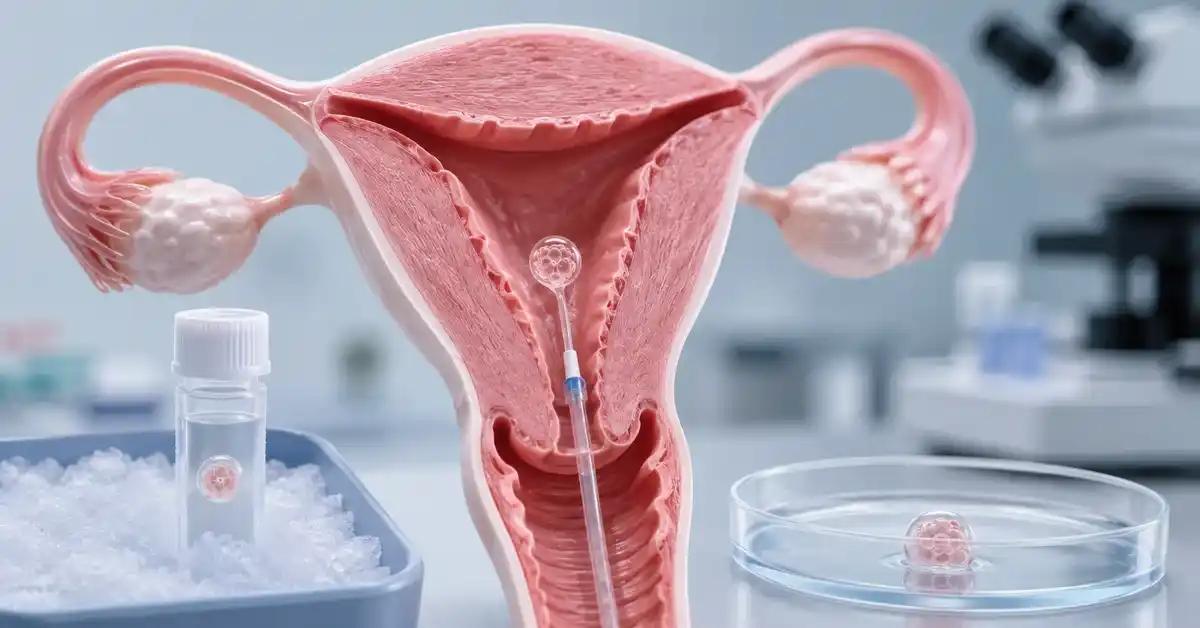
Frozen Vs Fresh Embryo Transfer: Which Is Better For Improving Pregnancy Chances?

Manar Hegazy

Majd Eddin Khaled
Embryo transfer is one of the most important steps in IVF and ICSI treatment. After embryos are created in the laboratory, the fertility team must decide whether to transfer an embryo in the same treatment cycle or freeze embryos and transfer later. This is the difference between fresh embryo transfer and frozen embryo transfer, also called FET.
There is no single answer that fits every patient. Fresh transfer can be excellent when ovarian response, hormones, and endometrial lining are suitable. Frozen transfer can be safer or more effective when the body needs time to recover from stimulation, when OHSS risk is high, when progesterone rises early, or when the uterus needs treatment before transfer. At Fertiliv, the decision is individualized for each patient and each cycle.
What Is The Difference Between Fresh And Frozen Embryo Transfer?
Fresh embryo transfer means transferring an embryo a few days after egg retrieval and fertilization, usually on day 3 or day 5. Stimulation, egg retrieval, fertilization, embryo culture, and embryo transfer happen in the same treatment cycle. This may be suitable when the patient is stable, the endometrium is ready, and there is no major medical reason to delay transfer.
Frozen embryo transfer means embryos are frozen after they are created and transferred in a later cycle. The later transfer cycle may be natural, modified natural, or hormone-prepared depending on ovulation pattern, endometrial response, and the medical plan. This separates ovarian stimulation from embryo transfer.
What Does Freeze-All Mean?
Freeze-all means that no embryo is transferred in the egg retrieval cycle. All suitable embryos are frozen and transferred later. This may be recommended when OHSS risk is high, progesterone rises before egg retrieval, the endometrium is not ideal, or a uterine problem needs treatment before transfer.
Freeze-all can feel disappointing for patients expecting immediate transfer, but it is often a protective and strategic decision. It does not mean the cycle failed. It means the embryo transfer is being moved to a safer or better-timed cycle.
Are Frozen Embryos Weaker?
With modern vitrification techniques, frozen embryos can do very well after thawing. A good-quality embryo that survives thawing well may have an excellent chance. Frozen should not be considered “weaker” simply because it was frozen.
However, embryo quality before freezing is still important. Freezing does not make a poor embryo strong. It mainly allows better timing and safer planning.
Read about: Egg Freezing: Modern Techniques for Future Fertility Preservation
When Is Fresh Embryo Transfer Suitable?
Fresh embryo transfer may be suitable when ovarian response is moderate, the risk of OHSS is low, progesterone levels are appropriate, the endometrium looks suitable, and no uterine issue needs treatment. In these cases, transfer in the same cycle can be practical and efficient.
Fresh transfer may also be reasonable when there are only a few embryos and the medical conditions are reassuring. It is not outdated or inferior by default. The key is whether the uterus and the body are ready in that specific cycle.
Advantages Of Fresh Transfer
The main advantage of fresh transfer is time. The patient does not need to wait for another cycle or go through additional endometrial preparation. The pregnancy result is known sooner, and extra freezing and thawing steps may be avoided.
However, speed alone should not guide the decision. If the hormonal environment or endometrial lining is not suitable, delaying transfer may be wiser.
When Fresh Transfer Is Not Preferred
Fresh transfer is often not preferred when OHSS risk is high, progesterone rises too early, the lining is unsuitable, hydrosalpinx is present, or a uterine problem needs treatment. It may also be avoided when the patient feels unwell after retrieval or has symptoms requiring monitoring.
Patient safety and uterine readiness matter more than transferring quickly.
Read about: Egg Freezing for Single Women: Future Fertility Preservation Options
When Is Frozen Embryo Transfer Better?
Frozen embryo transfer may be better when the doctor wants to separate ovarian stimulation from uterine preparation. During stimulation, hormone levels rise because several follicles are growing. In some women, this may affect the timing or receptivity of the endometrium. A later FET cycle may allow more controlled preparation.
FET is also important when OHSS risk is high. Pregnancy after a fresh transfer can worsen OHSS because pregnancy produces hCG. Freezing embryos and transferring later can protect the patient.
In OHSS Risk
When the ovaries respond strongly and many follicles or eggs develop, the doctor may recommend freezing embryos. A fresh pregnancy could worsen OHSS or prolong symptoms.
In this situation, FET is a safety strategy. The transfer can be done later when the body has recovered and the endometrium can be prepared calmly.
When Progesterone Rises Early
If progesterone rises before egg retrieval, the endometrium may become advanced compared with the embryo. This can reduce synchronization between embryo and uterine lining. The embryo may be good, but the timing of the uterus may not be ideal.
Freezing the embryo allows transfer in a later cycle when timing can be controlled more accurately.
Read about: Modern Egg Freezing Techniques: Innovations and Advanced Tips
The Role Of The Endometrium
The endometrium is where the embryo implants. A good embryo still needs a receptive uterine lining. The lining should have suitable thickness, appearance, and hormonal synchronization. If the lining is too thin, irregular, or not synchronized, delaying transfer may be beneficial.
Ultrasound or hysteroscopy may reveal polyps, fibroids inside the cavity, adhesions, chronic endometritis, or fluid from the tubes. Treating these before transfer may improve the plan and avoid wasting a valuable embryo.
Unsuitable Lining
If the endometrium is not suitable in the stimulation cycle, the doctor may recommend freezing embryos and preparing the lining in another cycle. A different protocol may be used, or the team may wait for a more favorable cycle.
This does not mean the embryo is not good. It means the uterus may need better timing or preparation.
Uterine Problems
If a polyp, adhesion, confirmed chronic endometritis, or cavity issue is found, treatment before transfer may be recommended. A fresh transfer in a clearly unsuitable uterine environment may reduce implantation chances.
Freezing embryos gives time to correct the problem before using the embryo.
Read about: Egg Freezing: Your Path to Preserving Fertility Between Turkey and Germany
Embryo Quality And Freezing
Embryo quality is central to pregnancy chances whether transfer is fresh or frozen. Good-quality embryos usually tolerate freezing and thawing better. The embryology team evaluates embryo number, quality, stage, and whether day 3 or day 5 transfer is more appropriate.
Freezing does not improve the embryo itself. It improves the timing and management of transfer. Embryo quality comes from egg quality, sperm quality, fertilization, and laboratory conditions.
Can Every Embryo Be Frozen?
Not every embryo is suitable for freezing. The laboratory selects embryos that are expected to tolerate vitrification and thawing. Very weak embryos may not be good candidates for freezing.
If there is only one embryo, the doctor may discuss fresh versus frozen transfer carefully based on endometrial conditions and patient safety. The decision becomes very individualized.
What Happens During Thawing?
Before FET, the embryo is thawed in the laboratory. If it survives and resumes expected activity, it can be transferred. Embryo survival after thawing is high in good laboratories, but it is not always 100%.
Patients should understand this clearly. Freezing is effective, but it is still a laboratory step that depends on embryo quality and lab expertise.

Does Frozen Transfer Always Improve Pregnancy Chances?
No. Frozen embryo transfer does not always improve chances for every patient. In some women, fresh and frozen transfer outcomes may be similar when ovarian response is moderate, progesterone is appropriate, and the lining is suitable. In others, frozen transfer may be better because the uterus can be prepared in a more stable cycle or OHSS risk can be reduced.
The better question is not “which is always better?” but “which is better for this patient in this cycle?”
Cases Where FET May Be Better
FET may be better when there is OHSS risk, elevated progesterone, unsuitable lining, need for embryo testing, or need to treat a uterine issue before transfer. It may also be preferred when the patient needs recovery time after retrieval.
In these cases, postponing transfer is not a loss. It is a strategy to match the embryo with a better-prepared uterus.
Cases Where Fresh Transfer Works Well
Fresh transfer can work very well when the patient is low-risk, the lining is ready, hormones are appropriate, there are no uterine or tubal concerns, and embryo number is limited. The same-cycle transfer may then be reasonable.
The best decision protects both embryo potential and patient safety.
Read about: Egg and Embryo Freezing: The Future of Fertility Preservation
Safety And Possible Considerations
Both approaches have safety considerations. Fresh transfer may be less suitable in high OHSS risk because pregnancy can worsen the condition. Frozen transfer requires another cycle and may involve hormone preparation depending on the protocol. Some studies also examine differences in pregnancy outcomes between fresh and frozen transfer, so it should not be seen as a choice with no considerations at all.
The safest approach is the one that fits the patient’s medical situation. A positive pregnancy test is not the only goal; a safe pregnancy matters too.
Pregnancy After FET
Pregnancy after FET is common and generally safe, but transfer preparation can vary. Some patients can have a natural cycle FET if they ovulate regularly. Others need estrogen and progesterone preparation.
The choice depends on cycle regularity, ovulation, endometrial response, patient schedule, and physician planning.
Pregnancy After Fresh Transfer
With fresh transfer, the body has just completed ovarian stimulation and egg retrieval. If the response is moderate and the lining is suitable, fresh transfer may be appropriate. If response is high or the lining is out of sync, fresh transfer may be less suitable.
Monitoring during stimulation helps determine whether fresh transfer remains a good option.
Read about:Stem Cell Therapy For Fertility: Is It A New Hope For Refractory Infertility?
Fertiliv’s Role In Choosing Transfer Type
Fertiliv does not follow a fixed rule that frozen is always better or fresh is always better. The decision begins with monitoring the stimulation cycle: follicle number, hormones, OHSS risk, endometrial lining, embryo number, embryo quality, and whether any treatment is needed before transfer.
If fresh transfer is suitable, the plan is explained clearly. If frozen transfer is safer or better timed, the reason and next steps are discussed. The goal is to protect pregnancy chances through individualized planning.
A Decision For Each Cycle
Even in the same patient, the decision may change from one cycle to another. One cycle may be suitable for fresh transfer, while another may require freezing because progesterone rises or OHSS risk appears.
Each cycle has its own details. Fertiliv reviews these details before making the transfer decision.
Clear Planning Before Transfer
Before transfer, the patient should understand why fresh or frozen transfer was chosen, how progesterone will be supported, when transfer will happen, and when pregnancy testing should be done. Clarity reduces stress and helps medication adherence.
Fertiliv also gives realistic post-transfer instructions without unnecessary restrictions or exaggerated promises.
Conclusion
Frozen and fresh embryo transfer can both lead to pregnancy when used in the right situation. Fresh transfer is faster and may be suitable when ovarian response, hormones, and endometrium are favorable. Frozen transfer may be better when OHSS risk is high, progesterone rises early, the lining is not suitable, embryo testing is needed, or a uterine issue must be treated first.
There is no single best option for everyone. The best option is the one that places a good embryo into a ready uterus while protecting patient safety. Fertiliv helps patients understand the difference and choose the transfer strategy that fits their cycle.
Frequently Asked Questions: Frozen Vs Fresh Embryo Transfer: Which Is Better For Improving Pregnancy Chances?
Is Frozen Embryo Transfer Always Better?
No. It may be better in selected cases, but fresh transfer can be excellent when lining, hormones, and ovarian response are suitable.
When Is Freeze-All Recommended?
It may be recommended for OHSS risk, high progesterone, unsuitable lining, embryo testing, or a uterine issue needing treatment.
Does Freezing Harm Embryos?
Usually not when embryos are good quality and the laboratory is experienced, but thaw survival is not guaranteed 100%.
Is Fresh Transfer Faster?
Yes. It happens in the same egg retrieval cycle, but speed is not best if the uterus or hormones are not ready.
How Is The Choice Made?
The choice depends on ovarian response, OHSS risk, progesterone, endometrial lining, embryo quality, and medical judgment.