
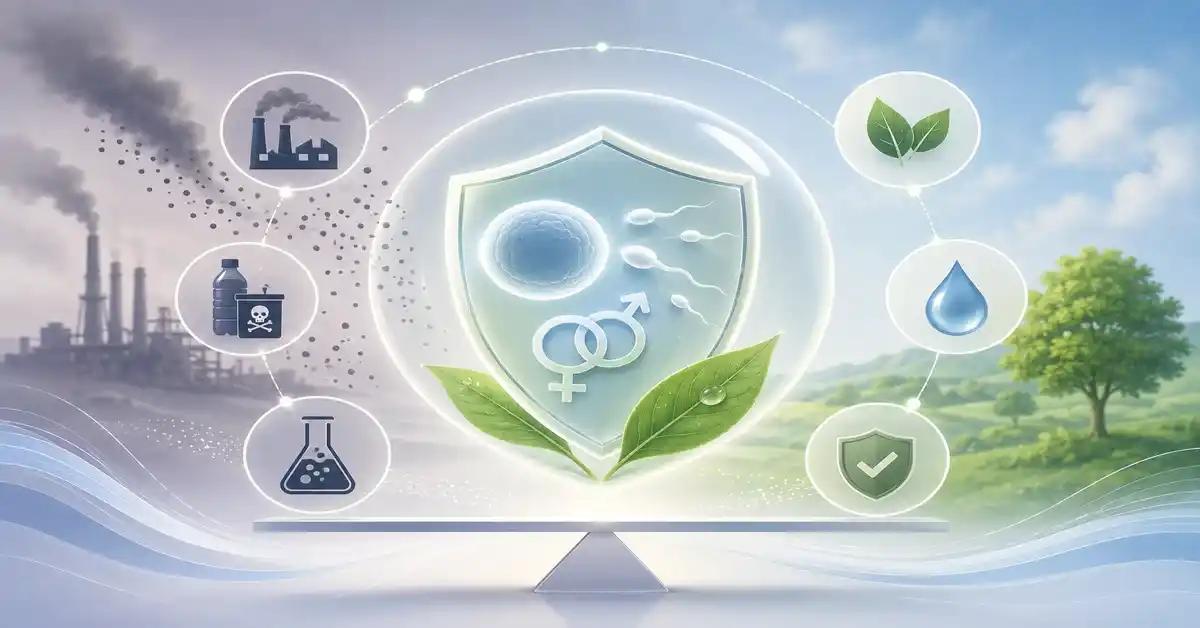
Environmental Pollutant Exposure: Protecting Fertility

Manar Hegazy

Majd Eddin Khaled
Environmental pollutants are becoming an important part of fertility discussions because people are exposed every day to small amounts of substances in air, food, water, plastics, cleaning products, personal care items, packaging, and workplaces. These exposures do not always cause immediate or direct harm, but some may contribute to hormonal imbalance, oxidative stress, or changes in egg and sperm quality.
At Fertiliv, environmental exposure is discussed in a practical and balanced way. The goal is not to make couples afraid of daily life, but to help them reduce unnecessary repeated exposure, especially while planning pregnancy or preparing for fertility treatment.
What Environmental Pollutants Mean for Fertility
Environmental pollutants are chemical or physical agents that may come from the environment, consumer products, food systems, or occupational settings. Some can interfere with hormones, some may increase oxidative stress, and some may persist in the body or environment.
Examples include certain pesticides, heavy metals such as lead and mercury, industrial solvents, air pollution, some plastic-related chemicals, fragrances, and some water- or grease-resistant compounds used in packaging or textiles.
Endocrine-disrupting chemicals
Endocrine-disrupting chemicals can interfere with hormone systems. They may be found in some plastics, pesticides, personal care products, food packaging, and industrial materials.
Because fertility depends on hormonal balance, reducing unnecessary exposure may be helpful when planning pregnancy, especially in couples with delayed conception, irregular cycles, or abnormal semen results.
Air pollution
Air pollution may affect more than the lungs and heart. Fine particles and traffic-related gases have been studied in relation to reproductive hormones, semen parameters, miscarriage risk, and time to pregnancy.
Air pollution cannot be fully avoided, but exposure can be reduced by avoiding outdoor activity during heavy pollution peaks, improving indoor air quality, and choosing less polluted routes or areas when possible.
Workplace exposure
Some workplaces involve pesticides, solvents, heavy metals, radiation, industrial fumes, or strong cleaning agents. These exposures may matter for both women and men, especially when repeated over long hours.
Agriculture, manufacturing, laboratories, painting, dry cleaning, hairdressing, health care, and maintenance work may require special attention during fertility planning.
How Pollutants May Affect Female Fertility
Some pollutants may affect female fertility through hormone disruption, ovulation changes, ovarian function, egg quality, inflammation, or oxidative stress. The effect varies widely depending on the substance, dose, duration, age, general health, and other fertility factors.
This does not mean every small exposure causes infertility. It means repeated avoidable exposure is worth reducing as part of a fertility-supportive lifestyle.
Ovulation and menstrual cycles
Ovulation depends on communication between the brain, pituitary gland, ovaries, thyroid, and other hormones. Some endocrine-disrupting chemicals may interfere with this balance, especially with ongoing exposure.
If cycles are irregular, medical causes such as PCOS, thyroid disorders, prolactin changes, weight changes, or ovarian reserve issues should be evaluated. Reducing pollutants supports health but does not replace diagnosis.
Egg quality
Egg quality is strongly related to age, but it may also be influenced by overall health, smoking, inflammation, nutrition, and oxidative stress. Some pollutants may contribute to oxidative stress, which is why reducing exposure can be part of fertility preparation.
There is no single test that proves pollutants are the direct cause of poor egg quality. They should be considered one piece of a broader health plan.
Endometrium and implantation
Implantation requires a suitable embryo, receptive endometrium, and healthy hormonal environment. If exposures contribute to inflammation or hormone disruption, reducing them may support reproductive balance.
However, implantation failure should not be blamed on pollutants alone. Embryo quality, uterine factors, hormones, age, and sperm factors must also be assessed.
Read about: Modern Fertility Treatments for Men and Women: Transform Your Parenthood Dreams
How Pollutants May Affect Male Fertility
Male fertility may be affected through sperm production, motility, morphology, reproductive hormones, or sperm DNA integrity. Since sperm development takes weeks, exposure during the months before semen analysis or fertility treatment may matter.
Men working with heat, pesticides, solvents, heavy metals, or chemical fumes should mention these exposures during fertility evaluation.
Sperm count and motility
Certain environmental and lifestyle factors may be associated with lower sperm count, weaker motility, or morphology changes. Smoking, heat exposure, poor sleep, and obesity can worsen the picture.
Semen analysis is the first step. If results are abnormal, occupational and environmental history should be reviewed instead of relying only on supplements.
Sperm DNA damage
Oxidative stress from smoking, inflammation, heat, and some pollutants may affect sperm DNA. In selected cases, sperm DNA fragmentation testing may be considered, especially with recurrent miscarriage or repeated treatment failure.
This test is not needed for every man, but it may be useful when there are signs of deeper sperm-quality concerns.
Male hormones
Some environmental chemicals may interfere with androgen signaling or reproductive hormones. In men with severe semen abnormalities, the doctor may check FSH, LH, testosterone, and other hormones.
Lifestyle, workplace exposure, and medication history should be reviewed alongside blood tests.
Read about: Do Natural Fertility Vitamins Really Boost Your Chances of Conception?
Everyday Exposure Sources Worth Noticing
It is impossible to remove all pollutants from daily life. The practical goal is to reduce repeated exposures that are easy to modify. The most useful areas are food, packaging, plastics, indoor air, personal care products, cleaning products, and water.
Small consistent changes are more sustainable than extreme avoidance.
Plastic and heat
Heating food in plastic containers or placing hot, oily food into plastic may increase chemical transfer into food. Glass, stainless steel, or ceramic containers are better choices for heating and hot storage.
Reducing single-use plastics, especially for hot drinks or fatty foods, can be a practical step.
Pesticides and food
Some fruits and vegetables may carry pesticide residues. Washing produce well, peeling when appropriate, choosing reliable sources, and eating a varied diet can help reduce exposure.
Fear of pesticides should not lead to avoiding fruits and vegetables. These foods are important for fertility and general health.
Personal care and cleaning products
Some heavily fragranced products, sprays, and strong cleaning agents may add unnecessary chemical exposure. Choosing simpler, less fragranced products and ventilating rooms during cleaning can reduce exposure.
During pregnancy planning, it may be reasonable to limit strong sprays, unnecessary pesticides at home, and products with unclear ingredients.
Read about: The Best Foods to Naturally Boost Fertility in Men and Women
Practical Steps to Protect Fertility
Protecting fertility from environmental pollutants does not require complicated changes. Couples can start with better food choices, less plastic heat exposure, better ventilation, smoking cessation, workplace protection, and simpler personal care products.
Consistency matters more than perfection.
At home
Use glass containers for heating, ventilate during cooking and cleaning, avoid unnecessary indoor pesticides, reduce dust with wet cleaning, and choose gentler cleaning products when possible.
House dust can carry chemical residues, so regular cleaning and ventilation are simple but useful steps.
In food
Choose a balanced diet rich in vegetables, fruits, quality protein, whole grains, and healthy fats. Wash fresh produce well and reduce ultra-processed and heavily packaged foods when possible.
Fish choices should be thoughtful because some species may contain more mercury. A doctor can guide safer choices when pregnancy is planned.
At work
If work involves pesticides, solvents, metals, radiation, or chemical fumes, protective equipment should be used properly. Exposure type and duration should be discussed during fertility evaluation.
The goal is not necessarily to stop work, but to improve protection and reduce avoidable exposure.

Pollutants and IVF or ICSI
Before IVF or ICSI, the focus is on egg quality, sperm quality, embryo development, and uterine readiness. Reducing environmental exposure in the months before treatment can be part of preparation, but it is not a stand-alone treatment for infertility.
If there are clear fertility factors such as blocked tubes, severe male factor, low ovarian reserve, or advanced age, treatment should not be delayed for a long time only for environmental changes. The plan should balance lifestyle improvement with timing.
Before ovarian stimulation
Before stimulation, patients can focus on sleep, nutrition, smoking cessation, reducing plastic heat exposure, reviewing supplements, and minimizing occupational exposure when possible.
These steps do not guarantee more eggs, but they may support a healthier treatment environment.
Before semen collection
Because sperm production takes time, men may benefit from reducing smoking, heat exposure, solvents, pesticides, and strong chemical exposure in the months before fertility treatment.
If semen analysis is abnormal, a male fertility assessment is more useful than general advice alone.
After embryo transfer
After embryo transfer, patients do not need to fear every exposure. The focus should be on avoiding smoking, strong chemicals, high heat, and unprescribed medications, while following clinic instructions.
A calm, balanced approach is healthier than excessive anxiety.
Read about: Natural Fertility Treatments: Effective Solutions to Increase Pregnancy Chances
When to Seek Medical Advice
Couples should seek medical advice if there is delayed pregnancy, recurrent miscarriage, repeated IVF failure, irregular cycles, abnormal semen analysis, or clear occupational exposure to pesticides, solvents, heavy metals, or radiation.
Environmental exposure should be evaluated together with age, ovarian reserve, ovulation, uterus, tubes, semen analysis, and lifestyle.
Delayed pregnancy
If pregnancy has not occurred after one year of trying, or after 6 months when the woman is over 35, fertility evaluation should not be replaced by environmental changes alone.
Reducing exposure can support health, but it cannot substitute for basic fertility testing.
Occupational exposure
People working in agriculture, manufacturing, laboratories, painting, dry cleaning, hairdressing, radiation-related settings, or strong chemical environments should discuss exposures with their doctor.
Better protective equipment or occupational medicine input may be appropriate in some cases.
Repeated treatment failure
If IVF or ICSI has failed repeatedly, or miscarriage has occurred repeatedly, multiple factors should be reviewed. Environmental exposure may be part of the discussion, but it should not become the only explanation.
A complete plan combines medical evaluation with realistic lifestyle changes.
Read about: Modern Fertility Treatments: Your Journey to Parenthood Between Turkey and America
Conclusion
Environmental pollutants may be an additional factor affecting fertility in women and men, especially when exposure is repeated or involves substances that can disrupt hormones, increase oxidative stress, or affect egg and sperm quality. It is not possible to avoid all pollutants, and couples should not live in fear. However, practical steps such as reducing plastic heat exposure, improving food choices, avoiding smoking, ventilating indoor spaces, and using workplace protection can support fertility planning.
Frequently Asked Questions: Environmental Pollutants and Fertility
Do environmental pollutants directly cause infertility?
Not always. They may contribute to fertility problems in some people, especially with repeated or high exposure and other risk factors.
Can plastic affect fertility?
Some plastic-related chemicals may affect hormone pathways. Reducing heating food in plastic and using glass or stainless steel can help reduce exposure.
Can air pollution affect sperm?
Some studies link air pollution with changes in semen parameters, but effects vary by exposure level and individual health.
Should IVF be delayed to reduce pollutants?
Not usually. Exposure reduction can happen alongside treatment. If age or ovarian reserve is time-sensitive, treatment should not be delayed without a clear medical reason.
What is the most important fertility-protection step?
Reduce repeated daily exposure: avoid heating in plastic, choose balanced food, avoid smoking, ventilate indoor spaces, and use protection at work.