What Happens Inside the Laboratory During ICSI Technique: Detailed Explanation

Manar Hegazy

Majd Eddin Khaled
Behind every successful pregnancy resulting from IVF, there is a precise and complex process that occurs inside advanced fertility laboratories. When using intracytoplasmic sperm injection (ICSI) technique, this process becomes even more controlled and requires extremely high precision from the specialized medical team. In this comprehensive article, we will take you on a detailed tour inside the laboratory during fertilization using ICSI technique, explaining how eggs and sperm are transformed into viable embryos, and what precise steps each cell undergoes before becoming an embryo capable of growing inside the mother's uterus.
Receiving Eggs Immediately After Retrieval
After eggs are retrieved from the woman's ovary through a simple and safe medical procedure, the eggs are immediately transferred to the laboratory under strictly controlled conditions and under careful monitoring. The specialized laboratory team begins monitoring the eggs under a microscope with high precision to determine their maturity level accurately. Only eggs that are in the second stage of maturity (MII) are used in the fertilization and injection process, while immature eggs either do not undergo injection or are left to mature for a short additional period under ideal conditions.
Preparing Eggs for the Procedure
Mature eggs are placed in specially designed culture dishes containing appropriate and safe nutritional medium, with temperature, humidity, and gas concentration maintained at precise levels exactly as they exist inside the human body. This nutritional medium contains all necessary nutrients to support eggs and embryos during the development period. The cells surrounding the egg (Corona radiata) are also carefully removed using special enzymes or gentle mechanical aspiration.
Preparing the Sperm Sample with High Precision
At the same time, the specialized medical team works on preparing the sperm sample from the husband with extreme precision. If the sample is normal and contains a good number of sperm, the team begins separating healthy and active sperm from others using specialized techniques such as density gradient separation or swim-up technique.
Cases of Male Factor Infertility
If sperm count is extremely low or sperm are absent in the seminal fluid (azoospermia), they may be extracted directly from the testes using advanced techniques such as TESE (testicular sperm extraction) or PESA (percutaneous epididymal sperm aspiration). The primary goal here is to obtain the best possible number of usable sperm, even if this means selecting only one sperm per egg. The most motile and morphologically normal sperm are selected.
The Intracytoplasmic Sperm Injection (ICSI) Procedure – The Beating Heart
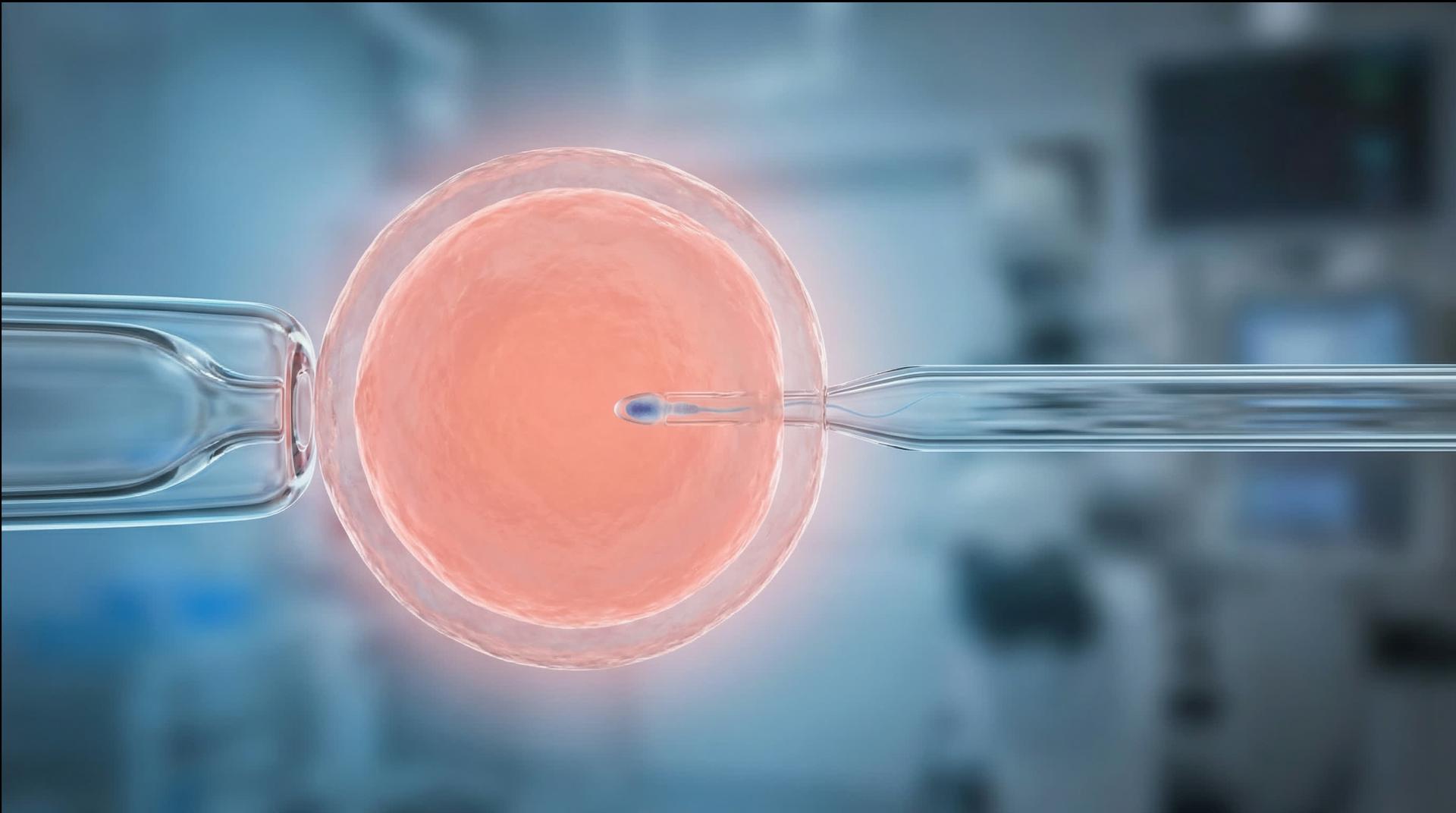
This stage is the true beating heart of ICSI technique, performed by a specialized laboratory expert using a microscope with very high magnification and extremely precise instruments invisible to the naked eye. The specialized doctor begins by holding the egg with a special micropipette to immobilize it, then selects one sperm that appears visually healthy and free from defects, and injects it directly into the egg's cytoplasm using an extremely fine needle.
Required Precision and Skill
This procedure requires exceptional skill and extremely high precision, as the needle must not damage the egg or harm it, and injection must occur at exactly the right location inside the cell. The sperm is injected to a specific depth inside the cytoplasm, and after injection the needle is withdrawn carefully. The IMSI technique (Intracytoplasmic Morphologically Selected Sperm Injection) can be used in the microinjection procedure, where sperm are examined with even greater precision using a microscope with magnification reaching up to 6000 times.
Selecting the Best Sperm
In IMSI technique, sperm with completely normal shape and free from internal defects are selected, which reduces the likelihood of defects that could negatively affect fertilization or embryo development. After injection, all injected eggs are placed in a special incubator under ideal conditions to help them develop naturally.
Monitoring Embryos After Fertilization
Approximately 16-18 hours after the microinjection procedure, the laboratory team begins carefully monitoring the eggs to determine whether fertilization has occurred successfully. The presence of two clear nuclei inside the egg (egg nucleus + sperm nucleus) is confirmed, which is a definitive and reliable sign that fertilization has occurred successfully. After that, embryos are monitored daily with high precision to assess their division and development progress.
Stages of Embryo Development
On the first day after fertilization, the embryo should divide into two cells. On the second day, it should reach 4 cells. On the third day, it should reach 6-8 cells. On the fifth or sixth day, the embryo develops into the blastocyst stage, which is a very advanced stage of development indicating the embryo is ready for transfer into the uterus. Sometimes embryos may develop faster or slower than expected, indicating they may be ready for transfer or may need additional time.
Selecting the Strongest and Best Embryos for Transfer
Once embryos reach an appropriate stage of development, the medical team evaluates their quality with extremely high precision. The healthiest and strongest embryo or embryos are selected based on cell number, regularity of division, and absence of obvious cellular defects. Embryos are evaluated using a worldwide recognized classification system that considers several important factors.
Optional Genetic Testing
In some cases, genetic testing of embryos (PGT) may be performed to select embryos that do not carry any genetic or chromosomal abnormalities. Selected and chosen embryos are transferred to the uterus at a precisely determined time, while remaining and extra embryos can be frozen for use in future attempts if the first attempt is unsuccessful.
Maintaining Ideal Conditions Throughout
Throughout all these procedures, ideal conditions are maintained inside the laboratory. Temperature is maintained at 37 degrees Celsius with extremely high precision. Humidity is maintained at specified levels. Oxygen and carbon dioxide concentrations are maintained precisely using advanced equipment. All these factors are absolutely necessary to ensure embryos develop correctly and naturally.
Conclusion and Key Points
From egg retrieval to sperm injection into the cytoplasm, then monitoring embryo development, every step is executed with extremely high precision and under continuous and careful monitoring, making ICSI technique one of the most important modern medical solutions for treating male factor infertility effectively. What happens inside the IVF laboratory using ICSI technique is a true and tangible scientific miracle. From just one egg and one sperm, science can create new life by God's will.
At Fertiliv IVF Center, we believe that what happens inside the laboratory is not just precise science, but also a human journey filled with optimism, hope, and continuous support. What begins with one egg and one sperm can be transformed by God's will into new life and a happy family. You can contact us now to learn more about ICSI technique or visit the clinic directly for comprehensive consultation.
Frequently Asked Questions About ICSI Laboratory Process
Yes, the procedure is very safe when performed by highly experienced specialists. The damage rate is extremely low.
Usually takes 3 to 6 days depending on embryo quality and laboratory protocol.
No, not all. Fertilization rate ranges between 50-80% depending on egg and sperm quality.
Yes, embryos are monitored daily under the microscope to assess their development.

Comments (0)
There's no more comments