
Varicocele: The Most Common Cause of Male Infertility and How to Treat It

Manar Hegazy

Majd Eddin Khaled
Varicocele is the most common cause of infertility in men. About 40% of infertile men have varicocele. At Fertiliv IVF Center, we see many men suffering from varicocele. The good news is that varicocele can be treated successfully. This article explains what varicocele is and how to treat it.
What is Varicocele and Why is It So Common?
Varicocele is a very common condition in men. About 15% of men have varicocele. Varicocele may greatly affect fertility. Understanding varicocele is very important for preserving fertility.
Definition of Varicocele as an Enlargement of Veins in the Scrotum
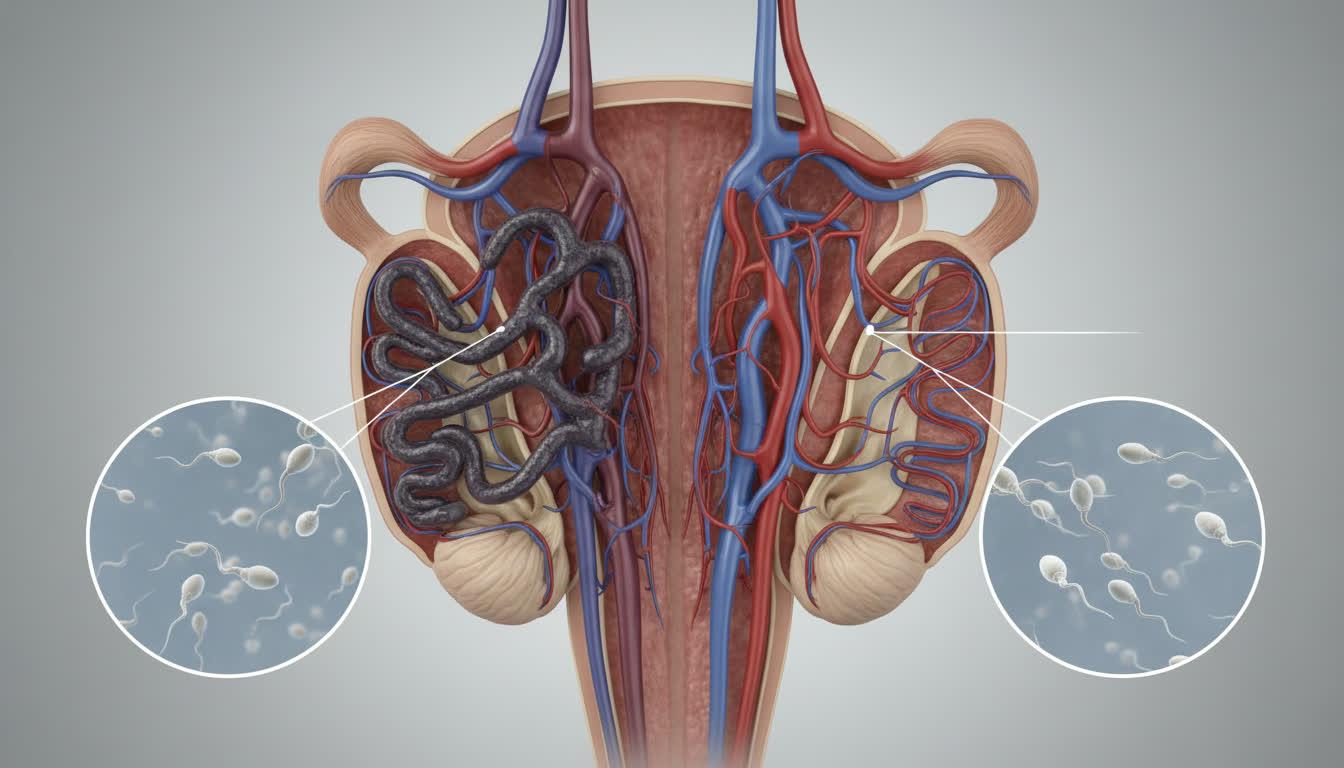
Varicocele is an enlargement of the veins in the scrotum. This enlargement is similar to varicose veins in the legs. Enlarged veins may cause problems in blood flow. This may affect testicular temperature. This may affect sperm production.
Simple Explanation of Its Causes (Problem with Venous Valves)
Varicocele occurs due to a problem with venous valves. Venous valves prevent blood from flowing backward. When these valves weaken, blood flows back to the testicle. This causes vein enlargement. The exact cause of valve weakness is not fully known. There may be a genetic factor.
How Does Varicocele Cause Infertility and Delayed Conception?
Varicocele causes infertility in several ways. Understanding these mechanisms is very important. Early treatment may prevent infertility.
The "Heat Rise" Mechanism and Its Toxic Effect on the Testicle
Enlarged veins cause a rise in testicular temperature. The testicle needs a low temperature to produce sperm. Temperature rise may kill sperm. Temperature rise may reduce sperm production. This is the main reason for varicocele's effect on fertility.
Increased Oxidative Stress and Oxygen Deficiency
Varicocele causes an increase in oxidative stress. Oxidative stress damages sperm DNA. Varicocele causes oxygen deficiency. Oxygen deficiency may reduce sperm motility. Contact the Fertiliv team if you are suffering from varicocele.
Symptoms and Diagnosis of Varicocele
Most men with varicocele have no symptoms. But some men may feel certain symptoms. Early diagnosis is very important.
Common Symptoms: Feeling of Heaviness, Pain, or Noticing a "Bag of Worms"
Feeling of heaviness in the scrotum is the most common symptom. Pain may be present especially when standing for long periods. Some men may notice swelling in the scrotum. Some men may describe the feeling as a "bag of worms". These symptoms may disappear when lying down.
Diagnostic Methods: Clinical Examination and Ultrasound (Doppler)
Diagnosis begins with clinical examination. The doctor may feel the enlarged veins. Ultrasound confirms the diagnosis. Doppler helps measure blood flow. These tests determine the grade of varicocele. Contact the Fertiliv experts for accurate diagnosis.
Available Treatment Options for Varicocele
There are several options for treating varicocele. Treatment choice depends on the grade of the condition and its symptoms. Treatment may greatly improve fertility.
Surgical Treatment: Microscopic Surgery and Laparoscopic Surgery
Microscopic surgery is the first choice. The surgeon uses a microscope to see the veins clearly. Laparoscopic surgery is another option. This surgery is less invasive. Both methods are very effective. Call Fertiliv IVF Center to discuss the best option.
Non-Surgical Treatment: Embolization or Catheterization
Embolization is a non-surgical procedure. A catheter is inserted through the groin. Enlarged veins are closed. This procedure is less invasive than surgery. Recovery time is faster. Results are similar to surgery.
Who is the Right Candidate for Treatment and What Are the Expected Results?
Not all men with varicocele need treatment. Some cases may not require intervention. Results differ from person to person.
When Does the Doctor Recommend Surgical or Medical Intervention?
Treatment is recommended if there is infertility. Treatment is recommended if there are painful symptoms. Treatment is recommended if the grade of varicocele is high. Treatment is recommended if there are problems in semen analysis. Contact the Fertiliv team for comprehensive evaluation.
Success Rate in Improving Fertility After Treatment
Success rate is very high. About 70% of men see improvement in semen quality. About 50% of couples conceive after treatment. Results appear after 3-6 months. Patience is very important after treatment.
Varicocele is the most common cause of infertility in men. Varicocele can be treated successfully. Treatment may greatly improve fertility. Early diagnosis and appropriate treatment are very important. Most men see improvement after treatment.
If you are suffering from varicocele and want to improve your fertility, contact Fertiliv IVF Center for comprehensive evaluation and appropriate treatment plan.