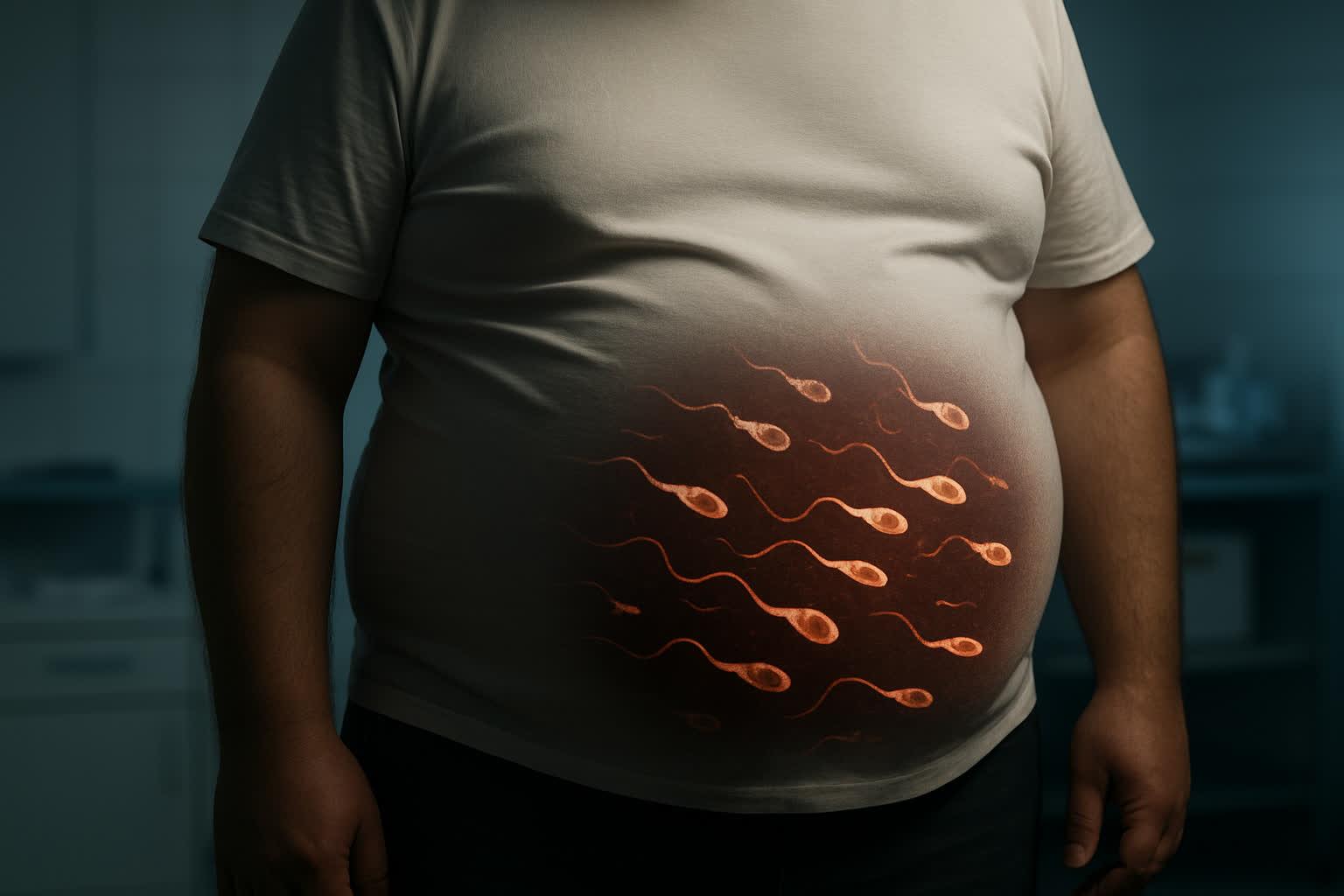
The Impact of Obesity and Excess Weight on Male Reproductive Capacity

Manar Hegazy

Majd Eddin Khaled
Obesity has become a global epidemic affecting millions of men worldwide, impacting not only their general health but also their reproductive capacity. Recent studies confirm that excess weight directly and negatively affects sperm quality and the ability to conceive. At Fertiliv IVF Center, we see daily cases of men suffering from obesity-related infertility, and the good news is that this type of infertility is treatable through weight loss. This article explores the complex relationship between obesity and fertility, explains the biological mechanisms that destroy reproduction, and provides a practical plan to restore reproductive capacity through weight loss.
Obesity: The Epidemic of Our Time and Its Silent Impact on Male Fertility
Obesity is not merely an aesthetic or general health issue; it is a real threat to reproductive capacity. Men suffering from obesity face significantly higher rates of infertility compared to men with normal weights. This silent impact may not be immediately noticeable, but it accumulates over time and affects every aspect of reproductive health.
Defining Obesity Using Body Mass Index (BMI)
Body Mass Index is the scientifically recognized method worldwide for determining whether a person suffers from obesity. BMI is calculated by dividing weight in kilograms by the square of height in meters. Normal weight occurs when BMI is between 18.5 and 24.9. Overweight begins at 25 to 29.9. Obesity begins at 30 and above.
Men with a BMI higher than 30 face significantly higher risks of infertility. The higher the BMI, the greater the negative impact on fertility. Studies show that obese men may suffer a decrease of up to 40% in sperm count compared to men with normal weights. This dramatic reduction directly affects the ability to conceive naturally.
Why Obesity Has Become One of the Most Important Treatable Causes of Infertility
Obesity has become one of the most important causes of infertility because it is completely treatable. Unlike genetic causes or chronic medical conditions, obesity can be managed through lifestyle changes. This means that a man suffering from obesity-related infertility has a real opportunity to restore his fertility.
Recent studies show that losing just 5 to 10% of body weight can significantly improve sperm quality. This makes obesity one of the easiest causes of infertility to address. If you suffer from obesity and infertility, contacting the Fertiliv team can help you develop a comprehensive plan for weight loss and improved fertility.
How Does Obesity Destroy Male Fertility?
Obesity affects fertility through several complex biological mechanisms. Excess fat in the body is not merely energy storage; it is active tissue that secretes hormones and causes inflammation. These hormones and inflammatory processes directly affect sperm production and quality.
Hormonal Imbalance: Converting Testosterone to Estrogen in Fat Tissue
One of the most important mechanisms that destroys fertility is hormonal imbalance. Fat tissue contains an enzyme called aromatase, which converts testosterone to estrogen. In obese men, the amount of fat tissue is very large, leading to conversion of large amounts of testosterone to estrogen.
This results in a sharp decrease in testosterone levels and an increase in estrogen levels. Testosterone is the primary hormone for sperm production, so its decrease directly leads to decreased sperm count and quality. This hormonal imbalance may persist as long as the man remains obese, creating a vicious cycle of declining fertility.
Increased Testicular Temperature Due to Excess Fat
The testicles require a temperature lower than normal body temperature to produce healthy sperm. Excess fat around the testicles and in the groin area acts as thermal insulation, raising testicular temperature. This temperature increase directly affects sperm production.
Studies show that an increase in testicular temperature of just one or two degrees Celsius can significantly reduce sperm count. This effect may persist for several months even after temperature returns to normal, because the sperm production cycle takes approximately 74 days. This prolonged effect means that obesity-related fertility problems may not improve immediately even after weight loss begins.
Increased Oxidative Stress and Inflammation in the Body
Obesity increases oxidative stress in the body. Oxidative stress means there are large numbers of free radicals attacking cells and causing damage. Sperm are very sensitive to oxidative stress, and this damage affects their motility and morphology.
Additionally, obesity causes chronic inflammation throughout the body. This inflammation affects the testicles and surrounding tissues. Chronic inflammation may lead to damage of cells responsible for sperm production. This combined effect of oxidative stress and inflammation means that sperm are not only fewer in number but also lower in quality. The result is a significant reduction in fertility potential.
The Direct Impact of Obesity on Semen
The biological effects of obesity are directly reflected in semen quality. Obese men show completely different results in semen analysis compared to men with normal weights. These differences are not minor; they are real and measurable effects that directly impact fertility.
Decreased Sperm Count
One of the most obvious effects of obesity is decreased sperm count. Studies show that obese men may suffer a decrease of up to 40% in sperm count. This means that a man who had a normal sperm count may decline to very low levels because of obesity.
In severe cases, the count may drop to levels approaching complete absence of sperm. This decrease occurs gradually with weight gain and can be reversed through weight loss. If you suffer from decreased sperm count and also suffer from obesity, consulting with the Fertiliv team may help you understand the next steps and available options.
Decline in Sperm Motility and Quality
In addition to decreased count, obesity also affects sperm motility. Healthy sperm must be able to move quickly and in a specific direction. Obese men may suffer a decrease in sperm motility of up to 30%.
Additionally, sperm morphology may also be affected. Abnormally shaped sperm cannot move efficiently or penetrate the egg. Obesity increases the percentage of abnormally shaped sperm. This combination of decreased count, decreased motility, and abnormal morphology means that chances of natural pregnancy decrease significantly. The overall effect is a dramatic reduction in fertility potential.
Is Weight Loss the Magic Solution?
The answer is yes; weight loss can be a very effective solution for obesity-related infertility. Recent scientific studies provide strong evidence that weight loss improves fertility significantly.
Studies Showing Significant Improvement in Fertility After Weight Loss
A study published in the European Journal of Andrology showed that men who lost 5 to 10% of their weight experienced significant improvement in sperm quality. The study found that sperm count increased by up to 20%, and motility improved by 15%.
Another study following obese men for one year found that those who lost 10% or more of their weight returned to normal fertility levels. Some men who suffered from complete infertility due to obesity were able to conceive naturally after weight loss. These studies prove that weight loss is not only beneficial but can be a complete solution for obesity-related infertility.
How Much Weight Do You Need to Lose to Make a Difference?
You do not need to lose all excess weight to see improvement in fertility. Studies show that losing just 5% of body weight can make a noticeable difference. This means that a man weighing 100 kilograms needs to lose only 5 kilograms to see improvement in sperm quality.
However, losing 10% of body weight gives much better results. Losing 15% or more may restore fertility to completely normal levels. The important thing is to start and continue the effort. Even small steps toward weight loss can improve fertility. Consistency and persistence are more important than achieving perfect results immediately.
Practical Action Plan: Weight Loss for Improved Fertility
Weight loss may seem like a difficult task, but with a clear and practical plan, real results can be achieved. The plan should focus on sustainable changes, not short-term harsh diets.
Effective and Sustainable Dietary Strategies
The first step is to change eating habits. Focus should be on healthy whole foods such as vegetables, fruits, and lean proteins. Reducing processed foods, sugars, and saturated fats is essential. Portion sizes should also be monitored and calories reduced gradually.
Water is also very important. Drinking adequate water helps with satiety and improves metabolism. Avoiding sugary drinks and alcohol can reduce calories significantly. The dietary plan should be sustainable long-term, not a harsh short-term diet. Small, consistent changes are more effective than dramatic restrictions.
The Importance of Incorporating Physical Exercise
Physical exercise is necessary for weight loss and improved fertility. Aerobic exercises such as brisk walking, running, and swimming help burn calories. Strength training helps build muscle, and muscle burns more calories than fat even during rest.
The goal is to engage in 150 minutes of moderate exercise weekly. This can be divided into 30 minutes daily, 5 days a week. Regular exercise not only helps with weight loss but also improves general health, mood, and sleep, all of which contribute to improved fertility. The combined effect of diet and exercise is much more powerful than either alone.
When to Consider Bariatric Surgery as an Option?
In cases of severe obesity, bariatric surgery may be an option. These surgeries such as gastric bypass or sleeve gastrectomy can help achieve significant weight loss quickly. However, they should be a last resort after attempting conventional methods.
Bariatric surgery may significantly improve fertility, but it carries risks and requires permanent lifestyle changes. Before considering surgery, specialists in nutrition and medicine should be consulted.
Obesity and excess weight directly and negatively affect male reproductive capacity. However, the good news is that this type of infertility is completely treatable through weight loss. Scientific studies prove that even modest weight loss can significantly improve fertility.
Weight loss is not only beneficial for fertility but also for overall health. Improving eating habits and increasing physical activity can improve quality of life in general. The plan should be sustainable and long-term, not a harsh short-term diet.
At Fertiliv IVF Center, we help men understand how weight affects their fertility and provide comprehensive support for the weight loss journey. If you suffer from infertility and obesity, contact the Fertiliv team via WhatsApp to begin your journey toward conception and better health.

Comments (0)
There's no more comments