
Testosterone Deficiency: Is It the Cause of Your Delayed Conception?

Manar Hegazy

Majd Eddin Khaled
Testosterone is the king of male hormones. This hormone controls every aspect of masculinity, from fertility to strength and energy. When testosterone levels drop, many problems may develop, including delayed conception. At Fertiliv IVF Center, we see daily men suffering from testosterone deficiency facing difficulties in conception. This article explains what testosterone is, symptoms of its deficiency, its relationship to delayed conception, and how to treat it safely without affecting fertility.
What Is Testosterone Hormone and What Is Its Importance for Men?
Testosterone is the primary hormone of masculinity. This hormone is produced mainly in the testicles, and in small amounts in the adrenal gland. Testosterone controls every aspect of male health and fertility.
Definition of Male Hormone and Its Vital Role in Fertility and General Health
Testosterone is the hormone responsible for the development of male reproductive organs and sperm production. Additionally, this hormone controls sexual desire, sexual performance, and erectile ability. Testosterone also affects general health, including muscle strength, bone density, mood, and energy.
Without adequate testosterone levels, a man cannot produce healthy sperm. Additionally, he may suffer from sexual problems and decreased energy and mood. This makes testosterone very necessary for fertility and general health.
Normal Testosterone Levels
Normal testosterone levels vary from person to person, but there is a general range considered normal. For adult men, the normal level ranges between 300 to 1000 nanograms per deciliter of blood. If the level is below 300 nanograms, it is considered testosterone deficiency.
It is important to note that testosterone levels change throughout the day. They are usually highest in the early morning and gradually decrease throughout the day. For this reason, testosterone testing should be done in the early morning for an accurate reading.
Symptoms of Testosterone Deficiency You Should Not Ignore
There are several symptoms that may indicate testosterone deficiency. Knowing these symptoms may help you seek medical help at the right time.
Common Physical Symptoms Such as Fatigue and Weight Gain
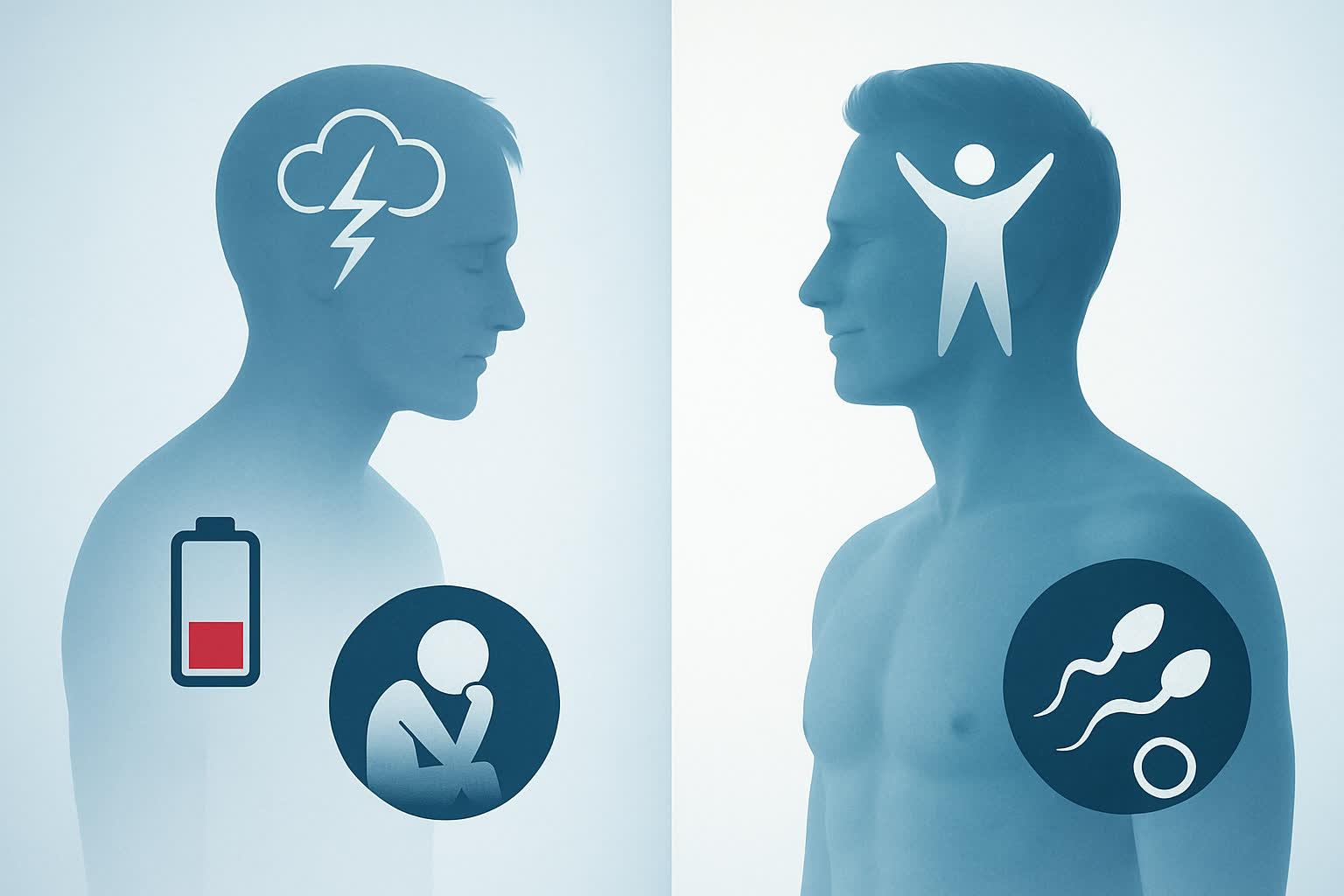
One of the most common physical symptoms of testosterone deficiency is persistent fatigue. Men suffering from testosterone deficiency may feel severe tiredness even after adequate sleep. Additionally, they may notice weight gain, especially around the belly and chest.
Other physical symptoms may include: muscle weakness and decreased strength, loss of muscle mass, osteoporosis or weak bones, breast swelling or pain, and decreased body and facial hair. These symptoms may appear gradually and may not be obvious at first.
Sexual and Psychological Symptoms Such as Decreased Desire and Mood Swings
One of the most important sexual symptoms of testosterone deficiency is decreased sexual desire. Men suffering from testosterone deficiency may not feel the desire for sexual intercourse. Additionally, they may suffer from erectile dysfunction or sexual performance problems.
Psychological symptoms may include: depression and anxiety, mood swings, difficulty concentrating, and decreased self-confidence. If you notice any of these symptoms, contact the Fertiliv team for comprehensive testing.
The Direct Relationship Between Testosterone Deficiency and Delayed Conception
Testosterone deficiency is one of the most important causes of delayed conception in men. Understanding this relationship is very important for dealing with the problem.
How Does Decreased Testosterone Affect Sperm Production?
Testosterone directly controls sperm production. When testosterone levels drop, the amount of sperm produced by the testicles also decreases. In some cases, production may drop so significantly that it may cause near-complete infertility.
In addition to sperm count, testosterone deficiency also affects their quality. Sperm may be less motile and may be more prone to abnormalities. This means that even if there is a reasonable number of sperm, they may not be able to achieve pregnancy.
Can Testosterone Deficiency Cause Infertility?
Yes, testosterone deficiency can cause infertility. In fact, testosterone deficiency is one of the most important causes of male infertility. The good news is that this type of infertility is usually treatable. When testosterone levels are raised to normal levels, fertility may return to normal.
Studies show that most men suffering from testosterone deficiency and infertility can restore fertility through proper treatment. Some men may restore fertility relatively quickly, while others may need more time.
Diagnosis and Treatment of Testosterone Deficiency for Those Wishing to Conceive
Accurate diagnosis and proper treatment are the keys to success in dealing with testosterone deficiency and restoring fertility.
The Importance of Blood Testing and Accurate Medical Diagnosis
Blood testing is the basic method for diagnosing testosterone deficiency. Testing should be done in the early morning, because testosterone levels are highest in the morning. The test should measure both total testosterone and free testosterone levels.
Additionally, the doctor may need to perform other tests to understand the cause of testosterone deficiency. These tests may include: measuring FSH and LH levels, thyroid function testing, and liver and kidney function testing. These tests help determine the root cause of the problem.
Treatment Options That Do Not Conflict With Fertility
There are several treatment options for testosterone deficiency. The first option is hormone replacement therapy. There are different forms of treatment: injections, gels, patches, and pills. Injections are usually the most common and most effective option.
However, it is very important to choose a form of treatment that does not affect fertility. Some forms of treatment may suppress sperm production. Consult a fertility specialist to choose the best option for your condition. In some cases, additional medications may be needed to protect fertility during treatment.
Natural and Safe Methods to Boost Testosterone Levels
In addition to medical treatment, there are several natural methods that can help boost testosterone levels.
The Role of Proper Nutrition and Exercise
Proper nutrition plays an important role in testosterone production. Foods rich in zinc, vitamins, and proteins may help improve testosterone levels. Foods such as red meat, poultry, fish, eggs, nuts, and seeds are all rich in important nutrients.
Exercise is also very important. Resistance training and heavy exercise may help increase testosterone levels. Studies show that men who regularly perform resistance training have higher testosterone levels. You should aim to perform resistance training 3 to 4 times a week.
The Importance of Adequate Sleep and Stress Management
Adequate sleep is very necessary for testosterone production. Most testosterone production occurs during sleep. Men who do not sleep enough may suffer from decreased testosterone levels. You should aim to sleep 7 to 9 hours every night.
Stress management is also very important. Chronic stress increases cortisol hormone levels, which suppresses testosterone production. Techniques such as meditation, yoga, and deep breathing may help reduce stress. Seek help from a specialist if you suffer from persistent stress that affects your health.
Testosterone deficiency is a common cause of delayed conception in men, but it is treatable. Understanding the symptoms of testosterone deficiency and the relationship between it and fertility is the first step toward solving the problem. Early diagnosis and proper treatment may help restore fertility and general health.
If you suspect you have testosterone deficiency, you should seek medical help. Testosterone testing is simple and painless. The results may give you clear answers and an effective treatment plan. At Fertiliv IVF Center, we have expertise in diagnosing and treating testosterone deficiency in ways that are safe and do not affect fertility.
If you suffer from testosterone deficiency affecting your fertility, contact the Fertiliv team via WhatsApp for specialized consultation and a personalized treatment plan for your condition.