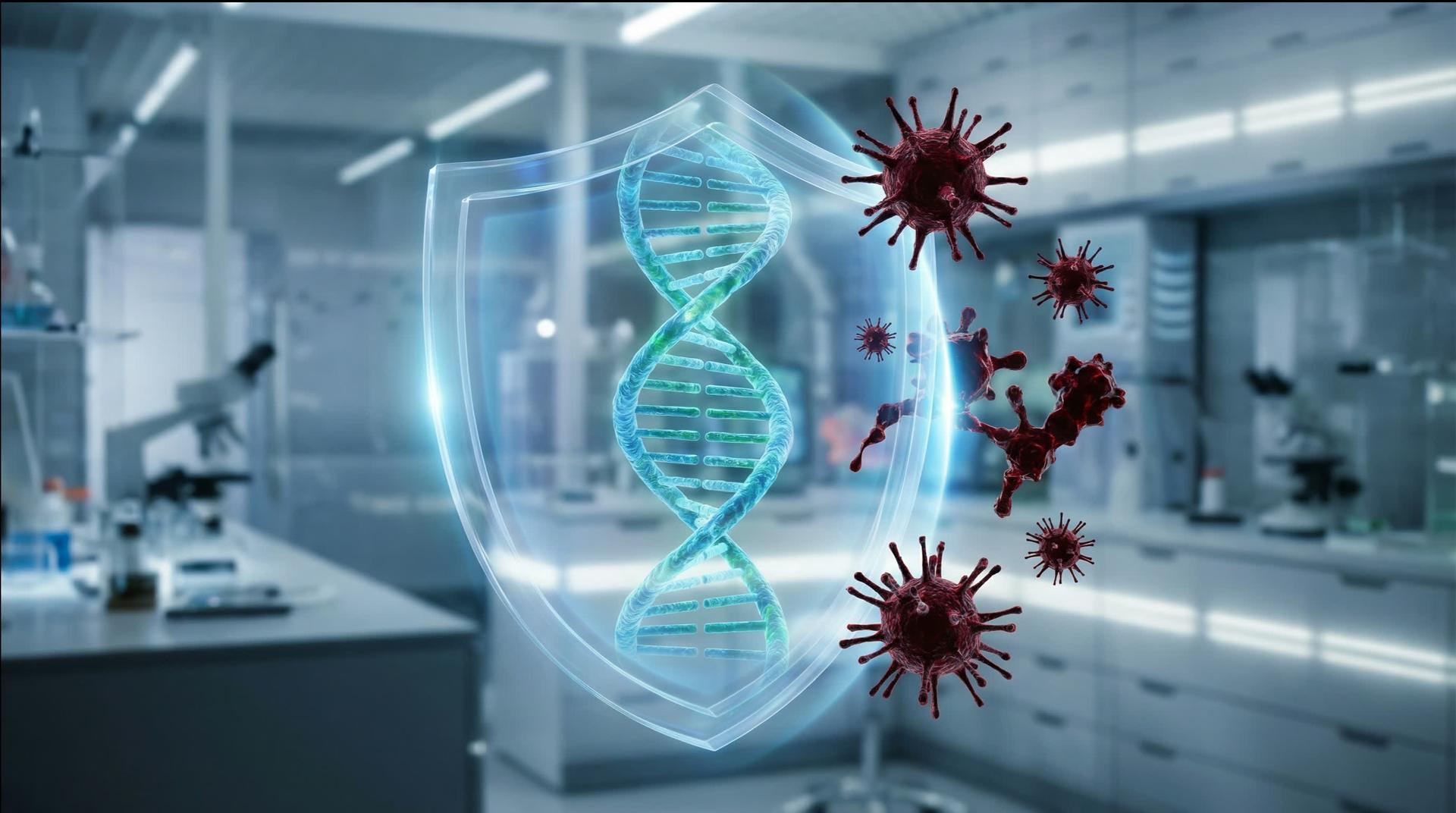
How Do Genetic Tests Help Prevent Hereditary Diseases?

Manar Hegazy

Majd Eddin Khaled
Genetic tests have become one of the most important modern medical tools used to understand future health risks accurately and determine whether a person carries certain genes that may lead to serious hereditary diseases. However, what many people may not know is that these modern tests do not only help in medical diagnosis and detection of existing diseases, but can also effectively help prevent hereditary diseases from being passed on to future generations. In this comprehensive article, we will explain in detail how advanced genetic tests contribute to preventing hereditary diseases and how they can be effectively used before pregnancy or during IVF to ensure the birth of a healthy and completely normal child.
What Are Hereditary Diseases?
Hereditary diseases are serious health disorders that result from changes and abnormalities in genes or chromosomes in the human body. These diseases can be passed from parents to children through sperm or eggs directly. Some of these diseases require the abnormal gene to be present in both the father and mother for the disease to appear in the child, while in other cases it is sufficient for it to be present in only one parent.
Most Common Hereditary Diseases
Among the most famous hereditary diseases that are passed through generations is thalassemia, which is a very serious hereditary anemia disease. Sickle cell disease, which is a hereditary condition that affects the shape of red blood cells. Cystic fibrosis, which is a hereditary disease that affects the respiratory and digestive systems. Duchenne muscular dystrophy, which is a hereditary disease that causes progressive muscle weakness. Huntington's disease, which is a neurological hereditary disease that affects the brain. Hemophilia, which is a hereditary bleeding disorder. All these diseases have very serious health effects on the patient's life.
How Do Genetic Tests Help Detect the Risk of Hereditary Diseases?
Modern genetic tests provide several very effective ways to detect hereditary diseases before they occur:
Detecting Whether Partners Carry the Disease-Causing Gene
Before pregnancy, a very accurate genetic test can be performed on the couple to determine whether either of them carries a hidden hereditary gene that could lead to the birth of a child with a serious hereditary disease. If both partners carry the same abnormal gene, there is a 25% chance that the child will be born with the disease. However, if only one of them carries the gene, the child will usually not get sick, but may be a carrier of the gene to future generations.
Identifying the Type of Hereditary Disease with High Accuracy
Using very advanced gene sequencing technology, the specific gene and the exact mutation responsible for the disease can be identified, which allows the use of genetic testing of embryos later to prevent the transmission of this gene safely and permanently.
Assessing the Severity of the Hereditary Disease
Genetic tests help assess the severity of the hereditary disease and determine whether the disease will appear early or late, and whether it will significantly affect life or not.
How Are Genetic Tests Used Before IVF (PGT-M)?
When it is discovered that one or both partners carry a serious hereditary disease, it is possible to resort to the technique of genetic testing of embryos (PGT-M) during the IVF process using advanced intracytoplasmic sperm injection (ICSI) technique.
Steps of the Procedure in Detail
First, the couple undergoes a very accurate genetic test to definitively identify the gene responsible for the disease. Second, eggs and sperm are extracted and fertilized using the advanced ICSI technique. Third, after embryos develop for a few days (usually 5-6 days), a very small biopsy is taken from each embryo with high precision. Fourth, the extracted cells are analyzed to accurately determine whether the embryo carries the disease-causing gene or not. Fifth, only healthy embryos free from the disease are selected for transfer to the uterus. In this way, it is possible to prevent the birth of a child with this serious hereditary disease, even if one or both parents carry the gene.
When Is It Recommended to Perform Genetic Tests?
There are several cases and times when genetic tests are strongly recommended:
Before Marriage or Engagement (Pre-marital Screening)
This stage is considered one of the most important moments when it is possible to discover the possibility of shared genes between partners that could lead to hereditary diseases in children. This is very important especially in societies where the rate of cousin marriage is very high.
Before Planning Pregnancy
If there is a strong family history of hereditary diseases, or if the couple has a previous child with a serious hereditary disease, performing genetic tests helps greatly in assessing the risk and taking necessary preventive measures.
Before Starting IVF or ICSI
In cases of infertility that require resorting to IVF or ICSI, it is strongly recommended to perform genetic tests to determine whether there is a need for genetic testing of embryos (PGT-M), to select healthy embryos and prevent the transmission of hereditary disease.
When There Are Unclear Symptoms
If there are unclear health symptoms that may indicate the presence of a hereditary disease, genetic tests may help identify the real cause behind these symptoms.
Are Genetic Tests Used Only in Disease Cases?
No, genetic tests are not only directed at couples who have a clear and strong medical history, but can be used for early and effective prevention and identification of potential risks, even in the absence of symptoms in parents. Even completely healthy people may be carriers of hereditary genes without knowing it, and they may face a serious medical surprise in case of pregnancy.
Are Genetic Tests Safe? Do They Have Side Effects?
Yes, genetic tests are completely safe and have no serious side effects. They are usually performed by taking a simple blood sample or a mouth swab painlessly. However, in the case of testing during IVF, taking a biopsy from the embryo is performed with very high precision and does not affect the health of the embryo if done correctly by specialists.
Medical Safety of Testing
Genetic testing causes no pain to the adult. The biopsy taken from the embryo is very small and does not affect the embryo's ability to implant and grow. The results are very accurate and reliable with a success rate of over 99%.
Conclusion
Genetic tests are not just ordinary diagnostic tools, but rather a very effective and modern means of preventing hereditary diseases and protecting future generations from suffering. Whether performed as part of pre-marital screening, or as preparation for IVF using the advanced PGT-M technique, these tests provide couples with a golden opportunity to achieve a healthy and safe pregnancy and completely safe birth, even if they carry disease genes. At Fertiliv IVF Center, we believe that early and accurate understanding of genetic health is a fundamental and inevitable step toward a safe pregnancy and a healthy and sound future for your children. Our medical team provides you with complete and comprehensive support and very accurate interpretation of each result, to help you make thoughtful, wise and science-based decisions. Contact us now to learn more about genetic tests and genetic screening or visit the clinic directly for comprehensive and accurate consultation.
Frequently Asked Questions About Genetic Tests and Hereditary Diseases
No, genetic tests can detect most known hereditary diseases, but there may be some very rare diseases that may not be detected easily.
Usually, it takes about 1-2 weeks to get genetic test results, depending on the type of test and the laboratory.
Yes, genetic testing can be performed during pregnancy through amniotic fluid or placental examination, but this carries slightly more risks.
Yes, genetic testing can accurately determine fetal gender, but this information is only provided when medically necessary.

Comments (0)
There's no more comments