
How Do Pituitary Gland Disorders Affect Male Fertility?

Manar Hegazy

Majd Eddin Khaled
The pituitary gland is a small but very powerful gland. This gland controls the production of most body hormones, including hormones responsible for fertility. When problems occur in the pituitary gland, fertility can be significantly affected. At Fertiliv IVF Center, we see daily men suffering from pituitary gland disorders facing difficulties in conception. This article explains the role of the pituitary gland in fertility, the most common disorders affecting it, their symptoms, and how to diagnose and treat them.
What Is the Pituitary Gland and Why Is It Called the "Maestro"?
The pituitary gland is a small gland the size of a peanut, located at the base of the brain. Despite its small size, it plays a crucial role in controlling body hormones. The pituitary gland is called the "maestro" because it conducts the "orchestra" of hormones in the body.
The Role of the Pituitary Gland as a Control Center for Body Hormones
The pituitary gland produces several important hormones:
- FSH (Follicle-Stimulating Hormone): Controls sperm production
- LH (Luteinizing Hormone): Stimulates testosterone production
- Prolactin: A hormone that suppresses sperm production when levels are elevated
- Growth Hormone: Affects growth and development
- Thyroid Hormone: Controls metabolism and energy
Without these hormones, the body cannot produce healthy sperm or maintain fertility.
A Simplified Explanation of the "Hypothalamus-Pituitary-Testis" Axis
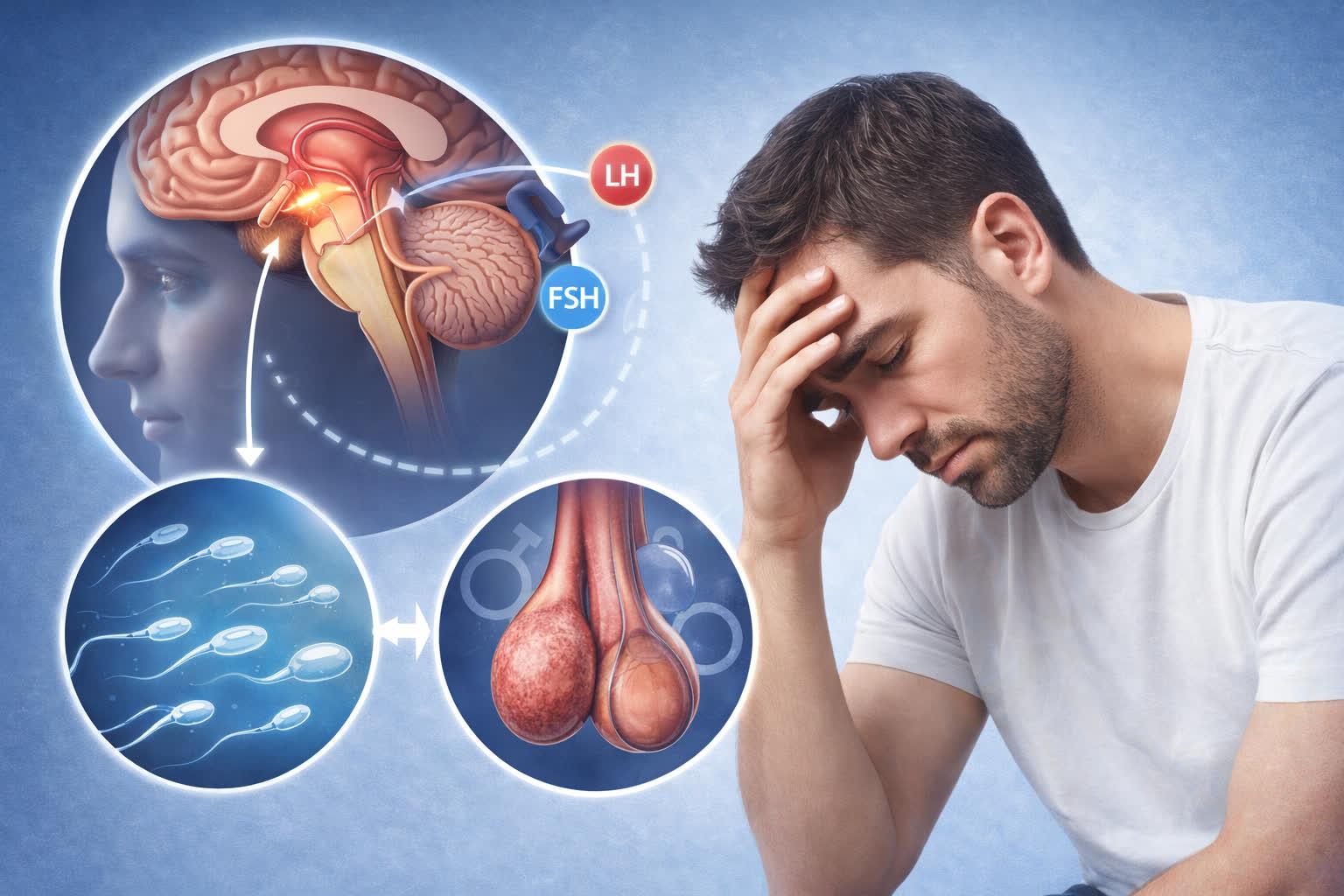
Male fertility depends on a complex system called the "Hypothalamus-Pituitary-Testis" (HPG) Axis. This system works as follows:
- The hypothalamus (part of the brain) sends signals to the pituitary gland
- The pituitary gland produces FSH and LH
- FSH and LH stimulate the testicles to produce sperm and testosterone
- When levels are adequate, the body sends a signal to stop (negative feedback)
If there is a malfunction in any part of this system, fertility can be significantly affected. Contact the Fertiliv team if you suspect a problem with the pituitary gland.
The Most Common Pituitary Gland Disorders Affecting Reproduction
There are several disorders that may affect the pituitary gland and fertility. Knowing these disorders is very important.
Elevated Milk Hormone (Prolactin) and Its Suppressive Effect
Elevated prolactin is one of the most common pituitary gland disorders affecting fertility. Prolactin is a hormone that suppresses FSH and LH production, and thus suppresses sperm and testosterone production.
Causes of elevated prolactin include:
- A benign tumor in the pituitary gland that produces prolactin (prolactinoma)
- Some medications such as antidepressants
- Hypothyroidism
- Chronic stress and tension
The good news is that elevated prolactin is usually easily treatable.
Pituitary Insufficiency and Its Benign Tumors
Pituitary insufficiency means the pituitary gland does not produce enough hormones. This may occur due to:
- A benign tumor in the pituitary gland that compresses hormone-producing cells
- Head injury or brain surgery
- Lack of blood supply to the pituitary gland
- Inflammation of the pituitary gland
When FSH and LH levels drop due to pituitary insufficiency, sperm production may decrease significantly. Consult a specialist if you suffer from symptoms of pituitary insufficiency.
Symptoms Indicating a Problem in the Pituitary Gland
There are several symptoms that may indicate a problem in the pituitary gland. Knowing these symptoms may help you seek medical help at the right time.
Symptoms Related to Fertility and Sexual Function
Symptoms related to fertility may include:
- Delayed conception or infertility
- Decreased sexual desire
- Erectile dysfunction
- Decreased testis size
- Low or absent sperm in seminal fluid
These symptoms may appear gradually and may not be obvious at first.
General Symptoms Such as Headaches and Vision Problems
General symptoms may include:
- Headaches: Especially if there is a tumor in the pituitary gland
- Vision problems: The tumor may compress the optic nerves
- Fatigue and weakness: Due to decreased hormones
- Nausea and vomiting: Especially in the morning
- Weight changes: Gain or loss without obvious reason
- Problems with concentration and memory
Diagnosing Pituitary Gland Problems: From Blood Tests to MRI
Accurate diagnosis is the first step toward effective treatment.
Hormone Tests Needed to Detect Defects
Blood testing is the basic method for diagnosing pituitary gland disorders. Testing should be done in the early morning. The test should include measuring levels of:
- FSH and LH
- Testosterone
- Prolactin
- Growth hormone
- Thyroid hormones
These tests help identify any defects in hormone production.
When Does the Doctor Request MRI (Magnetic Resonance Imaging)?
If blood test results are abnormal, the doctor may request MRI imaging of the pituitary gland. This imaging helps to:
- Detect the presence of a tumor in the pituitary gland
- Determine the size and location of the tumor
- Know if the tumor is compressing nearby nerves
Seek consultation from a specialist if you need MRI imaging.
Available Treatment Options to Restore Fertility
There are several treatment options available depending on the type of disorder.
Medication as a First-Line Treatment for Most Cases
Medication is the first option for most pituitary gland disorders. Medication options include:
- Medications to lower prolactin: Such as bromocriptine and cabergoline
- Hormone replacement: If the pituitary gland does not produce enough hormones
- Medications to stimulate the pituitary gland: Such as GnRH agonists in some cases
Most men respond well to medication and may restore fertility.
When Is Surgery or Hormone Therapy the Solution?
In some cases, surgery or hormone therapy may be necessary:
- Surgery: If there is a large tumor compressing nerves or causing vision problems
- Hormone therapy: If medication fails or if there is a need to stimulate sperm production
- Continuous monitoring: In some cases, all that may be required is regular monitoring
Pituitary gland disorders are an important cause of delayed conception in men, but they are usually treatable. Understanding the role of the pituitary gland in fertility and recognizing symptoms of disorders is the first step toward solving the problem. Early diagnosis and proper treatment may help restore fertility and general health.
If you suspect you have a pituitary gland problem, you should seek medical help. Tests are simple and painless. The results may give you clear answers and an effective treatment plan. At Fertiliv IVF Center, we have expertise in diagnosing and treating pituitary gland disorders.
If you suffer from a pituitary gland disorder affecting your fertility, contact the Fertiliv team via WhatsApp for specialized consultation and a personalized treatment plan for your condition.