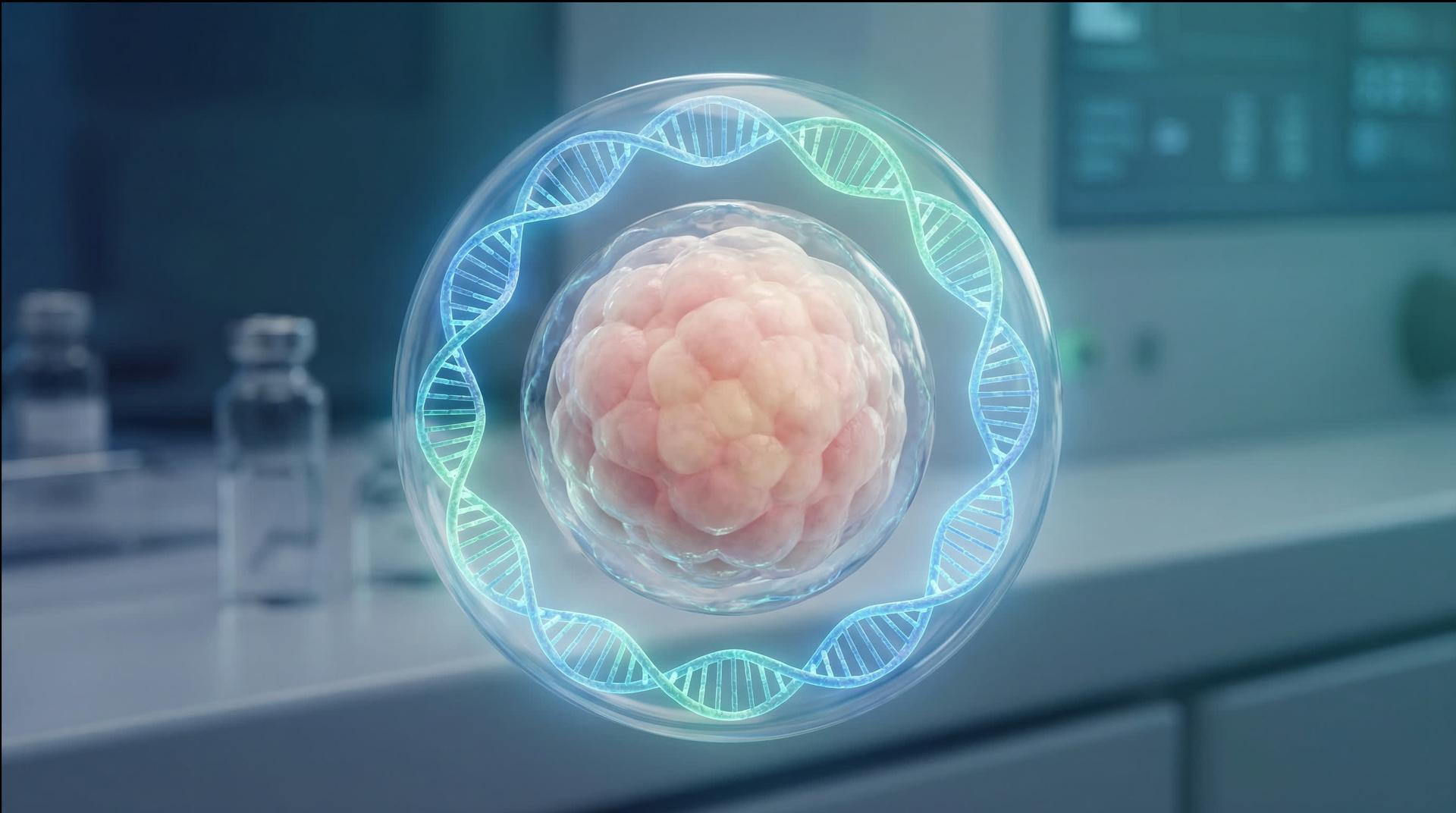
Genetic Testing of Embryos with ICSI Technique: Why Is It Recommended?

Manar Hegazy
Manar Hegazy
Although ICSI (Intracytoplasmic Sperm Injection) technique is commonly used to treat male infertility and male factor problems, there is a clear correlation between poor sperm quality, weak eggs, and the presence of chromosomal abnormalities in resulting embryos. This important correlation makes genetic testing of embryos (PGT) a necessary and highly recommended procedure in certain cases. In this comprehensive article, we will review the main reasons why genetic testing of embryos is necessary when using ICSI technique, the cases in which it is recommended, and how this testing can significantly improve the chances of successful treatment.
What Is ICSI Technique and Its Relationship to Chromosomal Abnormalities?
ICSI technique involves injecting a single sperm directly into an egg to achieve fertilization. This technique is very effective in cases of severe male infertility. However, recent research has shown that there is a correlation between very poor sperm quality and increased likelihood of chromosomal abnormalities in resulting embryos. Additionally, there may be problems with the eggs themselves that lead to chromosomal abnormalities.
The Relationship Between Sperm Quality and Chromosomal Abnormalities
When sperm quality is very poor, it may carry chromosomal abnormalities. When combined with the egg, these abnormalities may be transferred to the embryo. This means that embryos resulting from ICSI may carry genetic abnormalities even if the egg is healthy. For this reason, genetic testing of embryos becomes a critical and necessary step.
Main Reasons for Using Genetic Testing (PGT) with ICSI Technique
There are several very important reasons why genetic testing of embryos is necessary when using ICSI technique:
Increasing Chances of Pregnancy and Live Birth
Genetic testing allows selection of only embryos with normal and healthy chromosomal structure. This selection significantly increases the chances of successful implantation and reduces the likelihood of miscarriage. When a genetically healthy embryo is transferred, the chances of successful pregnancy are much higher than transferring an embryo that may carry chromosomal abnormalities.
Significantly Reducing Miscarriage Rates
Genetically abnormal embryos are the main cause of approximately 60% of early miscarriages. This is a very high percentage and affects many couples. By detecting these chromosomal abnormalities in advance through genetic testing, it is possible to avoid transferring embryos that are not viable for development. This means avoiding the sadness and frustration resulting from repeated miscarriages.
Shortening Treatment Journey and Reducing Attempts
Instead of undergoing multiple repeated attempts without positive results, this can be avoided by selecting embryos with the best genetic quality. This means that couples may need fewer attempts to achieve successful pregnancy. This reduces the psychological, physical, and financial stress on couples.
Preventing Transmission of Serious Genetic Diseases
If one or both partners carry a known genetic disease (such as thalassemia, cystic fibrosis, or hemophilia), a special type of genetic testing called PGT-M (genetic testing for specific diseases) can be used to select embryos that do not carry this disease. This ensures that the future child will be healthy and free from this genetic disease.
Increasing Chances of Successful Implantation in Women Over 35
As age advances, especially in women over 35 years old, the likelihood of chromosomal abnormalities in eggs increases significantly. Here, genetic testing becomes a necessary and critical step to increase the chances of successful pregnancy and avoid repeated miscarriages.
Should Genetic Testing Be Performed for All Cases Using ICSI Technique?
Not all cases using ICSI technique need genetic testing of embryos. Rather, it is particularly recommended in certain specific cases:
Cases in Which Genetic Testing Is Recommended
Women over 35-40 years old, where the likelihood of chromosomal abnormalities increases. Couples with a history of recurrent miscarriage (three or more times), where chromosomal abnormalities may be the cause. Those who have undergone previous failed attempts with IVF or ICSI, where genetic testing may help identify the cause. Couples carrying known genetic diseases, where PGT-M can be used to select healthy embryos. Men with very poor sperm quality, where the likelihood of chromosomal abnormalities in embryos increases.
Does Genetic Testing Affect Fetal Health?
This is a very important question asked by many couples. The answer is clear and reassuring: the procedure itself is completely safe if performed by a specialized medical team using precise and modern techniques. Additionally, numerous reliable medical studies have shown that the small biopsy taken from the embryo does not affect the embryo's ability to implant or develop normally.
Safety of Genetic Testing
The biopsy is taken from the outer cells of the embryo (which will later form the placenta), not from the cells that will form the embryo itself. This means that the testing is completely safe. Additionally, long-term studies have shown that children born from embryos that underwent genetic testing do not differ from others in terms of health and development.
Conclusion
Combining ICSI technique with genetic testing of embryos (PGT) is an advanced, modern, and very important step in treating infertility and reproductive problems. This combination is especially important in cases where pregnancy chances are limited or there have been previous failed attempts. If you or your partner belong to an advanced age group (over 35 years), or have a history of recurrent miscarriage or known genetic diseases, genetic testing of embryos can be the golden key to achieving a stable pregnancy and safe, healthy birth. At Fertiliv IVF Center, we believe that the use of genetic testing should be carefully planned and directed toward achieving a clear goal: achieving a healthy and successful pregnancy. Our specialized medical team provides you with complete support and accurate interpretation of each result, to help you make a decision based on science and complete awareness. Contact us now to find out if genetic testing is suitable for your case, or visit our clinic directly for consultation.
Frequently Asked Questions About Genetic Testing with ICSI Technique
Yes, genetic testing adds additional cost to the treatment cycle. However, it should be remembered that it may reduce the number of attempts needed to achieve successful pregnancy, which may save money and time in the long run.
Genetic testing results usually take about 7-10 days. In some cases, results may be available faster using modern techniques.
Yes, genetic testing can be performed on all available embryos. However, embryos must have reached a certain stage of development (usually 5-6 days) before the biopsy is taken.
Genetic testing is very accurate, but not 100%. The accuracy rate reaches approximately 99% when using modern techniques and specialized laboratories.

Comments (0)
There's no more comments