Gender Determination Techniques: What's the Difference Between ICSI and IVF?

Manar Hegazy

Majd Eddin Khaled
With the advancement of reproductive medicine and modern technologies, it has become possible to determine fetal gender before implantation using advanced techniques such as IVF (In Vitro Fertilization) and ICSI (Intracytoplasmic Sperm Injection) combined with genetic testing of embryos (PGT). However, many couples confuse these two important procedures and ask: Can both techniques be used to determine baby's gender? Is there a difference in this capability between them? These are important questions that deserve clear and comprehensive answers. In this comprehensive article, we will explain what gender determination techniques are and what the difference is between IVF and ICSI in terms of the ability to select gender and the technical capabilities of each.
Can Baby's Gender Be Determined Using IVF (In Vitro Fertilization)?
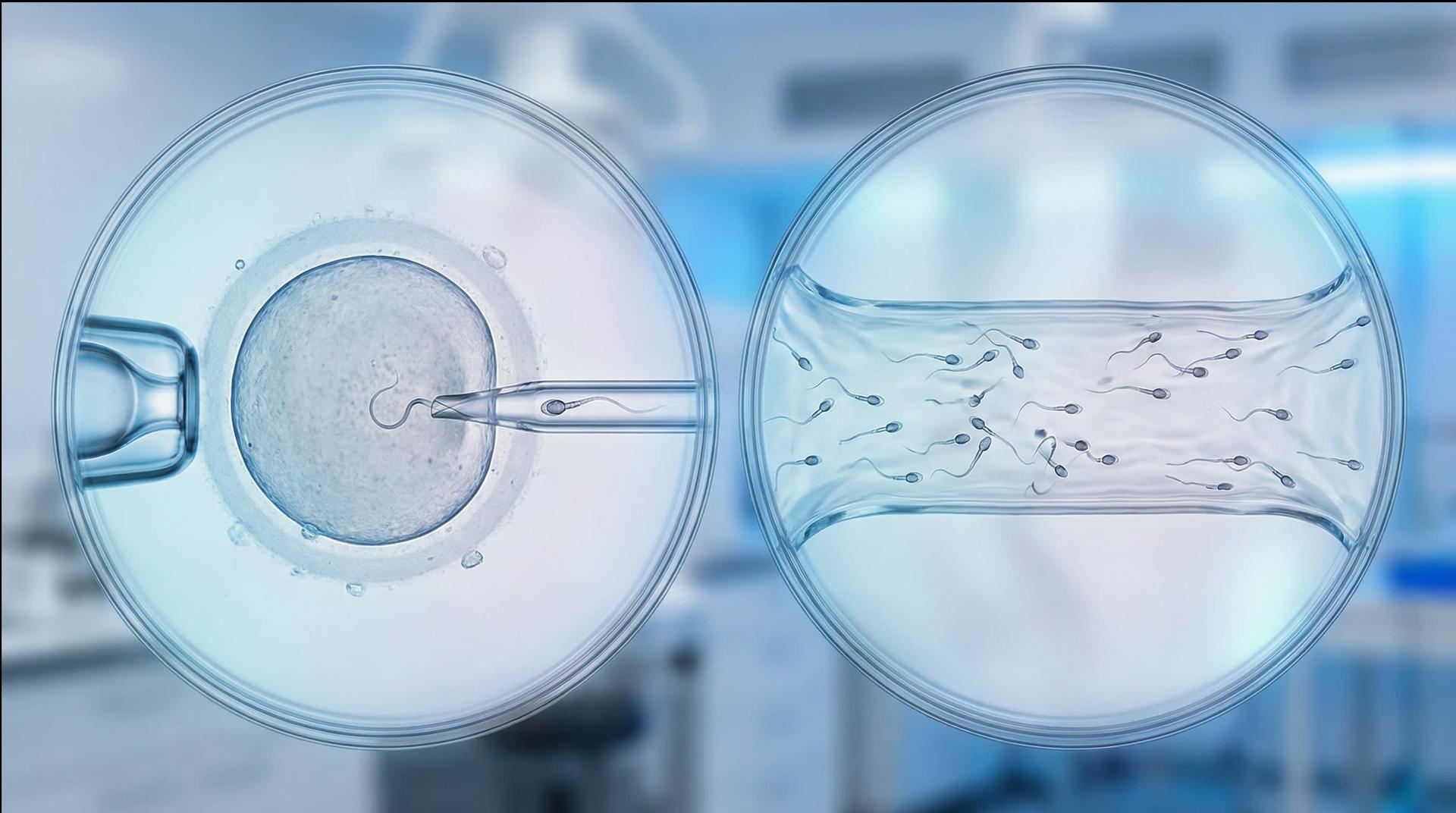
IVF technique is based on placing eggs with sperm in a special sterile culture dish, allowing fertilization to occur naturally. In this technique, fetal gender is not selected directly or immediately. However, if genetic testing of embryos (PGT) is performed after their development for several days, the specialized medical team can determine the gender of each embryo with very high accuracy. Here, an embryo of the desired type can be selected based on genetic test results, provided there is a clear medical need for this.
How IVF Works and Gender Determination
In IVF, eggs and sperm are placed together in a controlled environment where fertilization occurs naturally. After approximately 5-6 days of fertilization, embryos reach the blastocyst stage, and here a very small biopsy can be taken from each embryo. This biopsy is analyzed genetically to determine sex chromosomes (XX or XY), thus determining fetal gender with 99% accuracy.
Can Baby's Gender Be Determined Using ICSI (Intracytoplasmic Sperm Injection)?
ICSI technique differs from IVF in that it requires direct technical intervention to fertilize the egg by injecting a single sperm into the cytoplasm (contents of the egg). Fetal gender is not selected during fertilization itself. However, when ICSI is combined with genetic testing of embryos (PGT), fetal gender can be determined with precision before transfer to the uterus. This testing may be used to avoid sex-linked genetic diseases, not merely for personal or cultural preference.
How ICSI Works and Gender Determination
In ICSI, a single sperm is selected based on specific criteria (motility and morphology), then injected directly into the egg using a very fine needle under a microscope. After successful fertilization, embryos develop the same way as in IVF. After 5-6 days, genetic testing of embryos can be performed to determine their gender with high accuracy.
The Difference Between IVF and ICSI in Terms of Gender Determination
Although the two fertilization methods differ fundamentally, both techniques do not allow direct selection of fetal gender during fertilization; rather, gender determination depends on chromosome analysis after embryo development for several days. However, the real difference between them is:
Key Differences Between the Two Techniques
In IVF (In Vitro Fertilization), fertilization is allowed to occur naturally, and there may be more than one sperm around the egg, which may increase the chances of successful fertilization. In ICSI (Intracytoplasmic Sperm Injection), only one sperm is selected based on specific criteria and injected directly into the egg with high precision. In terms of the final result (fetal gender), the only difference is in the reason for using genetic testing, such as poor sperm quality in ICSI cases, or the presence of sex-linked genetic diseases, or a history of recurrent miscarriage or previous implantation failure.
How Do Both Techniques Determine Fetal Gender?
After embryo development for several days (usually 5-6 days), a very small biopsy is taken from each embryo to analyze its chromosomal structure with very high accuracy. If the structure is XX, the embryo is female; if it is XY, the embryo is male. Based on genetic test results, an embryo of the desired type can be transferred if there is more than one healthy embryo available for selection. However, the goal must be clear and medically and religiously acceptable, such as avoiding the birth of a child with a sex-linked genetic disease or improving pregnancy chances in older women or those with recurrent miscarriage.
Accuracy and Reliability of Genetic Testing
Genetic testing of embryos has very high accuracy reaching 99% in determining fetal gender. This high accuracy depends on the use of very modern techniques such as DNA sequencing (NGS) or microarray, and on the expertise of the specialized medical team and laboratory.
When Is Genetic Testing of Embryos Used to Determine Gender?
Genetic testing of embryos is not used to determine gender in all cases, but only in specific medically justified cases:
Medically Justified Cases for Gender Determination
Presence of sex-linked genetic disease: Such as hemophilia (bleeding disorder) or Duchenne muscular dystrophy, where males are primarily affected, and female embryos may be preferred to avoid the disease. Unexplained recurrent miscarriage: Genetic testing may help determine whether there is a relationship between gender and chromosomal abnormalities leading to recurrent miscarriage. Repeated failure in IVF procedures: Genetic testing may be used to improve pregnancy and successful implantation chances, without focusing specifically on gender.
Conclusion
Despite scientific advancement that allows determining fetal gender during IVF or ICSI procedures, determining baby's gender is not the primary goal of these procedures, but rather part of comprehensive genetic testing to improve pregnancy chances and prevent serious genetic diseases. At Fertiliv IVF Center, we believe that the focus should be on fetal health and pregnancy safety, and these techniques should be used within clear and reliable medical and religious boundaries. Our specialized medical team provides you with precise consultation about available options. Contact us now to learn more about the medical options available to you, or visit the clinic directly for consultation.
Frequently Asked Questions About the Difference Between IVF and ICSI
Both techniques have their advantages. IVF is used when sperm quality is good, while ICSI is used when sperm quality is very poor. The choice of technique depends on your specific case.
Yes, genetic testing of embryos (PGT) can be used with both techniques (IVF and ICSI). Genetic testing provides valuable information about embryo health and gender.
If there are 4-5 embryos available, the probability of having an embryo of the desired gender is high. However, final success depends on several other factors such as uterine quality and maternal health.
Yes, genetic testing adds additional cost. However, it may reduce the number of attempts needed in the long run, which may save money and time.

Comments (0)
There's no more comments