
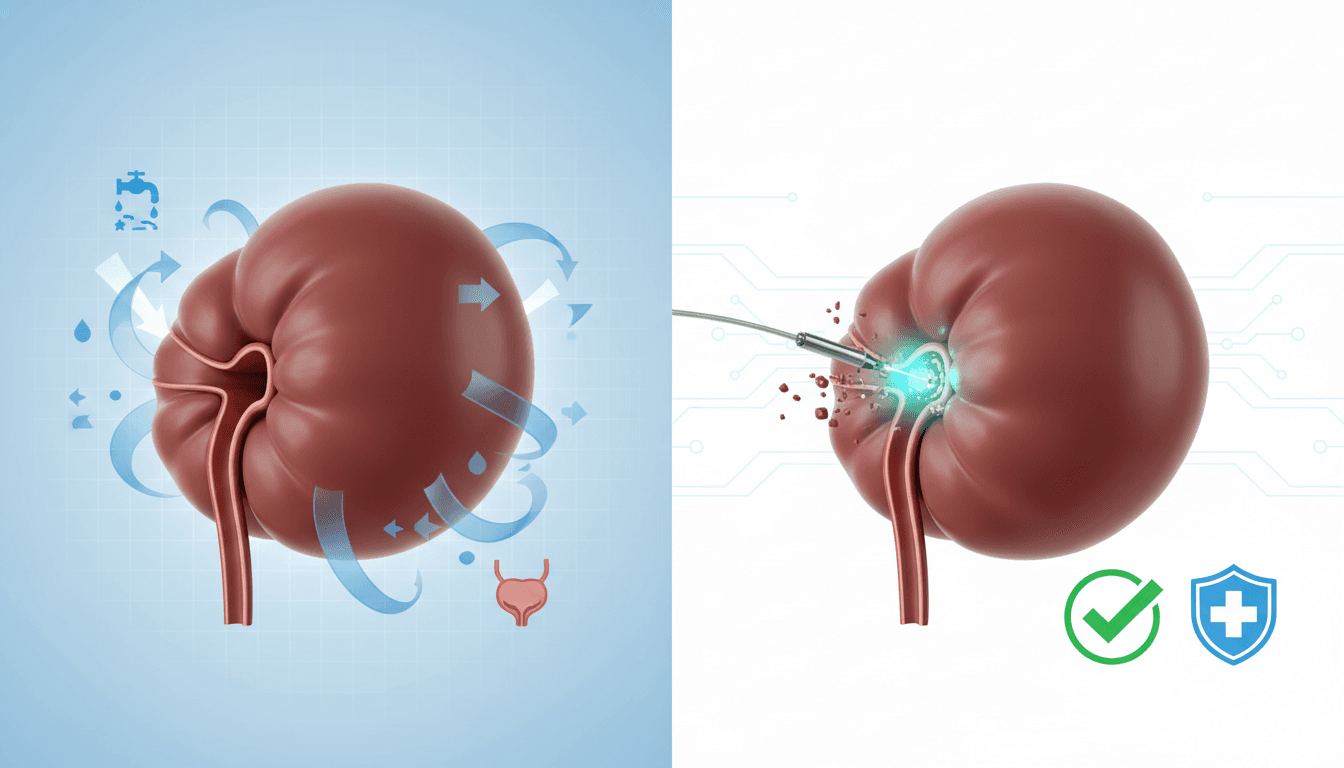
Benign Prostate Enlargement Laser Treatment: Modern Safe Solutions

Manar Hegazy

Majd Eddin Khaled
Benign prostatic hyperplasia (BPH), commonly known as benign prostate enlargement, is one of the most prevalent health conditions affecting men over fifty. Beyond causing urinary difficulties, this condition has direct implications for male fertility and reproductive health. Enlarged prostate affects semen quality, sperm motility, and ejaculatory function, potentially leading to fertility challenges for couples planning to conceive.
Prostate laser treatment represents a revolutionary advancement in urology, offering rapid, safe, and effective solutions without the need for traditional surgery. Green light laser prostate and laser prostate surgery have become the preferred choice for many physicians and patients due to their excellent outcomes, minimal complications, and superior preservation of fertility compared to conventional surgical approaches.
At Fertiliv Fertility Center, we understand the critical connection between prostate health and male fertility. We provide comprehensive assessment of how benign prostate enlargement affects fertility, guiding patients toward modern treatment solutions that preserve reproductive capacity. This complete guide covers everything you need to know about prostate laser treatment and its impact on male fertility.
Understanding Benign Prostate Enlargement and Its Impact on Fertility
Benign Prostate Enlargement in Men
Benign prostate enlargement is a common medical condition affecting the prostate gland in men as they age. The prostate is a walnut-sized gland located below the bladder, surrounding the urethra, responsible for producing part of the seminal fluid that carries sperm.
What is Benign Prostatic Hyperplasia (BPH)?
With advancing age, prostate cells begin to grow and multiply gradually, leading to gland enlargement. This growth is benign (non-cancerous) but causes pressure on the urethra, obstructing urine flow and causing urinary problems.
Prevalence of Benign Prostate Enlargement:
- Approximately 50% of men at age fifty experience prostate enlargement
- The rate increases to 80-90% in men over seventy
- Not all men with enlarged prostate develop symptoms
- About 50% of affected men require medical treatment
Impact of Benign Prostate Enlargement on Male Fertility:
Benign prostate enlargement affects male fertility through several direct and indirect mechanisms:
1. Impact on Semen Quality:
- Reduced semen volume: The prostate produces approximately 30% of seminal fluid, and enlargement affects the quantity and quality of this fluid
- Altered semen composition: Enlargement affects the chemical balance of semen, impacting the sperm environment
- Increased viscosity: Semen may become thicker, hindering sperm motility
2. Impact on Sperm Motility:
- Chronic inflammation associated with prostate enlargement produces free radicals that damage sperm
- Decreased percentage of normally motile sperm
- Reduced sperm capacity to penetrate the egg
3. Ejaculation Problems:
- Retrograde ejaculation: Occurs when semen enters the bladder instead of exiting through the urethra
- Weak ejaculation: Decreased ejaculatory force and semen volume
- Painful ejaculation: May affect marital relations and sexual desire
4. Medication Effects on Fertility:
Some medications used to treat prostate enlargement may affect fertility:
- 5-alpha reductase inhibitors: May reduce semen volume and affect sperm quality
- Alpha blockers: May cause retrograde ejaculation in some cases
Prostate Enlargement Symptoms and Urinary Difficulties
Prostate enlargement symptoms develop gradually and primarily affect urination, but may extend to include sexual function and fertility.
Primary Prostate Enlargement Symptoms:
1. Storage Symptoms (Irritative Symptoms):
- Urinary frequency: Needing to urinate more than 8 times daily
- Nocturia: Waking multiple times at night to urinate (more than twice)
- Urinary urgency: Sudden, strong urge that's difficult to postpone
- Urge incontinence: Urine leakage before reaching the bathroom
2. Voiding Symptoms (Obstructive Symptoms):
- Weak urine stream: Urine flow is weak and intermittent
- Hesitancy: Delay in starting urination despite the urge
- Post-void dribbling: Continued urine drops after finishing
- Incomplete bladder emptying: Feeling of residual urine in bladder
- Straining: Pushing to start or continue urination
3. Symptoms Affecting Fertility and Sexual Life:
- Erectile dysfunction: May accompany prostate enlargement in some cases
- Decreased libido: Due to bothersome symptoms and anxiety
- Painful ejaculation: Affects marital relations
- Reduced semen volume: Impacts fertility
- Retrograde ejaculation: Especially after certain treatments
Symptom Severity Classification:
Prostate enlargement symptom severity is assessed using the International Prostate Symptom Score (IPSS):
- Mild symptoms (0-7 points): Usually don't require immediate treatment
- Moderate symptoms (8-19 points): May need medical treatment
- Severe symptoms (20-35 points): Often require surgical or laser intervention
Complications of Prostate Enlargement on Fertility and Health
If left untreated, benign prostate enlargement may lead to serious complications affecting overall health and fertility.
Health Complications of Prostate Enlargement:
1. Acute Urinary Retention:
- Sudden inability to urinate despite full bladder
- Emergency condition requiring immediate catheterization
- Severe lower abdominal pain
- May recur if underlying cause isn't treated
2. Recurrent Urinary Tract Infections:
- Residual urine in bladder creates bacterial environment
- Recurrent bladder and prostate infections
- Infection may spread to kidneys
- Affects semen quality and fertility
3. Bladder Stones:
- Form due to incomplete bladder emptying
- Cause pain and bladder irritation
- May lead to blood in urine
4. Bladder Damage:
- Bladder muscle weakening from continuous pressure
- Loss of bladder's ability to contract effectively
- Damage may become permanent if untreated
5. Kidney Damage:
- Urine backflow to kidneys
- Increased pressure on kidneys
- May lead to kidney failure in severe cases
Fertility Complications of Prostate Enlargement:
1. Chronic Prostatitis:
- Leads to free radical production that damages sperm
- Affects sperm motility and morphology
- Increases sperm DNA fragmentation
2. Decreased Semen Quality:
- Changes in semen chemical composition
- Decreased fructose and zinc levels necessary for sperm motility
- Increased semen viscosity
3. Retrograde Ejaculation:
- Prevents sperm from reaching the vagina
- Makes natural conception difficult or impossible
- Couple may need assisted reproductive techniques
For comprehensive assessment of how prostate enlargement affects your fertility and to receive a treatment plan that preserves your reproductive capacity, contact Fertiliv team via WhatsApp for specialized consultation.
Prostate Laser Treatment: Modern Techniques
Laser Prostate Surgery and Green Light Laser
Prostate laser treatment represents a qualitative leap in treating prostate enlargement, offering excellent results while better preserving sexual function and fertility compared to traditional surgery.
What is Prostate Laser Treatment?
Prostate laser treatment is a modern medical procedure using laser energy to remove or vaporize enlarged prostate tissue pressing on the urethra. The procedure is performed through the urethra without external surgical incision, making it less invasive and faster in recovery.
Types of Lasers Used in Prostate Treatment:
1. Green Light Laser Prostate (GreenLight Laser):
Green light laser prostate is the most common and widely used in treating prostate enlargement.
How Green Light Laser Works:
- Uses potassium titanyl phosphate (KTP) laser with 532 nm wavelength
- Energy is selectively absorbed by hemoglobin in tissues
- Leads to instant tissue vaporization
- Seals blood vessels during procedure, reducing bleeding
Advantages of Green Light Laser Prostate:
- Less bleeding: Suitable for patients on blood thinners
- Short hospital stay: Most patients leave same day or next day
- Brief catheterization: Usually removed within 24 hours
- Quick return to activities: Most patients resume normal life within a week
- Preserves sexual function: Lower rate of retrograde ejaculation compared to traditional surgery
2. Holmium Laser (HoLEP - Holmium Laser Enucleation):
Advanced technique for laser prostate surgery, suitable for very large prostates.
Advantages of Holmium Laser:
- Effective for very large prostates (over 100 grams)
- Complete removal of enlarged tissue
- Excellent long-term results
- Very limited bleeding
3. Thulium Laser (ThuLEP - Thulium Laser):
Modern technique combining advantages of green light and holmium lasers.
Advantages of Thulium Laser:
- High precision in tissue cutting
- Less bleeding
- Shorter procedure time
- Best preservation of sexual function
Non-Surgical Prostate Treatment: Comparison with Traditional Methods
Prostate laser treatment is considered non-surgical treatment without traditional surgery, making it a preferred choice for many patients.
Difference Between Laser and Traditional Prostate Surgery:
| Laser | Traditional Prostate Surgery | |
| Procedure | Through urethra, no surgical incision | May require abdominal or perineal incision |
| Bleeding | Very limited bleeding, rarely needs blood transfusion | More bleeding, may need transfusion in some cases |
| Hospital Stay | One day or less | 3-5 days or more |
| Catheterization | 24 hours or less | 3-7 days |
| Recovery | 1-2 weeks to return to normal activities | 4-6 weeks |
| Fertility Impact | Lower rate of retrograde ejaculation (15-25%) | Higher rate of retrograde ejaculation (50-90%) |
Prostate Laser Procedure: Steps and Process
Prostate laser procedure is an advanced medical intervention performed with high precision and requires specialized medical expertise.
Steps of Prostate Laser Procedure:
1. Pre-Procedure Preparation:
Required Tests:
- Urine analysis and urine culture (to rule out infection)
- Kidney function tests
- PSA (Prostate-Specific Antigen) test
- Uroflowmetry (urine flow measurement)
- Ultrasound to measure prostate size and residual urine volume
- Complete blood tests and coagulation profile
- ECG for patients over 50 years
Pre-Procedure Instructions:
- Fasting 6-8 hours before procedure
- Stop blood thinners per doctor's instructions (may not be necessary with green light laser)
- Treat any urinary tract infection before procedure
- Inform doctor of all medications you're taking
2. During the Procedure:
Anesthesia:
- Spinal anesthesia - most common
- Or general anesthesia depending on patient condition and preference
Procedure Steps:
- Positioning: Patient lies on back with legs elevated
- Scope insertion: Special scope inserted through urethra to prostate
- Examination: Doctor examines prostate and bladder
- Laser application: Laser energy directed to vaporize or remove enlarged tissue
- Bleeding control: Laser automatically seals blood vessels
- Catheter placement: Temporary urinary catheter placed
Procedure Duration:
- Green light laser: 30-60 minutes
- Holmium laser: 60-120 minutes depending on prostate size
3. Immediately After Procedure:
- Transfer patient to recovery room for monitoring
- Monitor vital signs
- Ensure no bleeding
- Start oral fluids gradually
- Provide pain medication as needed
4. Hospital Stay:
- Most patients leave same day or next day
- Catheter usually removed within 24 hours
- Ensure patient can urinate normally before discharge
Modern Prostate Treatment Techniques and Fertility Preservation
Modern prostate treatment techniques focus on achieving best therapeutic outcomes while preserving sexual function and fertility.
Modern Techniques for Fertility Preservation During Prostate Treatment:
1. Selective Laser Vaporization:
- Precise targeting of only enlarged tissue
- Preservation of bladder neck and ejaculatory mechanism
- Reduces risk of retrograde ejaculation
2. Bladder Neck Preservation Technique:
- Avoid treating bladder neck area with laser
- Preserve bladder neck closure mechanism during ejaculation
- Reduce retrograde ejaculation rate to less than 10%
3. Advanced Intraoperative Imaging:
- Use of high-definition cameras
- Precise identification of tissue to be removed
- Avoid unnecessary damage
Tips for Fertility Preservation When Treating Prostate Enlargement:
1. Before Treatment:
- Fertility assessment: Perform semen analysis before treatment
- Sperm freezing: For couples planning future conception
- Risk discussion: Understand each treatment option's impact on fertility
- Choose appropriate technique: Green light laser best for fertility preservation
2. Choose the Right Surgeon:
- Select surgeon with extensive laser treatment experience
- Ask about retrograde ejaculation rates in their cases
- Ensure use of latest techniques
3. After Treatment:
- Fertility assessment: Perform semen analysis after 3 months
- Retrograde ejaculation treatment: If it occurs, can be treated with certain medications
- Assisted techniques: If problems persist, assisted reproductive techniques can be used
To discuss treatment options that preserve your fertility and receive comprehensive assessment, contact Fertiliv Fertility Center via WhatsApp for specialized consultation combining prostate treatment and reproductive capacity preservation.
Prostate Laser Treatment Results and Recovery
Laser Prostate Surgery Results and Success Rates
Prostate laser treatment results are excellent, showing remarkable improvement in symptoms and quality of life.
Short-Term Prostate Laser Treatment Results:
1. Immediate Urination Improvement:
- Urine flow strength increases by 100-200%
- Noticeable improvement within days of procedure
- Significant decrease in nighttime urination need
- Improvement in bladder emptying
2. Symptom Improvement:
- IPSS score (symptom scale) decreases by 70-80%
- Quality of life improves by 80-90%
- Disappearance or significant improvement in most symptoms
Long-Term Prostate Laser Treatment Results:
1. Success Rates:
- 90-95% success rate in symptom improvement
- Stable results for 5-10 years or more
- Low rate of retreatment need (less than 5-10%)
2. Impact on Sexual Function and Fertility:
- Retrograde ejaculation: Occurs in 15-25% of cases (less than traditional surgery)
- Erection: Most patients retain erectile ability
- Libido: Usually improves after bothersome symptoms resolve
- Semen quality: Improves after treating inflammation and congestion
3. Results Comparison Between Laser Types:
- Green light laser: Excellent results, lowest retrograde ejaculation rate
- Holmium laser: Excellent long-term results, suitable for large prostates
- Thulium laser: Excellent results with fewest complications
Prostate Laser Recovery Time and Care
Prostate laser recovery time is relatively short compared to traditional surgery, but requires following specific instructions.
Recovery Timeline After Prostate Laser Treatment:
Week 1:
- Day 1-2: Catheter removal, rest at home
- Day 3-7: Gradual urination improvement, may have mild burning
- Expected symptoms: Burning during urination, frequency, light blood in urine
Week 2-4:
- Significant symptom improvement
- Blood in urine gradually disappears
- Return to light daily activities
- Can return to desk work
Month 2-3:
- Complete tissue healing
- Urination pattern stabilizes
- Can return to sexual activity
- Can exercise
Care Instructions After Prostate Laser Procedure:
1. Catheter Care (if present):
- Maintain catheter area cleanliness
- Ensure urine flows freely
- Avoid pulling catheter
- Report any pain or blockage
2. Fluid Intake:
- Drink 8-10 glasses of water daily
- Helps flush out blood and remaining tissue
- Reduces infection risk
- Avoid caffeine and alcohol in first weeks
3. Medications:
- Antibiotics: To prevent infection, must complete full course
- Pain relievers: As needed
- Stool softeners: To avoid constipation and straining
- Urination improvement medications: Doctor may prescribe temporarily
4. Activities and Rest:
- Rest: First 2-3 days complete rest
- Light walking: Beneficial for improving circulation
- Avoid strenuous activities: For 4-6 weeks
- Avoid heavy lifting: More than 5 kg for 4 weeks
- Avoid driving: For one week or per doctor's instructions
5. Sexual Activity:
- Avoid sexual activity for 4-6 weeks
- Ejaculation allowed after complete healing
- May have blood in semen first few times (normal)
- Inform partner about possible retrograde ejaculation
6. Medical Follow-up:
- First follow-up visit after one week
- Second follow-up visit after 4-6 weeks
- Semen analysis after 3 months (for those concerned about fertility)
- Annual follow-up to assess long-term results
Signs Requiring Immediate Doctor Contact:
- Severe bleeding or large blood clots
- Inability to urinate
- Fever above 38°C
- Severe pain not responding to painkillers
- Infection symptoms (severe burning, foul-smelling urine)
Best Treatment for BPH: When to Choose Laser?
Choosing the best treatment for benign prostate enlargement depends on several factors, but laser is considered optimal in most cases.
When is Laser the Best Treatment for BPH?
1. Ideal Cases for Laser Treatment:
- Moderate to large prostate enlargement: Size 30-80 grams for green light laser, larger for holmium laser
- Medical treatment failure: Symptoms not responding to medications
- Moderate to severe symptoms: IPSS more than 8
- Prostate enlargement complications: Recurrent urinary retention, infections, bladder stones
- Patients on blood thinners: Green light laser very suitable
- Patients wishing to preserve fertility: Laser better than traditional surgery
2. Cases Preferring Other Options:
- Mild enlargement with minor symptoms: Medical treatment may suffice
- Very small prostate: (less than 30 grams) - medications may suffice
- Very large prostate: (more than 150 grams) - may need open surgery
- Presence of prostate cancer: Requires different treatment
Comparison of Prostate Enlargement Treatment Options:
| Medical Treatment | Prostate Laser Treatment | Traditional Surgery (TURP) | Open Surgery | |
| Advantages | Non-surgical, easy, can be stopped | Effective, fast, quick recovery, little bleeding, fertility preservation | Effective, widely available | Effective for very large prostates |
| Disadvantages | Requires continuity, may not be effective, side effects, ongoing cost | Initial cost, may have retrograde ejaculation in some cases | More bleeding, longer recovery, more retrograde ejaculation, longer stay | Major surgery, long recovery, more complications |
| Suitable for | Mild to moderate cases | Most moderate to large prostate enlargement cases | Cases where laser unavailable | Very large prostates (more than 150 grams) |
Permanent Enlarged Prostate Treatment and Prevention
Permanent Enlarged Prostate Treatment: Long-Term Solutions
Permanent enlarged prostate treatment requires choosing appropriate treatment and careful follow-up to ensure sustainable results.
Can Prostate Enlargement Be Permanently Treated?
Prostate laser treatment provides a near-permanent solution to the problem, where:
- Enlarged tissue is permanently removed
- Results last for many years (5-10 years or more)
- Retreatment rate is low (5-10%)
- Most patients don't need additional treatment
Long-Term Treatment Success Factors:
1. Choose Appropriate Technique:
- Green light laser excellent for moderate prostate
- Holmium laser best for very large prostate
- Complete removal of enlarged tissue reduces retreatment need
2. Surgeon Experience:
- Experienced surgeon achieves better results
- Adequate tissue removal without excess
- Reduce complications
3. Regular Follow-up:
- Annual prostate examination
- Periodic PSA testing
- Regular symptom assessment
- Early detection of any problems
4. Healthy Lifestyle:
- Maintain healthy weight
- Regular exercise
- Healthy diet
- Avoid constipation
Prostate Enlargement Prevention and Health Maintenance Tips
Preventing prostate enlargement and symptom worsening is possible through healthy lifestyle and proper habits.
Tips for Preventing Prostate Enlargement Worsening:
1. Healthy Nutrition:
- Eat fruits and vegetables: Rich in antioxidants
- Zinc-rich foods: Nuts, seeds, seafood
- Omega-3 rich foods: Fatty fish
- Tomatoes: Rich in lycopene beneficial for prostate
- Reduce saturated fats: Red meat and fried foods
- Reduce sugars: Affect inflammation
2. Fluids and Beverages:
- Drink water regularly: 6-8 glasses daily
- Reduce caffeine: Coffee and tea irritate bladder
- Avoid alcohol: Increases urination frequency
- Reduce fluids before bed: To reduce nighttime urination
- Distribute fluids: Throughout day instead of at once
3. Physical Activity:
- Regular exercise: At least 30 minutes daily
- Walking: Very beneficial for prostate health
- Pelvic floor exercises: Strengthen bladder muscles
- Avoid prolonged sitting: Increases prostate pressure
- Avoid long cycling: Presses on prostate
4. Healthy Urination Habits:
- Don't hold urine: Urinate when feeling the need
- Empty bladder completely: Take sufficient time
- Double voiding: Try urinating again after a minute
- Relax during urination: Don't strain
5. Sexual Health:
- Regular sexual activity: Beneficial for prostate health
- Regular ejaculation: Helps empty prostate
- Avoid harmful sexual practices: That may cause inflammation
6. Medication Management:
- Review medications: Some medications worsen symptoms (decongestants, antihistamines)
- Consult doctor: Before taking any new medication
- Adhere to treatment: If doctor prescribed prostate medications
7. Periodic Examinations:
- Annual prostate examination: For men over 50 years
- PSA testing: For early detection of any problems
- Symptom assessment: Monitor any changes
- Consult doctor: When new symptoms appear
8. Chronic Disease Management:
- Control diabetes: Affects prostate health
- Treat high blood pressure: Some of its medications benefit prostate
- Maintain healthy weight: Obesity increases prostate enlargement
Fertility Preservation After Prostate Treatment
Preserving fertility after prostate treatment requires advance planning and careful follow-up.
Steps for Fertility Preservation:
1. Before Treatment:
- Fertility assessment: Comprehensive semen analysis
- Sperm freezing: For couples planning conception
- Discuss options: With doctor about techniques preserving fertility
- Choose laser: Instead of traditional surgery
2. After Treatment:
- Fertility assessment: Semen analysis after 3 months
- Retrograde ejaculation treatment: If it occurs, medications or special techniques can be used
- Sperm extraction from urine: In case of retrograde ejaculation
- Assisted reproductive techniques: ICSI if necessary
3. Follow-up with Fertility Center:
- Comprehensive fertility assessment after treatment
- Customized treatment plan for conception
- Psychological and moral support
- Use of latest assisted reproductive techniques
At Fertiliv Fertility Center, we provide comprehensive assessment of prostate treatment's impact on fertility, with customized treatment plans helping couples achieve their conception dream. Contact us via WhatsApp for specialized consultation combining prostate treatment and fertility preservation.
Conclusion
Prostate laser treatment represents a true revolution in urology, offering rapid, safe, and effective solutions to a problem affecting millions of men worldwide. Green light laser prostate and laser prostate surgery have become the first choice for many physicians and patients due to their excellent results and limited complications.
What distinguishes prostate laser treatment is its ability to preserve male fertility better than traditional surgery, making it the ideal choice for men planning conception. The relatively low rate of retrograde ejaculation and preservation of semen quality make laser a comprehensive solution treating the problem without sacrificing reproductive capacity.
Prostate laser treatment results show remarkable improvement in symptoms and quality of life, with short recovery time allowing quick return to normal life. Prostate laser recovery time doesn't exceed one to two weeks for daily activities, making it a practical choice for working men.
At Fertiliv Fertility Center, we understand that prostate health and male fertility are closely linked. We provide comprehensive assessment of prostate enlargement's impact on fertility, guiding patients toward modern treatment solutions preserving reproductive capacity. To begin your journey toward treating prostate enlargement while preserving your fertility, contact Fertiliv Fertility Center via WhatsApp now and receive detailed consultation customized for your condition.
Frequently Asked Questions: Benign Prostate Enlargement Laser Treatment
Does prostate laser treatment affect fertility?
Prostate laser treatment has limited impact on fertility compared to traditional surgery. Retrograde ejaculation may occur in 15-25% of cases (versus 50-90% in traditional surgery), but most men retain their ability to conceive. Semen can be frozen before treatment for couples planning conception, and in case of retrograde ejaculation, sperm can be extracted from urine and used in assisted reproductive techniques.
How long is prostate laser recovery time?
Prostate laser recovery time is relatively short. Most patients leave hospital same day or next day, and catheter is removed within 24 hours. Can return to light daily activities within a week, and return to desk work within two weeks. Sexual activity and exercise are advised to wait 4-6 weeks. Complete tissue healing takes 2-3 months.
What is the difference between green light laser and traditional surgery?
Green light laser prostate differs from traditional surgery in several points: much less bleeding (rarely needs blood transfusion), shorter hospital stay (one day versus 3-5 days), shorter catheterization (24 hours versus 3-7 days), faster recovery (1-2 weeks versus 4-6 weeks), and most importantly lower rate of retrograde ejaculation preserving fertility better.
Are prostate laser treatment results permanent?
Prostate laser treatment results are long-term and near-permanent. Studies show results last 5-10 years or more, with low rate of retreatment need (only 5-10%). Treatment success rate in symptom improvement reaches 90-95%, and most patients feel significant and sustained improvement in quality of life. Regular follow-up and healthy lifestyle help maintain results longer.
When should prostate laser treatment be considered?
Prostate laser treatment is recommended in following cases: medical treatment failure to improve symptoms, moderate to severe symptoms (IPSS more than 8), prostate enlargement complications such as recurrent urinary retention or urinary tract infections or bladder stones, symptom impact on quality of life, or for patients on blood thinners that cannot be stopped. Laser also suitable for men wishing to preserve fertility.